Korean Braised Dried Pollack Strips (Hwangtae Jorim)
This post contains affiliate links. As an Amazon Associate, we earn from qualifying purchases at no extra cost to you.
p>On chilly winter mornings in Seoul, my mother always kept a bag of shredded dried pollack sitting on the counter next to the rice cooker. In Korea, pollack is more than just a fish; it is practically a national treasure with dozens of names depending on how it is handled. When Alaska pollack is hung on wooden racks in the windy mountain valleys of Gangwon Province, repeatedly freezing in the night air and thawing in the daytime sun over winter, it turns into a light, spongy, golden delicacy called hwangtae (yellowish dried pollack).
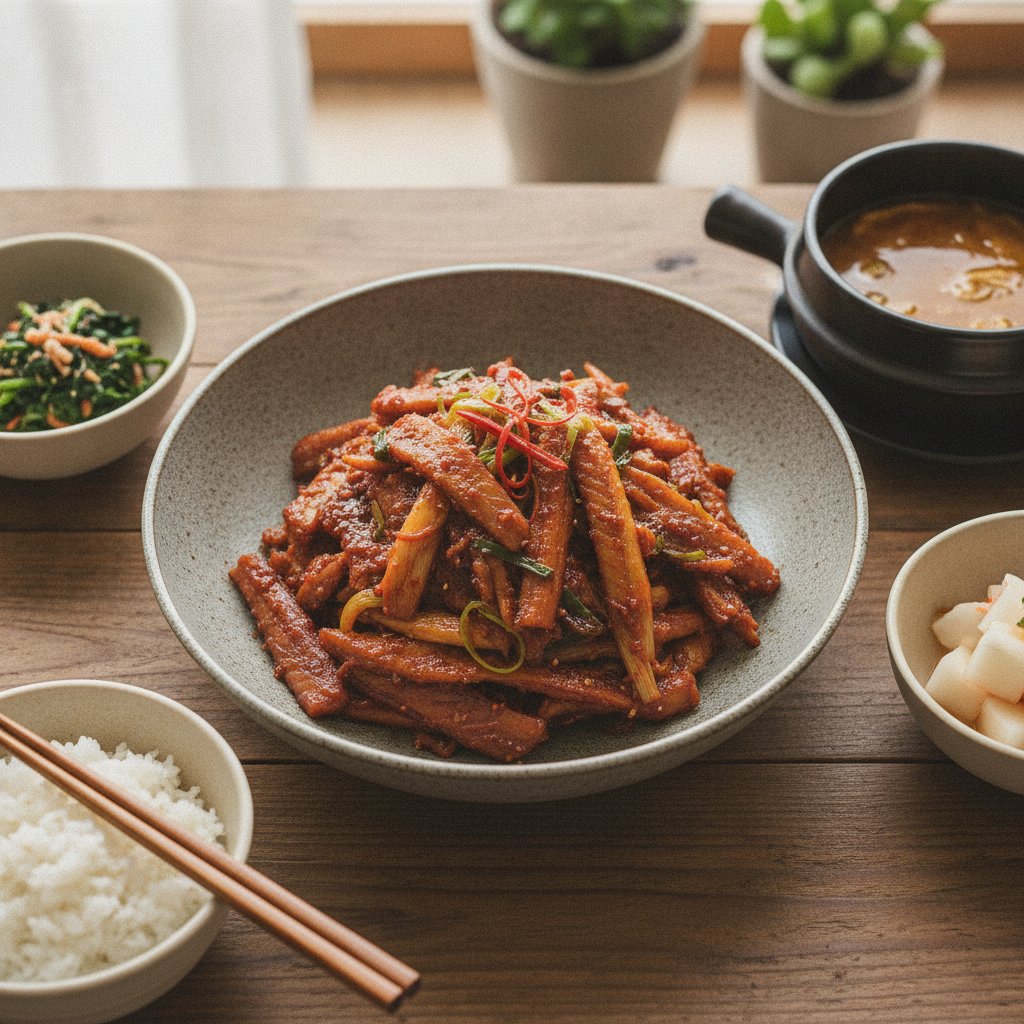
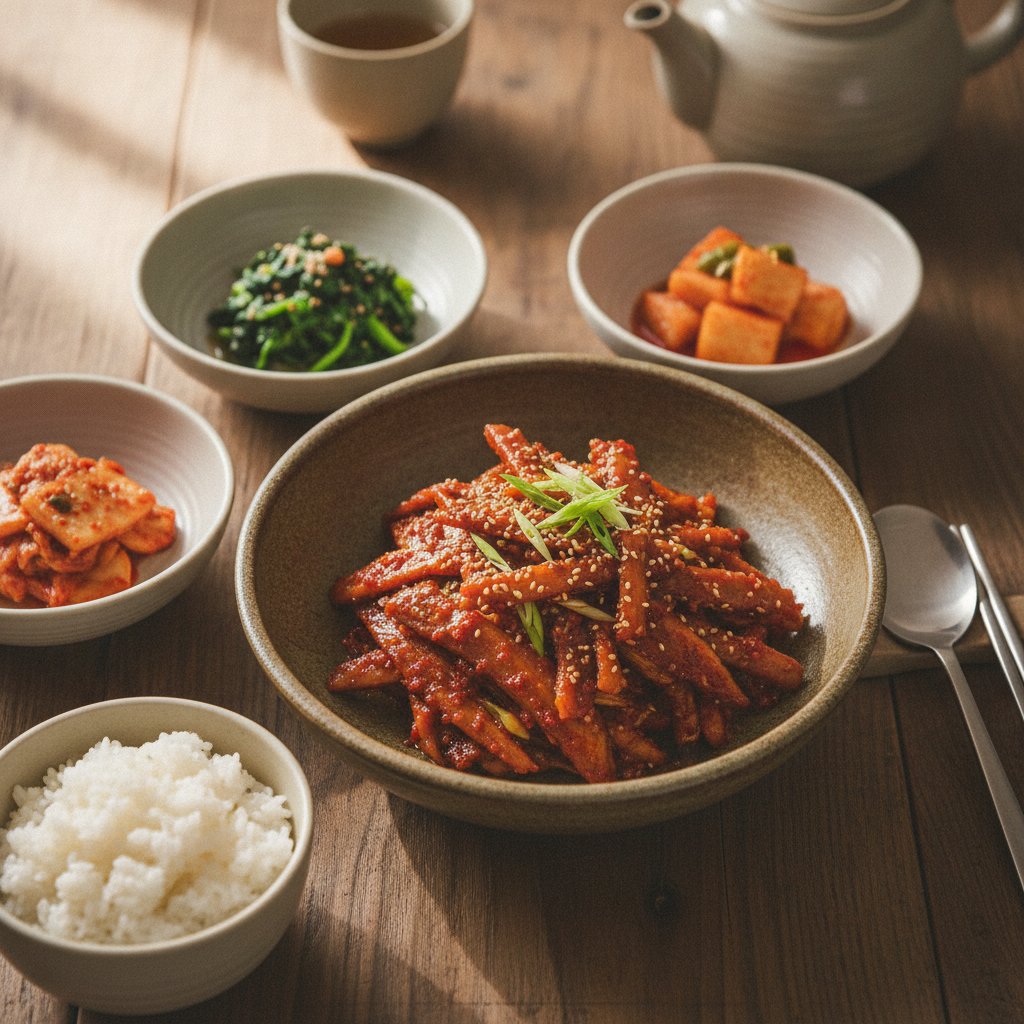
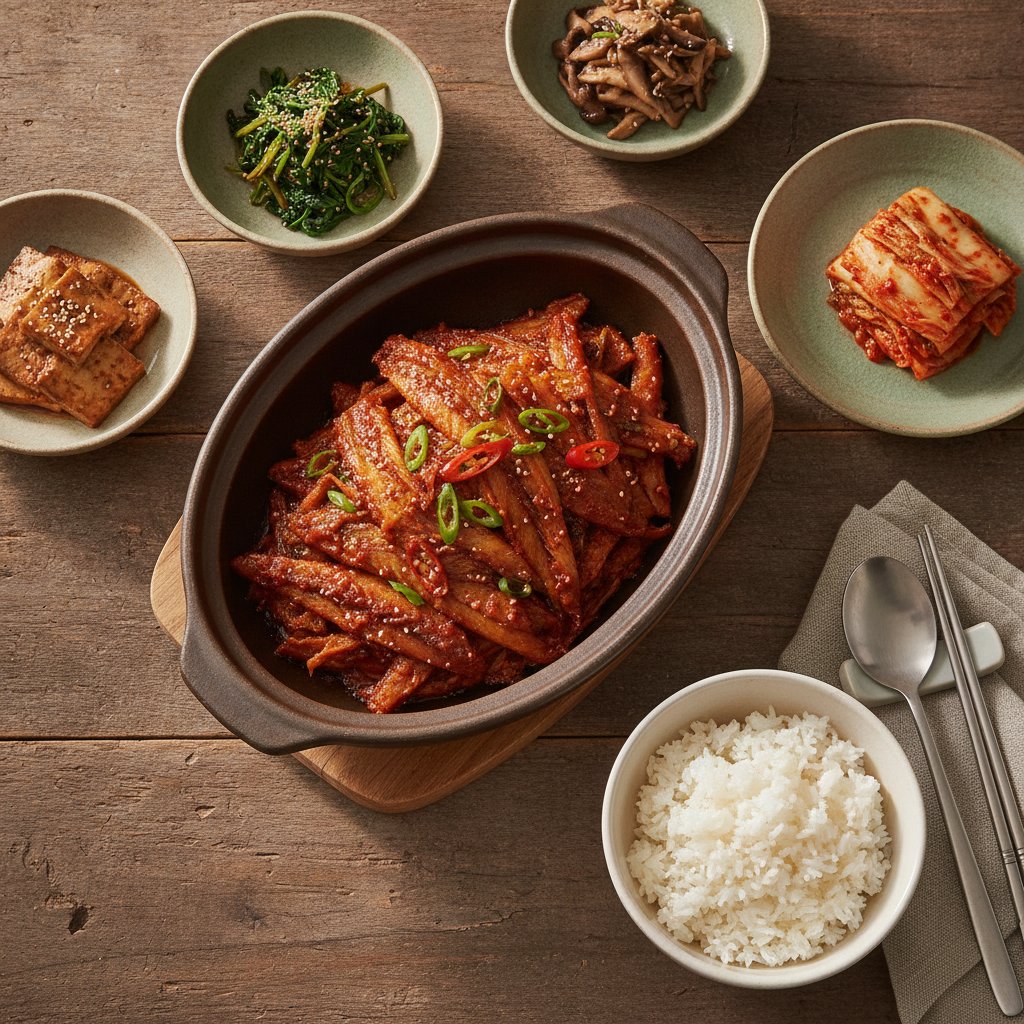
While many people outside Korea know pollack best as the base for a comforting hangover soup, braising it into hwangtae jorim (braised dried pollack strips) is how we turn this humble ingredient into an everyday side dish staple. The porous texture of dried pollack acts like a tiny sponge, soaking up a glossy, sweet, and spicy red sauce made from Korean chili paste, garlic, and sesame oil. It is chewy yet tender, savory, and keeps remarkably well in the refrigerator for days.
If you live outside Korea, you might walk past bags of yellow fish shreds at the Asian grocery store without knowing what to do with them. This recipe is designed specifically for home cooks shopping with standard supermarket staples supplemented by a quick trip to an Asian market or an Amazon delivery. You do not need any special cookware, and the entire cooking process takes under twenty minutes once your prep is done.
Why This Works
- Brief soaking hydrates without losing flavor: Plumping the dried fish strips in water for just sixty seconds makes them tender while saving the soaking liquid to use as a flavorful cooking stock.
- Pre-searing in sesame oil locks in texture: Lightly frying the rehydrated strips in oil before adding liquid prevents them from turning soggy and infuses a rich, nutty aroma directly into the fish.
- Gently reduced glaze creates a glossy finish: Combining both chili paste and chili flakes gives deep heat and vibrant red color without making the braising sauce overly thick or heavy.
Ingredients
- 100 g (about 3.5 oz) dried pollack strips (hwangtae chae)
- 750 ml (about 3 cups) water or rice-washing water (ssalttwul) for soaking
- 30 ml (2 tbsp) toasted sesame oil (cham-gireum)
- 15 ml (1 tbsp) neutral cooking oil (like vegetable or canola oil)
- 30 g (2 tbsp) Korean chili paste (gochujang)
- 10 g (1.5 tbsp) Korean chili flakes (gochugaru)
- 30 ml (2 tbsp) soy sauce (regular soy sauce or Korean soup soy sauce, guk-ganjang)
- 30 ml (2 tbsp) Korean rice syrup (moolyeot) or corn syrup
- 15 g (1 tbsp) finely minced fresh garlic
- 15 g (1 tbsp) grated fresh ginger or ginger juice
- 2 stalks scallions (green onions), thinly sliced
- 1 tbsp toasted sesame seeds for garnish
Substitutions
If you cannot find dried pollack strips (often sold in clear bags labeled as shredded dried pollack or hwangtae chae from brands like CJ or Ottogi), shredded dried cod or even mild shredded dried squid can work as a secondary alternative, though dried squid will be significantly chewier.
For the sweet component, Korean rice syrup (moolyeot) provides the traditional high-gloss sheen and gentle sweetness without burning easily. If you do not have it, substitute equal parts liquid honey or light corn syrup. If you only have granulated sugar, use 1.5 tablespoons, but add a splash more water so the glaze does not harden too quickly in the pan.
Korean chili paste (gochujang) is readily available in red plastic tubs at most Asian markets and many larger Western supermarkets. Brands like Sunchang or Haandrepl are reliable standards. If you cannot find Korean chili flakes (gochugaru), do not use Western chili powder blends, which contain cumin and oregano. Instead, use mild crushed red pepper flakes crushed coarsely in a mortar and pestle, or replace with an extra half-tablespoon of chili paste and cut back slightly on added salt.
🛒 Korean Braised Dried Pollack Strips
As an Amazon Associate we earn from qualifying purchases.
Shop Ingredients & Tools →How to Make It
- Hydrate the pollack briefly: Place the dried pollack strips in a large bowl and pour the 750 ml of water over them. Swirl the strips around for exactly 45 to 60 seconds. Do not leave them soaking for long periods, or the dried fish will lose all its rich umami into the water. Lift the fish out with your hands, squeeze gently to release excess liquid, and set the fish aside. Save 180 ml (about 3/4 cup) of the soaking water for the sauce base.
- Inspect and trim the strips: Spread the damp pollack strips on a cutting board. Run your fingers along the strips to check for small pin bones or hard bits of skin. Pluck out any bones with your fingers or kitchen tweezers. Cut any overly long strips into bite-sized pieces about 5 cm (2 inches) long. Trimming ensures every bite is easy to eat alongside rice.
- Pan-sear in oil: Heat a wide skillet over medium heat. Add 15 ml of neutral oil and 15 ml (1 tbsp) of the toasted sesame oil. Add the trimmed pollack strips to the warm oil. Stir-fry gently for 2 to 3 minutes until the edges of the fish curl slightly and turn pale golden. Pre-searing coats the outer fibers of the fish in fat, which stops them from dissolving into a mushy texture when braised.
- Mix the braising sauce: In a medium bowl, combine the reserved 180 ml of fish-soaking water, 30 g gochujang, 10 g gochugaru, 30 ml soy sauce, 30 ml rice syrup, minced garlic, and grated ginger. Whisk until the chili paste dissolves completely into a smooth liquid. Mixing the sauce ahead prevents uneven patches of thick paste in your pan.
- Braise the fish: Lower the skillet heat to medium-low. Pour the mixed sauce directly over the seared pollack strips in the pan. Stir gently to coat every strip. Let the mixture come to a gentle simmer. Cook uncovered for 5 to 7 minutes, stirring occasionally to prevent the sugars from sticking to the bottom of the skillet. The liquid should bubble down into a thick, glossy syrup that clings firmly to the fish strips.
- Finish and garnish: Once the liquid has reduced and the skillet looks glazed rather than watery, remove the pan from the heat. Drizzle the remaining 15 ml (1 tbsp) of toasted sesame oil over the top, then fold in the sliced green onions and toasted sesame seeds. The heat from the turned-off pan will cook the scallions just enough to soften their raw bite without losing their bright green color.
Tips from a Korean Kitchen
In Korean homes, small details make a big difference when preparing dried seafood banchan (side dishes). Here are four practical guidelines to keep in mind:
- Never skip the bone check: Commercial dried pollack is processed efficiently, but tiny soft bones frequently remain near the tail ends of the shreds. Checking with your fingers takes less than two minutes and prevents unpleasant surprises at the dinner table.
- Use rice-washing water if you have it: When rinsing white rice for dinner, save the cloudy water from the second rinse (ssalttwul). Soaking the dried pollack in rice water helps remove any lingering metallic or harsh fishy notes while adding subtle starches that thicken the braising glaze later.
- Control your heat carefully: Gochujang and rice syrup contain high amounts of natural sugars. If your stove burner is set too high during the reduction step, the sauce can turn bitter and scorch onto the bottom of your pan before the fish has time to absorb the flavors. Keep the heat strictly at medium-low once the liquid goes in.
- Let it rest before serving: While you can eat this warm right out of the skillet, hwangtae jorim actually tastes better after resting for an hour. As the fish cools down, it absorbs the remaining moisture and thickens into a wonderfully chewy texture.
Storage
Transfer the fully cooled braised pollack into an airtight glass or food-safe plastic container. Store it in the refrigerator for up to 10 days. Because dried pollack is a preserved ingredient and the sauce contains natural preservatives like soy sauce and chili paste, it holds up exceptionally well as a make-ahead banchan.
You can serve hwangtae jorim straight from the fridge cold, at room temperature, or warmed up briefly. If you prefer it warm, heat it in a small skillet over low heat for 1 to 2 minutes with a teaspoon of water to loosen the glaze, or microwave a single portion for 15 seconds. Freezing is not recommended, as freezing alters the delicate chewy texture of the fish strips upon thawing.
🛒 Korean Braised Dried Pollack Strips
As an Amazon Associate we earn from qualifying purchases.
Shop Ingredients & Tools →FAQ
Can I use regular dried pollack (buk-eo) instead of hwangtae?
Yes, you can use regular dried pollack (buk-eo). Regular dried pollack is dried quickly in indoor facilities or controlled conditions, making it slightly paler, firmer, and less spongy than mountain-dried hwangtae. If using buk-eo, soak it in water for an extra 30 seconds to ensure it softens properly before searing.
Why are my braised pollack strips too tough or rubbery?
Tough pollack strips usually happen for one of two reasons: either the fish was not soaked at all before cooking, or it was cooked over excessively high heat for too long, which drives out all remaining moisture from the protein. A short 60-second soak combined with gentle simmer time ensures tender results.
Is Korean braised dried pollack served hot or cold?
In everyday Korean home cooking, hwangtae jorim is most frequently served cold straight out of the refrigerator or at room temperature alongside warm bowl of steamed white rice. The contrast between hot rice and cool, spicy-sweet fish is a classic comfort food combination.
More Korean Recipes
- Creamy Korean Corn Cheese (콘치즈)
- Gyeran Jjim (Korean Steamed Eggs): Always Fluffy
- Jangjorim Recipe: Authentic Korean Soy-Braised Beef and Eggs
- Eomuk Bokkeum (Stir-Fried Fish Cakes): Your New Favorite Lunchbox Side Dish
🛒 Korean Braised Dried Pollack Strips
As an Amazon Associate we earn from qualifying purchases.
Shop Ingredients & Tools →