Crunchy Korean Soy Pickled Radish (Mu Jangajji)
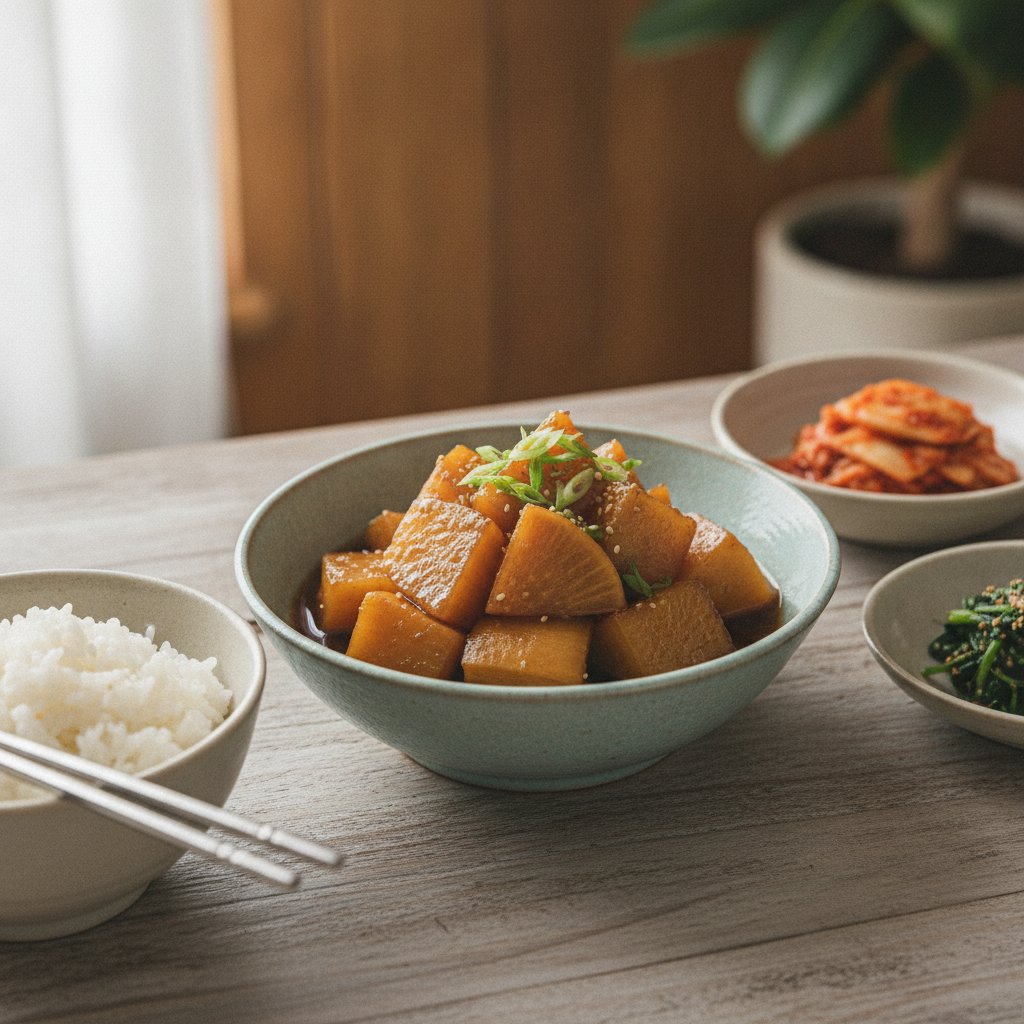
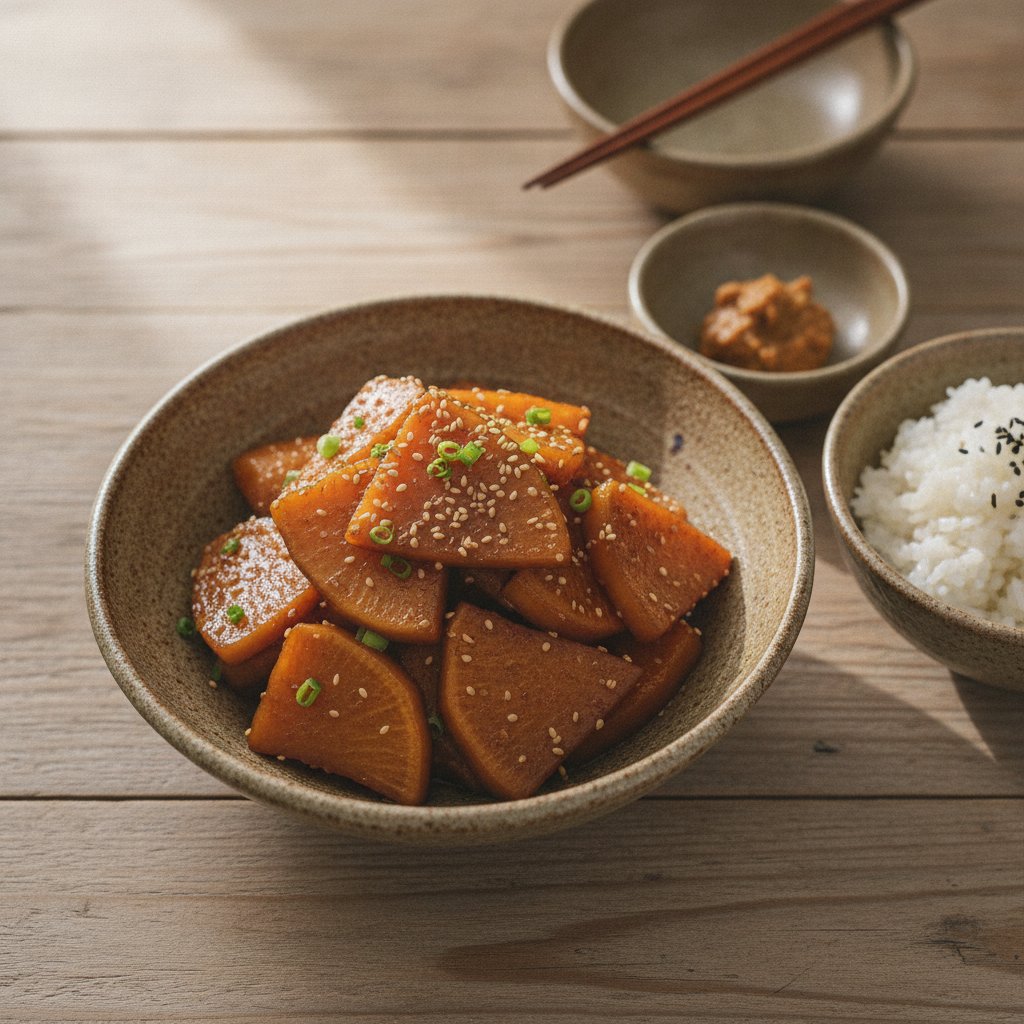
Every summer in Seoul, when the humidity turns oppressive and heavy meals sound completely unappealing, my mother pulls a heavy glass jar from the back of the refrigerator. Inside sit translucent, amber-colored cubes of radish bathed in a savory soy brine. Just a handful of these snappy bites served alongside a bowl of cold rice soaked in barley tea instantly revives a tired appetite.
Prep: 20 min · Cook: 5 min · Total: 25 min · Serves 8
In Korea, we call this mu jangajji (korean soy pickled radish). While many Westerners are familiar with the bright yellow danmuji served in kimbap or the sweet white pickled radish cubes (chiken mu) served with Korean fried chicken, mu jangajji is the rustic, deeply savory staple found in home kitchens across the country. It belongs to the jangajji family—traditional Korean preserves made by steeping vegetables in soy sauce, soybean paste, or chili paste.
This version is designed for home cooks anywhere in the world. You do not need specialized equipment or hard-to-find ingredients to achieve that iconic, ear-shattering crunch. By pairing simple garden radishes with a handful of everyday pantry items, you can create a versatile banchan (side dish) that cuts through rich meats, brightens simple rice bowls, and keeps in your fridge for months.
Why This Works
- The Hot Brine Shock: Pouring boiling-hot soy sauce brine directly onto raw, unheated radish shocks the plant tissue, hardening the cell walls so the radish retains a firm, crisp snap rather than turning soggy.
- Balanced Golden Ratio: Using an adapted 1:1:1:1 liquid base of soy sauce, water, vinegar, and sugar creates enough acidity and salinity to preserve the vegetable safely while keeping the flavor refreshing enough to eat in large quantities.
- Aromatic Layering: Combining the radish with fresh onion, garlic, and hot peppers creates a layered syrup-brine that infuses gentle heat and depth without needing specialized spices.
Ingredients
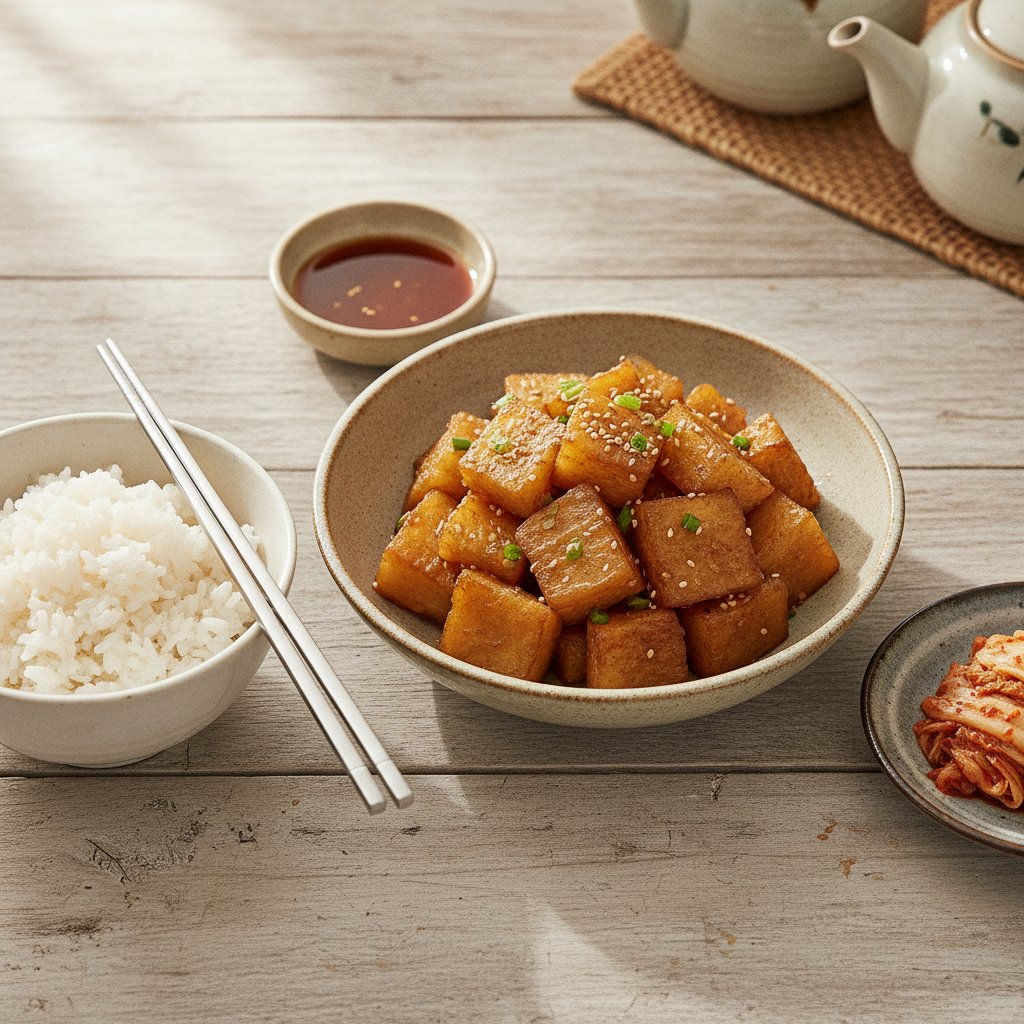
- 800 g (about 1.75 lbs) Korean radish (mu) or Daikon radish, peeled and cut into 1.5 cm (1/2 inch) cubes
- 1 medium onion (about 150 g / 5.3 oz), cut into bite-sized 1.5 cm squares
- 2-3 fresh jalapeño peppers or Korean green chili peppers (cheongyang gochu), sliced into 1 cm rounds
- 4 cloves fresh garlic, peeled and sliced in half lengthwise
- 240 ml (1 cup) regular soy sauce (such as Jin Ganjang or standard Japanese soy sauce)
- 240 ml (1 cup) water
- 180 ml (3/4 cup) distilled white vinegar or apple cider vinegar
- 150 g (3/4 cup) granulated sugar
Substitutions
If you cannot source a dense, sweet Korean radish (mu) at an Asian grocery market, white Daikon radish is your best substitute. Daikon contains slightly more water than Korean radish, so cut it into slightly thicker cubes to maintain optimal bite. Standard red globe radishes can also be used in a pinch, though they will lose their red color in the dark soy liquid.
For the peppers, green jalapeños work brilliantly because they share a similar crisp texture and clean capsaicin heat to Korean green chilies. If you prefer a mild pickle, simply substitute green bell pepper chunks. Standard white granulated sugar provides the cleanest sweetness, but light brown sugar adds a subtle malted note that works nicely with the soy sauce.
🛒 Crunchy Korean Soy Pickled Radish
As an Amazon Associate we earn from qualifying purchases.
Shop Ingredients & Tools →How to Make It
- Prepare and chop the vegetables: Peel the radish thoroughly to remove the tough outer skin, then slice it into uniform 1.5 cm (1/2 inch) cubes. Cut the onion into matching pieces and slice the hot peppers and garlic. Why: Uniform sizing ensures every piece absorbs the brine at the same rate, preventing small pieces from becoming over-salted while larger pieces remain bland.
- Pack the jar tightly: Layer the radish cubes, onion, garlic, and sliced peppers into a clean, heat-resistant glass jar or ceramic container. Leave about 2.5 cm (1 inch) of headspace at the top. Why: Packing the vegetables tightly keeps them wedged under the brine once liquid is added, minimizing exposure to air.
- Boil the soy brine: In a medium saucepan, combine the soy sauce, water, vinegar, and sugar. Stir over medium-high heat until the sugar completely dissolves, then bring the mixture to a full rolling boil for 1 to 2 minutes. Why: Boiling dissolves the sugar entirely, pasteurizes the pickling liquid for safety, and creates the intense heat necessary to treat the raw vegetables.
- Pour the boiling brine over the vegetables: Immediately pour the hot liquid directly over the packed vegetables in the jar until they are fully submerged. Place a small glass dish or fermentation weight on top if necessary to keep the radish submerged. Why: The sudden heat shock cooks the extreme outer layer of the radish cells, sealing in moisture and creating an irreversible crunchy texture without making the core mushy.
- Cool and cure at room temperature: Leave the jar uncovered on your kitchen counter until it reaches room temperature, about 2 to 3 hours. Seal with an airtight lid and let it cure at room temperature for 24 hours before moving it to the refrigerator. Why: Allowing the initial room-temperature cure speeds up flavor penetration before cold refrigeration slows down the osmosis process.
Tips from a Korean Kitchen
In Korean homes, the mark of a great mu jangajji is a clear brine and an unforgettable snap when you bite down. Here are a few practical rules we follow at home to guarantee perfect results every batch:
- Never skip the heat proofing check: Ensure your glass container is rated for heat shock (like a Mason jar or Pyrex container). Pouring boiling soy brine into cold, thin glass can cause standard jars to crack instantly.
- The double-boil long-storage method: If you plan to keep your korean soy pickled radish for longer than a month, pour the liquid back into a saucepan after 3 days of pickling. Boil the liquid again for 2 minutes, let it cool completely this second time, and pour it back over the radishes. This removes excess water released by the vegetables and extends shelf life significantly.
- Repurpose the leftover brine: Never throw away the liquid after eating the radishes! The leftover soy brine becomes an incredible, complex dipping sauce for Korean savory pancakes (pajeon), dumplings (mandu), or as a base seasoning for cold noodle dressings.
Storage
Store your pickled radish jar in the coldest part of your refrigerator. It is ready to eat after 24 to 48 hours, but reaches its flavor peak around day 5 as the soy sauce fully penetrates the center of each cube. Properly refrigerated, this pickle stays safe and wonderfully crunchy for up to 3 months.
Do not freeze this dish. Freezing destroys the delicate cellular structure of raw radish, turning it soft, rubbery, and watery upon thawing. Always serve straight from the refrigerator—cold pickles deliver the maximum crunch!
🛒 Crunchy Korean Soy Pickled Radish
As an Amazon Associate we earn from qualifying purchases.
Shop Ingredients & Tools →FAQ
What is the difference between Mu Jangajji, Danmuji, and Chicken Mu?
Mu jangajji is soy sauce-based, resulting in an amber color and a savory, tangy flavor profile. Danmuji is a yellow, sweet-and-sour pickled radish colored with gardenia fruit or turmeric, commonly served with kimbap. Chicken mu is cured in a clear, sweet vinegar-water brine without soy sauce, specifically designed to cleanse the palate when eating fried chicken.
Can I use regular supermarket red radishes for this recipe?
Yes, standard red globe radishes work well. Trim the stems and roots, then cut them into quarters. Keep in mind that the red pigment in the skins will bleed into the brine and darken, but the interior crispness and peppery flavor pair wonderfully with the savory soy liquid.
Why did my pickled radish lose its crunch over time?
Soft pickled radish usually results from pouring lukewarm brine rather than boiling brine over the fresh vegetables, or failing to submerge the radish cubes entirely under the liquid. Keeping the vegetables weighed down below the surface of the acidic liquid is key to preserving structural integrity.
More Korean Recipes
- Creamy Korean Corn Cheese (콘치즈)
- Gyeran Jjim (Korean Steamed Eggs): Always Fluffy
- Jangjorim Recipe: Authentic Korean Soy-Braised Beef and Eggs
- Eomuk Bokkeum (Stir-Fried Fish Cakes): Your New Favorite Lunchbox Side Dish
🛒 Crunchy Korean Soy Pickled Radish
As an Amazon Associate we earn from qualifying purchases.
Shop Ingredients & Tools →