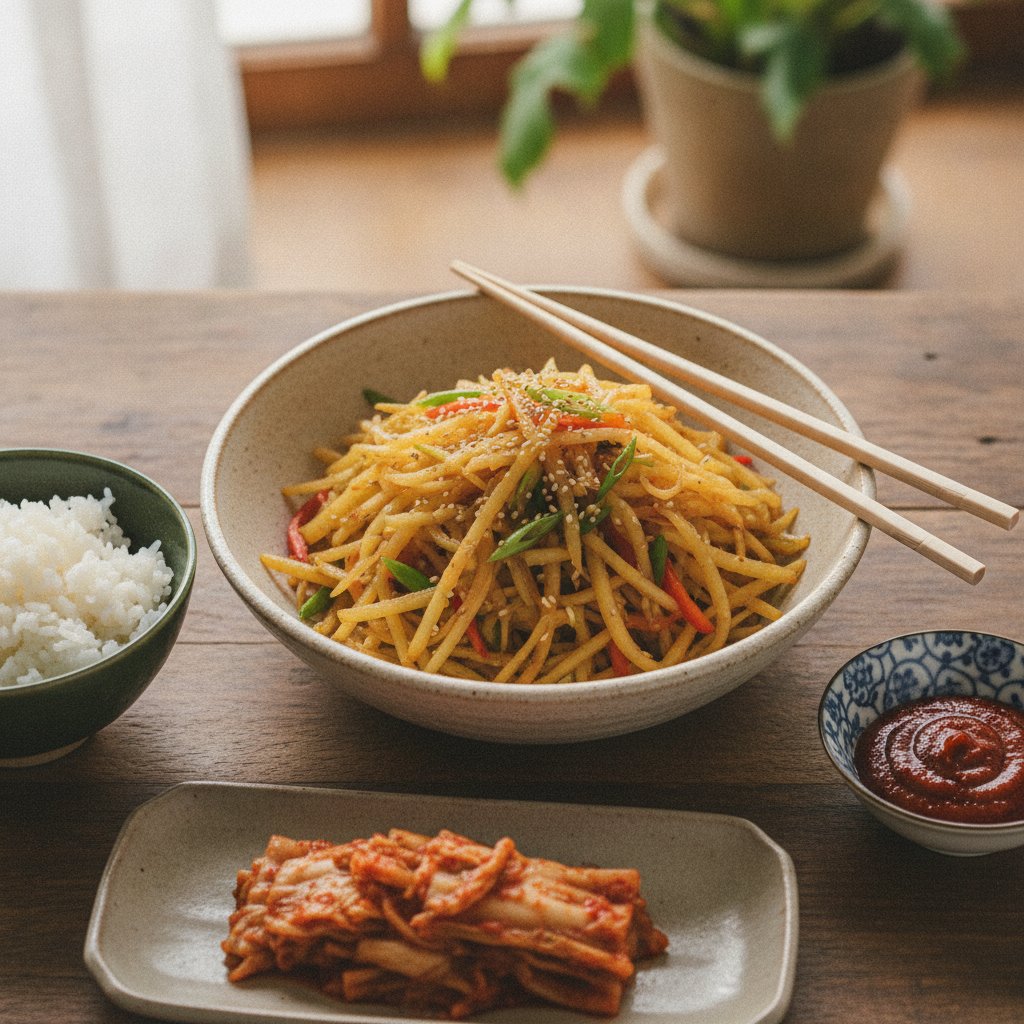
Easy Gamja Chae Bokkeum (Korean Stir Fried Potatoes)
This post contains affiliate links. As an Amazon Associate, we earn from qualifying purchases at no extra cost to you.
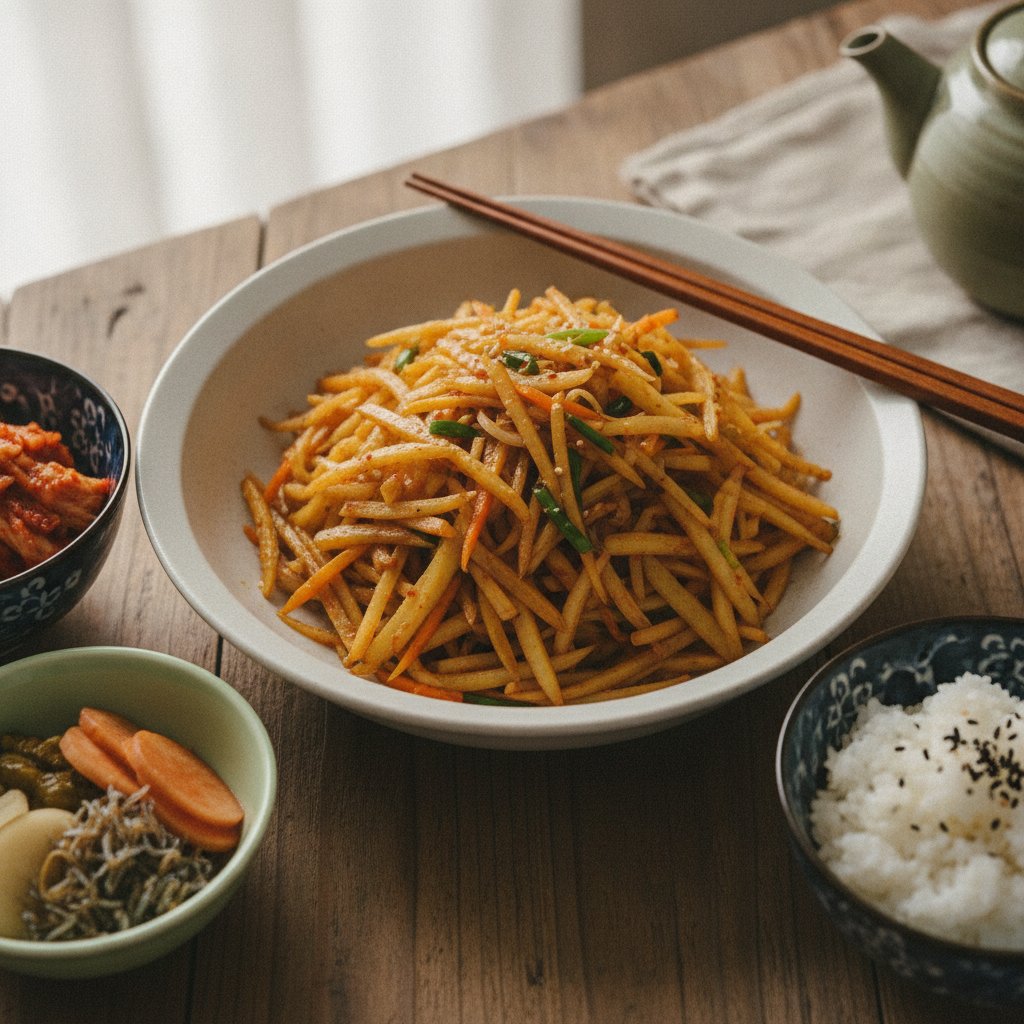
Korean Stir Fried Potato Side Dish (Gamja Chae Bokkeum)
When I opened my refrigerator in Seoul this morning, there was a clear glass container sitting right next to the kimchi jar, filled with glossy, translucent potato matchsticks. I pinched a bite out with my chopsticks—cold, lightly salted, and satisfyingly tender-crisp. In Western cooking, potatoes are almost always treated as the main starch: mashed, roasted whole, or deep-fried. But in a Korean home, potatoes frequently step into the spotlight as a vegetable banchan (side dish) meant to balance a bowl of warm, freshly steamed white rice.
This dish is called gamja chae bokkeum (stir-fried shredded potatoes). If you ever attended elementary school in Korea or ate from a homemade dosirak (lunchbox), you know this taste instantly. It is mild, savory, slightly nutty from toasted sesame, and wildly comforting. Yet, many home cooks outside Korea run into two common roadblocks: the potatoes either dissolve into a sticky, gummy clump of mashed potato mush, or they remain raw and unpleasantly crunchy in the center. Here at Korean Recipe Lab, I am going to walk you through the precise technique Korean mothers use to keep each potato strand crisp, individual, and perfectly cooked every single time.
Why This Works
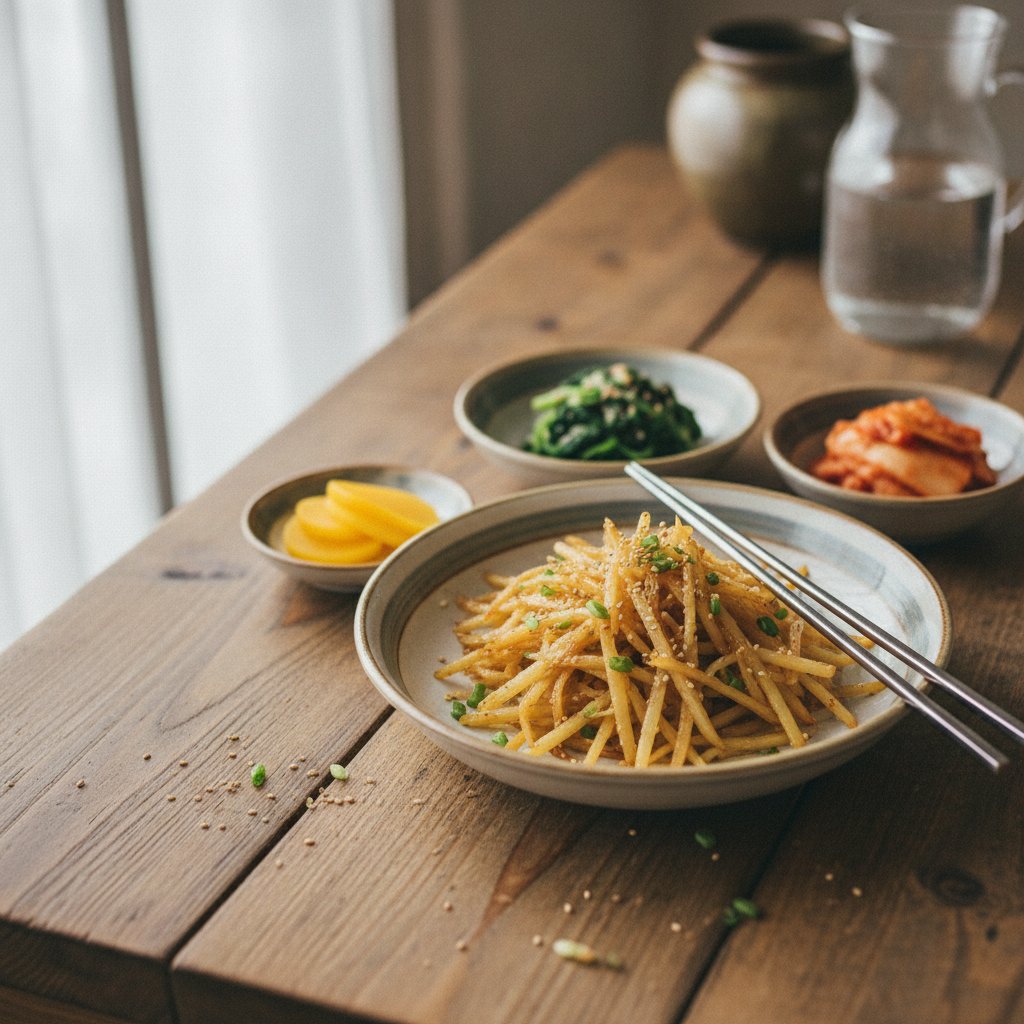
- Starch Extraction Soak: Soaking the shredded potatoes in cold water strips away excess surface amylose starch, preventing the matchsticks from sticking together or turning gummy in the skillet.
- The Quick Par-Blanch: Boiling the potato shreds for just 60 to 90 seconds cooks the center through instantly, eliminating raw bite while drastically reducing total stir-fry time.
- High-Heat Flash Stir-Fry: A swift toss over medium-high heat with minimal oil seals in the signature asag-asag (tender-crisp) texture without soaking up grease.
🛒 Easy Gamja Chae Bokkeum
As an Amazon Associate we earn from qualifying purchases.
Shop Ingredients & Tools →Ingredients
- 400 g (about 14 oz or 2 medium) Russet or Yukon Gold potatoes
- 60 g (about 2 oz or 1/2 small) carrot, cut into fine matchsticks
- 50 g (about 1.7 oz or 1/2 small) yellow onion, thinly sliced
- 1 green Korean pepper (asag-gochu) or 1/3 green bell pepper, cut into matchsticks
- 2 tbsp (30 ml) neutral cooking oil (vegetable, canola, or avocado oil)
- 1 tsp (5 g) fine sea salt (divided for blanching and stir-frying)
- 1 tsp (5 ml) toasted sesame oil (such as Ottogi or CJ brand)
- 1/2 tsp (1 g) toasted sesame seeds
- 1 clove garlic, finely minced (optional)
Substitutions
If you cannot find Korean green peppers, a standard green bell pepper or a mild jalapeño (with seeds and ribs removed) works wonderfully to add a pop of color and fresh herbal aroma. Russet potatoes provide a lighter, crisper snap, while Yukon Gold potatoes lend a richer golden color and slightly buttery mouthfeel; both work great, but avoid overly waxy red potatoes as they hold too much moisture and do not absorb seasoning well. For the toasted sesame oil, look for dark brown toasted sesame oil from Asian markets or major Western supermarkets rather than cold-pressed light sesame oil, which lacks the rich nutty aroma essential to finish Korean side dishes.
How to Make It
- Shred the Potatoes Uniformly: Peel the potatoes and slice them into thin planks about 1/8-inch (3 mm) thick. Stack the planks and slice them into neat matchsticks. Why: Uniformity is key here. If your potato shreds vary widely in thickness, the thin pieces will overcook into paste before the thick pieces lose their raw crunch.
- Soak and Rinse Away Starch: Submerge the potato matchsticks in a bowl of cold water for 10 minutes. Swirl them around with your hand until the water turns cloudy, then drain and rinse under cold tap water 2 to 3 times until the water runs completely clear. Why: Potatoes release heavy starches when cut. If left on the potato, this surface starch gelatinizes when heated, creating a sticky coating that turns your stir-fry into mashed potatoes.
- Par-Blanch the Potato Shreds: Bring 4 cups (1 liter) of water and 1/2 teaspoon of fine sea salt to a rolling boil in a pot. Drop in the drained potato shreds and boil for exactly 60 to 90 seconds. The matchsticks should look slightly translucent around the edges but still hold their shape. Drain immediately into a colander and rinse briefly with cold water to stop the cooking process. Shake off excess water thoroughly. Why: Stir-frying raw potato shreds requires a long pan cook time, which draws out moisture and breaks down the edges. Quick blanching locks in internal cooking so the skillet stage only needs to focus on building flavor and crispness.
- Sauté the Aromatics First: Heat 2 tablespoons of neutral oil in a large non-stick skillet or wok over medium-high heat. Add the sliced onions and carrot matchsticks. Sauté for about 1 to 2 minutes until the onions begin to turn translucent. Why: Carrots and raw onions take slightly longer to soften than pre-blanched potatoes, so giving them a head start ensures all vegetables reach peak texture simultaneously.
- Stir-Fry the Potato Matchsticks: Add the blanched potato shreds, green pepper matchsticks, minced garlic (if using), and remaining 1/2 teaspoon of fine sea salt to the skillet. Toss continuously on high heat for 2 to 3 minutes until the potatoes are cooked through, glossy, and tender with a gentle crunch. Why: Stir-frying briskly over high heat evaporates any lingering surface moisture, preventing sogginess and sealing the seasoning onto each individual strand.
- Season and Finish: Turn off the heat entirely. Drizzle 1 teaspoon of toasted sesame oil over the potatoes and sprinkle with toasted sesame seeds. Give the pan one final gentle toss before transferring the dish to a serving plate. Why: Finishing off the heat preserves the volatile aroma of toasted sesame oil, which degrades if exposed to direct, scorching heat.
🛒 Easy Gamja Chae Bokkeum
As an Amazon Associate we earn from qualifying purchases.
Shop Ingredients & Tools →Tips from a Korean Kitchen
Here are a few practical rules I follow in my own home to guarantee perfect gamja chae bokkeum every time:
- Drying is Crucial: After blanching and rinsing your potatoes in cold water, shake the colander vigorously or gently pat the matchsticks with a clean kitchen towel. Water introduced to hot oil creates steam, and steam leads to soggy vegetables.
- Resist Soy Sauce: Traditional Korean shredded potato stir-fry relies on fine sea salt rather than soy sauce. Soy sauce darkens the beautiful white and yellow contrast of the potatoes and introduces liquid that alters the texture. Keep the seasoning clean and simple.
- Mind Your Knife Work: While a mandoline slicer saves time, avoid ultra-fine julienne blades designed for raw slaws. If the shreds are as thin as hair, they will collapse in the pan. Aim for matchsticks roughly the thickness of a wooden matchstick or toothpick.
- Embrace the Cold Eat: In Korea, we love eating this side dish warm right out of the skillet, but it is equally popular served chilled straight from the refrigerator the next day. The cold temperature accentuates the crisp snap of the potato strands.
Storage
Store any leftover stir-fried potatoes in an airtight container in the refrigerator for up to 4 to 5 days. Do not freeze this dish; frozen cooked potatoes release cellular water upon thawing, turning the texture grainy and soft. To serve leftovers, you can eat them cold alongside warm rice, or quickly toss them in a dry skillet over low heat for 1 minute just to take the chill off.
FAQ
Why are my stir fried potatoes soggy or mushy?
Sogginess usually happens because surface starches were not thoroughly rinsed off prior to cooking, or because the potatoes were crowd-steamed raw in a skillet over low heat. Rinsing until the water runs clear and par-blanching for 60 to 90 seconds completely prevents this issue.
Can I make Gamja Chae Bokkeum without blanching?
Yes, you can stir-fry raw shredded potatoes directly, but you must rinse them exceptionally well, use a bit more oil, and cover the pan with a lid for 2 minutes on medium heat to let them steam through before crisping them up. However, the par-blanching method outlined above is far more forgiving and yields superior texture.
Is Gamja Chae Bokkeum eaten hot or cold?
It can be enjoyed both ways! When freshly cooked, it is warm, soft, and fragrant. Once chilled in the refrigerator, the oils set and the potato matchsticks take on a firmer, refreshing crunch that makes a wonderful counterpoint to spicy Korean mains like jeyuk bokkeum (spicy stir-fried pork) or kimchi stew.
🛒 Easy Gamja Chae Bokkeum
As an Amazon Associate we earn from qualifying purchases.
Shop Ingredients & Tools →More Korean Recipes
- Creamy Korean Corn Cheese (콘치즈)
- Gyeran Jjim (Korean Steamed Eggs): Always Fluffy
- Jangjorim Recipe: Authentic Korean Soy-Braised Beef and Eggs
- Eomuk Bokkeum (Stir-Fried Fish Cakes): Your New Favorite Lunchbox Side Dish
🛒 Easy Gamja Chae Bokkeum
As an Amazon Associate we earn from qualifying purchases.
Shop Ingredients & Tools →