Hobak Jeon: Easy Korean Zucchini Pancakes
This post contains affiliate links. As an Amazon Associate, we earn from qualifying purchases at no extra cost to you.
On grey, overcast afternoons in Seoul, you will hear the faint crackle of frying oil coming from almost every apartment kitchen window. In Korea, rainy days are universally known as pancake weather. The steady rhythm of raindrops falling on asphalt sounds uncannily like batter hitting a skillet coated in shimmering oil, sparking an irresistible craving for something warm, golden, and savory.
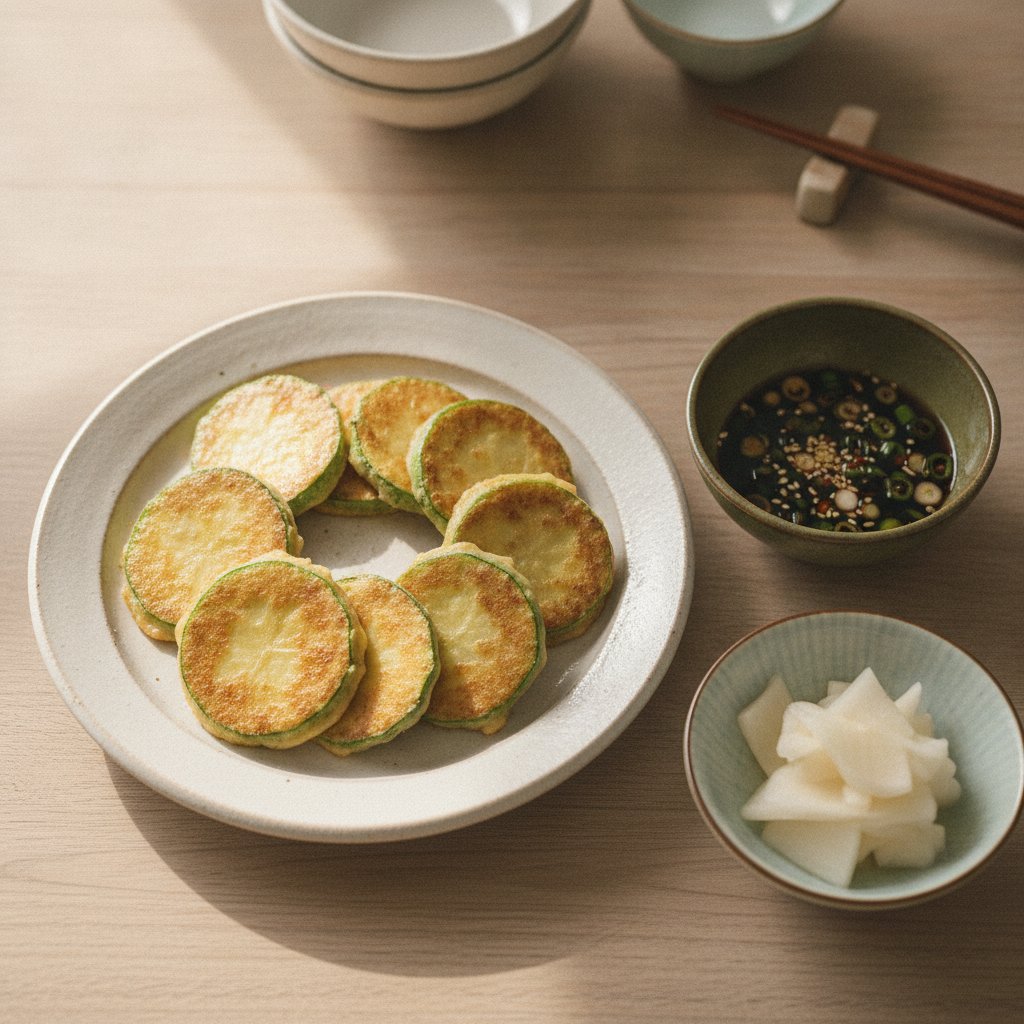
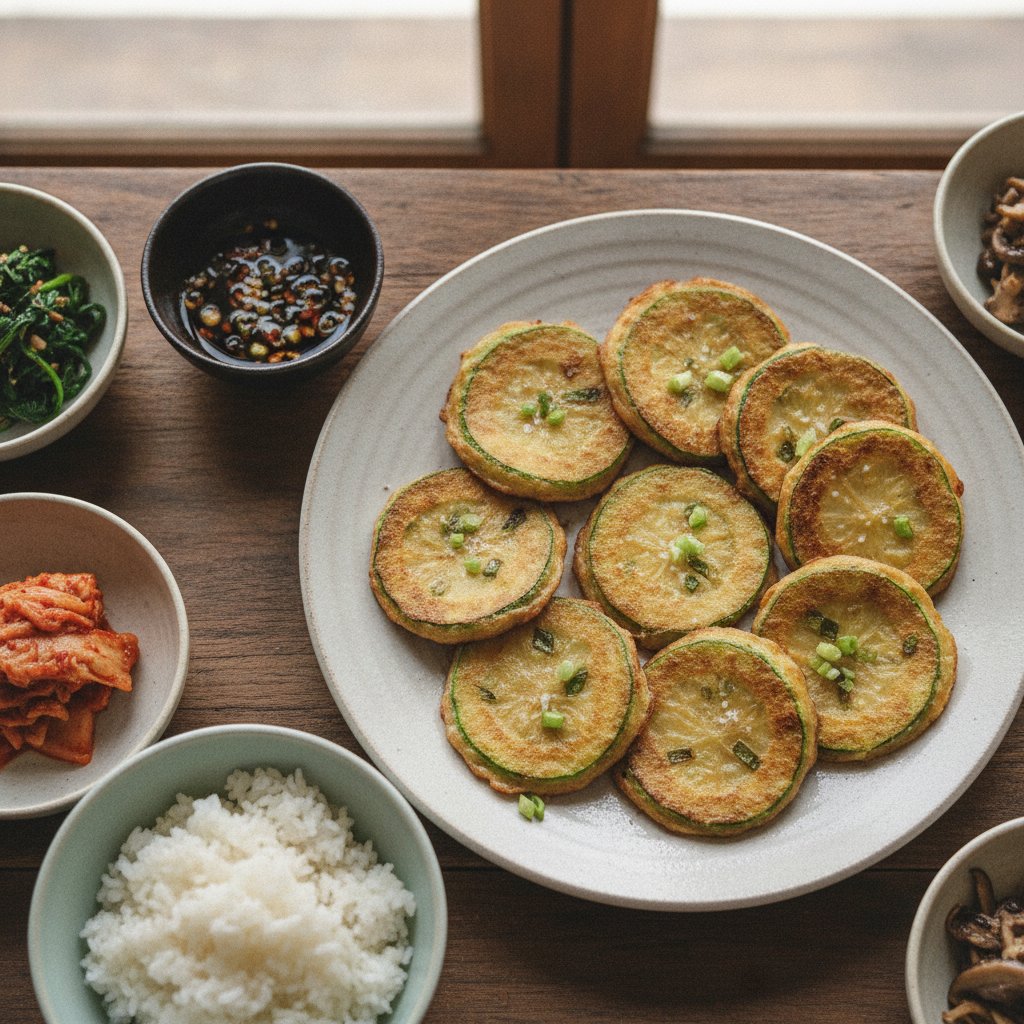
While heavy seafood pancakes or kimchi-stuffed batters get plenty of attention, hobak jeon (zucchini pancakes) is the humble workhorse of the home kitchen. It appears routinely as part of a traditional meal spread, known as banchan (side dishes), and takes less than fifteen minutes from cutting board to table. Unlike Western vegetable fritters that rely on shredded zucchini bound with heavy flour dough and cheese, this authentic version keeps the vegetable whole. Tender, sweet rounds of zucchini are dusted lightly with flour, dipped into seasoned beaten egg, and pan-fried until tender.
The magic of this dish lies in its simplicity. When cooked gently, the natural sugars in the squash caramelize beneath a soft, golden egg jacket. Paired with a splash of soy vinegar sauce, it delivers a clean, delicate bite that complements almost any main meal.
Why This Works
- Salting the squash slices before cooking draws out surface moisture, concentrating the natural sweet flavor of the zucchini while keeping the exterior coating from turning soggy.
- A light dusting of flour before the egg wash acts as an anchor, allowing the smooth egg batter to stick tightly to the slick zucchini skin without peeling off in the pan.
- Medium-low heat skillet frying cooks the inner squash until tender and buttery without scorching the delicate egg layer on the outside.
Ingredients
- 300 g (about 10.5 oz or 1 medium) green zucchini or young Korean squash
- 3 g (about 1/2 tsp) fine sea salt
- 45 g (about 1/3 cup) all-purpose flour
- 2 large eggs
- 1 g (about 1 pinch) fine sea salt for the eggs
- 30 ml (2 tbsp) neutral cooking oil, such as canola, vegetable, or grapeseed oil
- 1 red chili pepper, thinly sliced into rings for garnish (optional)
- For the Tangy Soy Dipping Sauce (Cho-ganjang):
- 15 ml (1 tbsp) soy sauce
- 15 ml (1 tbsp) water
- 5 ml (1 tsp) rice vinegar
- 2.5 ml (1/2 tsp) toasted sesame oil
- 1 g (1/2 tsp) gochugaru (Korean chili flakes), optional
- 1 g (1/2 tsp) toasted sesame seeds
Substitutions
If you shop at a standard Western grocery store, regular dark green zucchini works perfectly for this recipe. In Korea, we typically use aebohak (young Korean squash), which has a pale green skin, a sweeter taste, and a firmer flesh. If you happen to visit an Asian grocery store and spot light-green, club-shaped squash labeled as Korean squash or tender green pumpkin, grab it for the most authentic flavor.
For a gluten-free adaptation, replace the all-purpose flour with potato starch, cornstarch, or a 1-to-1 gluten-free flour blend. Potato starch gives the exterior a delightfully light texture that absorbs the egg wash smoothly.
How to Make It
- Slice and salt the zucchini: Trim off the ends of the zucchini and slice it into round disks about 6 mm (1/4 inch) thick. Lay the slices in a single layer on a cutting board or paper towel. Sprinkle 3 g (1/2 tsp) of fine sea salt evenly over both sides. Let them sit for 10 minutes. Why you do this: Zucchini holds a massive amount of water. The salt pulls excess moisture out via osmosis so the squash cooks through evenly without steaming into a mushy mess.
- Pat dry: After 10 minutes, you will see bead-like droplets of water sitting on top of the squash rounds. Gently press paper towels onto both sides of the slices to absorb the liquid. Why you do this: If the slices remain wet, the flour will turn into a pasty sludge instead of a light coating.
- Dust with flour: Place the 45 g (1/3 cup) of flour into a shallow bowl or a clean gallon-sized sealable plastic bag. Add the dried zucchini slices to the flour and toss gently until every slice is completely coated. Lift each slice out and shake off the excess flour, leaving only a faint, translucent white film. Why you do this: Egg wash naturally slips off glossy raw zucchini skin. Flour creates a dry, tacky surface for the egg to grip. Shaking off the excess prevents a thick, gummy barrier under the egg layer.
- Prepare the egg coating: Crack the 2 eggs into a wide, shallow bowl. Add a small pinch of salt and whisk thoroughly with a fork until the yolks and whites are fully blended and smooth.
- Preheat the skillet: Heat 15 ml (1 tbsp) of cooking oil in a wide non-stick skillet or cast-iron pan over medium-low heat for about 2 minutes. Why medium-low heat: Egg browns extremely fast. Lower heat gives the thicker zucchini slices enough time to soften fully to the center without burning the golden exterior.
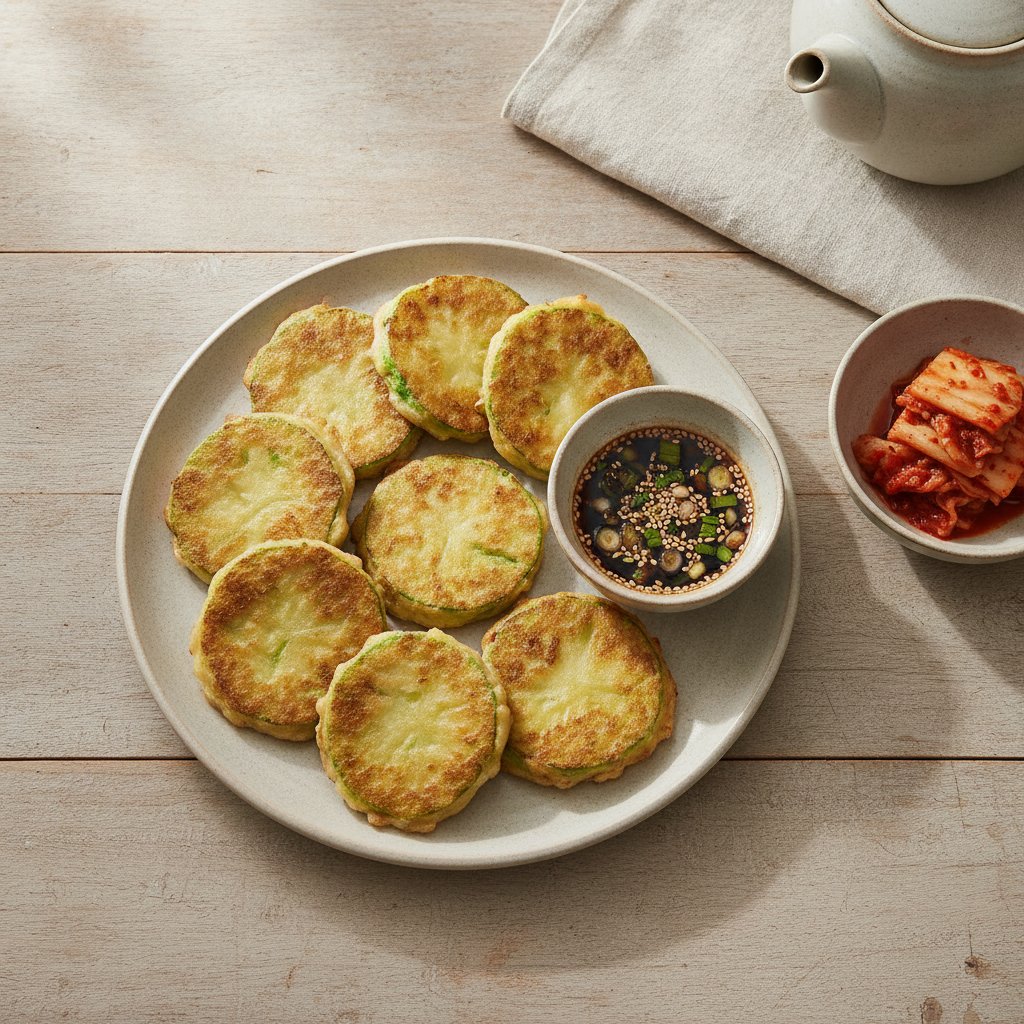
- Dip and fry: Dip each flour-dusted zucchini slice into the beaten egg, coating both sides completely. Let any heavy excess egg drip back into the bowl for a second, then lay the slices carefully into the heated skillet in a single layer. Do not let them overlap. If using red chili rings for garnish, press one small slice gently onto the top of each zucchini round now.
- Cook to golden perfection: Pan-fry for about 2 to 3 minutes until the bottom is a light golden yellow. Flip each slice carefully with a spatula and cook for another 2 minutes. To check for doneness, pierce the center of a slice with a toothpick; it should slide through easily with minimal resistance. Transfer the finished pancakes to a paper-towel-lined plate. Repeat with the remaining oil and zucchini if needed.
- Mix the dipping sauce and serve: In a small bowl, combine the soy sauce, water, rice vinegar, toasted sesame oil, chili flakes, and toasted sesame seeds. Stir well and serve alongside the warm hobak jeon.
Tips from a Korean Kitchen
Every household in Korea makes this dish slightly differently, but these three foundational techniques guarantee success regardless of your stove type:
- Use the plastic bag trick: Instead of dipping each individual round into flour one by one, drop all your dried zucchini slices into a sealable plastic bag with the flour. Puff the bag up with air, seal it, and shake it gently for five seconds. Every slice gets an even coat in seconds with zero messy fingers.
- Mind the temperature: The most common mistake beginners make with this korean zucchini fritters recipe is turning the burner up too high. High heat sears the egg within thirty seconds while leaving the zucchini firm and raw in the middle. Keep the flame low and steady.
- Wipe the pan between batches: If you are making a double batch, small bits of cooked egg left in the pan will burn and stick to your next batch. Take a folded paper towel, wipe the pan clean, add fresh oil, and proceed with the remaining zucchini.
Storage
Hobak jeon is best served freshly made while hot and fragrant. However, leftover pancakes can be stored in an airtight container in the refrigerator for up to 3 days.
To reheat, avoid the microwave, which turns the delicate egg coating soft and rubbery. Instead, heat a dry skillet over medium-low heat and place the leftover cold pancakes directly into the pan without adding extra oil. Warm them for 1 to 2 minutes per side until heated through and lightly crisp. Freezing is not recommended, as zucchini loses its firm structural integrity upon thawing, leaving the pancakes watery.
FAQ
Can I shred the zucchini instead of slicing it into rounds?
Yes, though it changes the nature of the dish. Shredded zucchini pancakes are called hobak-chae jeon. If you shred the squash, mix it directly with a small amount of flour, water, and egg to create a wet dough, then cook it in larger round patties. Slicing into rounds provides a better contrast between tender squash and savory egg.
Why did the egg coating slide off my pancakes?
This usually happens for two reasons: either the zucchini was too wet when dusted, or the flour layer was too thick. Be sure to pat the salted zucchini dry with paper towels, and shake off any loose, powdery excess flour before dipping the slices into the egg wash.
Can I add other vegetables to this recipe?
When cooking round hobak jeon, keeping it strictly to zucchini allows the flavor of the squash to shine. However, you can use this exact same flour-and-egg technique on other thinly sliced vegetables, such as yellow squash, eggplant, or sweet potatoes.
More Korean Recipes
- Creamy Korean Corn Cheese (콘치즈)
- Gyeran Jjim (Korean Steamed Eggs): Always Fluffy
- Jangjorim Recipe: Authentic Korean Soy-Braised Beef and Eggs
- Eomuk Bokkeum (Stir-Fried Fish Cakes): Your New Favorite Lunchbox Side Dish