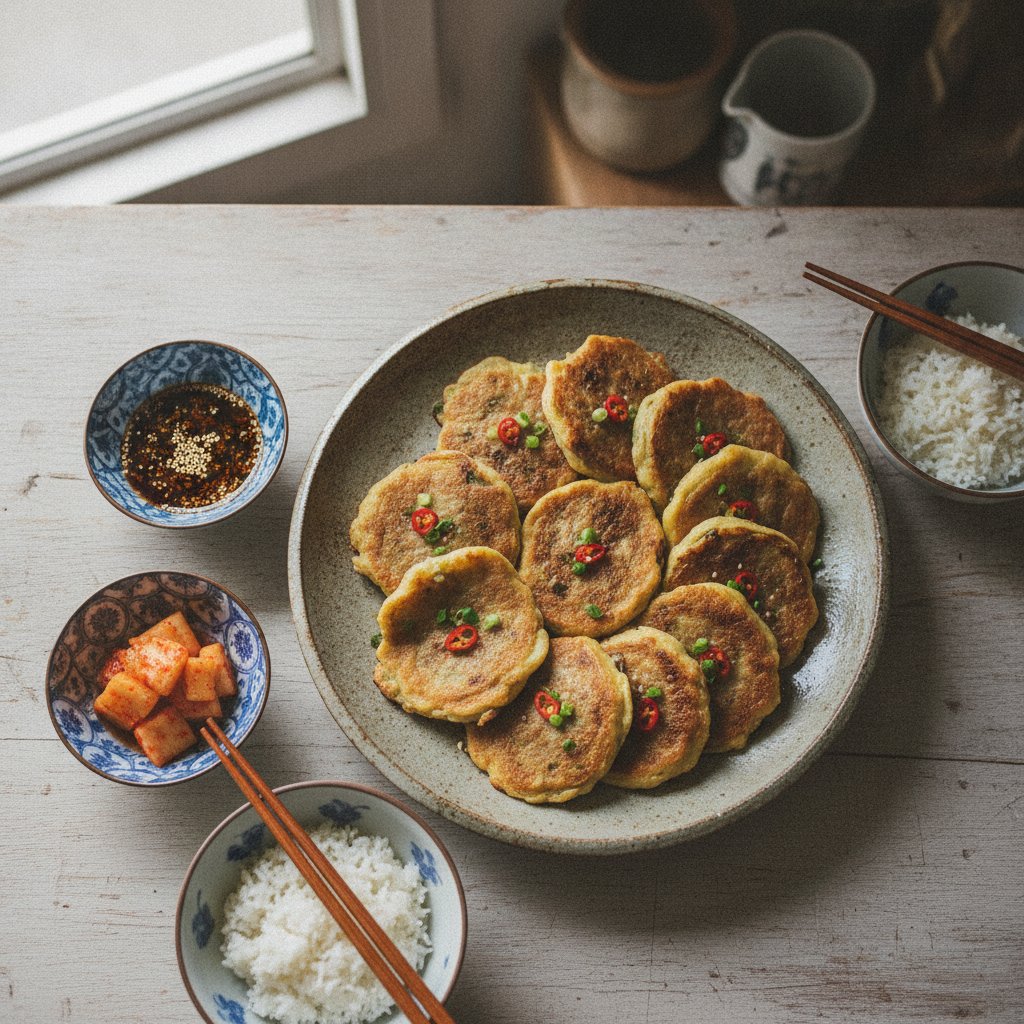
Stuffed Perilla Leaf Pancakes (Kkaennip Jeon)
This post contains affiliate links. As an Amazon Associate, we earn from qualifying purchases at no extra cost to you.
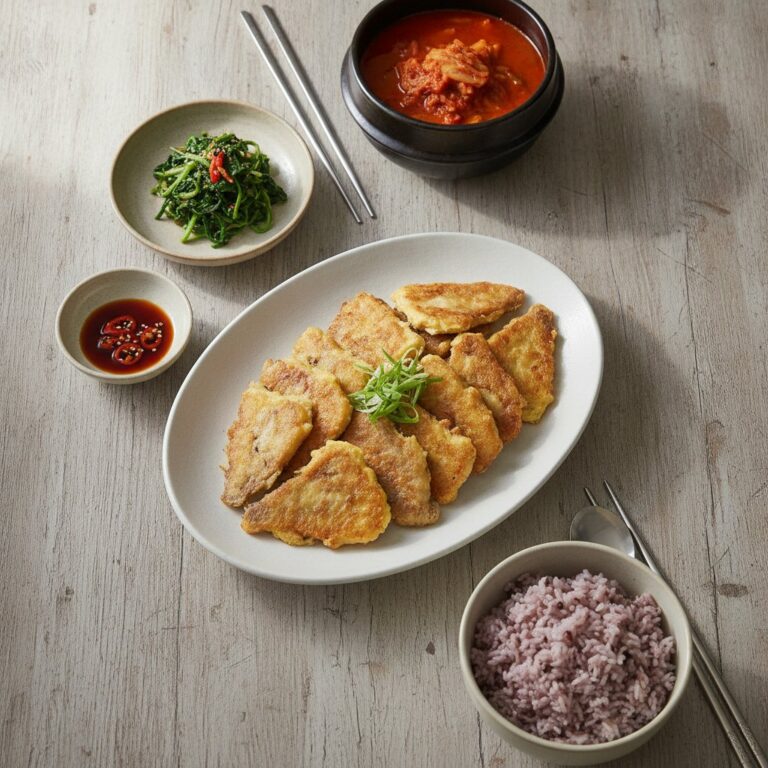
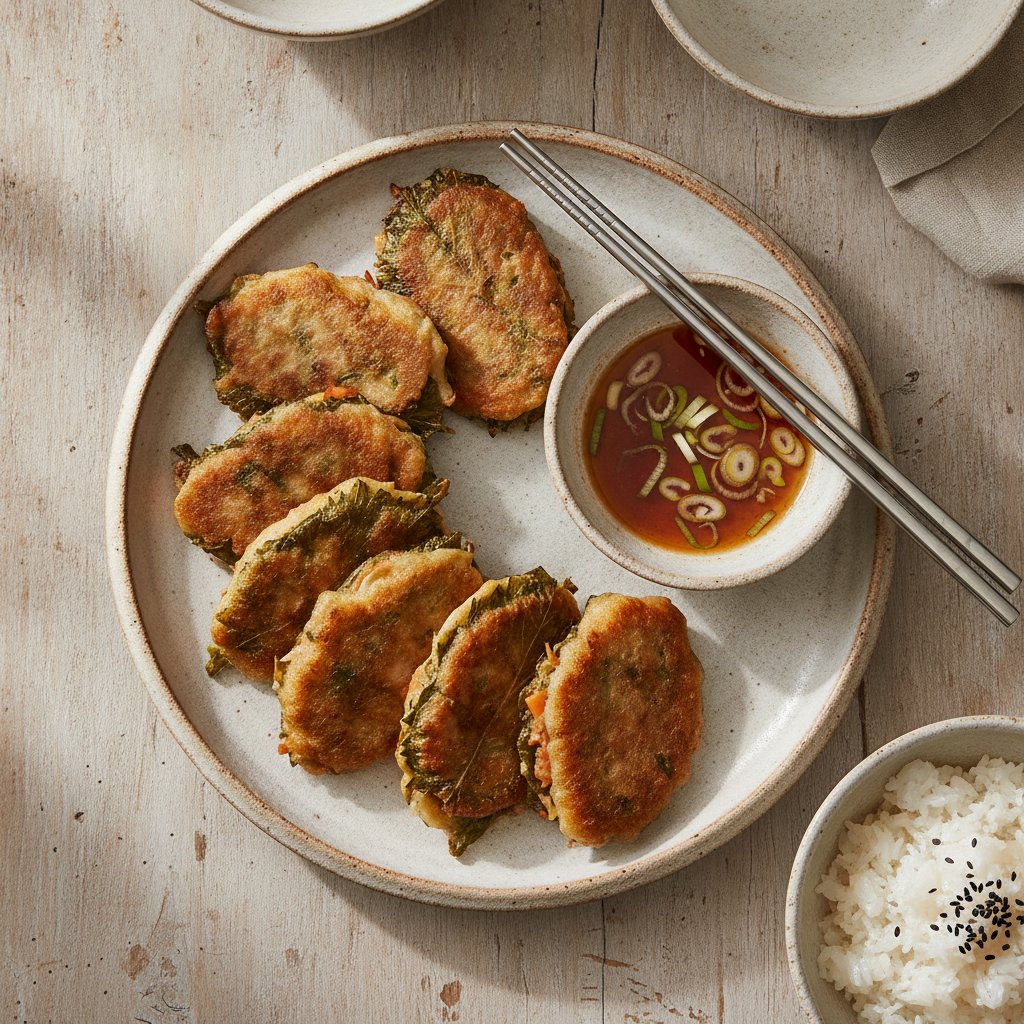
Every Chuseok morning in Seoul, my mother’s kitchen fills with the unmistakable smell of nutty sesame oil and sizzling egg batter. While my sister sets the brass bowls and my father chops fruit, my job has always been pan-frying the spread of savory pancakes known as jeon. Among all the options on the tray, kkaennip jeon (stuffed perilla leaf pancakes) are always the first to vanish. They offer a unique bite: a refreshing, earthy herb leaf holding a warm, savory pork and beef filling, wrapped in a thin, golden blanket of fried egg.
In Korea, kkaennip jeon appears frequently on holiday tables, at rainy-day gatherings accompanied by chilled makgeolli (rice wine), and as a special evening side dish (banchan). If you have never tasted fresh perilla leaves before, their distinct aroma—somewhat like mint combined with anise and a subtle pepper finish—is uniquely addictive. Wrapping this fragrant herb around a lightly seasoned meat and tofu stuffing creates a dish that feels indulgent yet light.
Making these stuffed perilla leaves at home is far simpler than it looks. While some traditional festival recipes require tedious rolling, this home-style method uses a simple fold-over technique that seals the filling securely and keeps every bite tender and juicy.
Why This Works
- Starch as velcro: Lightly dusting only the underside of the leaf with starch creates a tight, glue-like bond that locks the meat in place so it never separates during flipping.
- Pork and beef blend with tofu: Squeezed tofu retains moisture while ground beef provides robust structure and pork adds essential fats, preventing the filling from shrinking into a tough nugget.
- Gentle heat frying: Cooking over strictly medium-low heat gives the raw meat filling enough time to cook thoroughly before the delicate egg coating darkens or burns.
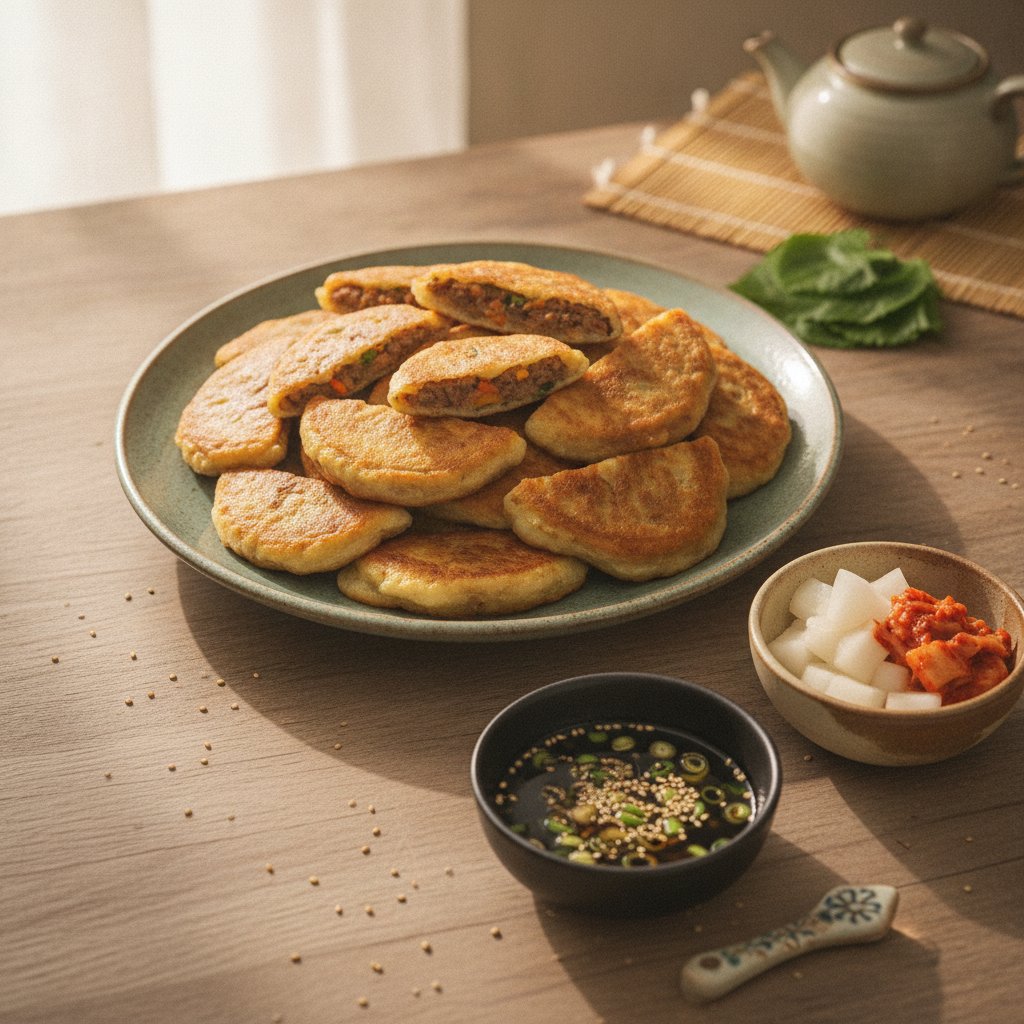
Ingredients
- 20 to 24 fresh perilla leaves (kkaennip), thoroughly washed and dried
- 150 g (about 5.3 oz) ground pork
- 150 g (about 5.3 oz) ground beef
- 100 g (about 3.5 oz) firm tofu, squeezed of liquid
- 50 g (about 1.8 oz or 1/4 small) yellow onion, extremely finely minced
- 2 green onions (scallions), finely chopped (about 30 g / 1 oz)
- 3 cloves garlic, finely minced (about 1 tbsp)
- 15 ml (1 tbsp) regular soy sauce
- 10 ml (2 tsp) toasted sesame oil
- 3 g (1/2 tsp) fine sea salt
- 1 g (1/4 tsp) freshly ground black pepper
- 45 g (about 3 tbsp) potato starch or all-purpose flour for dusting
- 2 large eggs, beaten
- 45 ml (3 tbsp) neutral cooking oil (canola, vegetable, or sunflower oil) for frying
Substitutions
Finding perilla leaves outside East Asia can sometimes be a challenge. If your local Asian market is out of stock, Japanese shiso leaves make a wonderful alternative; they are slightly smaller and a touch sweeter, but carry a similar herbaceous profile. If neither is available, fresh grape leaves can offer a similar wrapping shape, though the flavor profile will shift toward tangy rather than earthy.
For the dusting powder, potato starch provides a wonderfully light coating, but all-purpose flour, cornstarch, or tapioca starch work equally well. If you prefer a non-pork version, you can replace the pork with an equal amount of ground chicken or increase the ground beef to 300 g total.
🛒 Stuffed Perilla Leaf Pancakes
As an Amazon Associate we earn from qualifying purchases.
Shop Ingredients & Tools →How to Make It
-
Prep and dry the leaves thoroughly. Wash the perilla leaves gently in cold water. Pat each leaf completely dry using paper towels or a clean kitchen cloth. Trim away the long stem stems, leaving just a tiny 1/4-inch stub at the top for easy handling. Why this matters: Excess moisture on the leaf will turn the dusting flour into a gummy slurry, preventing the egg coating from adhering properly.
-
Drain and squeeze the tofu. Wrap the firm tofu in a kitchen towel or cheesecloth and squeeze aggressively over the sink to remove as much liquid as possible. You want the tofu to look dry and crumbly. Why this matters: Water trapped in the tofu will steam inside the leaf during frying, diluting seasonings and making the filling spongy rather than cohesive.
-
Mix the meat filling. In a large bowl, combine the ground pork, ground beef, squeezed tofu, minced onion, scallions, garlic, soy sauce, toasted sesame oil, salt, and black pepper. Use your hands to knead the mixture firmly for about 2 to 3 minutes until it becomes sticky, pale, and holds together easily. Why this matters: Kneading releases proteins in the meat, creating a cohesive, smooth paste that sticks together inside the leaf without crumbling when cut.
-
Dust the leaves with starch. Lay a perilla leaf flat on a cutting board with its textured, dull underside facing up and its shiny green side facing down. Dust a light layer of potato starch over the dull side using a fine mesh strainer or clean fingers. Shake off any heavy excess flour. Why this matters: The rough underside absorbs the starch better than the smooth front side, creating a reliable adhesive layer for the raw meat filling.
-
Stuff and fold the leaf. Take roughly 1 tablespoon (about 20-25 g) of meat filling and flatten it into a thin semi-circle over one half of the leaf’s rough side, leaving a narrow clear border along the outer edge. Fold the bare half of the leaf over the meat to form a half-moon shape. Press gently around the stuffed bulge to push out trapped air pockets and seal the edges. Repeat with the remaining leaves. Why this matters: Trapped air pockets expand when heated, causing the leaf to burst open and release juices into the hot oil.
-
Dust the outside and coat in egg. Lightly dust both outer sides of the folded leaf with a tiny pinch of starch, tapping off the excess. Just before placing into the skillet, dip the folded packet into the bowl of beaten egg, ensuring all surfaces are lightly coated. Why this matters: The light outer starch layer holds the egg coating smoothly onto the leaf’s slippery, shiny outer skin.
-
Fry over gentle heat. Heat 2 tablespoons of neutral oil in a large non-stick skillet over medium-low heat. Lay the egg-dipped stuffed leaves carefully into the skillet in a single layer without overcrowding. Fry gently for 3 to 4 minutes on the first side until the underside turns a soft light gold and the meat inside feels firmer. Flip carefully and fry the second side for another 3 to 4 minutes. Transfer to a paper-towel-lined plate. Why this matters: High heat will cook the exterior egg coating instantly while leaving the raw meat cold and raw inside. Medium-low heat ensures slow, even heat penetration.
Tips from a Korean Kitchen
The single most common mistake beginners make with kkaennip jeon is overfilling the leaves. It can be tempting to scoop a heavy ball of meat onto the herb, but thick fillings require long cooking times that cause the perilla leaf to lose its bright color and turn brown. A thin layer—about 1/3 inch thick—cooks rapidly and keeps the balance between leaf and meat ideal.
Another key practice in Korean home cooking is wiping down the pan between batches. As you cook multiple rounds of jeon, stray bits of egg batter fall off into the skillet and brown quickly. Wiping the pan with a paper towel and adding a fresh splash of oil before starting a new batch keeps your finished pan-fried leaves clean, bright, and golden.
Finally, keep your stove dial set to medium-low. If you hear loud, aggressive crackling when the batter hits the pan, lower your heat source immediately. You want a soft, quiet sizzle.
Storage
Stuffed perilla leaves are best enjoyed hot right out of the pan, but leftovers keep surprisingly well. Store completely cooled extra pieces in an airtight container lined with a paper towel in the refrigerator for up to 3 days.
To freeze, arrange cooked and cooled pancakes in a single layer on a baking sheet lined with parchment paper. Freeze until solid (about 2 hours), then transfer them to a freezer-safe bag for up to 1 month. Reheat directly from frozen on a dry non-stick skillet over low heat until warmed through and crisp. Avoid using the microwave, as it makes the egg batter wet and chewy.
🛒 Stuffed Perilla Leaf Pancakes
As an Amazon Associate we earn from qualifying purchases.
Shop Ingredients & Tools →FAQ
Can I make the filling without tofu?
Yes, you can omit the tofu entirely and use strictly ground meat. If you skip the tofu, consider adding an extra tablespoon of finely minced scallions or onions to preserve moisture inside the meat patty so it doesn’t dry out during cooking.
Why is my egg coating sliding off the leaves?
Egg coating slips off when the surface of the leaf is wet or lacks a starch layer. Make sure your perilla leaves are completely dry before assembly, and do not skip dusting the outside of the leaf with flour or starch before dipping it into the beaten egg.
What dipping sauce pairs best with kkaennip jeon?
A classic Korean soy-vinegar sauce (choganjang) balances the rich fried texture perfectly. Simply mix 1 tablespoon of soy sauce, 1/2 tablespoon of rice vinegar, 1/2 tablespoon of water, a pinch of toasted sesame seeds, and a few thin slices of fresh chili pepper.
More Korean Recipes
- Creamy Korean Corn Cheese (콘치즈)
- Gyeran Jjim (Korean Steamed Eggs): Always Fluffy
- Jangjorim Recipe: Authentic Korean Soy-Braised Beef and Eggs
- Eomuk Bokkeum (Stir-Fried Fish Cakes): Your New Favorite Lunchbox Side Dish
🛒 Stuffed Perilla Leaf Pancakes
As an Amazon Associate we earn from qualifying purchases.
Shop Ingredients & Tools →