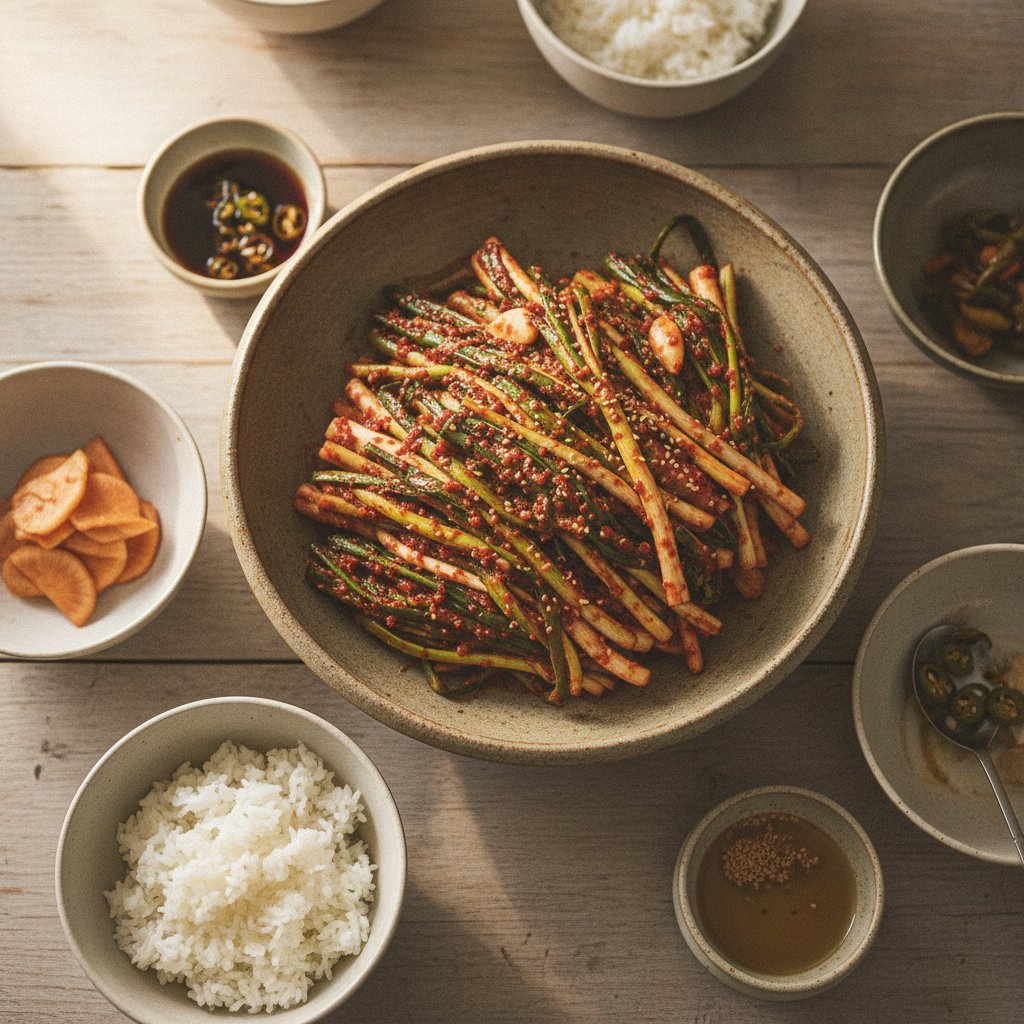
Traditional Pa Kimchi Recipe: Korean Green Onion Kimchi
This post contains affiliate links. As an Amazon Associate, we earn from qualifying purchases at no extra cost to you.
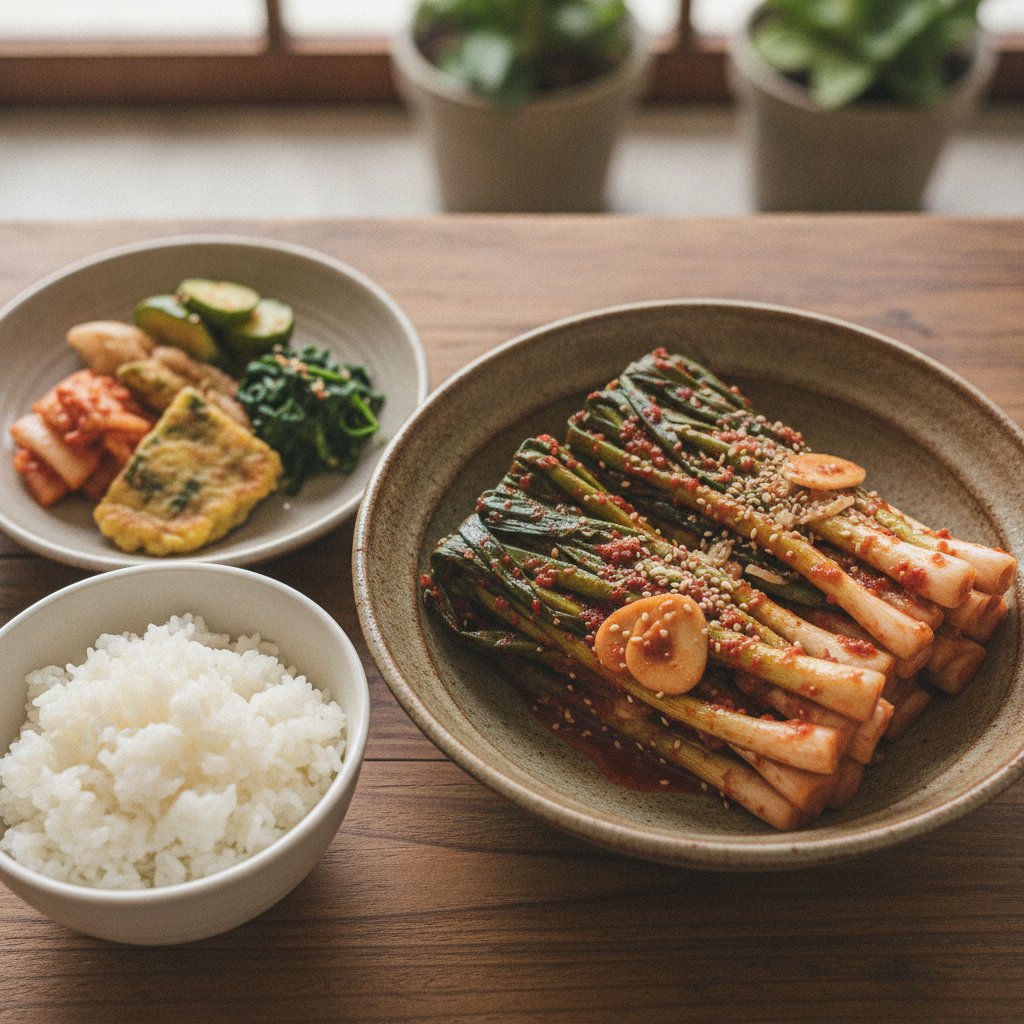
When late spring arrives in Seoul, neighborhood traditional markets turn into sea-green carpets of fresh scallions. My grandmother used to buy three massive bundles at a time, carrying them home in woven plastic baskets that rattled as we walked up the alley. In my family, making pa kimchi (green onion kimchi) was always a sign that warmer days were coming. While cabbage kimchi requires hours of salting, quartering, and tedious leaf-by-leaf stuffing, green onion kimchi is remarkably quick and forgiving. The primary work involves sitting around a wide plastic tub, trimming long green roots, and catching up on neighborhood gossip while soaking the thick scallion bulbs in savory fish sauce.
If you have ever visited a Korean barbecue restaurant, you might have tasted this pungent, savory side dish served alongside sizzling cuts of samgyeopsal (grilled pork belly). The sharp, allium bite of the green onion cuts through rich, fatty meat like nothing else. In Korean home kitchens, it is equally famous as the ultimate companion to a piping hot bowl of instant ramyeon (noodle soup) or a rich, dark dish of jjajangmyeon (black bean noodles). The beauty of this green onion kimchi recipe lies in how effortlessly the raw, fiery heat of the scallions mellows out over a few days into a complex, sweet, and tangy ferment that brightens any meal.
Why This Works
- Salting directly in fish sauce: Unlike cabbage kimchi which relies on coarse salt water, scallions are seasoned exclusively in liquid fish sauce. Pours concentrating on the thick white bulbs draw out excess moisture while infusing deep savory umami directly into the core of the vegetable.
- Glutinous rice flour binder: Cooking a quick starch porridge creates a glossy, viscous paste that clings effortlessly to the smooth, slippery surface of green onion stalks rather than sliding off to the bottom of the container.
- Balanced natural sweetness: Incorporating a hint of sugar or traditional fruit syrup tempers the intense sulfur compounds in fresh scallions, accelerating smooth fermentation without leaving a sticky or cloying aftertaste.
>
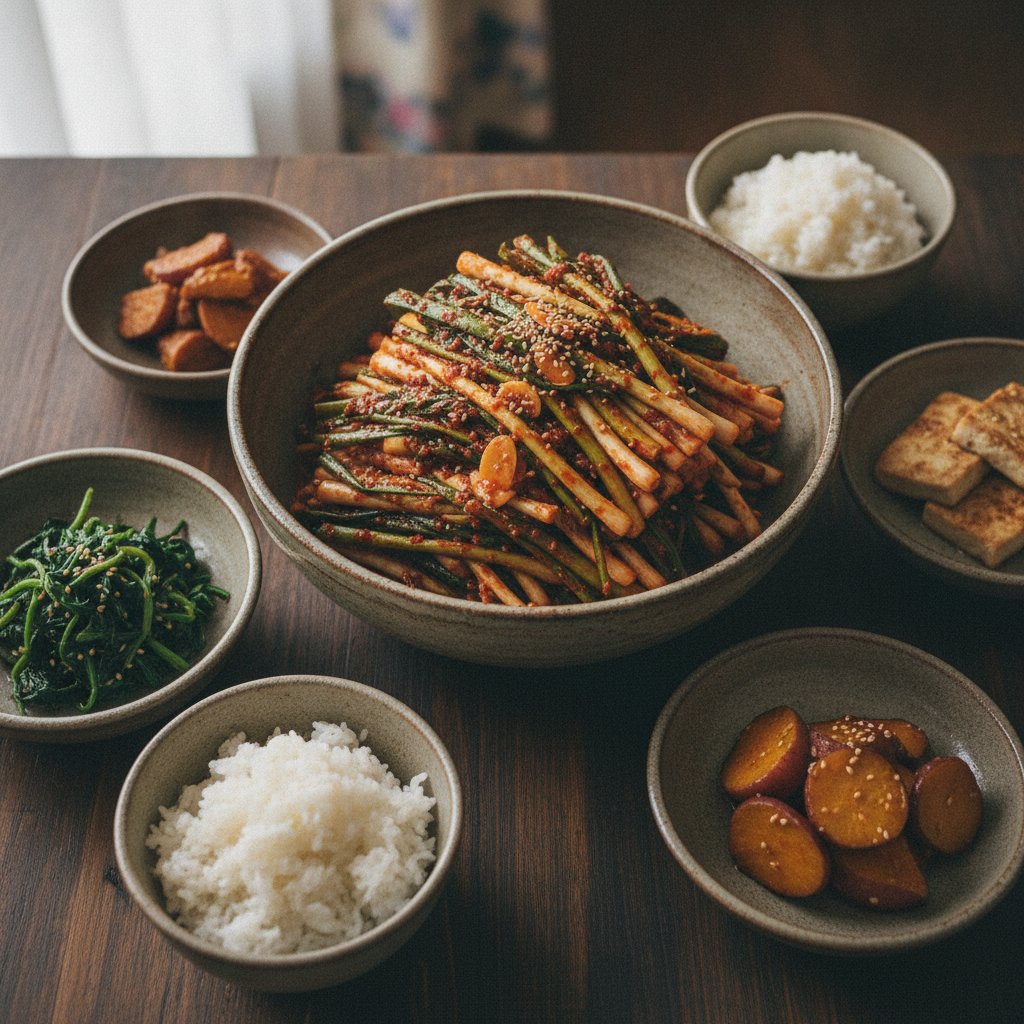
Ingredients
- 700 g (about 1.5 lbs) fresh green onions (scallions), trimmed and washed thoroughly
- 120 ml (about 1/2 cup) Korean anchovy sauce (myeolchi aekjeot) or liquid fish sauce
- 60 g (about 3/4 cup) coarse Korean red pepper flakes (gochugaru)
- 3 tbsp (about 45 ml) glutinous rice flour (sweet rice flour)
- 240 ml (about 1 cup) water
- 2 tbsp (about 30 g) finely minced garlic
- 1 tsp (about 5 g) finely grated fresh ginger
- 2 tbsp (about 25 g) white granulated sugar or Korean plum syrup (maesil cheong)
- 2 tbsp (about 18 g) toasted sesame seeds
Substitutions
Finding traditional Korean ingredients at local Western supermarkets is easier today than ever, but realistic substitutions keep this dish accessible wherever you live:
- Korean Anchovy Sauce: You can easily substitute standard Southeast Asian fish sauce (such as Three Crabs or Red Boat). Because non-Korean fish sauces can sometimes be slightly saltier, reduce the amount by one tablespoon and splash in a tablespoon of water if needed. For a vegan version, mix standard light soy sauce with Yondu vegetable seasoning or dissolved kelp powder.
- Glutinous Rice Flour: Sweet rice flour (like Mochiko brand) is standard, but you can substitute regular all-purpose flour or even cooked white rice blended smooth with a few tablespoons of water. The goal is simply creating a mild starch glue for the chili paste.
- Korean Red Pepper Flakes (Gochugaru): There is no direct substitute for genuine coarse gochugaru because it offers a fruity, mild heat with vibrant red color. Standard Western chili powder contains added spices like cumin, and cayenne pepper is far too spicy. If necessary, coarse red chili flakes blended with a touch of sweet paprika can work in a pinch.
🛒 Traditional Pa Kimchi Recipe
As an Amazon Associate we earn from qualifying purchases.
Shop Ingredients & Tools →How to Make It
- Prep and dry the green onions: Trim off the stringy root ends and peel away any slimy outer layers from the white bulbs. Wash the scallions thoroughly in cold water to remove residual dirt. Pat them completely dry with clean kitchen towels. Why: Excess water clinging to the stalks dilutes your seasoning paste and increases the chance of mold or watery, bland fermentation.
- Season the bulbs in fish sauce: Place the dried green onions in a large, wide tray or shallow bowl with all the white bulbs aligned at one end. Pour 120 ml (1/2 cup) of fish sauce directly over the white bulbs and lower stems. Let them rest for 30 minutes, turning the bulbs over halfway through so they soak evenly. Why: The thick white bulbs take significantly longer to absorb salt and soften than the tender green leaves. Pre-soaking the bulbs balances texture so the entire scallion ferments evenly.
- Cook the starch porridge: While the onions are soaking, combine 3 tbsp glutinous rice flour and 240 ml (1 cup) water in a small saucepan over medium heat. Whisk continuously for 2 to 3 minutes until the mixture thickens into a translucent, bubbling paste. Remove from heat and let it cool completely to room temperature. Why: Cooking the starch gelatinizes the flour, creating a binder that coats smooth vegetables. Letting it cool completely prevents the hot paste from cooking the raw garlic and ginger or wilting the onions prematurely.
- Mix the kimchi seasoning paste: Gently tilt the tray of green onions and drain off all accumulated fish sauce into a mixing bowl. To this drained fish sauce, add the cooled rice porridge, 60 g gochugaru, minced garlic, grated ginger, sugar (or plum syrup), and toasted sesame seeds. Stir thoroughly until a thick, shiny crimson paste forms. Let the paste sit for 10 minutes. Why: Resting the paste allows the dried red pepper flakes to absorb the liquid, blooming into a rich color and thick consistency that spreads evenly.
- Coat and bundle the scallions: Take small hand-sized bundles of green onions (about 5 to 7 stalks). Using gloved hands, gently rub the spice paste over the entire length of the onions, applying slightly more paste near the white bulbs. Fold the green tops over the white bulbs and wrap one green stalk around the middle to tie each cluster into a neat bundle. Why: Tying scallions into individual bundles prevents long stems from tangling into a messy knot inside your jar, making serving clean and simple later.
- Pack and ferment: Pack the bundled green onions tightly into a clean glass jar or food-safe airtight container, pressing down firmly to minimize air pockets. Leave about 1 to 2 inches of space at the top. Seal the lid loosely and let the container sit at cool room temperature for 24 to 48 hours out of direct sunlight. Why: Initial room-temperature exposure kickstarts the beneficial lactic acid bacteria fermentation. Pressing down eliminates trapped air that could encourage unwanted spoilage.
Tips from a Korean Kitchen
The secret to exceptional green onion kimchi comes down to selecting the right produce at the store. Look for scallions with clean, sturdy white bases that are roughly the thickness of a pencil. Avoid thick, overly thick bulbs—they tend to be tough, woody, and intensely bitter inside. On the flip side, whisper-thin scallions wilt into mush once salted.
Always wear disposable kitchen gloves when rubbing the chili paste over the onions. The combination of concentrated fish sauce, raw garlic, and red pepper flakes will stain your hands and leave a lingering spice that easily burns skin or eyes hours later. In my mother’s home, wearing thick pink rubber gloves for kimchi duty is non-negotiable!
Never skip the cooling step for the starch porridge. If you pour lukewarm or hot porridge over raw scallions, you end up blanching the delicate green leaves. Blanched greens lose their vibrant snap and develop a swampy, overcooked flavor during the fermentation process.
Storage
Once you notice small bubbles forming along the sides of your jar and smell a subtle, pleasant sour aroma (usually after 24 to 48 hours at room temperature), tighten the lid and move your pa kimchi to the refrigerator. Cold refrigeration slows down fermentation significantly, allowing flavors to mature gradually.
Green onion kimchi is ready to enjoy after about 3 to 5 days in the fridge, reaching its absolute peak flavor between weeks two and four. It remains delicious for up to 2 months. As the weeks go on, the scallions will turn deeper forest green and develop a strong, sour punch. Do not throw aged pa kimchi away! Deeply sour, aged green onion kimchi is prized in Korean home cooking as a flavor base for stir-frying with pork belly or simmering into rich stew broth.
🛒 Traditional Pa Kimchi Recipe
As an Amazon Associate we earn from qualifying purchases.
Shop Ingredients & Tools →FAQ
Why is my green onion kimchi so spicy and sharp right after making it?
Raw green onions contain high levels of natural sulfur compounds that create a strong, stinging sharpness similar to raw garlic. This fiery bite is completely normal when the kimchi is freshly made. As the kimchi ferments over several days in the refrigerator, beneficial bacteria break down these harsh compounds, transforming the sharpness into a smooth, sweet, and tangy flavor profile.
Can I make green onion kimchi without fish sauce?
Yes! To make a delicious vegetarian or vegan version, replace the fish sauce with an equal amount of Korean soup soy sauce (guk-ganjang) or premium tamari, mixed with 1/2 teaspoon of kelp powder or a splash of mushroom broth concentrate. This maintains the essential salty umami base necessary for proper fermentation without using seafood products.
How do I know when my pa kimchi is ready to move to the fridge?
Look for visual cues rather than relying strictly on time. Gently press down on the green onions inside your container using a clean spoon. If tiny gas bubbles rise to the surface and you smell a slightly tangy, pickled aroma instead of raw onions, your kimchi has begun fermenting successfully and is ready to transfer to cold storage.
More Korean Recipes
- Creamy Korean Corn Cheese (콘치즈)
- Gyeran Jjim (Korean Steamed Eggs): Always Fluffy
- Jangjorim Recipe: Authentic Korean Soy-Braised Beef and Eggs
- Eomuk Bokkeum (Stir-Fried Fish Cakes): Your New Favorite Lunchbox Side Dish
🛒 Traditional Pa Kimchi Recipe
As an Amazon Associate we earn from qualifying purchases.
Shop Ingredients & Tools →