Easy Baechu Namul (Korean Blanched Cabbage Side Dish)
This post contains affiliate links. As an Amazon Associate, we earn from qualifying purchases at no extra cost to you.
Savoring Simple Korean Home Cooking
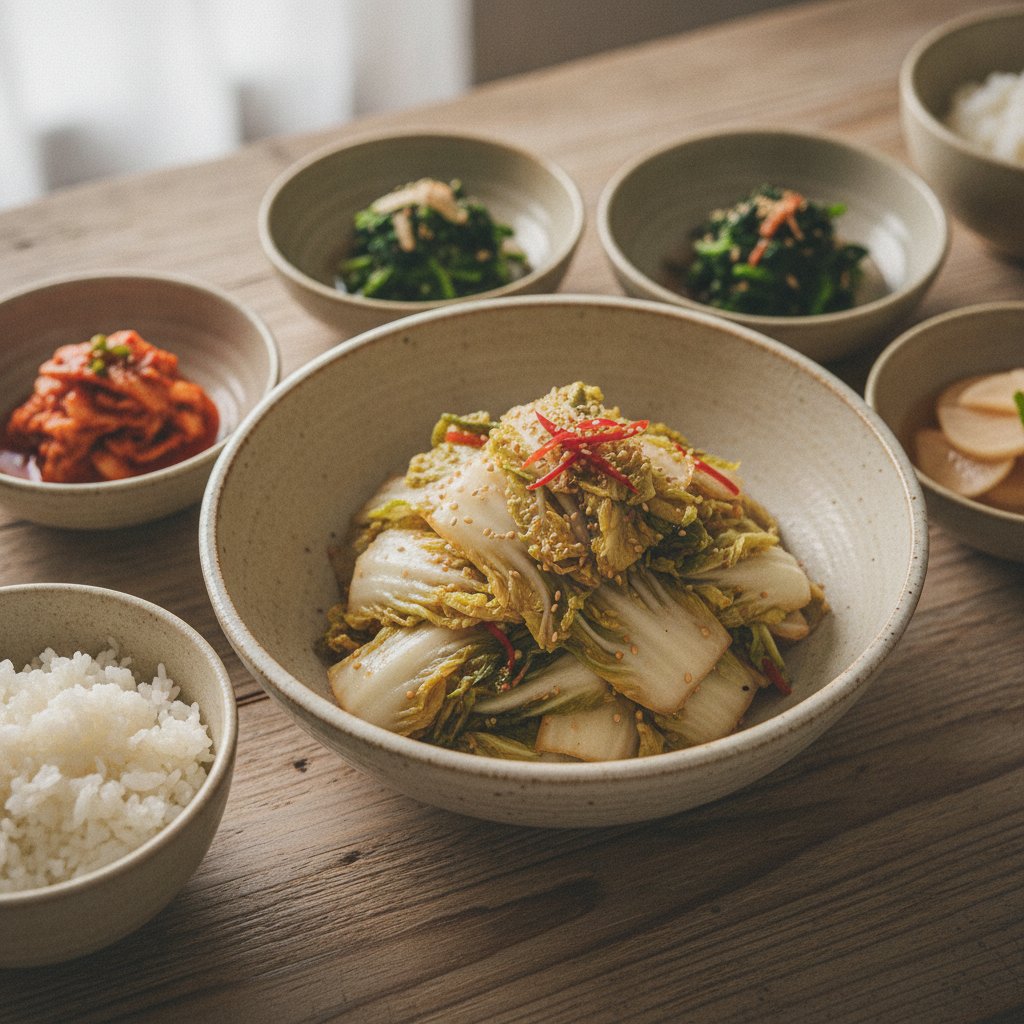
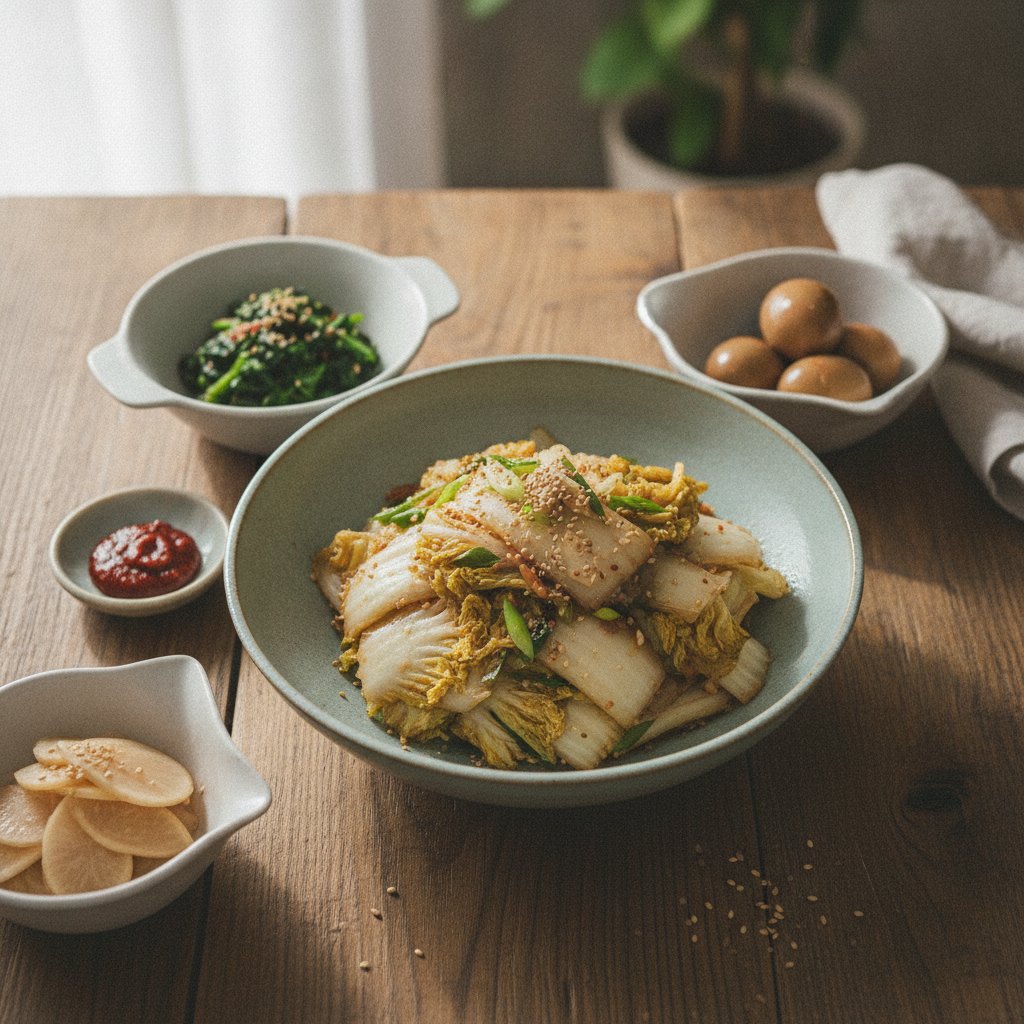
On crisp autumn afternoons in Seoul, my mother would buy dozens of heads of napa cabbage to prepare for kimjang, the annual winter kimchi-making ritual. But before any red chili powder touched the leaves, she always set aside a handful of tender inner leaves to make baechu namul (seasoned blanched napa cabbage). Steaming hot white rice, a drop of fresh toasted sesame oil, and a light bowl of this lightly seasoned cabbage was our simple reward after hours of prepping vegetables in the cold kitchen.
In Korean cooking, the word namul refers both to edible greens and the seasoned vegetable dishes made from them. While western cooks often think of Korean food as fiery and heavily spiced, everyday home meals rely heavily on gentle, mild side dishes like this one. Baechu namul highlights the natural, subtle sweetness of napa cabbage through quick blanching and light seasoning. It serves as an essential staple banchan (side dish) in Korean households because it balances stronger, spicier mains like jeyuk bokkeum (spicy stir-fried pork) or kimchi jjigae (kimchi stew).
If you have ever bought a massive head of napa cabbage at the store for a single stir-fry and wondered what to do with the leftover cabbage sitting in your produce drawer, this recipe is your answer. It comes together in under 15 minutes, uses basic pantry ingredients, and brings genuine Seoul-style comfort to your dinner table.
Why This Works
- Staggered blanching keeps textures crisp: Dropping the thick white stems into boiling water before the leafy tops ensures the entire vegetable cooks evenly without turning the leaves mushy.
- Double-squeezing prevents soggy seasoning: Removing excess moisture before tossing with sesame oil and soy sauce allows the savory seasonings to cling directly to the cabbage rather than getting diluted in pool water.
- Minimalist seasoning lets natural sweetness shine: Relying on soup soy sauce and toasted sesame oil enhances the cabbage’s natural taste without overwhelming its delicate flavor.
🛒 Easy Baechu Namul
As an Amazon Associate we earn from qualifying purchases.
Shop Ingredients & Tools →Ingredients
- 500 g (about 1.1 lbs) Napa cabbage leaves (about half a medium head)
- 15 g (about 1 tbsp) coarse sea salt or kosher salt (for blanching water)
- 1 clove garlic, finely minced (about 5 g / 1 tsp)
- 1 green onion, finely chopped (about 15 g / 2 tbsp)
- 10 ml (2 tsp) Korean soup soy sauce (guk-ganjang) or regular light soy sauce
- 10 ml (2 tsp) toasted sesame oil (such as Ottogi brand)
- 5 g (1 tsp) toasted sesame seeds
- 1 pinch fine salt (optional, to adjust taste at the end)
Substitutions
If you cannot find specific Korean specialty items at your local supermarket, these easy swaps will still deliver wonderful results:
- Napa Cabbage: Savoy cabbage or sweet pointed cabbage makes a fine alternative. Standard green cabbage can work, but require an extra 30 to 45 seconds of blanching time because its leaves are much tougher and less naturally sweet.
- Korean Soup Soy Sauce (Guk-Ganjang): Korean soup soy sauce is salty, clear, and rich in umami without adding sugar. If you only have regular light soy sauce from a Western supermarket, use 2 teaspoons of light soy sauce plus a tiny pinch of sea salt. Avoid dark soy sauce or sweet soy sauces, as they alter both color and flavor profile completely.
- Toasted Sesame Oil: Always look for dark, toasted sesame oil rather than light cold-pressed sesame oil. Japanese or Korean brands like Ottogi or Kadoya provide the deep, nutty aroma necessary for authentic namul dishes.
How to Make It
- Prep and slice the cabbage: Separate the napa cabbage leaves from the core. Wash them thoroughly under cold running water to remove any trapped dirt. Stack 3 to 4 leaves at a time and slice them crosswise into 2-inch wide pieces. Keep the thick white stem pieces and the tender green leaf tops in separate piles on your cutting board. Why: The white stems require slightly longer cooking time than the delicate leaf tips.
- Boil and salt the water: Bring about 2 liters (roughly 2 quarts) of water to a rolling boil in a deep stockpot over high heat. Add 1 tablespoon of coarse sea salt. Why: Salted boiling water seasons the cabbage internally while helping preserve its vivid green color during blanching.
- Blanch in stages: Drop the thick white cabbage stems into the boiling water first. Let them boil for 30 seconds. Then, submerge the green leaf pieces into the pot. Stir gently with tongs or wooden chopsticks to ensure everything stays under water. Blanch together for another 60 to 90 seconds until the thick white stems look translucent and feel slightly pliable when pressed, about 2 minutes total blanching time. Why: Blanching removes harsh raw vegetable notes while retaining a satisfying tender-crisp texture.
- Shock in cold water: Immediately drain the cabbage in a colander and plunge it into a large bowl filled with cold tap water and ice cubes. Swirl the cabbage around until it cools completely. Why: Ice baths instantly stop residual heat from overcooking the vegetables and turning them soft.
- Squeeze out excess moisture: Grab a manageable handful of cooled cabbage and press it firmly between your palms to squeeze out as much water as possible. Place squeezed bundles on a clean cutting board, loosen them up with your fingers, and squeeze them one more time gently. Why: Retained water dilutes your soy sauce and sesame oil, leaving you with a watery, tasteless dish.
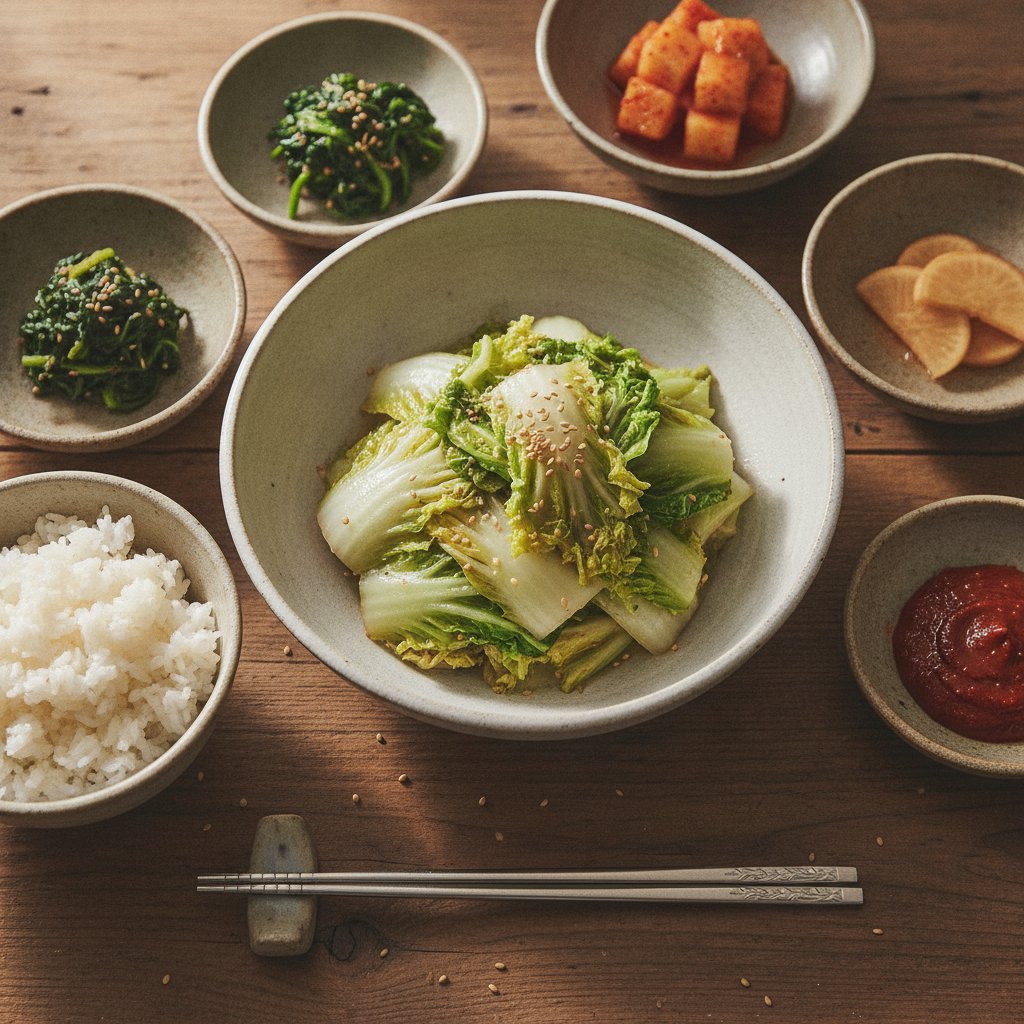
- Season and toss: Place the squeezed cabbage into a medium mixing bowl. Separate the clumped leaves with your fingers. Add the minced garlic, chopped green onion, soup soy sauce, toasted sesame oil, and toasted sesame seeds. Using a gloved hand or clean fingers, gently massage and toss the ingredients together for 30 to 45 seconds until every leaf is coated in the fragrant oil and soy sauce. Taste one leaf and add a small pinch of fine salt if desired. Why: Massaging by hand helps infuse aromatic seasonings directly into the cabbage folds better than tossing with spoons.
🛒 Easy Baechu Namul
As an Amazon Associate we earn from qualifying purchases.
Shop Ingredients & Tools →Tips from a Korean Kitchen
In Korean homes, making namul is less about strict measurement and more about feeling the balance of seasonings with your hands. Here are practical tips to keep in mind:
- Master the crush technique for sesame seeds: Rather than dumping whole sesame seeds into the bowl, rub them between your thumb and index finger as you sprinkle them over the cabbage. Crushing the seeds releases their aromatic oils instantly, doubling the nuttiness of your side dish.
- Try the rustic soybean paste variation: While this recipe uses soy sauce for a light, clean flavor, many traditional home cooks in rural Korea prefer doenjang namul. Simply replace the soup soy sauce with 1 tablespoon of Korean soybean paste (doenjang) mixed with 1/2 teaspoon of sugar for a richer, earthy side dish.
- Season right before serving: Cabbage naturally draws out moisture over time once salted. If you are preparing a large meal, blanch and squeeze the cabbage ahead of time, but hold off on tossing it with sesame oil and soy sauce until 10 minutes before sitting down to eat.
Storage
Store leftover baechu namul in an airtight glass container in the refrigerator for up to 3 to 4 days. Because salt continues to draw out natural moisture from the cabbage over time, you may see a little liquid pool at the bottom of the container by the second day. Simply drain excess liquid and toss the cabbage gently with your chopsticks before serving.
Do not freeze this dish. Freezing breaks down the delicate cell walls of blanched cabbage, causing it to become soggy and limp upon thawing. Always serve baechu namul cold or at cool room temperature—never microwave or reheat it with heat.
FAQ
Can I use regular green cabbage for this korean cabbage namul recipe?
Yes, you can use regular western green cabbage if napa cabbage is unavailable. Cut it into thin ribbons rather than large chunks and extend the blanching time by about 45 seconds until the pieces are tender-crisp. Keep in mind green cabbage is slightly less sweet than napa cabbage.
Why did my cabbage namul turn out watery and flavorless?
Watery namul happens when blanched vegetables are not squeezed tightly enough before seasoning. Water left in the leaves dilutes the oil and soy sauce completely. Make sure to squeeze small handfuls of cabbage firmly twice before adding seasonings to your mixing bowl.
Is baechu namul spicy?
No, authentic baechu namul is completely mild and non-spicy. It relies on garlic, toasted sesame oil, and soy sauce for flavor, making it a great vegetable side dish for children or anyone sensitive to spicy food.
🛒 Easy Baechu Namul
As an Amazon Associate we earn from qualifying purchases.
Shop Ingredients & Tools →More Korean Recipes
- Creamy Korean Corn Cheese (콘치즈)
- Gyeran Jjim (Korean Steamed Eggs): Always Fluffy
- Jangjorim Recipe: Authentic Korean Soy-Braised Beef and Eggs
- Eomuk Bokkeum (Stir-Fried Fish Cakes): Your New Favorite Lunchbox Side Dish
🛒 Easy Baechu Namul
As an Amazon Associate we earn from qualifying purchases.
Shop Ingredients & Tools →