Slow Braised Pork Rib Kimchi Jjim Recipe
This post contains affiliate links. As an Amazon Associate, we earn from qualifying purchases at no extra cost to you.
On rainy Tuesday evenings in Seoul, when nobody in my apartment building wants to spend hours standing over a stove, you can smell sour kimchi simmering down every hallway. There is a quiet comfort in listening to a heavy pot bubble on low heat while rain hits the window pane. In my family, whenever the tub of kimchi sitting in the back of the fridge grew far too sour to eat raw, my mother would smile, pull out a rack of pork ribs, and announce that dinner was taking care of itself. That is the magic of kimchi jjim (braised kimchi with pork).
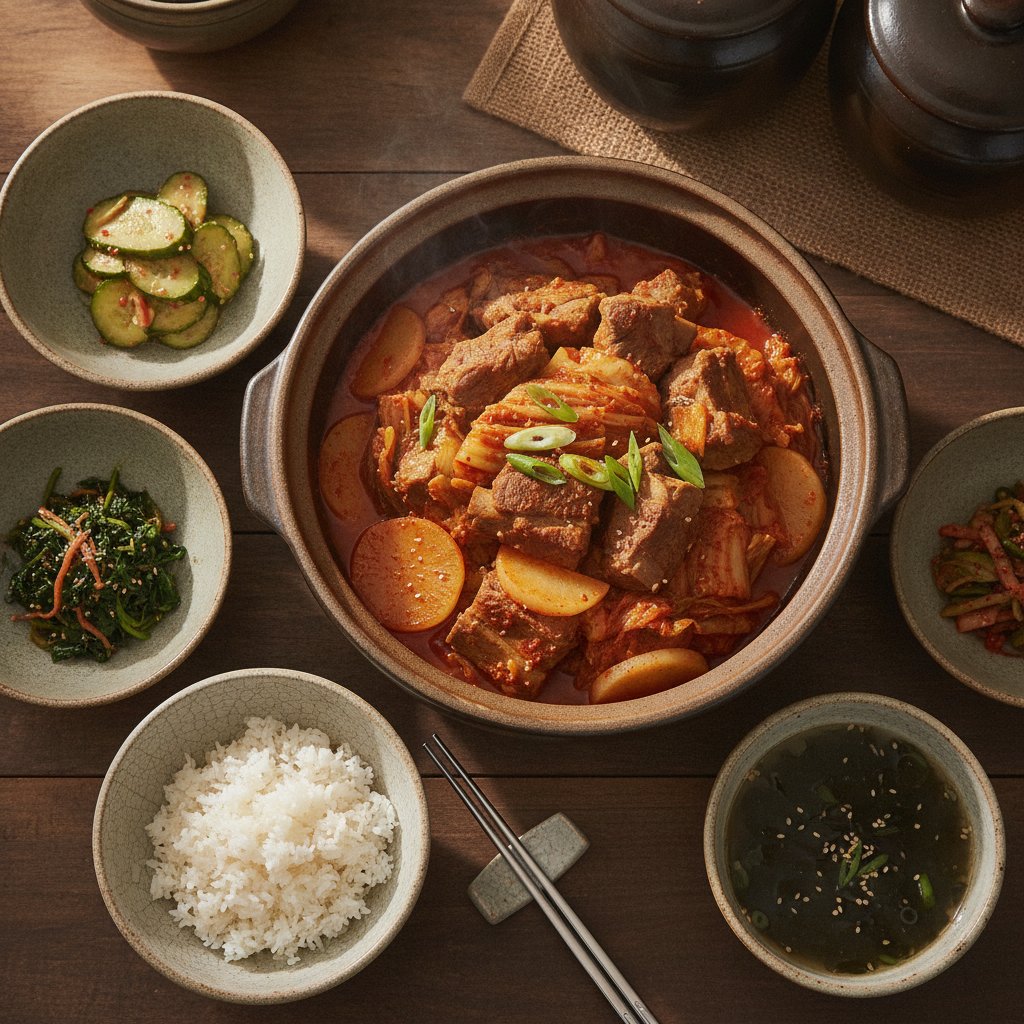
Unlike kimchi jjigae (kimchi stew), which is soupier and cooks quickly, kimchi jjim is a low-and-slow dish. Whole leaves of aged kimchi wrapped around tender pork ribs cook down until the cabbage becomes buttery soft and the pork pulls away from the bone with nothing more than a gentle press of a chopstick. It is the quintessential Korean comfort food—rich, deeply savory, tart, and gently spicy. The best part for home cooks outside Korea is that it requires very little active effort. Once everything is in the pot, the stove does all the heavy lifting.
Why This Works
- Browning the ribs creates depth: Searing the pork ribs first renders out fat that coats the acidic cabbage leaves, smoothing out the harsh bite of fermented kimchi and creating a rich, silky sauce base.
- Gentle braising breaks down collagen: Slow-simmering tough rib meat in an acidic liquid tenderizes the muscle fibers over time without drying out the pork, giving you melt-in-your-mouth ribs.
- Layering prevents scorching: Nesting sliced onions and whole kimchi leaves under the pork creates a moisture shield at the bottom of the pot, allowing the braise to simmer steadily for an hour without burning.
Ingredients
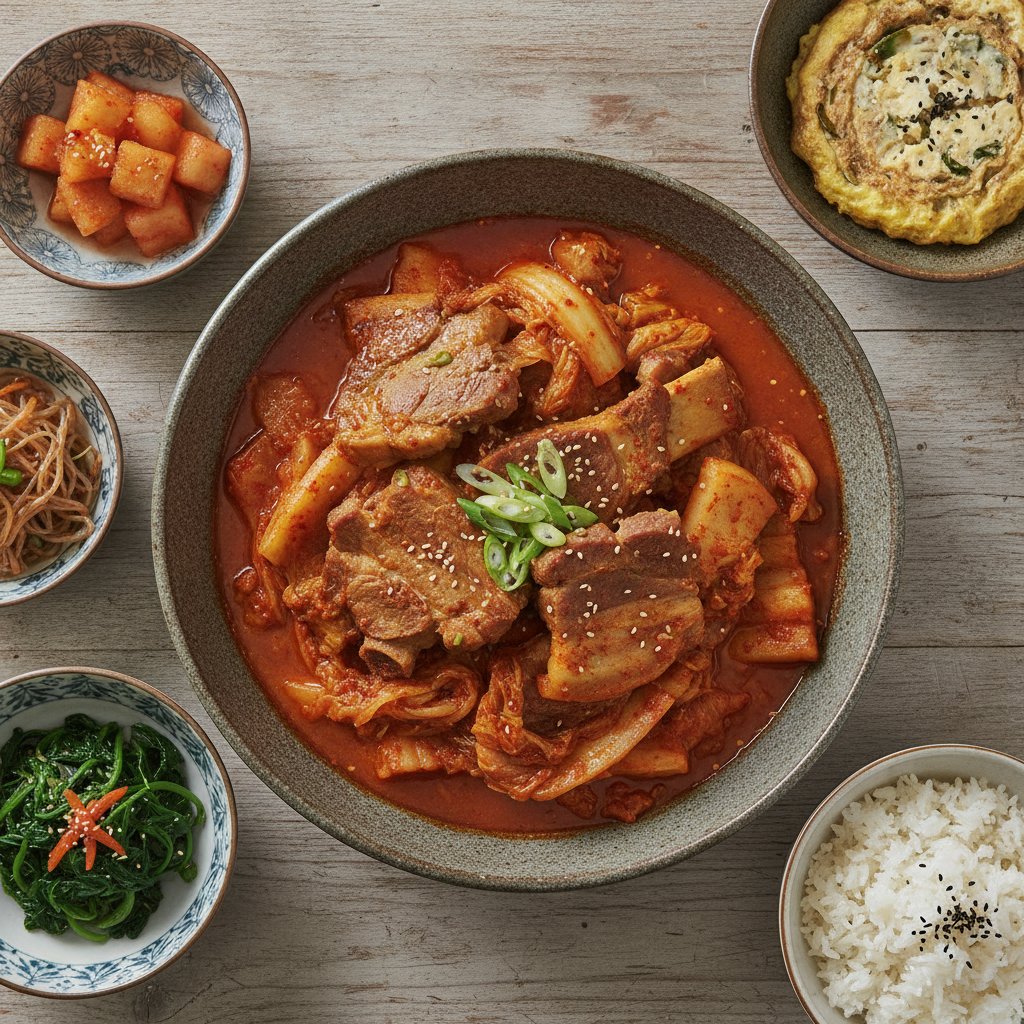
- 800 g (about 1.75 lbs) pork baby back ribs or spare ribs, cut into individual ribs
- 600 g (about 1.3 lbs / roughly 1/2 head) well-aged sour Napa cabbage kimchi, kept in whole leaf strips
- 120 ml (1/2 cup) aged kimchi juice from the bottom of your kimchi container
- 1 medium yellow onion (about 150 g / 5 oz), sliced into thick wedges
- 3 green onions (scallions), cut into 5 cm (2-inch) lengths
- 3 cloves garlic, finely minced
- 1 piece fresh ginger (about 15 g / 0.5 oz), thinly sliced
- 15 ml (1 tbsp) neutral cooking oil (like canola or vegetable oil)
- 15 g (1 tbsp) gochugaru (Korean coarse chili flakes)
- 15 ml (1 tbsp) gochujang (Korean chili paste), such as CJ Haandrepl or Ottogi
- 15 ml (1 tbsp) soy sauce
- 15 ml (1 tbsp) toasted sesame oil
- 15 g (1 tbsp) brown sugar or Korean rice syrup
- 750 ml (about 3 cups) dashima (dried kelp) stock, or low-sodium chicken broth
Substitutions
If you cannot find well-aged kimchi—known in Korea as mukeunji (aged sour kimchi)—you can use regular fresh kimchi from your local Western supermarket. Simply mix 15 ml (1 tbsp) of white vinegar or rice vinegar directly into your fresh kimchi broth to replicate that sharp, mature acidity. If you do not have dashima stock on hand, low-sodium chicken broth or unsalted vegetable stock works brilliantly to supply the background savory notes. For gochugaru, coarse red pepper flakes mixed with a tiny pinch of smoked paprika can work in a pinch, though authentic gochugaru offers a unique fruited heat that is worth seeking out online.
🛒 Slow Braised Pork Rib Kimchi Jjim Recipe
As an Amazon Associate we earn from qualifying purchases.
Shop Ingredients & Tools →How to Make It
- Parboil and sear the ribs: Bring a pot of water to a boil and drop the ribs in for 3-4 minutes until scum rises to the surface. Drain and rinse under cold water. Heat the neutral oil in a heavy-bottomed Dutch oven over medium-high heat and sear the pork ribs until lightly golden on the edges, about 3-4 minutes. Why: Parboiling removes excess blood and impurities for a clean-tasting broth, while searing triggers the Maillard reaction, developing deep savory notes in the fat.
- Build the braising foundation: Remove the ribs briefly and lay the sliced yellow onion across the bottom of the Dutch oven. Place the whole, untrimmed strips of aged kimchi on top of the onions, keeping the head end of the cabbage intact so the leaves stay connected. Why: Onions and thick cabbage stems release moisture slowly, creating a natural cushion that stops the meat from catching on the bottom of the pot during a long simmer.
- Nestle the meat and prepare the seasoning liquid: Arrange the seared ribs evenly on top of the bed of kimchi. In a bowl, whisk together the minced garlic, ginger, gochugaru, gochujang, soy sauce, brown sugar, sesame oil, kimchi juice, and dashima stock until fully blended. Pour this mixture evenly over the pork and cabbage. Why: Mixing the wet seasonings prior to pouring guarantees the strong flavors like gochujang distribute evenly throughout the pot rather than clumping on top.
- Simmer on low heat: Cover the pot with a tight-fitting lid and bring to a boil over medium heat. Once steam begins escaping, drop the heat down to low-medium. Let it simmer undisturbed for 50 to 60 minutes, until the cabbage turns translucent and soft, and the pork meat starts slipping down the rib bones. Why: Low, steady steam gently transforms tough pork collagen into tender gelatin while allowing the strong acid of the kimchi to penetrate the core of the meat.
- Finish and uncovered reduce: Scatter the green onions across the top. Leave the lid off, turn the heat up slightly to medium, and spoon the simmering braising liquid continuously over the ribs and kimchi for another 10 to 12 minutes until the liquid reduces into a shiny, slightly thickened gravy. Why: Uncovering at the end evaporates excess water, concentrating the savory flavors and coating every surface with a glossy glaze.
Tips from a Korean Kitchen
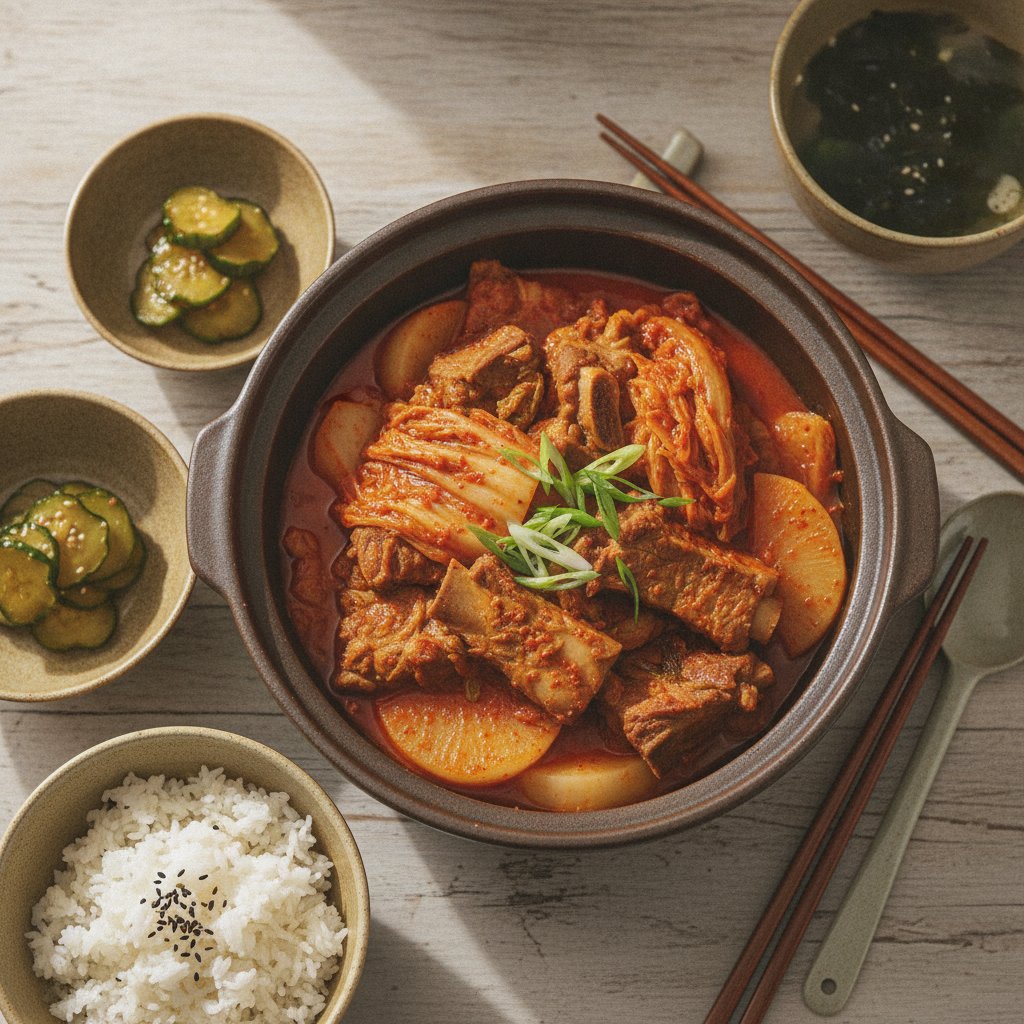
In a home kitchen in Seoul, we rarely cut the kimchi leaves before cooking kimchi jjim. Cooking the cabbage leaves whole preserves their natural structure during the long braise so they do not dissolve into a purée. When serving at the dinner table, use kitchen shears to cut off the hard root end, then use chopsticks to tear long strips of cabbage lengthwise. Wrap a long, tender strip of kimchi around a chunk of pork rib and eat them together in a single bite over warm white rice.
Pay close attention to your pot choice. A heavy cast-iron Dutch oven or ceramic pot holds heat far more consistently than thin stainless steel. Thin pots tend to create hot spots that scorch the bottom layer of cabbage long before the pork ribs become tender.
Finally, never throw away the cloudier kimchi liquid left at the bottom of your storage jar. That liquid contains concentrated lactic acid and complex umami developed over weeks of fermentation. It is the real secret to getting authentic, deep flavor into home-cooked Korean braises.
Storage
Kimchi jjim is one of those rare dishes that tastes even better the next day after the flavors have had time to settle together in the fridge. Store leftovers in an airtight glass container in the refrigerator for up to 4 days. Reheat gently in a saucepan over medium-low heat on the stovetop, adding 30-45 ml (2-3 tbsp) of water or stock to loosen the sauce as it heats up. You can also freeze kimchi jjim in a freezer-safe container for up to 2 months. Thaw overnight in the refrigerator before reheating thoroughly on the stove.
🛒 Slow Braised Pork Rib Kimchi Jjim Recipe
As an Amazon Associate we earn from qualifying purchases.
Shop Ingredients & Tools →FAQ
Can I make kimchi jjim in a slow cooker or Instant Pot?
Yes, you can easily adapt this for a slow cooker or pressure cooker. For a slow cooker, layer the onions, whole kimchi leaves, seared pork, and sauce ingredients as directed, then cook on LOW for 6 to 7 hours until tender. For an Instant Pot, select the Manual/Pressure Cook setting on HIGH for 28 minutes, followed by a 15-minute natural pressure release. Reduce the broth liquid slightly using the Sauté function at the end.
What is the best cut of pork to use if I cannot find baby back ribs?
While pork ribs are classic because the bones add extra body to the braise broth, pork shoulder (pork butt) cut into 5 cm (2-inch) thick chunks is an outstanding alternative. Pork belly sliced into thick slabs also works wonderfully if you enjoy a richer, higher-fat dish.
Why is my kimchi jjim tasting too sour or sharp?
If your aged kimchi was exceptionally sour, the braising liquid can sometimes turn out overly tangy. You can instantly balance high acidity by stirring in an extra teaspoon of brown sugar or a small splash of toasted sesame oil at the end of cooking. The fat and sweetness neutralize the harsh acidic edge without dulling the deep fermented taste.
More Korean Recipes
- Crunchy & Refreshing Kkakdugi Recipe (Cubed Radish Kimchi)
- Kimchi Storage (김치 보관법) & Sour Kimchi Tips
- Quick Oi Muchim (Cucumber Kimchi) in 15 Minutes
- How to Make Kimchi (김치) at Home: A Small-Batch Beginner’s Guide
🛒 Slow Braised Pork Rib Kimchi Jjim Recipe
As an Amazon Associate we earn from qualifying purchases.
Shop Ingredients & Tools →