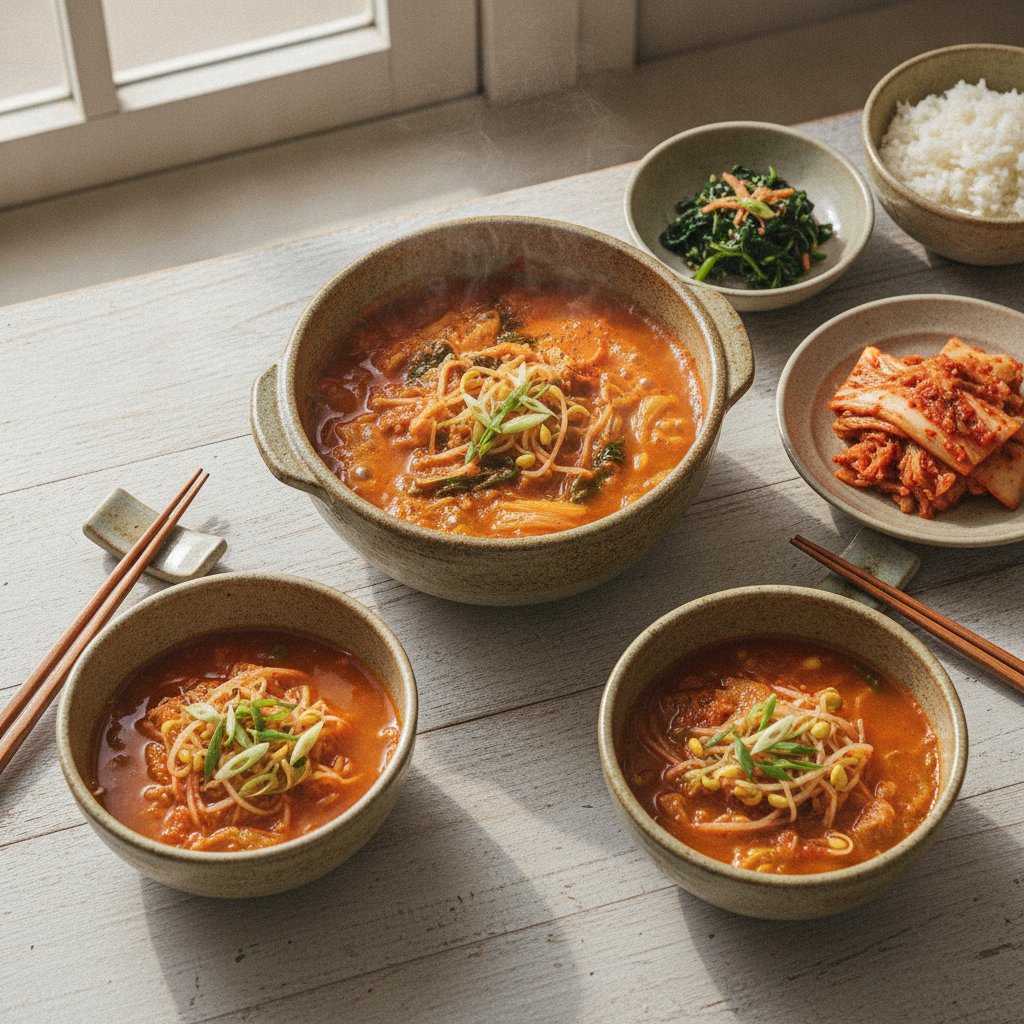
Easy Kimchi Bean Sprout Soup (Kimchi Kongnamul Guk)
This post contains affiliate links. As an Amazon Associate, we earn from qualifying purchases at no extra cost to you.
Warm Comfort in a Bowl: Kimchi Bean Sprout Soup
On cold rainy evenings in Seoul, when the mountain air off Namsan turns crisp, there is one soup my mother would put on the stove without fail: kimchi kongnamul guk (kimchi bean sprout soup). It is simple, humble, and fiercely restorative. In Korean homes, this soup fills every role imaginable. It is the light meal you crave when your stomach feels heavy, the ultimate morning-after hangover cure (*haejangguk*), and the quick weeknight side dish assembled when the pantry looks bare except for a jar of sour kimchi and a fresh bag of soybean sprouts.
What makes this soup so beloved across Korea is its balance of textures and flavors. You get the snappy, satisfying crunch of yellow soybean sprouts contrast against tender, slow-simmered kimchi cabbage. The broth itself is hot, savory, and clean—never weighed down by heavy oils or thick starches. While many Western soup recipes rely on long meat simmers, the traditional Korean home cook relies on fermented kimchi brine, dried anchovy stock, and quick vegetable boiling to build layers of flavor in under thirty minutes.
If you have ever ordered this soup at a Korean restaurant and wondered how to replicate that signature light yet deeply punchy broth at home, the process comes down to a few fundamental kitchen habits. Here is the exact way my family cooks it in Seoul, adapted smoothly for kitchens anywhere in the world.
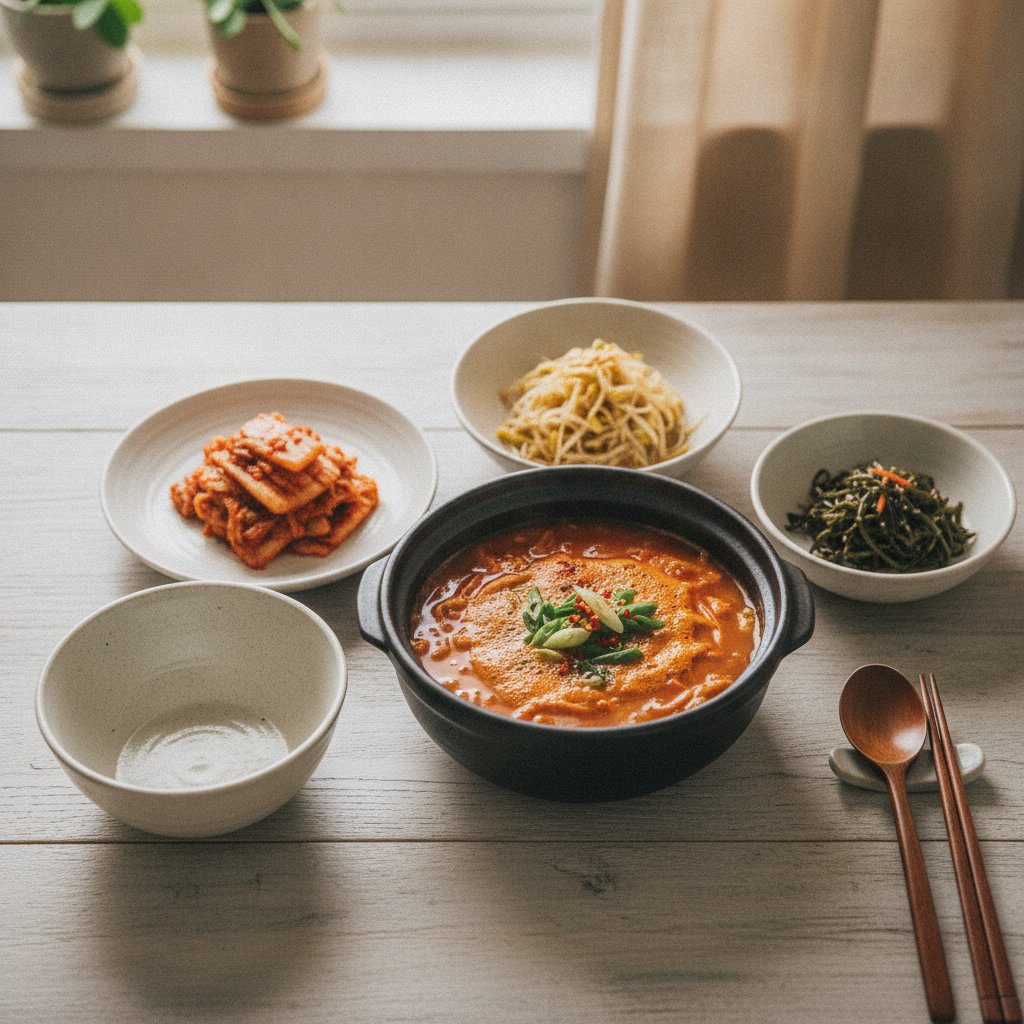
Why This Works
- Lactic Acid Simmer: Using properly aged sour kimchi releases built-up lactic acid and natural umami into the broth, creating a tangy foundation without needing prolonged stock reduction.
- The Open-Pot Sprouts Method: Leaving the pot completely uncovered after adding soybean sprouts prevents sulfur compounds from trapping, guaranteeing a clean, sweet aroma rather than a raw or fishy off-flavor.
- Layered Salinity: Combining soup soy sauce with salted fermented shrimp or fish sauce seasons the broth at two distinct points, giving you a rounded depth of saltiness that plain salt cannot achieve.
🛒 Easy Kimchi Bean Sprout Soup
As an Amazon Associate we earn from qualifying purchases.
Shop Ingredients & Tools →Ingredients
- Dried anchovy and kelp stock: 1.5 liters (about 6.5 cups) water, 20 g (0.7 oz) large dried soup anchovies (heads and guts removed), and 1 piece dried kelp/dashima (about 5×5 cm or 2×2 inches).
- Aged sour kimchi: 250 g (about 1.5 cups), well-fermented and chopped into bite-sized ribbons.
- Kimchi brine: 60 ml (1/4 cup), strained from your kimchi jar.
- Fresh soybean sprouts (kongnamul): 250 g (about 8.8 oz / 0.5 lb), rinsed thoroughly.
- Korean soup soy sauce (guk-ganjang): 15 ml (1 tbsp).
- Salted fermented shrimp (saeujeot) or fish sauce: 15 ml (1 tbsp).
- Korean chili flakes (gochugaru): 8 g (1 tbsp), adjusted to spice preference.
- Fresh garlic: 15 g (1 tbsp / about 3-4 cloves), finely minced.
- Scallions: 2 medium stalks, sliced diagonally.
- Medium-firm tofu (optional): 150 g (5.3 oz), cut into bite-sized rectangles.
Substitutions
If you are shopping mainly at Western supermarkets, you can easily adapt these traditional staples:
- Soup Anchovies & Kelp: Replace the homemade anchovy broth with 1.5 liters of low-sodium vegetable broth or mushroom broth. If using store-bought broth, reduce added salt later in the cooking process.
- Soybean Sprouts (Kongnamul): While mung bean sprouts look similar, soybean sprouts have a larger yellow head and a much firmer stem that holds up to boiling. If you must use mung bean sprouts, add them in the final minute of cooking, as they soften very quickly.
- Korean Soup Soy Sauce (Guk-Ganjang): Soup soy sauce is lighter in color but significantly saltier and more savory than regular soy sauce. If substitute regular light soy sauce, use 10 ml (2 tsp) regular soy sauce plus a small pinch of fine sea salt to prevent darkening the soup too much.
- Salted Shrimp (Saeujeot): Premium Thai or Vietnamese fish sauce works as a direct 1:1 substitute. For a fully vegan variation, use liquid aminos or a blend of sea salt and mushroom seasoning powder.
How to Make It
- Prepare the broth base: Place 1.5 liters of cold water, cleaned dried anchovies, and dried kelp into a medium soup pot. Bring to a boil over medium-high heat. As soon as the water reaches a rolling boil, remove the kelp piece immediately. Why: Boiling kelp too long releases excess mucilage, making your soup broth viscous and slightly slimy rather than clean and clear. Let the anchovies simmer alone for another 10 to 12 minutes, then strain and discard the solids.
- Simmer the aged kimchi: Add the chopped sour kimchi and 60 ml of kimchi brine into the hot anchovy broth. Bring back to a simmer over medium heat and cook uncovered for 8 to 10 minutes until the kimchi cabbage turns translucent around the edges. Why: Simmering cooked kimchi releases its fermented sugars and mellows sharp acidity into a smooth broth background.
- Add the soybean sprouts without covering: Toss in the rinsed soybean sprouts, spreading them evenly into the boiling broth. Keep the heat on medium-high and leave the pot completely uncovered for 4 to 5 minutes. Why: Soybean sprouts contain enzyme compounds that release an unpleasant raw scent (*binnae*) if heated under a closed lid that is opened prematurely. Cooking them fully uncovered lets these volatile compounds evaporate freely.
- Season the soup broth: Stir in the minced garlic, Korean chili flakes (gochugaru), soup soy sauce, and salted shrimp or fish sauce. Reduce heat to medium-low and simmer for 3 minutes to allow the garlic and chili powder to bloom into the liquid. Why: Adding garlic toward the end of cooking preserves its warm aromatic qualities without turning bitter from prolonged boiling.
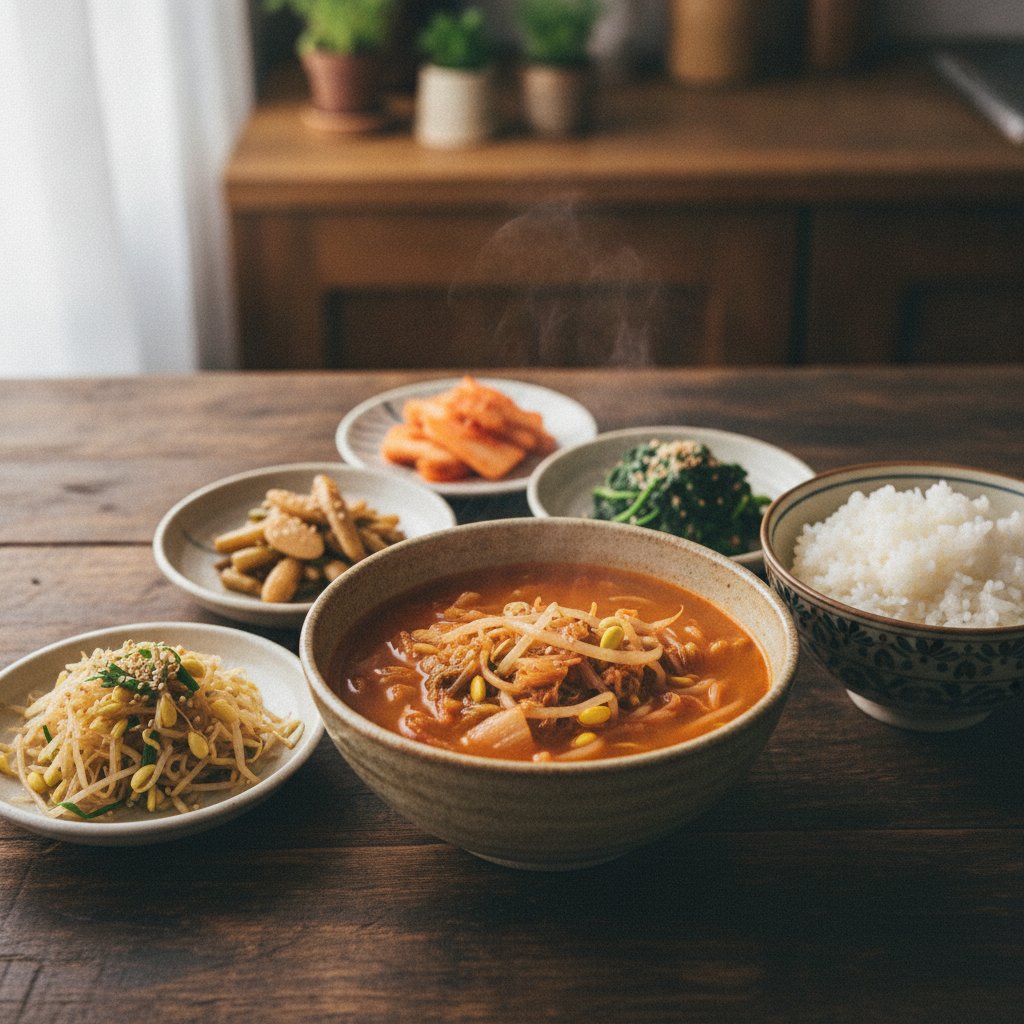
- Finish with tofu and scallions: Carefully slide in the cubed tofu and sliced scallions. Simmer gently for an additional 2 minutes until the tofu is heated through and the green onions turn bright. Taste the broth and add a small pinch of salt if needed. Serve piping hot in deep soup bowls alongside warm white rice.
🛒 Easy Kimchi Bean Sprout Soup
As an Amazon Associate we earn from qualifying purchases.
Shop Ingredients & Tools →Tips from a Korean Kitchen
In home cooking, tiny procedural habits separate a flat soup from a deeply satisfying one. Keep these practices in mind when you cook:
- Respect the Sprouts Lid Rule: You have two choices with soybean sprouts: cook them completely uncovered from start to finish, or keep the lid tightly sealed without peeking for 7 full minutes. In my family, we always choose the uncovered method because it gives total visual control over broth evaporation and sprout texture.
- Reach for the Old Kimchi: Freshly made kimchi (*geotjeori*) will yield a grassy, flat soup broth. Always select kimchi that has sat in the refrigerator for at least a month—the kind that smells intensely sour and has soft leaves. If your kimchi isn’t sour enough, add 1/2 teaspoon of rice vinegar to the pot to simulate aged acidity.
- Skim the Foam Surface: As the soup boils, a light layer of chili oils and vegetable proteins will float to the top. Skim this off once or twice with a small fine-mesh strainer. Removing foam leaves you with a vibrant, glowing red broth that tastes clean on the palate.
- Pair with Rice Correctly: In Seoul, people rarely drink this soup alone. The classic home style is to scoop spoonfuls of fresh warm short-grain rice directly into the broth bowl (*gukbap* style), allowing the rice grains to absorb the hot, tangy soup as you eat.
Storage
Refrigerator: Allow the soup to cool completely to room temperature before transferring to an airtight glass container. Stored properly in the fridge, kimchi bean sprout soup stays fresh for up to 4 days. In fact, many Koreans prefer the soup on day two, as the flavors meld deeper into the broth.
Reheating: Reheat in a small saucepan over medium heat until bubbling hot. If the soybean sprouts have softened slightly during storage, you can revive the soup’s freshness by tossing in a handful of fresh scallions right before serving.
Freezing Note: Freezing this finished soup is generally not recommended. Soybean sprouts lose their internal cellular structure when frozen and thawed, turning stringy and watery. However, you can easily freeze the simmered kimchi broth base alone for up to 1 month, then simply drop fresh sprouts into the pot when boiling from thawed.
FAQ
Can I make this soup vegan without losing traditional flavor?
Yes, absolutely. Skip the anchovies and salted shrimp entirely. Create a broth using dried kelp (*dashima*) and dried shiitake mushrooms simmered in water for 15 minutes. Season the soup at the end with a combination of sea salt, soup soy sauce, and a dash of mushroom powder or liquid aminos to replicate the natural savory umami of traditional fish sauce.
Why are my soybean sprouts tough or rubbery?
Overcooking is the main cause of tough bean sprouts. Soybean sprouts only require about 4 to 5 minutes of total boiling time to transition from raw to tender-crisp. Once the stems turn slightly translucent and pliable, turn down the heat. Leaving them over a high boil for 15+ minutes breaks down their juices and leaves behind fibrous strands.
Is kimchi bean sprout soup suitable for mild spice preferences?
You can easily control the heat level. The natural heat comes from two sources: the gochugaru (chili powder) and the kimchi itself. Omit the extra gochugaru entirely for a mild, clear version. You can also rinse your aged kimchi quickly under cool water to wash away excess chili paste before chopping, which retains the sour fermented cabbage taste while significantly lowering the spice level.
🛒 Easy Kimchi Bean Sprout Soup
As an Amazon Associate we earn from qualifying purchases.
Shop Ingredients & Tools →More Korean Recipes
- Crunchy & Refreshing Kkakdugi Recipe (Cubed Radish Kimchi)
- Kimchi Storage (김치 보관법) & Sour Kimchi Tips
- Quick Oi Muchim (Cucumber Kimchi) in 15 Minutes
- How to Make Kimchi (김치) at Home: A Small-Batch Beginner’s Guide
🛒 Easy Kimchi Bean Sprout Soup
As an Amazon Associate we earn from qualifying purchases.
Shop Ingredients & Tools →