Spicy Korean Fish Roe Stew (Altang) Recipe
This post contains affiliate links. As an Amazon Associate, we earn from qualifying purchases at no extra cost to you.
At a glance
- In shortA step-by-step guide to making authentic Korean spicy fish roe stew at home.
- Best forHome cooks making authentic Korean fish roe stew
- DifficultyEasy
- HeatMedium
- Key pointsSimmering radish in anchovy-kelp stock creates a balanced, light broth base. · Rinsing roe in saltwater prevents casings from rupturing during cooking. · A blooming seasoning paste eliminates fishy odors and builds deep flavor.
- Heads-upRemove dried kelp as soon as water boils to avoid bitter, slimy broth.
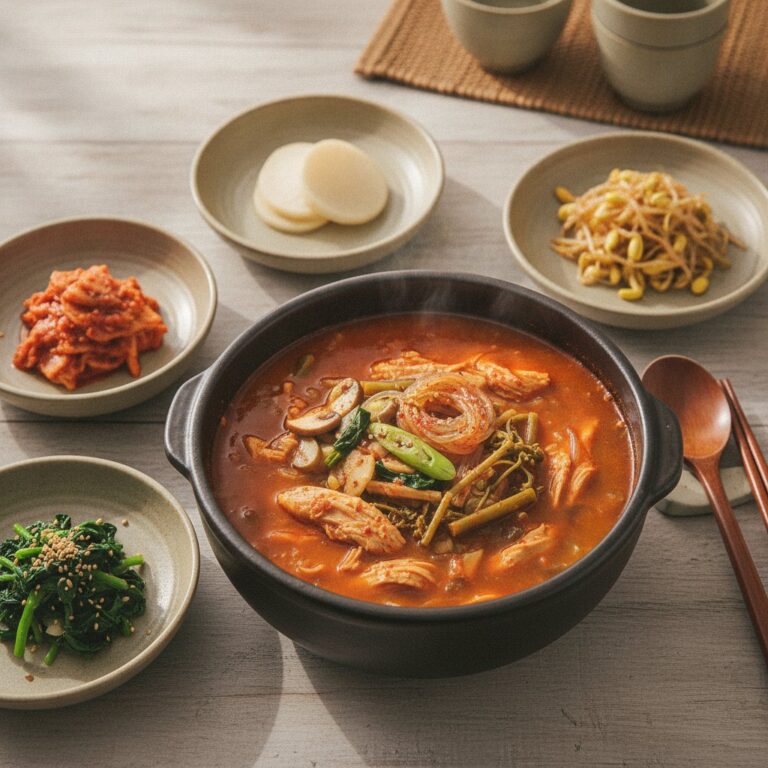
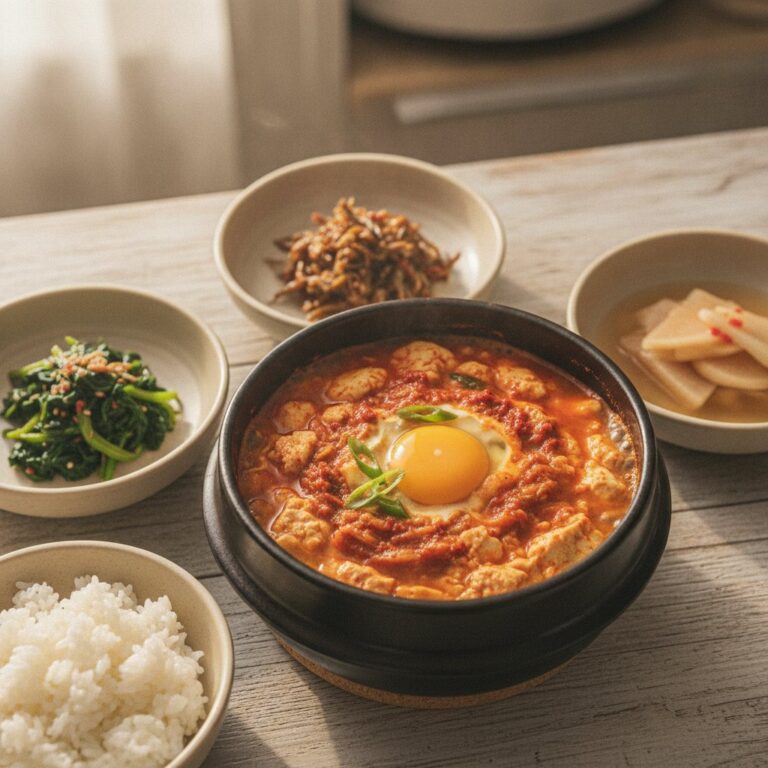
On a freezing winter night in Seoul, nothing pulls you into a neighborhood silbi-jip (a cozy local eatery) faster than the steam fogging up its front window. Inside, nearly every yellow-laminated table has a shallow brass pot boiling over a portable gas stove. Floating in a vibrant, crimson-red broth are plump sacs of pollock roe, cloud-like soft tofu, translucent radish slices, and vibrant green crown daisy leaves. This is altang (spicy fish roe stew), one of Korea’s most beloved winter comfort foods and iconic anju (food eaten while enjoying drinks).
In my family, altang was always the stew my father requested when the first autumn chill settled over our apartment in Mapo. My mother would buy fresh, uncooked pollock roe from the seafood vendor at our local traditional market. She always said that while many stews rely on heavy meat bones for body, a proper altang relies on pure seafood sweetness and a clean broth base. The pops of rich, savory fish roe paired with silky tofu and a fiery, aromatic broth create a harmony of textures that feels deeply nourishing.
If you live outside Korea, fish roe stew might sound like something reserved for specialized restaurants, but it is surprisingly simple to make in a standard home kitchen. This recipe breaks down the traditional process into foolproof steps using easy-to-find alternatives so you can achieve that authentic, bubbling Seoul eatery flavor right on your stove.
Why This Works
- Two-stage broth simmering: Cooking the Korean radish in anchovy-kelp stock before adding delicate seafood draws out natural vegetable sugars, creating a balanced, light broth that never tastes heavy or oily.
- Gentle roe handling: Soaking the pollock roe in a mild saltwater bath and adding it during the last few minutes of cooking prevents the delicate casings from rupturing, keeping your broth clear rather than cloudy.
- Aromatic balancing paste: Mixing garlic, ginger, rice wine, and Korean chili powder into a bloomable paste (dadaegi) before adding it to the pot eliminates any unwanted fishy notes while delivering a deep, lingering spice.

Ingredients
To make an authentic batch of altang, gather the following ingredients. Measurements are provided in both metric and US customary units for your convenience.
For the Anchovy-Kelp Stock (Myulchi Yuksu)
- 1.2 liters (about 5 cups) water
- 20 g (about 0.7 oz / 10-12 large) dried soup anchovies (myulchi), heads and guts removed
- 10 g (about 0.35 oz / 1 large square) dried kelp (dashima / kombu)
- 150 g (about 5.3 oz) Korean radish (mu), cut into thin, bite-sized rectangles
Seafood and Tofu
- 300 g (about 10.5 oz) fresh or frozen pollock roe (myeongran), thawed if frozen
- 150 g (about 5.3 oz) pollock milt (goni), optional but traditional
- 200 g (about 7 oz) medium-firm or soft tofu, sliced into 1/2-inch thick slabs
- 100 g (about 3.5 oz / 5-6 pieces) fresh clams or small shrimp, cleaned (optional, for extra depth)
Vegetables and Aromatics
- 100 g (about 3.5 oz / roughly 2 loose cups) soybean sprouts (kongnamul), rinsed
- 2 green onions, cut diagonally into 2-inch pieces
- 1 fresh red chili pepper, sliced diagonally
- 1 fresh green chili pepper (such as serrano or Korean jalapeño), sliced diagonally
- 50 g (about 1.7 oz / 1 large handful) crown daisy leaves (ssukgat) or chrysanthemum greens
Spicy Seasoning Paste (Dadaegi)
- 3 tbsp (about 24 g) Korean red pepper flakes (gochugaru)
- 2 tbsp (30 ml) Korean soup soy sauce (guk-ganjang)
- 1 tbsp (15 ml) fish sauce or juice from salted shrimp (saeujeot)
- 2 tbsp (30 ml) cooking rice wine (mirin or cooking sake)
- 1.5 tbsp (about 20 g) minced garlic
- 1 tsp (about 5 g) finely grated fresh ginger
- 1/8 tsp freshly cracked black pepper
Substitutions for Western Kitchens
- Pollock Roe (Myeongran): If fresh pollock roe is unavailable, look for unseasoned cod roe or Japanese mentaiko (salted cod roe) in the seafood freezer section of Asian markets. If using salted roe, reduce the fish sauce in the seasoning paste by half.
- Korean Radish (Mu): Daikon radish makes an almost identical substitute. In a pinch, white turnips can work, though they are slightly sweeter.
- Soup Soy Sauce (Guk-Ganjang): Korean soup soy sauce is saltier and lighter in color than regular soy sauce. If you do not have it, substitute equal parts light soy sauce and a pinch of fine sea salt.
- Crown Daisy (Ssukgat): This herb offers a unique, peppery, herbal aroma. If you cannot find it, substitute fresh watercress, garland chrysanthemum, or baby spinach mixed with a few fresh basil leaves.
- Anchovy-Kelp Stock: You can replace homemade anchovy stock with dashi powder dissolved in water, or use a light vegetable broth mixed with 1 teaspoon of fish sauce.
🛒 Spicy Korean Fish Roe Stew Recipe
As an Amazon Associate we earn from qualifying purchases.
Shop Ingredients & Tools →How to Make It
-
Prepare the broth base: Place 1.2 liters (5 cups) of water, cleaned dried anchovies, and dried kelp into a medium pot. Bring to a gentle boil over medium-high heat. As soon as the water begins to boil rapidly, remove the dried kelp with tongs. Why: Boiling kelp for too long releases bitter compounds and slimy tannins into the liquid. Continue simmering the anchovies alone for another 10 minutes, then strain out the anchovies, keeping the clear broth in the pot.
-
Bloom the seasoning paste: In a small bowl, combine the gochugaru, soup soy sauce, fish sauce, cooking rice wine, minced garlic, grated ginger, and black pepper. Stir well until it forms a thick paste and let it sit for 10 minutes. Why: Hydrating the dry red pepper flakes in liquid allows their pigments and flavors to bloom fully, resulting in a richer red color and smoother sauce texture in the stew.
-
Prep the seafood gently: Fill a bowl with cold water and add 1 teaspoon of fine sea salt. Gently submerge the pollock roe (and milt, if using) to rinse away any surface debris. Drain carefully on paper towels. Cut large roe sacs into 2-inch chunks, keeping small sacs whole. Why: Washing roe in salted water preserves its structural integrity and keeps the membrane from breaking open prematurely during cooking.
-
Simmer the radish and sprouts: Add the thin radish slices and soybean sprouts into the strained anchovy stock. Stir in 2 tablespoons of the prepared seasoning paste. Cover the pot and bring to a boil over medium heat, cooking for about 5 to 7 minutes until the radish turns translucent at the edges. Why: Radish takes longer to soften than seafood, so cooking it first builds a sweet, flavorful liquid foundation without overcooking the delicate roe.
-
Layer the tofu and seafood: Arrange the sliced tofu, pollock roe, milt, and optional clams neatly over the simmering radish layer. Dollop the remaining seasoning paste into the liquid between the ingredients. Bring the pot back to a gentle simmer over medium heat and cook for 5 to 6 minutes without stirring aggressively. Why: Keeping the heat at a steady simmer rather than a rolling boil ensures the fish roe cooks thoroughly to a firm, creamy texture without breaking apart into the broth.
-
Add fresh aromatics and finish: Taste the broth and adjust saltiness with an extra drop of fish sauce if needed. Add the green onions, sliced red and green chili peppers, and crown daisy leaves on top. Simmer for an additional 1 to 2 minutes until the greens are just wilted, then serve immediately hot from the pot.
If Something Goes Wrong
| Problem | Likely Cause | Fix |
|---|---|---|
| Cloudy or grainy broth | Roe membranes ruptured from high heat or over-stirring | Rinse roe in cold saltwater prior to cooking and keep heat at a low simmer rather than a rolling boil. |
| Bitter stock base | Kelp boiled too long or anchovy guts were left intact | Remove kelp immediately when water boils, and ensure anchovies are gutted before simmering. |
| Lingering fishy odor | Roe was not pre-rinsed, or seasoning lacked rice wine/ginger | Always incorporate fresh ginger and mirin into the dadaegi paste, and add fresh chili slices before serving. |
Scaling & Make-Ahead
Make-Ahead Prep: You can prepare the anchovy-kelp stock and the dadaegi paste up to 3 days in advance and keep them covered in the refrigerator. Wait to rinse and slice the fish roe until right before cooking for maximum freshness.
Scaling: When doubling the recipe, double the roe and vegetables, but scale the liquid stock to 1.75 times (around 2.1 liters) to avoid diluting the rich seasoning base.
Key Takeaways
- Protect the Roe Structure: Soaking pollock roe in a mild saltwater solution stabilizes the outer casing, preventing cloudy broth during cooking.
- Build Layers First: Simmering Korean radish and soybean sprouts in anchovy-kelp stock creates a sweet, savory foundation before adding delicate seafood.
- Bloom the Dadaegi: Pre-mixing chili flakes with rice wine, garlic, and ginger eliminates fishy notes while producing a vibrant red color and deep flavor.
🛒 Spicy Korean Fish Roe Stew Recipe
As an Amazon Associate we earn from qualifying purchases.
Shop Ingredients & Tools →More on Seafood & Fish Soups
- Miyeokguk (Korean Seaweed Soup)Learn how to make traditional Korean seaweed soup, a classic birthday and comfort dish.
- Eomuk Guk (Korean Fish Cake Soup)A simple recipe for making authentic Korean fish cake soup with a deeply savory broth at home.
- Honghap Tang (Clear Korean Mussel Soup)Learn how to make traditional clear Korean mussel soup with simple aromatics in under 20 minutes.
See every Seafood & Fish Soups post in our Soups & Stews guide.
Handy toolsRecipe scaler · Measurement converter · Korean pantry guide · Recipe Finder
More Korean Recipes
- Creamy Biji Jjigae (Korean Ground Soybean Stew)
- Dwaeji Gukbap Recipe: Hearty Korean Pork and Rice Soup
- Easy Korean Spinach Soup (Sigeumchi Doenjang Guk)
- Easy Maeuntang Recipe: Spicy Korean Fish Stew at Home
🛒 Spicy Korean Fish Roe Stew Recipe
As an Amazon Associate we earn from qualifying purchases.
Shop Ingredients & Tools →