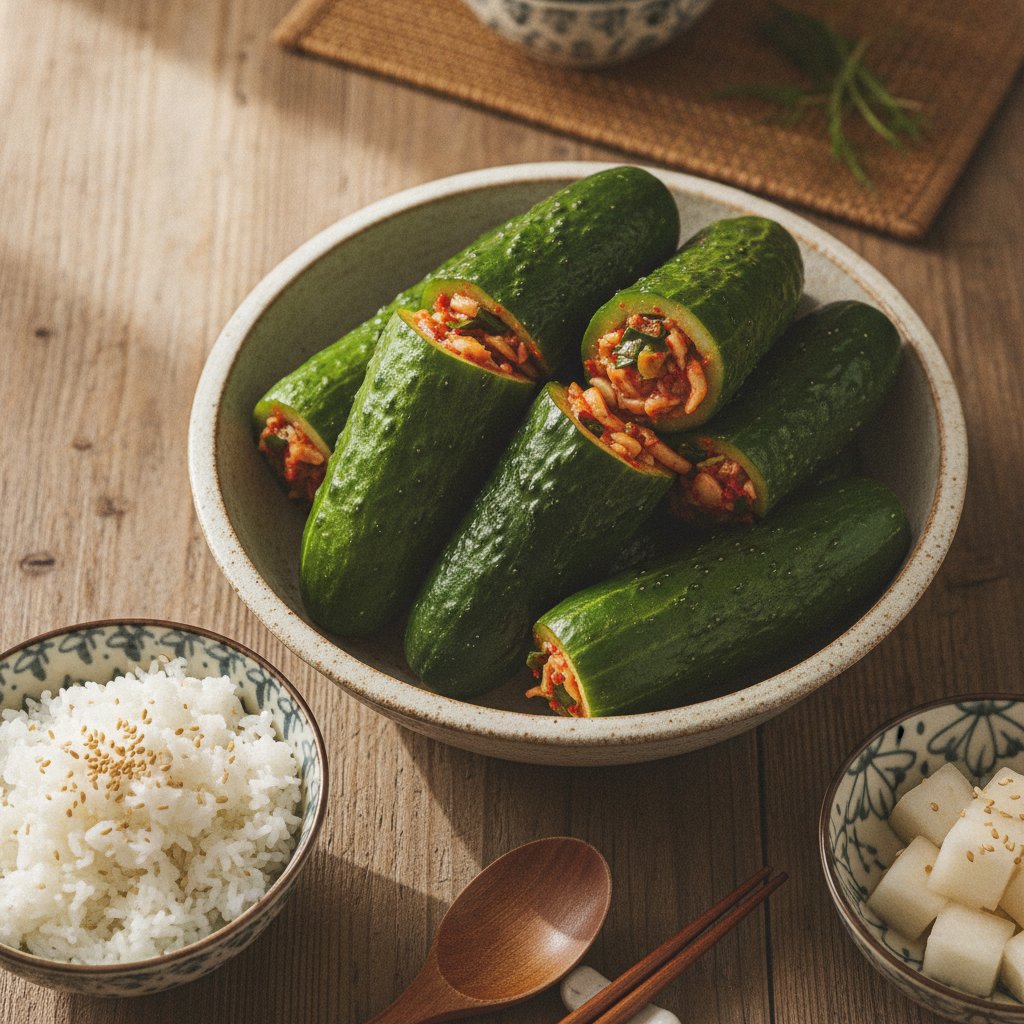
Easy Korean Stuffed Cucumber Kimchi (Oi Sobagi)
This post contains affiliate links. As an Amazon Associate, we earn from qualifying purchases at no extra cost to you.
Prep: 25 min · Cook: 5 min · Total: 30 min · Serves 6
On hot, humid summer afternoons in Seoul, when nobody in my house wants to stand anywhere near a warm stovetop, my mother always pulls a chilled glass container of oi sobagi (stuffed cucumber kimchi) from the refrigerator. The sharp, refreshing crunch of cold cucumber paired with hot garlic, pungent Asian chives, and vibrant chili flakes instantly wakes up a tired appetite. Unlike baechu kimchi (napa cabbage kimchi) or kkakdugi (cubed radish kimchi), which are crafted in massive winter batches to age over long months, cucumber kimchi is a celebration of immediate freshness. It is light, intensely aromatic, and remarkably fast to assemble.
When I talk to friends outside Korea who love Korean food, they often assume making homemade korean stuffed cucumber kimchi requires tricky fermentation vessels or obscure market ingredients. In reality, the way Koreans actually make this at home is surprisingly straightforward. Cucumbers do not contain as much dense fiber as cabbage, meaning they brine in a fraction of the time. By using a clever hot brine technique and simple grocery store swaps, you can have a batch of crispy, spicy stuffed cucumbers ready to eat in less than an hour.
Why This Works
- The Hot Brine Technique: Pouring hot salt water over raw sliced cucumbers briefly softens the vegetable walls so they bend without snapping during stuffing, while setting the pectin in the skin to guarantee a long-lasting, audible crunch.
- Strategic Cross-Cut Pockets: Slicing a deep cross through the center of each cucumber chunk creates four distinct pockets that hold the aromatic chive stuffing securely without splitting the cucumber apart.
- No-Cook Quick Paste: Instead of brewing a traditional rice flour paste (glutinous rice porridge), this streamlined version relies on natural fruit sugars and minced onion to hydrate the red pepper flakes quickly, saving 20 minutes without sacrificing rich garlic-chive flavor.
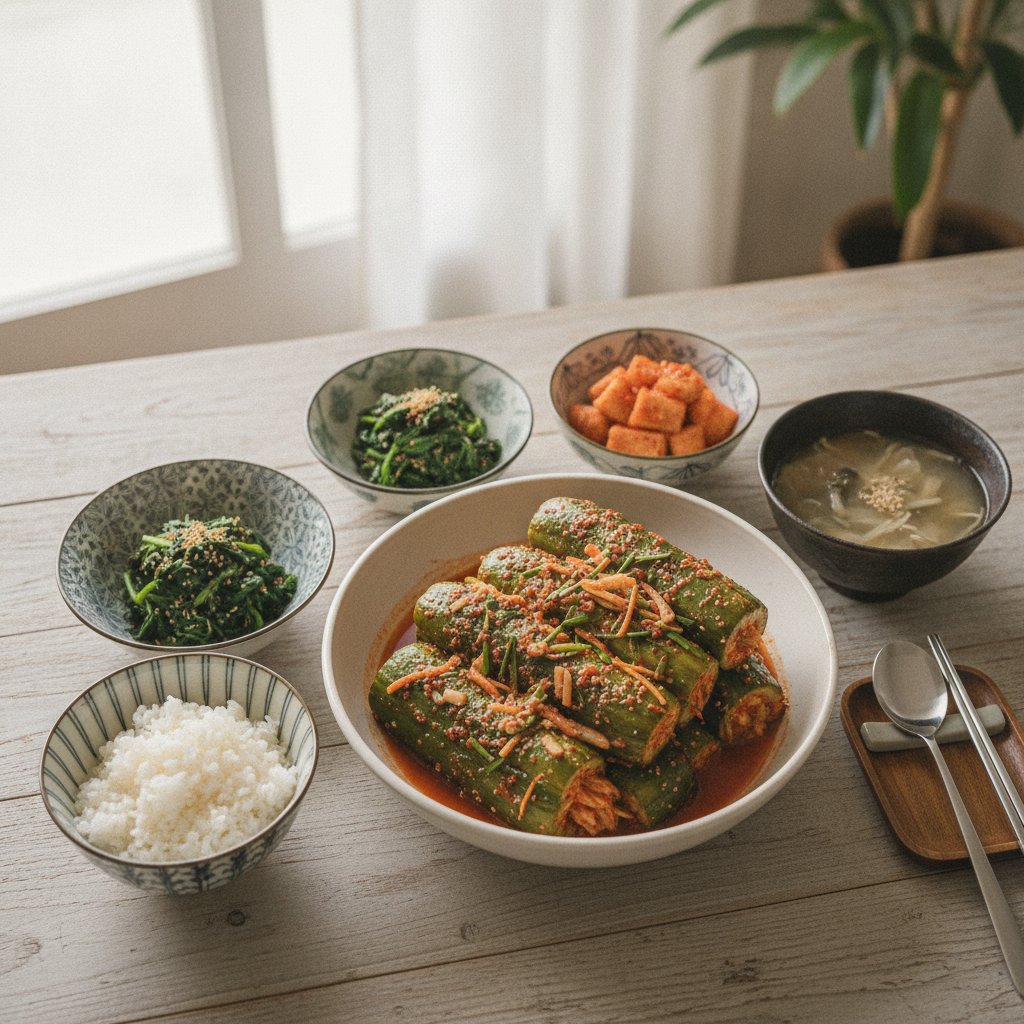
Ingredients
- 1 kg (about 2.2 lbs) Korean cucumbers (baek-oi), or Persian/Kirby cucumbers
- 1 liter (about 4 cups) water
- 60 g (about 1/4 cup) coarse sea salt or kosher salt (for brining)
- 100 g (about 1.5 cups packed) Asian chives (buchu), washed and cut into 1.5 cm (1/2-inch) pieces
- 50 g (about 1/2 small) yellow onion, finely minced
- 35 g (about 1/3 cup) Korean red pepper flakes (gochugaru)
- 45 ml (3 tbsp) Korean fish sauce (aekjeot, such as anchovy or sand lance fish sauce)
- 15 g (1 tbsp) salted shrimp (saeujeot), finely minced (optional, but adds deep traditional umami)
- 15 g (about 1 tbsp) minced fresh garlic
- 5 g (about 1 tsp) grated fresh ginger
- 15 g (1 tbsp) granulated sugar, honey, or finely grated Asian pear
- 15 ml (1 tbsp) water, only if needed to adjust paste consistency
Substitutions
If you shop primarily at Western supermarkets, finding exact Korean cucumber varieties can sometimes be tricky. Korean cucumbers (baek-oi) are pale green, slender, and feature thin skins with minimal seeds. The absolute best substitute in Western stores is the Persian cucumber, followed closely by small Kirby pickling cucumbers. Avoid long English cucumbers or thick-skinned field cucumbers whenever possible; their tough skins resist seasoning, and their watery, seedy centers turn soft quickly when salted.
Asian chives (buchu) offer a distinct flat leaf and a garlic-forward bite. If you cannot source them at your local store, green onions (scallions) cut into thin, short ribbons make a fine replacement. Korean fish sauce (aekjeot) provides savory depth, but standard Thai or Vietnamese fish sauce works very well. For a fully plant-based version, replace the fish sauce and salted shrimp with a combination of tamari soy sauce and Yondu (Korean liquid vegetable seasoning) plus a small pinch of kelp powder.
🛒 Easy Korean Stuffed Cucumber Kimchi
As an Amazon Associate we earn from qualifying purchases.
Shop Ingredients & Tools →How to Make It
- Prep and cut the cucumbers: Wash 1 kg (2.2 lbs) of cucumbers thoroughly under cold water. Trim off both end tips. Cut each cucumber crosswise into chunks about 5 to 6 cm (2 to 2.5 inches) long. Stand each chunk upright on your cutting board. Cut a deep cross (plus sign) down through the length of the chunk, stopping about 1.5 cm (1/2 inch) before reaching the bottom. Why: Leaving the bottom intact holds the cucumber together like a pocket, making it easy to stuff while keeping the pieces neat for serving.
- Prepare the hot salt brine: In a medium saucepan, combine 1 liter (4 cups) of water and 60 g (1/4 cup) of coarse salt. Bring to a rolling boil over high heat for 2 to 3 minutes until the salt dissolves completely. Place your prepared cucumber chunks in a large heatproof bowl, then carefully pour the hot brine directly over them. Submerge them gently with a spoon and let them soak for 20 to 25 minutes. Why: Pouring boiling hot salt brine over cucumbers may seem counterintuitive, but the heat quickly cooks the exterior pectin without softening the interior flesh, locking in crispness far better than cold brining.
- Mix the red pepper paste base: While the cucumbers brine, prepare the spice mixture. In a mixing bowl, combine 35 g (1/3 cup) gochugaru, 45 ml (3 tbsp) fish sauce, 15 g minced garlic, 5 g grated ginger, 50 g minced onion, 15 g sugar, and 15 g minced salted shrimp. Stir vigorously until a thick, shiny crimson paste forms. Let it rest for 10 minutes. Why: Allowing the gochugaru to hydrate in the liquid aromatics blooms its brilliant red color and softens the dried chili flakes, helping the paste cling smoothy to the vegetables.
- Fold in the chives: Add the 100 g chopped Asian chives to the chili paste. Gently toss with a spoon or gloved hands until the chives are lightly coated. Why: Adding delicate chives at the very end prevents them from becoming bruised or slimy during heavy mixing.
- Rinse and drain the cucumbers: Check your brined cucumbers by gently bending one of the cut quadrants. It should yield smoothly without snapping. Drain the cucumbers in a colander and rinse them under cool running water to wash away surface salt. Shake well, then lay them cut-side down on clean kitchen towels for 10 minutes to drain fully. Why: Removing excess surface water prevents your kimchi paste from becoming diluted and watery over time.
- Stuff the pockets: Wearing disposable gloves to protect your hands from chili burn, take a cucumber chunk and gently pry open the four quadrants. Pack about a tablespoon of the chive paste deep inside the cross-cut. Gently squeeze the quadrant closed so the paste stays inside, then rub a thin layer of remaining paste over the exterior skin. Repeat for all pieces. Why: Squeezing the pocket helps trap the aromatics inside, ensuring every single bite contains a balanced blend of crunchy cucumber and savory filling.
- Pack and rest: Pack the stuffed cucumbers snugly into a clean, dry glass jar or airtight container, pressing down gently to remove air pockets. Cover tightly. Leave the container on your kitchen counter at room temperature for 12 to 24 hours depending on room warmth, then transfer to the refrigerator. Why: A short room-temperature rest initiates rapid lactic acid fermentation, developing a pleasant, subtle tangy kick before chilling halts softening.
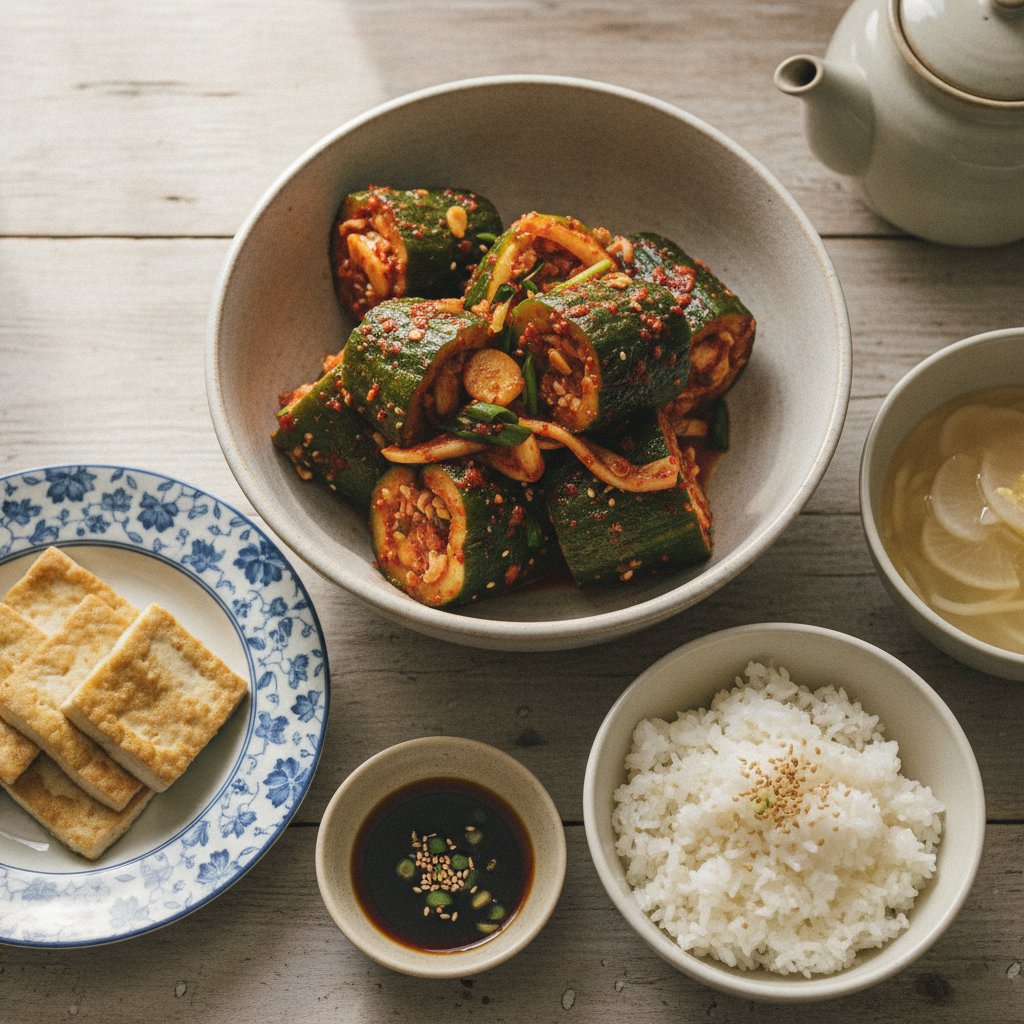
Tips from a Korean Kitchen
In my family, we always treat oi sobagi as a fresh seasonal delicacy rather than a long-term storage project. Because cucumbers are mostly water, their structure naturally changes over time once exposed to salt and acid. Here are four essential tips to make sure your batch comes out perfect every single time:
First, never skip drying your cucumbers after rinsing off the brine. Water is the biggest enemy of crisp kimchi. If too much residual water remains inside the pockets, it dilutes the garlic and chili paste, leading to a bland brine at the bottom of your container.
Second, cut your Asian chives relatively short—no longer than 1.5 cm (1/2 inch). Longer chive strands clump together and make stuffing the small cucumber pockets frustrating and messy.
Third, use food-safe gloves when handling gochugaru paste. Korean chili powder has a lingering heat that easily stays on your fingers, and you definitely do not want to accidentally rub your eyes after stuffing kimchi!
Fourth, if you end up with extra stuffing paste left over in your bowl, do not throw it away! Mix it with a bowl of warm steamed rice, a drizzle of toasted sesame oil, and a fried egg for an instant, incredibly flavorful lunch.
Storage
Store your stuffed cucumber kimchi in the refrigerator in a tightly sealed glass container. Glass is strongly recommended because plastic containers quickly absorb garlic and fish sauce odors that are nearly impossible to wash out.
Oi sobagi tastes wonderful right after making, but reaches its peak flavor after 2 to 3 days in the fridge as the garlic, chives, and cucumbers meld together. It stays deliciously crisp for about 10 to 14 days. After two weeks, the cucumbers will begin to lose their crunch and release liquid. While still safe to eat, fully aged cucumber kimchi loses its signature fresh snap. Do not attempt to freeze cucumber kimchi; freezing destroys the cucumber’s cellular structure, leaving you with mushy, unappetizing vegetables upon thawing.
🛒 Easy Korean Stuffed Cucumber Kimchi
As an Amazon Associate we earn from qualifying purchases.
Shop Ingredients & Tools →FAQ
Can I use regular English cucumbers for oi sobagi?
English cucumbers can be used if no other options exist, but they are not ideal. Their high water content and softer flesh mean they lose crunch very quickly after salting. If you must use English cucumbers, scoop out the watery seed core before cutting, reduce the brining time slightly, and plan to consume the kimchi within 3 to 4 days.
Why did my cucumber kimchi turn soggy or watery?
Cucumber kimchi turns soggy primarily for two reasons: skipping the hot brine step or leaving too much moisture on the cucumbers before stuffing. Pouring hot salt water sets the pectin in the skin, which preserves structure. Additionally, if you do not dry the brined cucumbers thoroughly on towels before stuffing, trapped surface water will bleed into the paste and soften the vegetables.
Is oi sobagi meant to be eaten right away or fermented?
Unlike napa cabbage kimchi, which is often fermented for weeks or months, oi sobagi is designed to be enjoyed fresh or lightly fermented. Many Koreans eat it immediately after assembly as a fresh salad-style banchan (side dish). Leaving it at room temperature for just 12 to 24 hours gives it a delightful gentle tang, after which it should be kept cold in the fridge.
More Korean Recipes
- Creamy Korean Corn Cheese (콘치즈)
- Gyeran Jjim (Korean Steamed Eggs): Always Fluffy
- Jangjorim Recipe: Authentic Korean Soy-Braised Beef and Eggs
- Eomuk Bokkeum (Stir-Fried Fish Cakes): Your New Favorite Lunchbox Side Dish
🛒 Easy Korean Stuffed Cucumber Kimchi
As an Amazon Associate we earn from qualifying purchases.
Shop Ingredients & Tools →