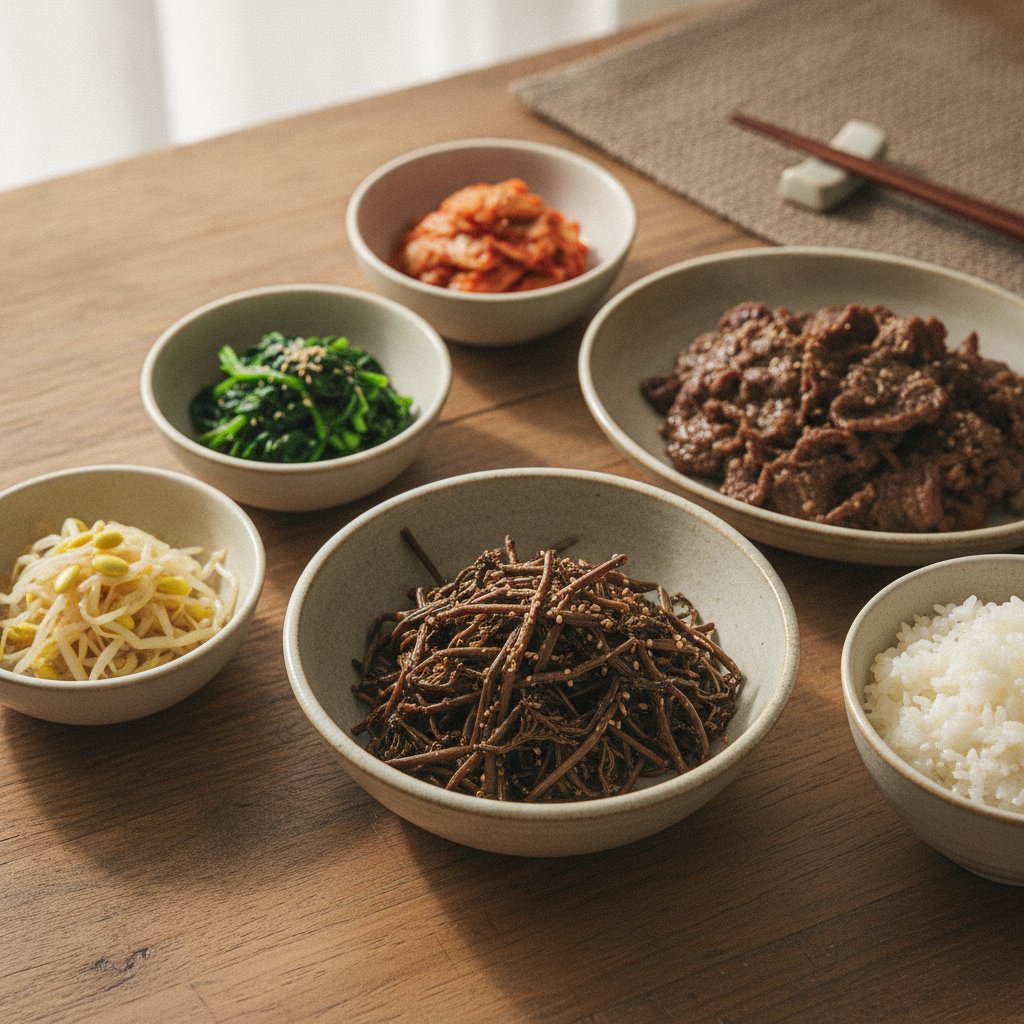
Gosari Namul: Korean Seasoned Fernbrake Recipe
This post contains affiliate links. As an Amazon Associate, we earn from qualifying purchases at no extra cost to you.
Prep: 20 min · Cook: 50 min · Total: 70 min · Serves 4
Seasoned Fernbrake Side Dish (Gosari Namul)
Every autumn during Chuseok (Korean autumn harvest festival), my mother would set out wide bamboo baskets in our Seoul kitchen, filled with plump, rehydrated mountain greens. Among them, gosari namul (seasoned fernbrake side dish) was always the first to disappear from our family table. Deep brown, savory, and rich with a subtle earthy aroma, fernbrake shoots are young edible fronds of wild bracken fern that have been harvested, blanched, and sun-dried in the mountains of Korea. When properly hydrated and simmered, they take on an almost meaty texture that absorbs garlic, soy sauce, and nutty toasted oils like a sponge.
This dish is an essential element of samsaek namul (three-colored seasoned vegetables) served during major holidays and ancestral memorial ceremonies, but in everyday Korean homes, it is most beloved as an irreplaceable component of authentic bibimbap (mixed rice bowl). If you have ever ordered bibimbap at a Korean restaurant and wondered what those soft, savory, brown stalk-like vegetables were, this is it. While dried fernbrake requires a bit of advance soaking time, the hands-on cooking process for this authentic Korean gosari recipe is delightfully simple and remarkably forgiving.
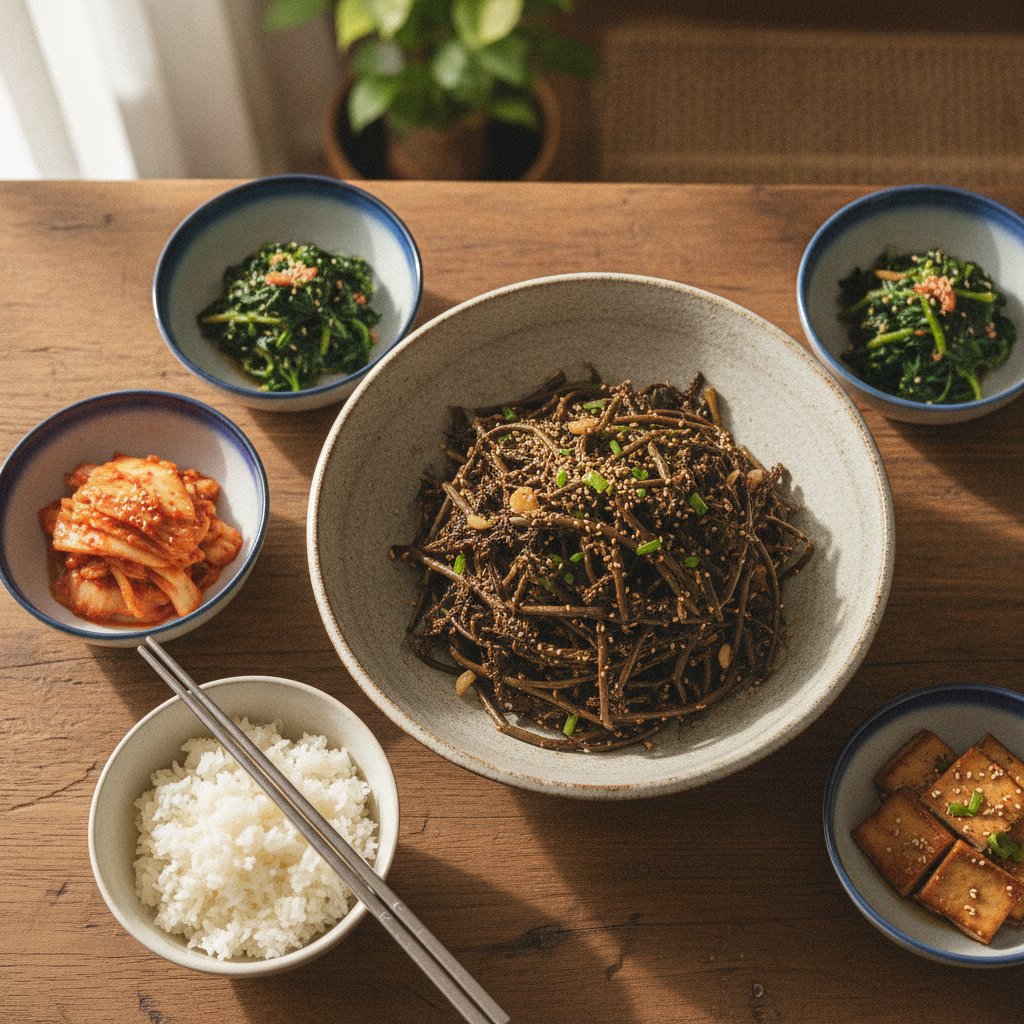
Why This Works
- Two-phase braising method: Sautéing the soaked stalks briefly in toasted perilla oil before simmering them in a light savory broth ensures the stems become silky and tender right to their core rather than remaining rubbery.
- Pre-marinating the fibers: Massaging the fernbrake with minced garlic and soup soy sauce before heat touches the pan allows the deep umami flavor to penetrate the dense plant stalks thoroughly.
- Low-heat finishing oil technique: Adding a second drizzle of unheated perilla or sesame oil off the flame preserves delicate aromatic compounds that break down under direct frying heat.
Ingredients
- 50 g (1.8 oz) dried fernbrake shoots (yields about 250 g to 300 g / 9 to 10.5 oz when rehydrated)
- 3 cloves garlic (about 15 g / 0.5 oz), finely minced
- 2 scallions (about 30 g / 1 oz), thinly sliced
- 1.5 tbsp (22.5 ml) Korean soup soy sauce (guk-ganjang)
- 1 tsp (5 ml) regular Korean soy sauce (yangjo-ganjang)
- 1.5 tbsp (22.5 ml) Korean toasted perilla oil (deul-gireum) or toasted sesame oil, divided
- 4 tbsp (60 ml) anchovy-kelp broth, dashima water, or vegetable stock
- 1/2 tsp (1.5 g) toasted sesame seeds, lightly crushed
- 1/4 tsp salt (about 1.5 g), added only if needed to taste
Substitutions
If you cannot find dried fernbrake at your local market, look in the refrigerated or frozen section of an Asian grocery store for pre-boiled, fully hydrated saeng-gosari (soaked fernbrake). If using pre-soaked shoots, skip the overnight soaking and initial boiling steps, rinse them thoroughly in cold water, and jump straight to trimming and cooking.
For the seasonings, Korean soup soy sauce (guk-ganjang) provides a sharp, salty umami depth without adding sweet molasses notes or darkening the dish excessively. If you do not have it, substitute 1 tbsp (15 ml) regular light soy sauce mixed with 1/2 tsp (2.5 ml) fish sauce or liquid aminos. Toasted perilla oil (deul-gireum) gives the dish its distinct, earthy country-style aroma, but high-quality toasted sesame oil (such as Ottogi brand) works brilliantly as a standard kitchen substitute.
How to Make It
- Soak the dried fernbrake overnight: Place 50 g (1.8 oz) of dried fernbrake shoots in a large bowl and cover completely with at least 5 to 6 cups of cold water. Leave them to hydrate at room temperature for at least 8 to 12 hours. WHY: Dried fernbrake stems are dense and fibrous; a long cold soak gently reconstitutes the plant cells without making the delicate tips mushy.
- Boil until tender: Transfer the fernbrake along with its soaking water into a large pot, adding extra water if needed so the stalks float freely. Bring to a boil over medium-high heat, then lower the heat to medium and simmer uncovered for 20 to 25 minutes. Turn off the heat, cover the pot with a lid, and let the shoots sit in the hot bath for another 20 minutes. WHY: Boiling neutralizes residual natural bitterness and softens tough cellulose fibers, while letting them rest in hot water off the heat steams the stems through to the center uniformly.
- Rinse and test for done-ness: Drain the hot water and rinse the fernbrake under running cold water 2 to 3 times, gently squeezing out excess liquid. Take a thicker stem and press it between your thumb and forefinger; it should pinch through smoothly with gentle resistance. If it feels hard or woody, boil for another 10 minutes. WHY: Rinsing washes away lingering earthy tannins and stops the cooking process so the stalks retain a pleasant, tender bite.
- Trim and cut into bite-sized segments: Pinch off and discard any tough, woody bottoms at the base of the stems. Cut the tender fernbrake into 5 cm (about 2-inch) long pieces. WHY: Trimming removes unpalatable woody ends, and cutting into uniform lengths makes the banchan easier to pick up with chopsticks or fold into bibimbap.
- Season and marinate: In a mixing bowl, combine the cut fernbrake, minced garlic, sliced scallions, soup soy sauce, regular soy sauce, and 1 tbsp (15 ml) of perilla oil. Use your hand to gently massage the seasonings into the stems for about 1 minute, then let sit for 10 minutes. WHY: Massaging breaks down surface fibers slightly and allows seasonings to penetrate deep inside the hollow stalks before cooking.
- Sauté and steam braise: Heat a skillet over medium heat. Add the marinated fernbrake mixture and sauté for about 2 minutes until the garlic becomes fragrant and cooked. Pour in the 4 tbsp (60 ml) of broth, immediately reduce the heat to medium-low, cover with a tight lid, and simmer for 3 to 4 minutes until most of the liquid is absorbed. WHY: Sautéing blooms the aromatics, while short steam-braising cooks the garlic through and infuses juicy stock into the core of the vegetable stems.
- Finish and garnish: Remove the lid and stir for 30 seconds to evaporate any pooling pan liquid. Turn off the heat entirely, then drizzle over the remaining 1/2 tbsp (7.5 ml) of perilla oil and sprinkle with crushed toasted sesame seeds. Toss gently and transfer to a serving dish. WHY: Adding raw toasted oil off the heat preserves volatile nutty aromatics that evaporate under high pan temperatures.
Tips from a Korean Kitchen
- Master the fingernail test: Never rely strictly on clock timing when boiling dried greens. Every batch of dried fernbrake varies depending on harvest age and dry time. Always test the thickest stem by pressing your fingernail into it; it should yield like cooked al dente pasta.
- Don’t skip the short resting soak: Leaving the boiled fernbrake in its own cooling bath off the stove is the traditional grandmother secret for achieving a velvety texture without boiling the fronds into mush.
- Rinse away the mountain astringency: If your fernbrake smells intensely woodsy or slightly sour after boiling, soak it in fresh cold water for an extra 1 to 2 hours, changing the water once, before marinading.
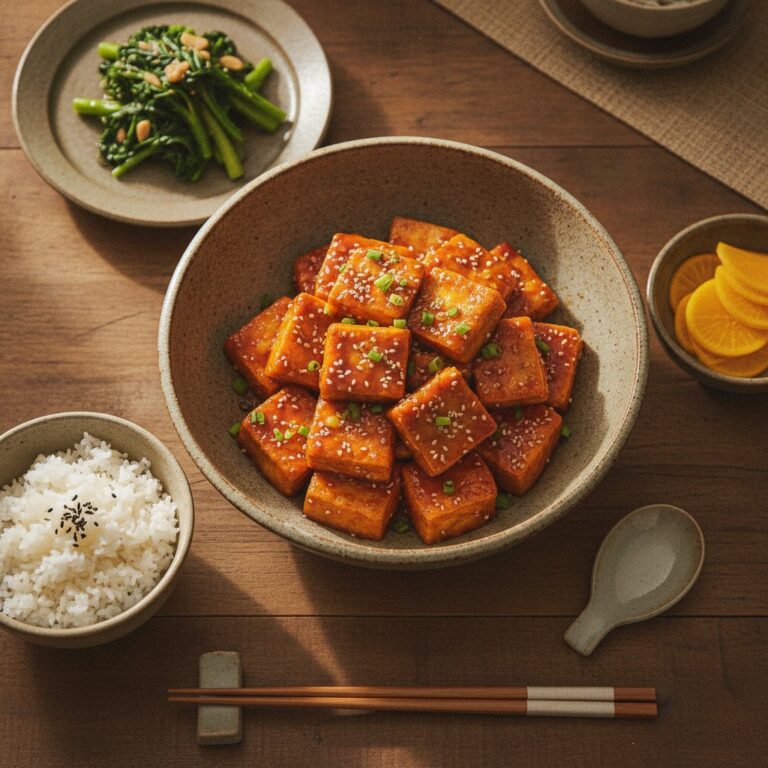
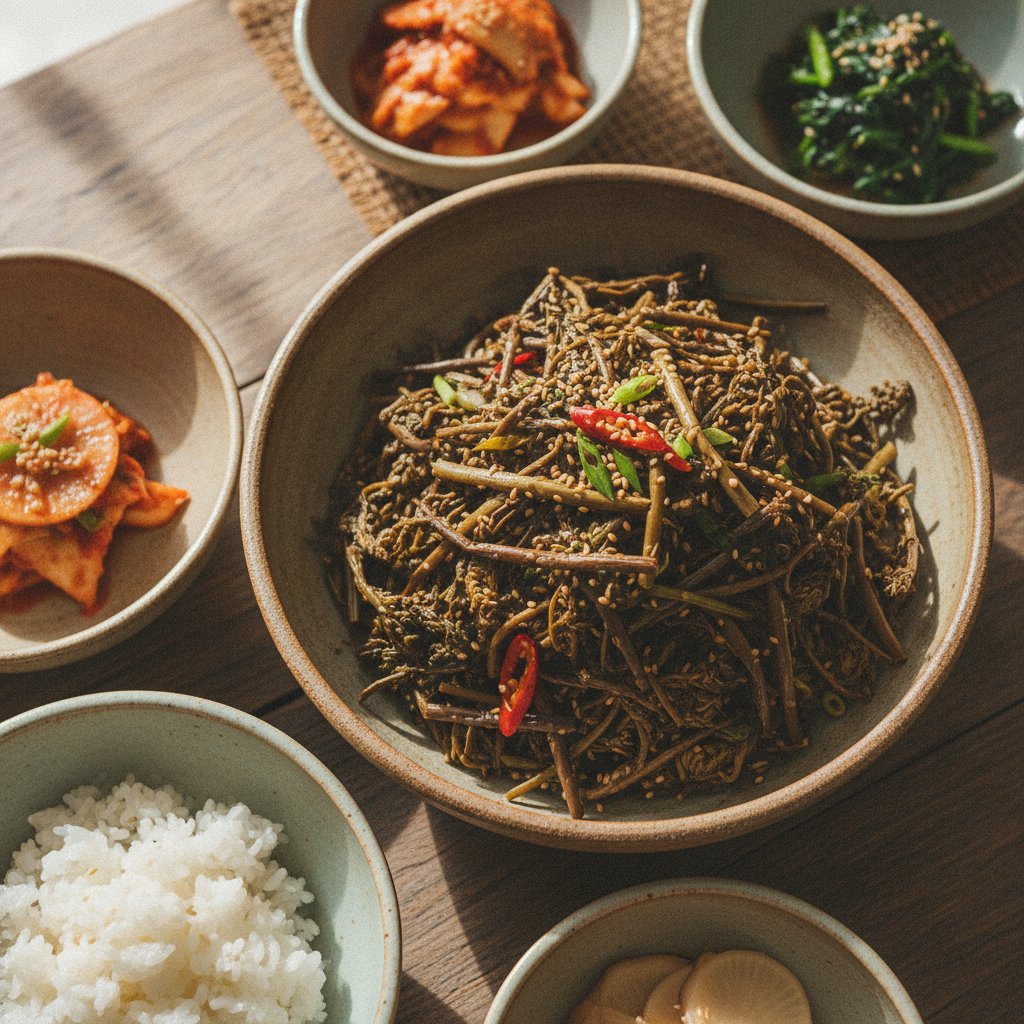
- Pairing suggestions: Serve this at room temperature alongside warm short-grain white rice, a simple soy-marinated tofu, and fresh kimchi. For quick bibimbap, toss leftovers into a bowl of warm rice with a sunny-side-up egg, a spoonful of gochujang (fermented chili paste), and a splash of sesame oil.
Storage
Allow the seasoned fernbrake to cool completely to room temperature before packing it into a clean glass airtight container. Store in the refrigerator for up to 4 to 5 days. As it sits in the cold, the shoots will continue to absorb the seasonings, often tasting even better on day two.
While rehydrated cooked greens can technically be frozen, freezing alters the delicate texture of fernbrake fronds, making them somewhat stringy upon thawing. For best enjoyment, cook in small batches and enjoy fresh from the fridge. Reheating is rarely necessary as Koreans traditionally eat this side dish chilled or at room temperature, but if you prefer it warm, flash-sauté it in a dry pan with a splash of water for 60 seconds.
FAQ
Is fernbrake (gosari) safe to eat?
Yes, cooked fernbrake is entirely safe. Raw bracken ferns contain a natural compound called ptaquiloside, but this compound is water-soluble and heat-sensitive. Traditional Korean preparation methods—boiling, soaking in multiple changes of water, and thorough cooking—completely break down and flush out these compounds, rendering the shoots healthy and nutritious.
Can I use pre-soaked canned or tubbed gosari from the Asian market?
Absolutely. Buying pre-hydrated (saeng-gosari) shoots cuts prep time dramatically. Simply rinse the pre-soaked stalks thoroughly in cold water to remove any liquid preservative odors, trim off hard bottom ends, squeeze out excess moisture gently, and proceed directly to step 5 of the recipe.
Why is my cooked fernbrake still tough and chewy?
Tough fernbrake usually means the dried shoots were not boiled long enough or were skipped during the hot-water steeping phase. If your batch remains tough after sautéing, simply add another 3 to 4 tablespoons of water or broth to the pan, cover tightly, and steam-braise on low heat for an additional 5 minutes until soft.
More Korean Recipes
- Creamy Korean Corn Cheese (콘치즈)
- Gyeran Jjim (Korean Steamed Eggs): Always Fluffy
- Jangjorim Recipe: Authentic Korean Soy-Braised Beef and Eggs
- Eomuk Bokkeum (Stir-Fried Fish Cakes): Your New Favorite Lunchbox Side Dish