Dubu Gangjeong: Korean Sweet and Spicy Tofu Recipe
This post contains affiliate links. As an Amazon Associate, we earn from qualifying purchases at no extra cost to you.
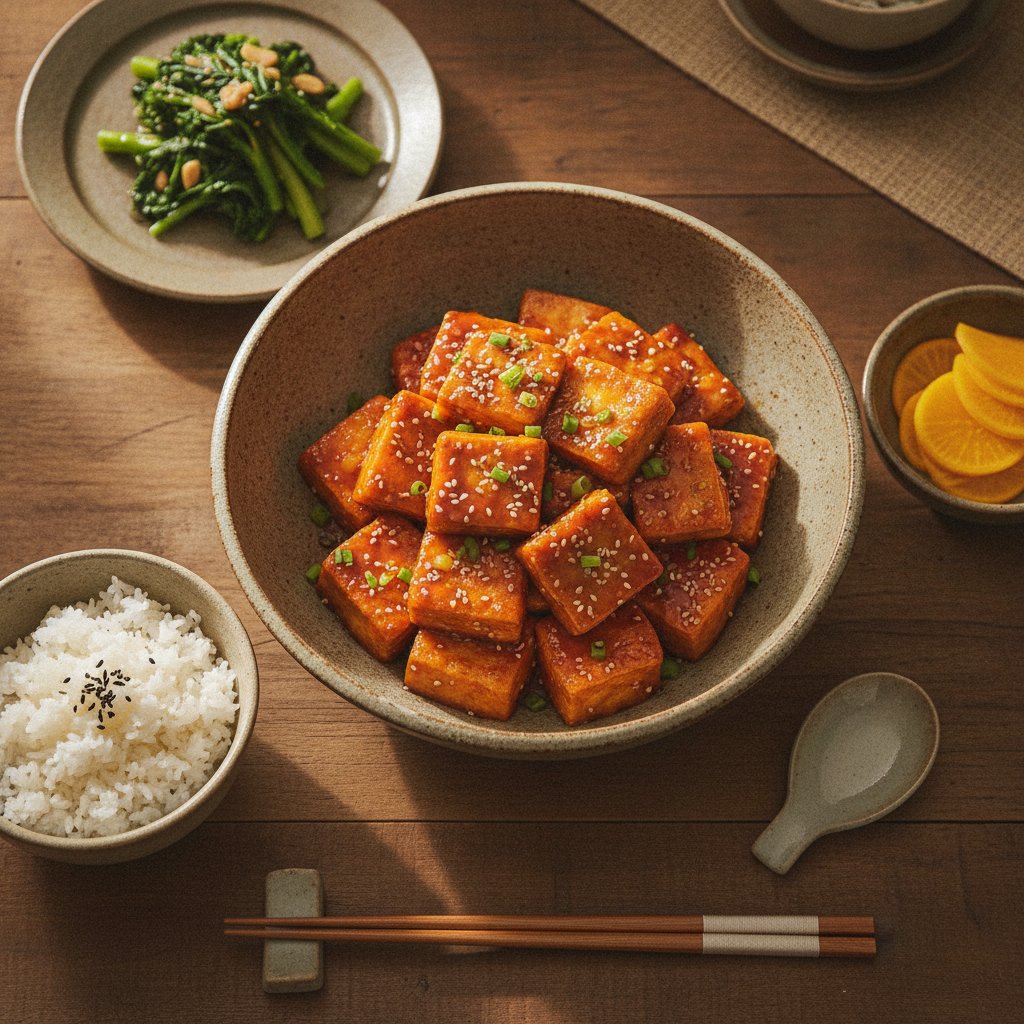
On rainy Thursday afternoons in Mapo, the sweet, garlic-heavy aroma of pan-fried glaze simmering in a warm wok always drew my brother and me into our grandmother’s kitchen. She would stand over the stove with long wooden chopsticks, flipping pale white cubes of dubu (tofu) in hot oil until they turned crackling golden brown. Within seconds of pulling them from the pan, she tossed them into a bubbling red sauce that smelled of toasted sesame, pungent garlic, and sweet fermented chili paste. That dish was dubu gangjeong (sweet and spicy glazed tofu), and in our home, a fresh batch never made it to the dinner table without half of it disappearing straight from the cooling rack.
In Korea, the word gangjeong originally referred to a traditional rice liquor confection coated in syrup and puffed grains. Over time, home cooks adapted the term to describe deep-fried or pan-fried proteins coated in a thick, sticky, caramelized glaze. While dakgangjeong (sweet and spicy fried chicken) gets most of the international spotlight, dubu gangjeong is the everyday unsung hero of Korean home cooking. We eat it as a comforting side dish—what we call banchan—alongside a bowl of freshly steamed short-grain white rice, or as a late-night snack with a cold drink.
Making this dish outside Korea can sometimes lead to soggy results if you follow standard western Western pan-frying methods. The secret to achieving that satisfying street-food crunch that holds up under a heavy glaze lies in how you prep the moisture out of the bean curd and the precise starch coating you choose. This recipe brings you the exact balance of crunch, spice, and stickiness that you would find in a neighborhood eatery in Seoul, using simple tools and ingredients readily available at your local supermarket.
Why This Works
- Double-drying and pressing the tofu: Salting and pressing extra-firm tofu draws out trapped internal water, preventing moisture from steaming the crust into a soggy layer during cooking.
- Potato starch coating over flour: Potato starch forms a glassy, micro-thin outer shell that locks out liquid, allowing the fried exterior to stay crisp even after absorbing hot syrup.
- Pre-caramelizing the glaze: Boiling the sauce ingredients together before adding the crispy tofu cooks off raw garlic notes and creates a thick lacquer that coats the cubes instantly without soaking into the core.
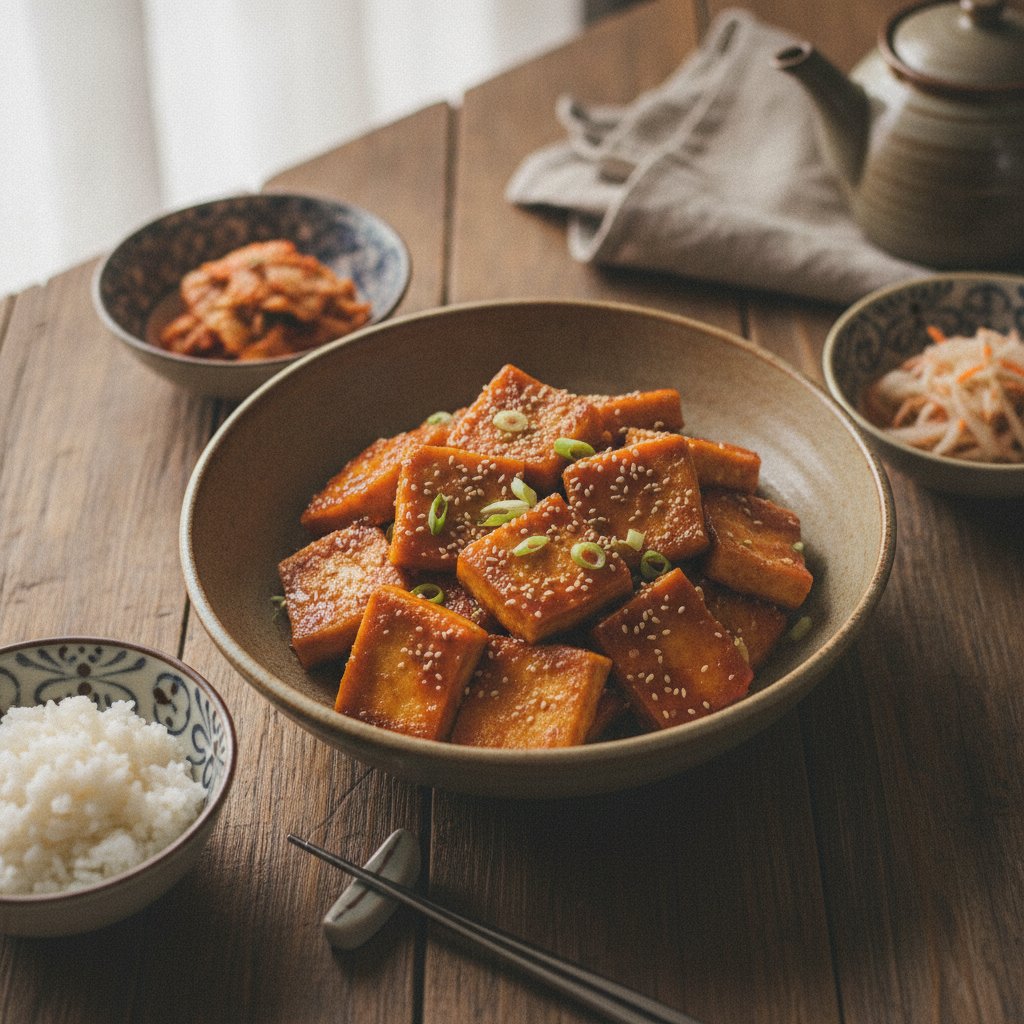
Ingredients
- 500 g (about 1.1 lbs) extra-firm block tofu (dubu)
- 3 g (about 1/2 tsp) fine sea salt
- 1 g (about 1/4 tsp) freshly ground black pepper
- 45 g (about 3 tbsp) potato starch (or cornstarch)
- 60 ml (about 1/4 cup) neutral cooking oil (such as canola, vegetable, or avocado oil)
- For the Sweet & Spicy Glaze:
- 30 g (about 2 tbsp) gochujang (Korean red pepper paste)
- 30 g (about 2 tbsp) tomato ketchup
- 30 ml (about 2 tbsp) moolyeot (Korean rice syrup or corn syrup)
- 15 ml (about 1 tbsp) jin ganjang (Korean dark/regular soy sauce)
- 15 g (about 1 tbsp) light brown sugar
- 15 ml (about 1 tbsp) chamgiroem (toasted sesame oil)
- 15 g (about 3-4 cloves) fresh garlic, minced
- 5 g (about 1 tsp) fresh ginger, grated
- 30 ml (about 2 tbsp) cold water
- For Garnish:
- 5 g (about 1 tbsp) toasted white sesame seeds
- 15 g (about 2 stalks) scallions, thinly sliced
Substitutions
If you cannot source every specific Korean ingredient at your local grocery store, these practical kitchen swaps will keep the flavor profile authentic:
- Korean Rice Syrup (Moolyeot / Joecheong): Rice syrup gives the glaze its thick, glossy luster and chewy pull. You can substitute equal parts light corn syrup or honey. If using honey, lower your glaze heat slightly, as honey burns more quickly than grain syrups.
- Gochujang: This fermented chili paste is essential for true Korean flavor. Look for green or red plastic tubs by classic brands like Sunchang or CJ Haandrepl at Asian market stalls or online. In an absolute pinch, combine 1.5 tablespoons Sriracha with 1/2 tablespoon tomato paste and a pinch of sugar, though it lacks the deep umami of true fermented soybean paste.
- Potato Starch: Potato starch yields the crispest texture used in professional Korean kitchens. However, standard cornstarch is an excellent 1:1 substitute that produces a very close crunch. Avoid using regular all-purpose wheat flour, which absorbs moisture quickly and turns soft.
How to Make It
- Press and drain the tofu: Remove the extra-firm tofu block from its water packaging. Slice the block horizontally into two thick slabs, then wrap both slabs tightly in 3-4 layers of paper towels or a clean kitchen linen. Place a flat cutting board on top and weight it down with a heavy canned good or skillet for 20 minutes. Why: Tofu is packed with manufacturing water. Removing this water is the single most critical step to prevent hot oil splatters and ensure a dry, crispy surface when fried.
- Cube and pre-season: Cut the pressed tofu slabs into bite-sized cubes, roughly 2 cm (about 3/4 inch) on each side. Transfer the cubes to a wide plate in a single layer, then sprinkle evenly with the fine sea salt and black pepper. Let them rest for 5 minutes. Why: Pre-seasoning seasons the interior bean curd itself, so every bite is flavorful rather than bland inside the sauce coating.
- Dredge in starch: Place the potato starch in a large, clean plastic zipper bag or a wide bowl. Add the seasoned tofu cubes in small batches, sealing the bag or tossing gently until every cube is dusted with a thin, even white coat of starch. Tap off any excess powder before frying. Why: Excess loose starch in the pan absorbs the oil, turning into gummy dough patches instead of a delicate crunch shell.
- Shallow fry until golden: Heat 60 ml (1/4 cup) of neutral oil in a non-stick skillet or seasoned cast-iron pan over medium-high heat. When the oil shimmers and a tiny pinch of starch dropped into the pan sizzles instantly, add the coated tofu cubes in a single layer, ensuring they do not touch. Pan-fry for 8 to 10 minutes total, turning the cubes with tongs every 2 minutes until all six sides are light golden brown and feel firm to the touch. Transfer the cooked tofu to a wire cooling rack set over a baking sheet. Why: Using a cooling rack rather than paper towels allows air to circulate around the fried cubes, preventing trapped steam from softening the bottoms.
- Build and caramelize the glaze: In a separate wide skillet or wok, combine the gochujang, ketchup, rice syrup, soy sauce, brown sugar, minced garlic, grated ginger, and water. Stir well to dissolve the pastes into a smooth liquid. Set the pan over medium heat and bring to a gentle simmer. Cook for 2 to 3 minutes, stirring constantly with a spatula until the sugar dissolves and the mixture thickens slightly, bubbling into large, slow-popping shiny drops. Why: Cooking the raw garlic and ginger in the sugary liquid reduces their sharp bite and transforms the watery mix into a thick syrup that coats instantly.
- Toss and finish: Turn off the heat completely. Immediately tip the fried crispy tofu into the pan along with the toasted sesame oil. Toss rapidly using a wide spatula for 30 to 45 seconds until every block is shiny and evenly coated in red lacquer. Transfer immediately to a serving platter and garnish with toasted sesame seeds and sliced green onions. Why: Tossing off the heat prevents the sugars from scorching and stops residual pan heat from steaming the crispy starch layer into mush.
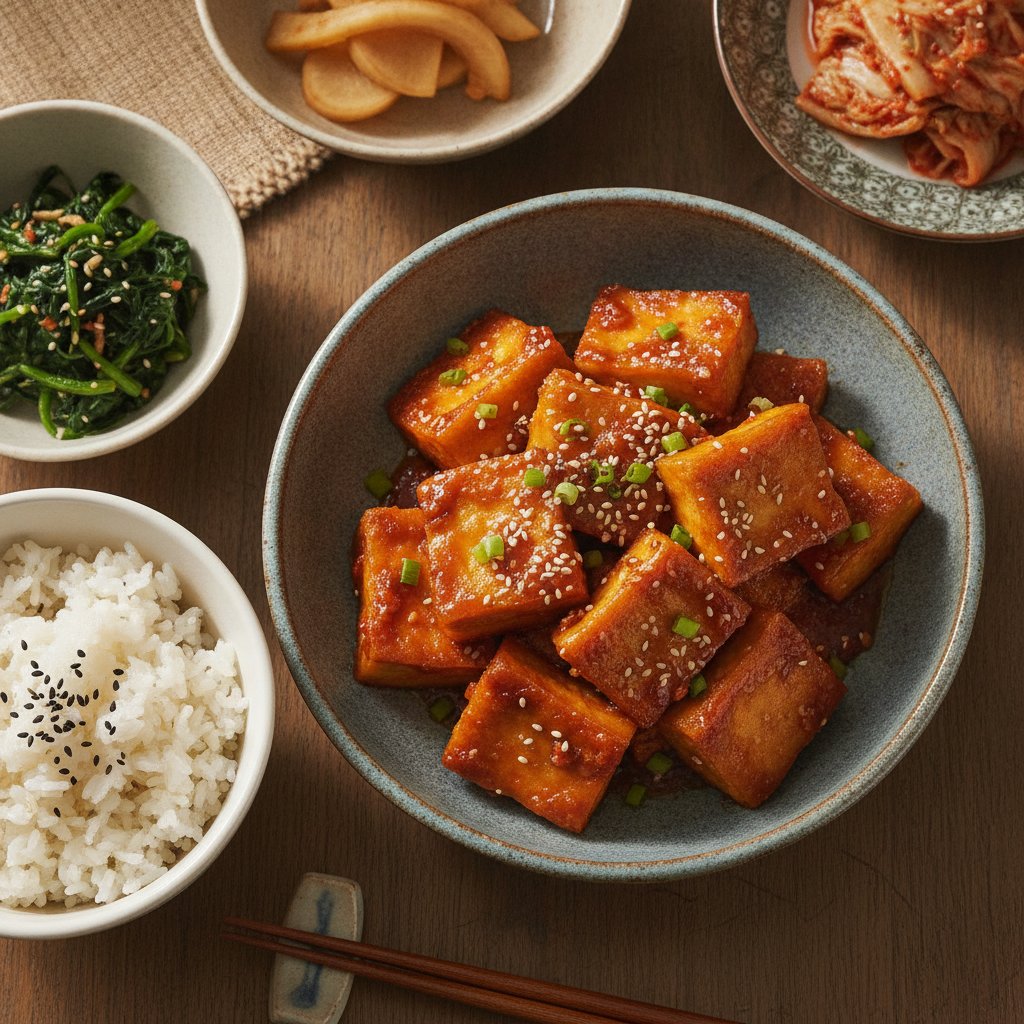
Tips from a Korean Kitchen
- Don’t skip the ketchup: Foreign cooks are often surprised to see ketchup in traditional street-food recipes like dubu gangjeong or sweet-and-spicy fried chicken glaze. In modern Korean culinary culture, ketchup provides the exact balance of fruit acidity, natural pectin, and vinegar required to soften the earthy, fermented heat of gochujang.
- Maintain space in the skillet: Overcrowding your frying pan causes the temperature of the oil to plunge instantly. When the oil temperature drops, the tofu absorbs oil like a sponge instead of searing the starch exterior into a crispy crust. Fry in two separate batches if your pan is smaller than 12 inches across.
- Toss right before serving: In Korea, we appreciate dishes with high contrast between texture and sauce. While the starch shell on these tofu bites is durable, no fried food stays crispy forever under a moist glaze. Stir the sauce and tofu together just minutes before you plan to eat for the best sensory experience.
Storage
Dubu gangjeong is at its absolute peak immediately after tossing while the glaze is warm and the crust is snappy. However, leftovers make a wonderful lunchbox addition the next day.
- Refrigeration: Store leftover coated tofu in an airtight glass container in the refrigerator for up to 3 days. The glaze will soak into the crust over time, turning the texture softer and chewier, which many home cooks in Seoul actually enjoy with cold rice.
- Reheating: To restore a bit of crispness, spread the chilled tofu bites onto a parchment-lined tray and heat in an air fryer or oven preheated to 180°C (350°F) for 4 to 5 minutes until warm. Avoid microwaving, as it turns the starch crust rubbery.
- Freezing: Freezing glazed tofu is not recommended. The expansion of ice crystals alters the internal cellular structure of extra-firm tofu, leaving it dry and spongy upon thawing.
FAQ
Can I air-fry the tofu instead of pan-frying?
Yes, air-frying works very well for this dish. After dredging the seasoned tofu cubes in potato starch, generously spray or toss them with 2 tablespoons of neutral oil to cover all sides. Arrange the cubes in a single layer in your air fryer basket and cook at 200°C (400°F) for 12 to 15 minutes, shaking the basket halfway through until golden and crispy. Proceed with tossing them into the simmered glaze as directed.
Why did my tofu end up soft instead of crispy?
Soft tofu usually happens for three reasons: using firm or medium tofu instead of extra-firm, not pressing out enough water before cooking, or overcrowding the skillet while frying. Skipping the wire cooling rack and dumping hot fried tofu onto flat paper towels can also trap steam underneath the starch layer, turning it soft within minutes.
How spicy is Korean sweet and spicy glaze?
This glaze features a mild-to-medium heat level with a strong accent of sweet and savory notes. Gochujang provides a warm, rich pepper flavor rather than an aggressive burning heat. The addition of ketchup, brown sugar, and rice syrup tempers the spice significantly. If you prefer a completely mild dish for children, reduce the gochujang to 1 tablespoon and increase the ketchup by 1 tablespoon.
More Korean Recipes
- Creamy Korean Corn Cheese (콘치즈)
- Gyeran Jjim (Korean Steamed Eggs): Always Fluffy
- Jangjorim Recipe: Authentic Korean Soy-Braised Beef and Eggs
- Eomuk Bokkeum (Stir-Fried Fish Cakes): Your New Favorite Lunchbox Side Dish