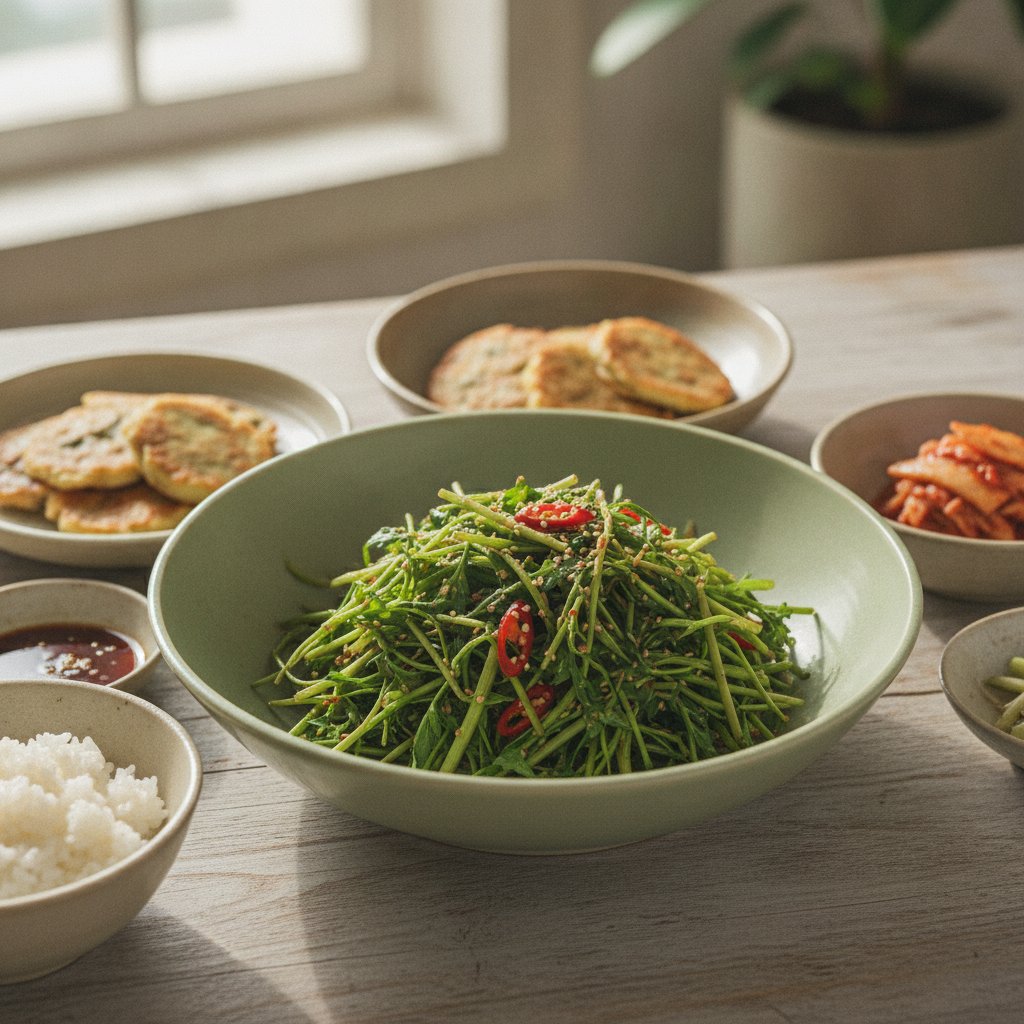
Fresh Water Dropwort Salad (Minari Muchim)
This post contains affiliate links. As an Amazon Associate, we earn from qualifying purchases at no extra cost to you.
Fresh Water Dropwort Salad (Minari Muchim)
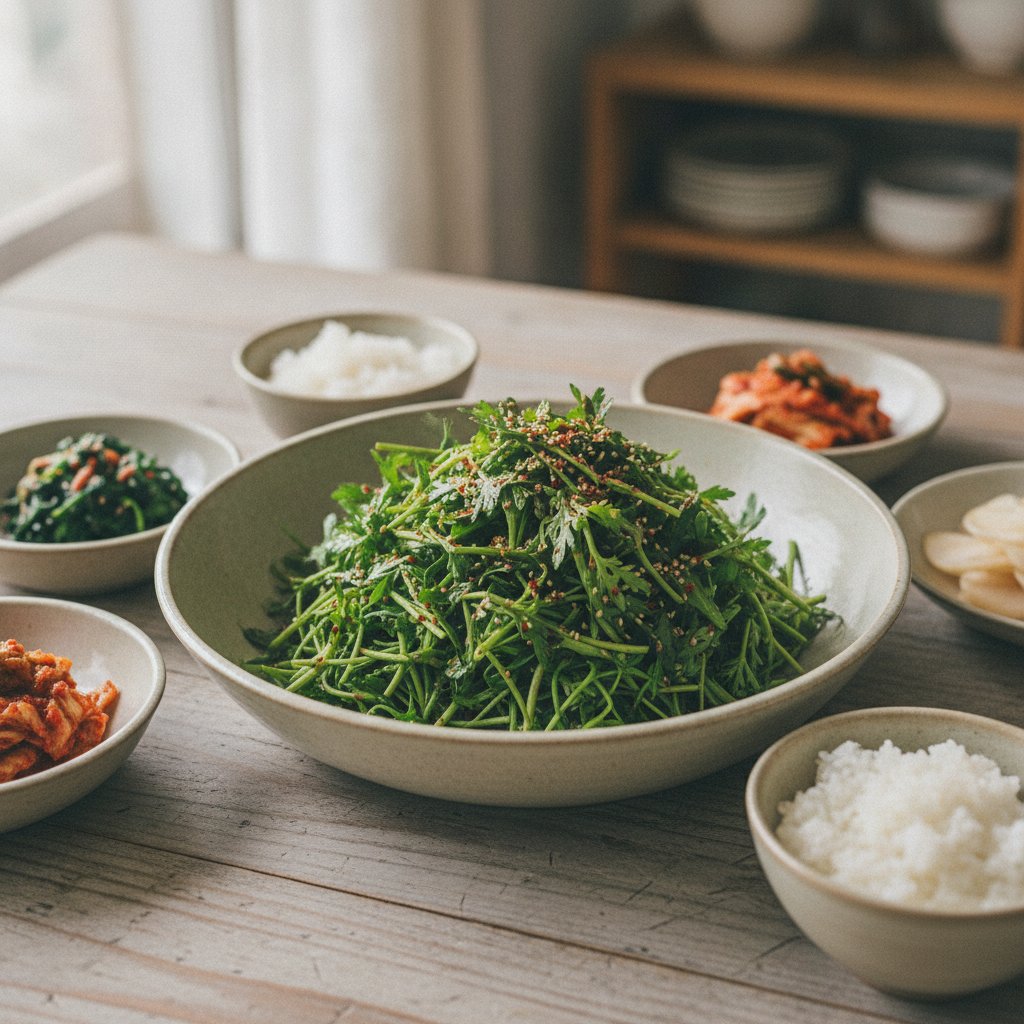
Every spring in Seoul, when the chill finally leaves the alleys and winter cabbage stews start feeling too heavy, my mother comes home from the market with a long, bright green bundle wrapped in newspaper. It is fresh minari, known in English as water dropwort or Oenanthe javanica. The moment she unties the twine, the kitchen fills with a sharp, herbal aroma that sits somewhere between celery, flat-leaf parsley, and fresh black pepper.
If you watched the Oscar-winning film Minari, you already know its reputation: a resilient wild herb that grows anywhere near water, thriving best after its first harvest. But in Korean homes, minari muchim (seasoned water dropwort salad) is simply one of our favorite springtime banchan (side dishes). We eat it alongside crisp samgyeopsal (grilled pork belly), toss it into bibimbap (mixed rice bowl), or serve it as a clean, pepper-bright side to rich fish soups. Finding a good classic Korean water dropwort recipe is the best way to bring this traditional flavor straight to your table.
There are two primary ways Koreans prepare this herb: raw with a sweet-and-sour red pepper dressing, or lightly blanched with a mild soy sauce and sesame seasoning. This recipe focuses on the classic blanched method. Blanching tames the wild, slightly muddy edge that wild dropwort can carry while locking in a vivid emerald green tone and a satisfying stem crunch.
Why This Works
- A 10-second blanching technique: Dipping the greens into salted boiling water for less than fifteen seconds softens the fibrous hollow stems just enough while neutralizing astringency without sacrificing crunch.
- Shocking and controlled squeezing: Plunging the blanched greens immediately into an ice bath sets the bright chlorophyll color. Squeezing out roughly 80% of the water leaves enough moisture to prevent toughness while keeping the dressing from becoming watery.
- Balanced savory dressing: Combining guk-ganjang (soup soy sauce) with toasted sesame oil highlights the aromatic herb rather than burying it under heavy paste.
🛒 Fresh Water Dropwort Salad
As an Amazon Associate we earn from qualifying purchases.
Shop Ingredients & Tools →Ingredients
- 300 g (about 10.5 oz) fresh water dropwort (minari)
- 1 tbsp coarse sea salt (for blanching water)
- 1.5 tbsp guk-ganjang (soup soy sauce) or regular light soy sauce
- 1 tsp gochutgaru (Korean chili flakes), optional for mild heat
- 1 tsp minced fresh garlic
- 1 tbsp toasted sesame oil
- 1 tsp maesil-cheong (Korean plum syrup) or sugar
- 1 tsp toasted white sesame seeds, lightly crushed between your fingers
- 1 green onion, finely chopped (optional)
Substitutions
Finding fresh minari outside an Asian supermarket can occasionally be tricky depending on where you live. If you cannot source fresh water dropwort for this Korean water dropwort recipe, here are realistic options:
- Watercress: The absolute best substitute. Watercress shares the same hollow stem structure, watery crunch, and peppery bite. Prepare it using the exact same blanching method described below.
- Celery leaves and stems mixed with flat-leaf Italian parsley: Tender inner celery stalks sliced thinly on a bias mixed with parsley leaves closely match the herbal, celery-like notes. Skip the blanching step if using tender celery and parsley; simply dress them raw.
- Tender crown daisy (ssukgat): Another common Korean aromatic herb available at most Asian markets that responds beautifully to this seasoning mix.
How to Make It
- Clean and trim the water dropwort carefully. Rinse the stalks thoroughly under cold running water. Submerge them in a large bowl filled with cold water and 1 tablespoon of white vinegar for about 10 minutes. Why: Because water dropwort grows in wet, marshy soil or shallow water beds, sediment and small garden debris easily hide in the hollow stems. The vinegar soak draws out grit without wilting the leaves. Trim off the bottom 1 inch of tough root ends and discard any yellowed leaves.
- Prepare an ice water bath. Fill a broad mixing bowl with cold tap water and a handful of ice cubes, setting it right next to your stovetop. Why: Cooking is a thermal process that continues even after greens leave the hot pot; having ice water ready stops the cooking instantly, preserving both bright green chlorophyll and delicate stem texture.
- Blanch briefly in salted boiling water. Bring a large pot filled with 2 liters (about 2 quarts) of water and 1 tablespoon of coarse salt to a rapid rolling boil. Submerge the dropwort stems-first into the water, pressing them down with tongs. Leave them in the boiling water for only 10 to 15 seconds. Why: High heat and salt cook off raw bitterness quickly. Leaving the herb in boiling water any longer than 15 seconds causes the hollow stems to collapse into stringy mush.
- Shock and squeeze excess liquid. Transfer the hot greens immediately into the ice bath using tongs. Swirl them until completely cold to the touch. Gather the dropwort into a neat bundle, lift it out, and squeeze gently between your palms to press out excess water. Aim to squeeze out most of the liquid while avoiding crushing the stems completely. Why: Trapped water dilutes your savory dressing, leaving the final dish bland and wet.
- Cut into manageable bite-sized lengths. Lay the squeezed bundle across a cutting board and slice it cleanly into 5 cm (about 2 inch) long sections. Why: Long uncut dropwort strands are awkward to lift with chopsticks and difficult to chew through cleanly.
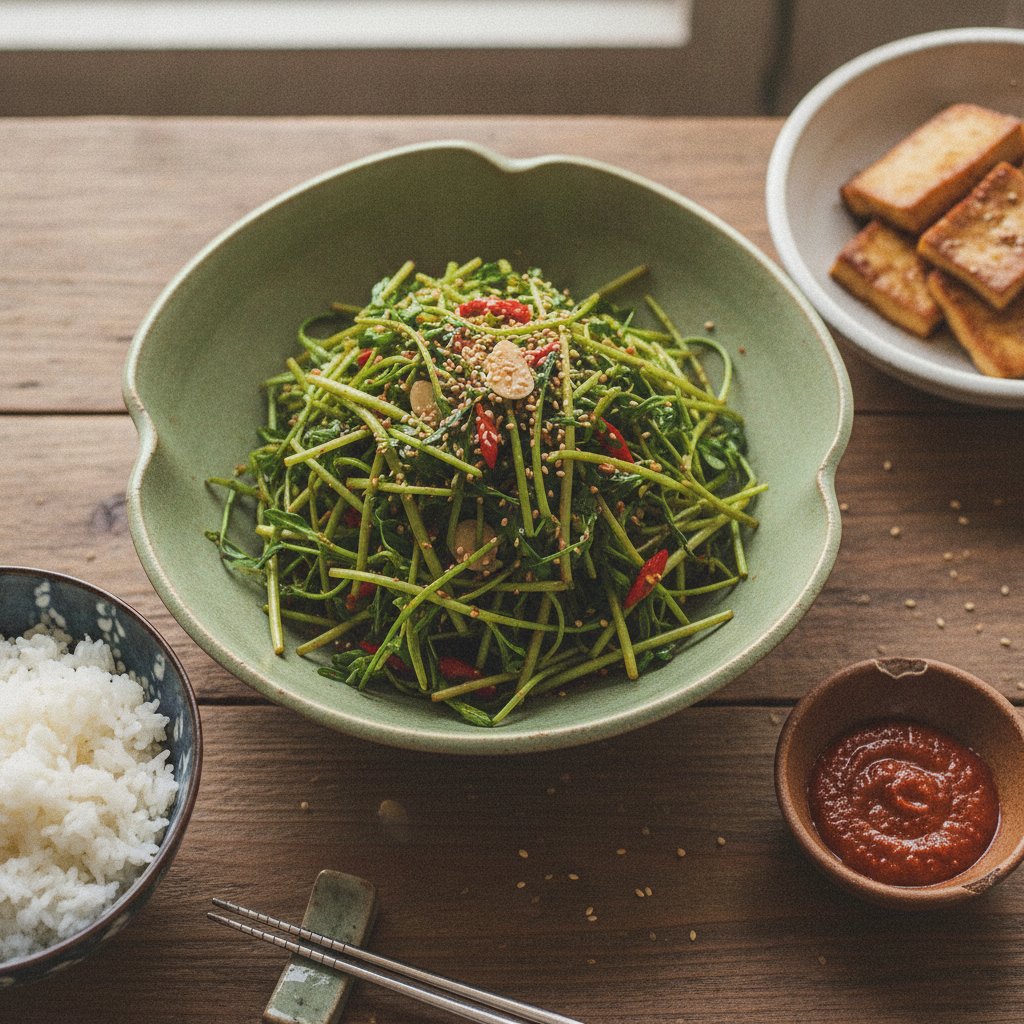
- Mix dressing and gently toss by hand. In a large mixing bowl, combine the soup soy sauce, minced garlic, gochutgaru, plum syrup, toasted sesame oil, and crushed sesame seeds. Mix well with a spoon. Add the cut dropwort to the bowl. Put on a disposable food glove and gently fluff the greens apart with your fingers, tossing light-handedly until every strand is coated. Why: Hand-tossing (son-mat, or ‘hand taste’) ensures the dressing distributes evenly without bruising the delicate leaves.
🛒 Fresh Water Dropwort Salad
As an Amazon Associate we earn from qualifying purchases.
Shop Ingredients & Tools →Tips from a Korean Kitchen
In Korean cooking, cold vegetable dishes live or die by small technique adjustments. Here are four practical secrets from home cooks in Seoul:
- Master the stem squeeze: Squeezing greens after blanching is an art. If you squeeze too hard, you bruise the cells, turn the leaves dark, and destroy the crisp texture. If you don’t squeeze enough, water pools at the bottom of your bowl within ten minutes. Aim for firm, steady pressure—like wringing out a delicate washcloth.
- Use soup soy sauce if available: Traditional guk-ganjang is light in color but deeply savory and saltier than standard soy sauce. It seasons the greens thoroughly without darkening the vibrant emerald color. If using regular soy sauce like Kikkoman, add a tiny pinch of fine sea salt to compensate for lower salinity.
- Toast and crush sesame seeds fresh: Whole sesame seeds often pass right through our digestive system without releasing flavor. Rubbing toasted seeds between your thumbs as you sprinkle them over the bowl releases essential aromatic oils right before serving.
- Pair with fatty meats: In Korea, we almost always order or prepare minari alongside rich pork dishes like samgyeopsal or spicy chicken stir-fries. The natural sharpness and high moisture content cut right through heavy pork fat, cleansing your palate between bites.
Storage
Minari muchim is finest right after it is tossed, while the sesame oil is fresh and aromatic. Store leftovers in an airtight glass container in the refrigerator for up to 3 days. Over time, the salt draws out moisture, causing the stems to lose crispness and pool liquid at the bottom. Give it a gentle toss with your chopsticks before serving cold straight from the fridge.
Do not freeze this dish. Freezing destroys the cellular structure of delicate hollow-stemmed water vegetables, turning them watery and limp upon thawing.
FAQ
Is water dropwort the same as regular celery or parsley?
No, though they belong to the same botanical family (Apiaceae). Water dropwort has hollow stems, a far lighter texture than celery, and a complex flavor profile combining the fresh crispness of celery with the herbal zest of flat-leaf parsley and black pepper.
Can I eat water dropwort completely raw?
Yes! Tender young spring leaves can be eaten raw. Wash them thoroughly in vinegar water, cut them fresh, and toss with a sweet-and-sour dressing made from gochujang (Korean chili paste), vinegar, garlic, and sugar for a vibrant raw salad.
Why did my dish turn out soggy or watery?
Wateriness usually comes from two errors: blanching for too long (over 15 seconds) which breaks down cellular walls, or failing to squeeze out enough excess moisture after cooling the greens in the ice bath.
🛒 Fresh Water Dropwort Salad
As an Amazon Associate we earn from qualifying purchases.
Shop Ingredients & Tools →More Korean Recipes
- Creamy Korean Corn Cheese (콘치즈)
- Gyeran Jjim (Korean Steamed Eggs): Always Fluffy
- Jangjorim Recipe: Authentic Korean Soy-Braised Beef and Eggs
- Eomuk Bokkeum (Stir-Fried Fish Cakes): Your New Favorite Lunchbox Side Dish
🛒 Fresh Water Dropwort Salad
As an Amazon Associate we earn from qualifying purchases.
Shop Ingredients & Tools →