Seasoned Bellflower Root (Doraji Muchim) Recipe
This post contains affiliate links. As an Amazon Associate, we earn from qualifying purchases at no extra cost to you.
Every autumn during the Chuseok harvest holiday, my grandmother would hand me a large stainless steel bowl full of tough, earthy white roots and a handful of coarse sea salt. My job was simple but exhausting: rub those roots between my palms with all my strength until my skin stung slightly and the water turned milky white. That was my very first cooking lesson in Seoul, and it taught me the single most important secret to working with doraji (bellflower root).
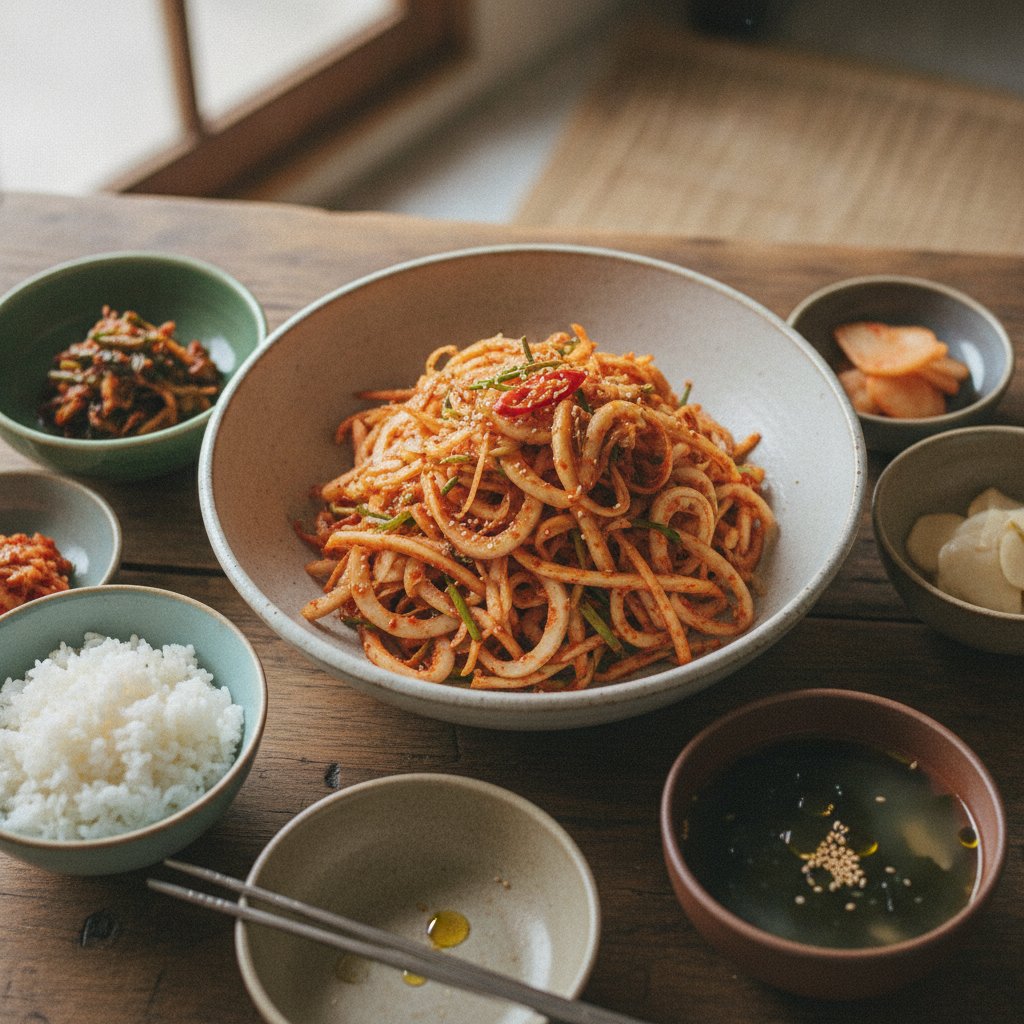
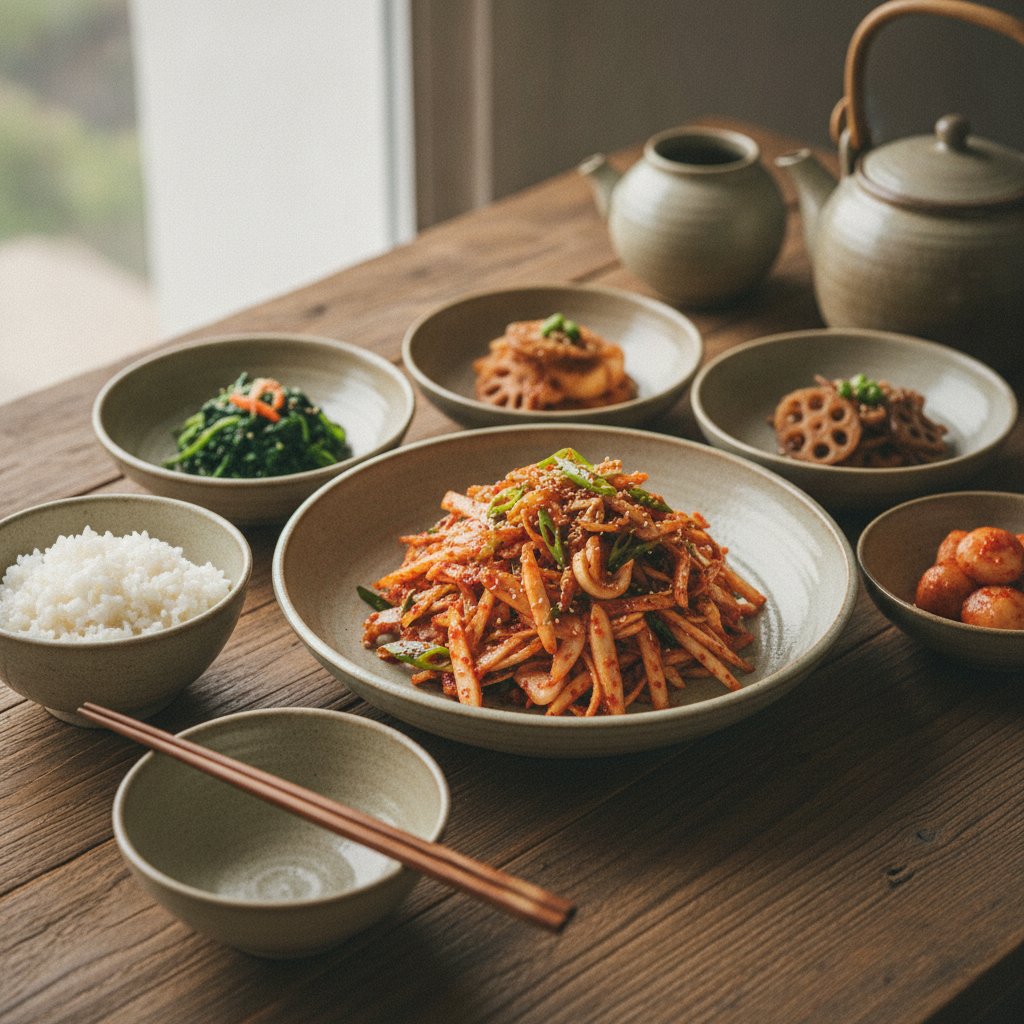
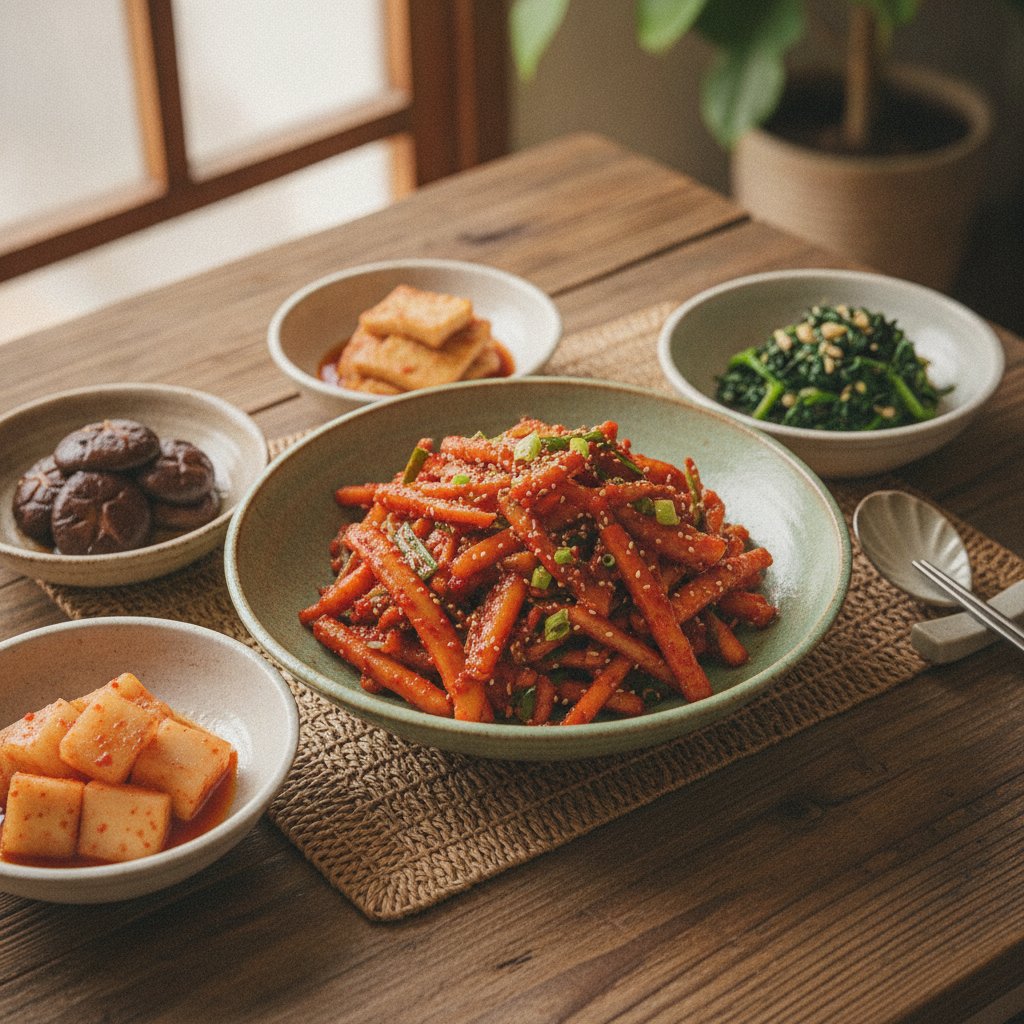
If you have ever tried a Korean bellflower root recipe at a restaurant or bought a packaged version from an Asian market, you already know its appeal. It delivers a uniquely satisfying, fibrous crunch alongside an earthy, slightly medicinal bite. When tossed in a vibrant red sweet-and-sour chili dressing, it becomes doraji muchim (spicy seasoned bellflower root)—one of the most beloved side dishes (banchan) in Korean home cooking. It commonly appears on holiday feast tables, inside a hot stone bowl of bibimbap (mixed rice bowl), or simply alongside a steaming bowl of fresh white rice on a weeknight.
For cooks outside Korea, bellflower root can seem intimidating. Raw doraji contains saponins—the same natural bitter compounds found in ginseng—which can overpower the dish if not properly handled. Many Western recipes skip the crucial debittering step or over-soak the root until it loses all its delightful crispness. In this recipe, I will show you the exact traditional method we use in Korean home kitchens to strip away harsh bitterness while preserving every bit of that signature, addictive crunch.
Why This Works
- Coarse salt friction scrub: Physical friction with coarse salt breaks down cell walls on the surface, drawing out bitter saponin sap without making the root mushy.
- Dual chili base balance: Combining savory gochujang (Korean chili paste) for richness with fine gochutgaru (Korean chili flakes) for bright color prevents the sauce from becoming overly watery or pasty.
- Sweet-and-sour vinegar brine: A quick toss in sweet rice vinegar neutralizes any lingering astringency while highlighting the root’s natural woody aromatics.
Ingredients
- 200 g (7 oz) prepped raw or rehydrated bellflower root (doraji)
- 20 g (about 1.5 tbsp) coarse sea salt or kosher salt (for scrubbing)
- 15 g (about 2 tbsp) Korean chili flakes (gochutgaru)
- 15 g (about 1 tbsp) Korean chili paste (gochujang, such as CJ or Sunchang)
- 30 ml (2 tbsp) rice vinegar or apple cider vinegar
- 15 g (1 tbsp) sugar or Korean plum syrup (maesil-cheong)
- 10 g (2 cloves) garlic, finely minced
- 25 g (about 2 green onion stalks), finely chopped
- 10 ml (2 tsp) toasted sesame oil
- 5 g (1 tsp) toasted sesame seeds
Substitutions
Finding fresh bellflower root outside major metro areas can be tricky. Look for pre-stripped, vacuum-sealed wet packages in the refrigerated produce section of Asian markets (often labeled as “Peeled Bellflower Root” or “Prepped Doraji”). You can also buy dried doraji strips on Amazon or online Asian grocers; simply soak them in lukewarm water for 2 to 3 hours until fully pliable before starting this recipe.
If bellflower root is completely unavailable, thinly julienned Korean radish (mu) or daikon radish makes a wonderful stand-in for the dressing technique, creating a quick radish salad (musaengchae). For the acid, apple cider vinegar works smoothly if you do not have rice vinegar on hand. If you do not have plum syrup, plain white sugar or honey will sweeten the dish perfectly.
🛒 Seasoned Bellflower Root Recipe
As an Amazon Associate we earn from qualifying purchases.
Shop Ingredients & Tools →How to Make It
- Prep and split thick roots: Inspect your bellflower roots. If any pieces are thicker than a pencil, split them down the middle lengthwise using a small paring knife or shred them by hand along their natural grain. Why: Equal thickness ensures that every strand loses its bitterness evenly and absorbs the dressing uniformally.
- Scrub with salt (The Debittering Step): Place the split roots in a medium mixing bowl and sprinkle the coarse salt directly over them. Add about 1 tablespoon of cold water to help the salt stick. Rub and knead the roots vigorously between your palms for 3 to 5 minutes. You will see a foamy, milky liquid release from the roots, and they will become remarkably pliable. Why: Saponins are concentrated near the surface. Physical friction combined with salt draws out this bitter foam without softening the internal crisp structure.
- Rinse and cold-soak: Pour cold tap water into the bowl, swish the roots around, and drain. Rinse them under cold running water 3 to 4 times until the water runs completely clear and no foam remains. Soak the rinsed roots in a bowl of cold water for 15 minutes. Why: Soaking washes away any leftover surface salt and gives the roots a final rinse to tone down any remaining sharp notes.
- Squeeze out excess water thoroughly: Take handfuls of the soaked root and squeeze them firmly over the sink to remove as much liquid as possible. Wrap them in a clean kitchen towel or paper towels and give them another squeeze. Why: Excess water dilutes your chili dressing, leaving you with a bland, soggy dish instead of a crisp banchan coated in a glossy sauce.
- Mix the spicy season base: In a clean bowl, whisk together the Korean chili flakes, gochujang, rice vinegar, sugar (or plum syrup), and minced garlic until a thick, uniform paste forms. Why: Pre-mixing the liquid and dry seasoning ingredients allows the sugar and chili flakes to hydrate evenly before touching the vegetables.
- Toss and finish: Add the squeezed bellflower root and chopped green onions to the bowl with the dressing. Wear a food prep glove and massage the dressing gently into the root strips for about 1 minute until every strand turns bright crimson. Finally, drizzle in the toasted sesame oil and sprinkle toasted sesame seeds over the top, tossing lightly once more. Why: Adding sesame oil at the very end seals in the flavors and ensures its rich aromatic aroma is not lost while mixing the sharp vinegar sauce.
Tips from a Korean Kitchen
- Taste as you scrub: After rinsing off the salt in Step 3, bite into a small piece of root. It should be pleasantly crunchy, slightly salty, with only a tiny hint of earthy bitterness at the end. If it still tastes harsh or overwhelmingly bitter, perform a second 2-minute salt rub and rinse again.
- Adjust heat vs. acid: Korean gochujang brands vary in sweetness and spice levels. If your brand is particularly spicy, add an extra teaspoon of sugar or plum syrup to balance the heat.
- Do not over-soak in salt: Never leave bellflower roots sitting in concentrated salt water for hours like you might with cabbage for kimchi. Prolonged salt exposure cures the roots into a rubbery, leather-like texture that ruins the signature snap.
- Serve chilled: While you can eat this immediately after making it, letting the salad chill in the refrigerator for 30 minutes allows the flavors to settle into the roots for maximum refreshment.
Storage
Transfer your seasoned bellflower root to an airtight glass container and store it in the main compartment of your refrigerator. It keeps exceptionally well for 5 to 7 days. In fact, many home cooks prefer eating it on day two or three, as the vinegar and chili paste mellow into a deep, harmonious tang. Do not freeze this dish; freezing breaks the cell walls of the roots, causing them to turn soft and watery upon thawing.
🛒 Seasoned Bellflower Root Recipe
As an Amazon Associate we earn from qualifying purchases.
Shop Ingredients & Tools →FAQ
Is bellflower root bitter, and how do I remove the bitterness?
Raw bellflower root has a naturally bitter, earthy flavor due to organic compounds called saponins. You can easily remove this bitterness by rubbing the roots vigorously with coarse salt for several minutes until foamy sap releases, followed by a thorough cold-water rinse and a short 15-minute soak.
Can I use dried bellflower root instead of fresh for this recipe?
Yes, dried bellflower root works very well. Rehydrate the dried roots in lukewarm water for 2 to 3 hours until completely softened and pliable. Once rehydrated, follow the exact salt-scrubbing and seasoning steps outlined in this recipe.
How do Koreans serve doraji muchim at home?
Doraji muchim is served chilled or at room temperature as a classic side dish (banchan) alongside grilled meats, stews like kimchi jjigae, or steamed rice. It is also a star component in spring bibimbap, where its sour, crunchy profile cuts through rich egg yolks and savory beef.
More Korean Recipes
- Creamy Korean Corn Cheese (콘치즈)
- Gyeran Jjim (Korean Steamed Eggs): Always Fluffy
- Jangjorim Recipe: Authentic Korean Soy-Braised Beef and Eggs
- Eomuk Bokkeum (Stir-Fried Fish Cakes): Your New Favorite Lunchbox Side Dish
🛒 Seasoned Bellflower Root Recipe
As an Amazon Associate we earn from qualifying purchases.
Shop Ingredients & Tools →