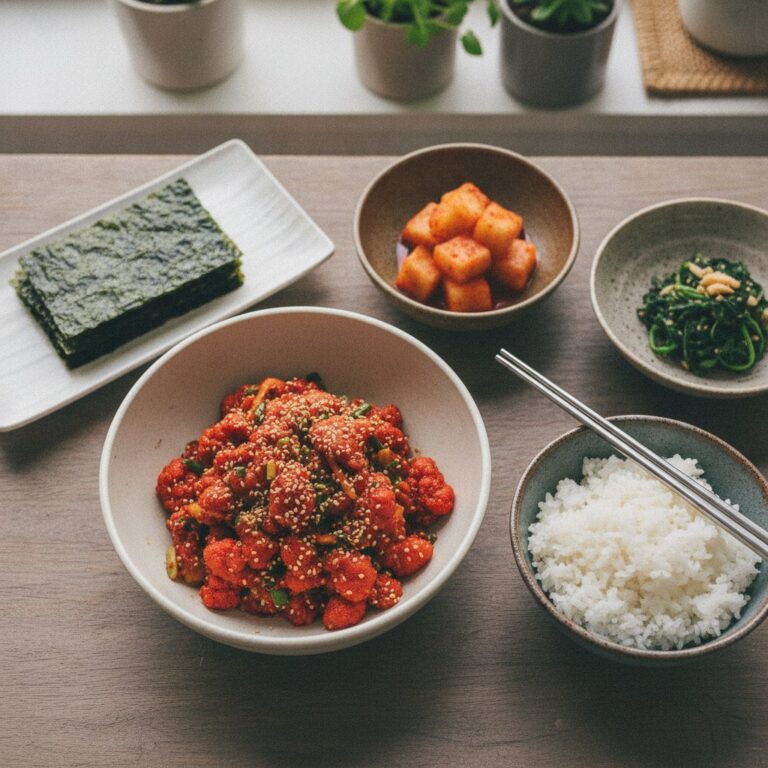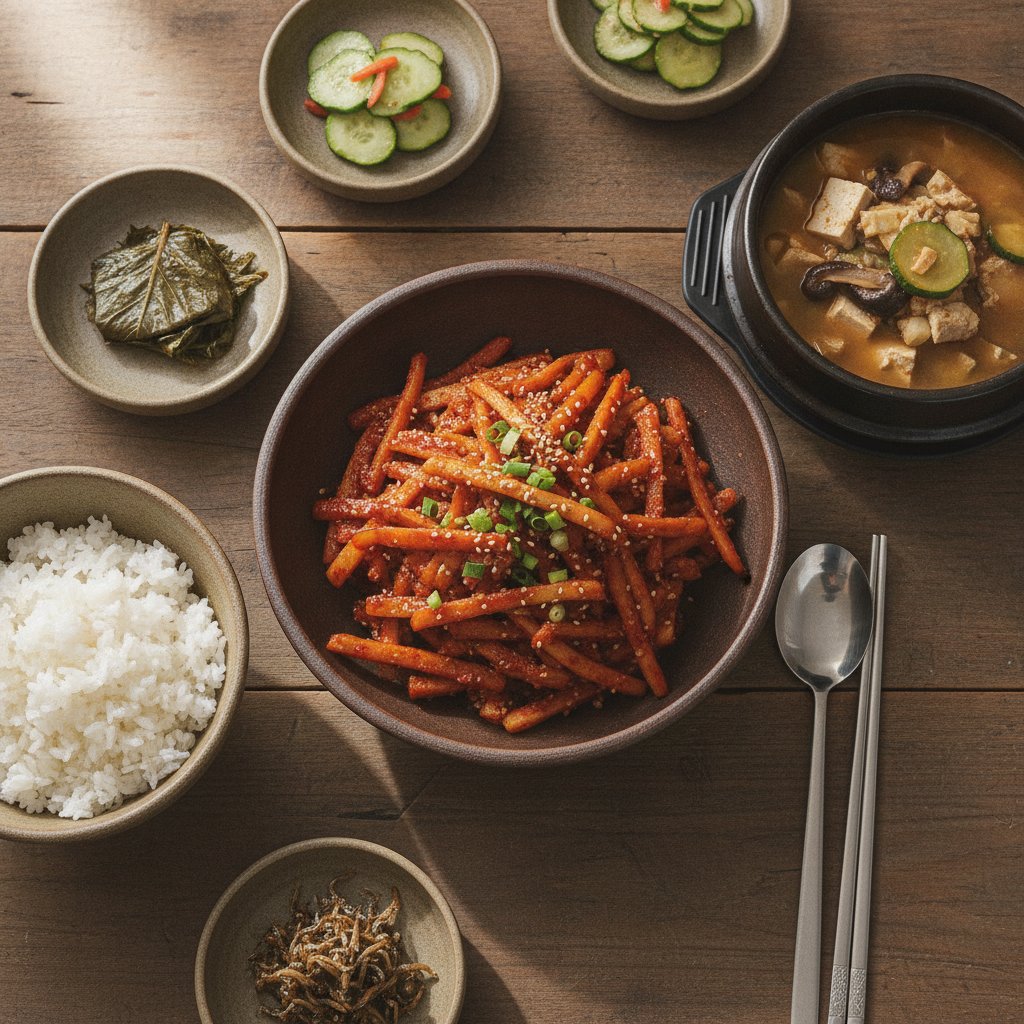
Korean Dried Radish Side Dish (Mu Malleangi)
This post contains affiliate links. As an Amazon Associate, we earn from qualifying purchases at no extra cost to you.
Every autumn in Seoul, as the crisp autumn air turns chilly and white radishes reach their peak sweetness, my mother spreads hundreds of thin radish batons across bamboo drying screens on our balcony. Over a week under the bright, dry sunlight, those plump radishes shrink into tough, beige strips. To an outsider, they look discarded and useless. But in a Korean home, those sun-dried strips represent pure culinary magic: mu malleangi muchim (seasoned dried radish strips).
If you have ever eaten late-night bossam (boiled pork belly wrapped in cabbage) at a Seoul night market, you have almost certainly encountered this dish. It is the deep red, delightfully chewy banchan (side dish) tucked next to the pork, cutting through the rich meat with its sweet, fiery crunch and complex savory depth. Unlike fresh radish side dishes that bleed liquid and go soft after two days, this dried version retains an unbelievable snap for weeks in the refrigerator. In my family, we make a big batch at the start of winter to eat alongside steaming bowls of seolleongtang (ox bone soup) or simply mixed with warm rice and a spoonful of sesame oil on busy weeknights.
Making this traditional Korean dried radish side dish at home is surprisingly simple, but it relies on mastering one crucial element: texture. If you soak the dried radish too long, it turns into a spongy, waterlogged disappointment. If you don’t soak it enough, you’ll feel like you are chewing on leather bands. Here is how we balance moisture and flavor in a traditional Korean home kitchen.
Why This Works
- Controlled rehydration time: A strict 15-to-20-minute lukewarm soak allows the radish fibers to plump up without absorbing excess water, preserving the famous Korean odok-odok (pleasantly crunchy and rubbery) bite.
- Pre-salting and hard squeezing: Rubbing the rehydrated strips with a pinch of sea salt draws out lingering bitter water and raw moisture, ensuring the spicy glaze clings tightly instead of watering down over time.
- Rice syrup glaze base: Using dense Korean grain syrup rather than dissolved sugar creates a glossy, varnish-like coating that keeps the chili paste locked onto the dried vegetable while delivering a slow, rounded sweetness.
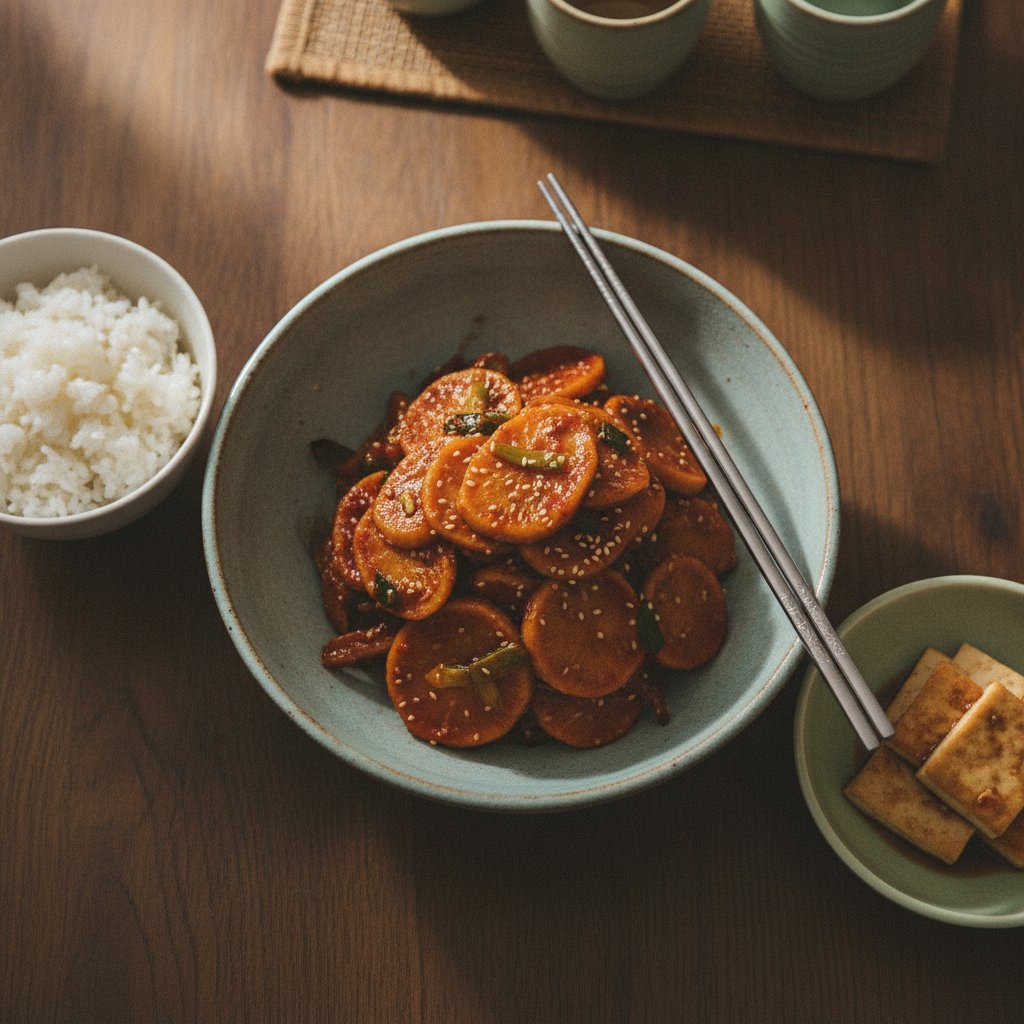
Ingredients
- 100 g (3.5 oz / about 2.5 cups) dried radish strips (mu malleangi)
- 30 g (1 oz / about 1/2 cup) dried shredded squid (ojingeo chae), optional but highly traditional
- 3 stalks green onions (approx. 45 g / 1.5 oz), cut into 5 cm (2-inch) pieces
- 0.5 tsp (3 g) fine sea salt (for salting stage)
- 4 tbsp (32 g) coarse Korean chili powder (gochutgaru)
- 3 tbsp (45 ml) Korean rice syrup (ssal-jocheong) or corn syrup (mullyeot)
- 2 tbsp (30 ml) Korean anchovy fish sauce (myeolchi aekjeot)
- 1.5 tbsp (22 ml) regular soy sauce
- 1 tbsp (15 g) minced garlic
- 0.5 tsp (2 g) minced fresh ginger
- 1 tbsp (15 ml) toasted sesame oil
- 1 tbsp (9 g) toasted sesame seeds
Substitutions
If you cannot find pre-dried radish strips at your local Asian market, search online retailers for “dried daikon strips” or “mu malleangi.” In a pinch, you can make your own by cutting fresh Korean radish (or daikon) into 0.5 cm (1/4-inch) thick, 5 cm (2-inch) long batons and dehydrating them at 60°C (140°F) for 8 to 10 hours until completely dry and leathery.
For the sweetener, Korean rice syrup (ssal-jocheong) provides the best shine and body, but light corn syrup or brown rice syrup works equally well. Avoid pure honey if possible, as its strong floral aroma can overpower the delicate dried radish profile. If you are vegan, replace the anchovy fish sauce with Korean soup soy sauce (guk-ganjang) or a rich kelp-based liquid seasoning like Yondu.
🛒 Korean Dried Radish Side Dish
As an Amazon Associate we earn from qualifying purchases.
Shop Ingredients & Tools →How to Make It
- Rehydrate the dried radish strips carefully. Place 100 g (3.5 oz) of dried radish strips in a large bowl and submerge them in lukewarm water. Let them soak for 15 to 20 minutes max. Why: Dried radish acts like a dense sponge. Over-soaking for 45 to 60 minutes strips away its unique elasticity and leaves you with waterlogged, mushy radish. Take a piece out at 15 minutes and bite it: it should feel pliable on the outside but still yield a firm, rubbery core.
- Rinse and rub to clear dust. Swirl the rehydrated radish gently in cold water two or three times, then drain through a colander. Why: Traditional sun-dried radish often carries subtle starch or outdoor dust on its surface. Rubbing it under fresh water cleans the exterior so your sauce tastes bright and clean.
- Salt and express excess liquid. Toss the drained radish strips with 0.5 tsp fine sea salt in a bowl and let sit for 5 minutes. Then, take small handfuls of radish and squeeze them firmly between your palms to wring out every last drop of water. Why: Unbound water inside the vegetable will leach into your seasoning bowl later, diluting your sauce and making the dish slimy. Squeezing creates empty room inside the radish fibers for the spicy marinade to take its place.
- Hydrate the chili flakes. In a wide mixing bowl, combine 4 tbsp gochutgaru, 3 tbsp rice syrup, 2 tbsp fish sauce, 1.5 tbsp soy sauce, 1 tbsp minced garlic, 0.5 tsp minced ginger, and the cut green onions. Mix well and let the paste sit for 5 to 10 minutes. Why: Dried gochutgaru needs a few minutes to absorb liquid from the syrups and sauces. Resting allows the chili flakes to swell into a deep crimson, sticky paste that glues smoothly to the radish without leaving grainy powder behind.
- Massage the radish into the glaze. Put on food-safe disposable gloves. Add the squeezed radish strips (and the optional dried shredded squid) into the paste bowl. Vigorously rub and squeeze the radish strips with your hands for 2 to 3 minutes until every single piece changes color from dull yellow to bright red. Why: The friction from hand-massaging softens the tough dried skin slightly and forces the sticky seasoning into the deep grooves of the rehydrated strips.
- Finish with aromatics. Drizzle 1 tbsp toasted sesame oil over the seasoned radish and toss in 1 tbsp toasted sesame seeds. Fold gently to distribute. Why: Adding sesame oil at the very end wraps the radish in an aromatic, glossy seal without blocking the water-based seasonings from penetrating the vegetable first.
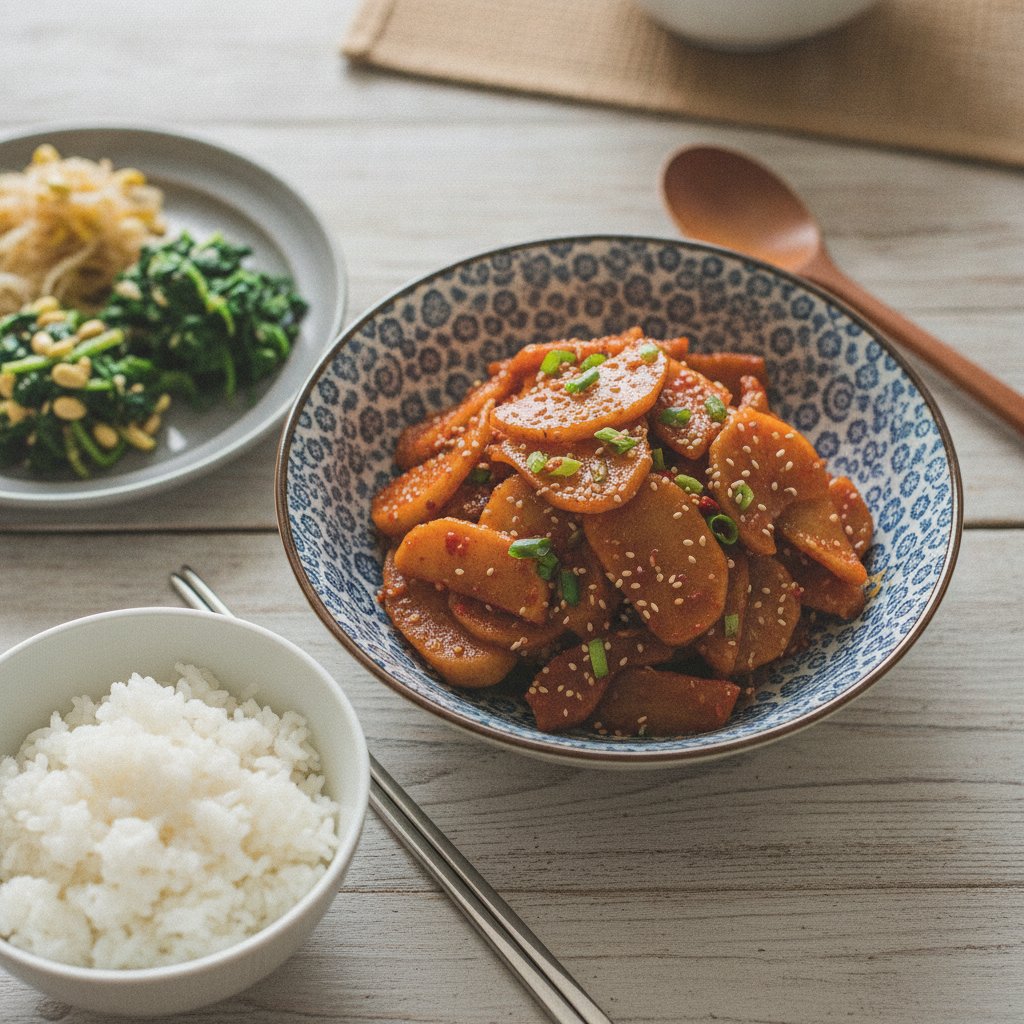
Tips from a Korean Kitchen
In home cooking, we often talk about son-mat—literally “hand taste.” It refers to the intuitive care and physical technique a cook puts into a dish. For this Korean dried radish side dish, hand technique makes all the difference. Always use your hands (protected by clean gloves) to knead the seasoned radish rather than stirring with a spoon. Squeezing the spice paste into the radish fibers coats it ten times better than passive mixing ever could.
Another classic home cook secret is adding a handful of dried shredded squid (ojingeo chae) or fresh garlic scapes (manul-jjong) cut into short lengths. Dried squid absorbs the extra chili glaze and softens alongside the radish, offering a wonderful savory seafood note that balances the earthy radish pungency.
Lastly, do not panic if the dish tastes slightly sharp or overly salty right out of the bowl. Dried radish side dishes are designed to mature. As it sits in your refrigerator overnight, the radish strips continue to draw in the garlic, fish sauce, and rice syrup, rounding out into a sweet, rich, harmonized bite by day two.
Storage
Transfer the finished dish into a clean glass container with an airtight lid. Store it in the coldest part of your refrigerator. Because the radish has been rehydrated, salted, and coated in natural preservatives like salt, chili, and sugar, it stays fresh and deliciously crunchy for 3 to 4 weeks.
Do not freeze this dish. Freezing destroys the carefully preserved cellular structure of the dried radish, causing it to thaw into a limp, watery mess. Serve it cold directly from the fridge alongside warm soups, grilled meats, or boiled rice.
🛒 Korean Dried Radish Side Dish
As an Amazon Associate we earn from qualifying purchases.
Shop Ingredients & Tools →FAQ
Why is my mu malleangi tough and leathery even after mixing?
If your radish strips are uncomfortably tough, they were either under-soaked during the initial prep or were cut from extremely old, woody radishes. To fix this, cover the seasoned dish tightly in your container and let it sit at room temperature for 3 to 4 hours before refrigerating; the moisture from the sauces will gradually soften the fibers without ruining the crunch.
Can I make this dish without gochutgaru?
Coarse Korean chili powder (gochutgaru) provides a unique balance of mild heat, subtle sweetness, and vibrant red color without adding liquid. Western chili powders contain cumin and garlic powder, while chili flakes are too fiery and dry. If you cannot tolerate spice, you can reduce the gochutgaru by half and supplement with mild sweet paprika to maintain the traditional red glaze.
Why did my dish turn watery after a few days in the fridge?
A watery dish happens when the radish strips were not squeezed hard enough after rehydrating, or if the pre-salting step was skipped. Trapped tap water slowly seeps out into the container, breaking down the sticky rice syrup coating. Always wring out the rehydrated radish in small handfuls until no more liquid drips out before combining it with your marinade.
More Korean Recipes
- Creamy Korean Corn Cheese (콘치즈)
- Gyeran Jjim (Korean Steamed Eggs): Always Fluffy
- Jangjorim Recipe: Authentic Korean Soy-Braised Beef and Eggs
- Eomuk Bokkeum (Stir-Fried Fish Cakes): Your New Favorite Lunchbox Side Dish
🛒 Korean Dried Radish Side Dish
As an Amazon Associate we earn from qualifying purchases.
Shop Ingredients & Tools →