Korean Braised Chili Peppers (Gochu Jorim)
This post contains affiliate links. As an Amazon Associate, we earn from qualifying purchases at no extra cost to you.
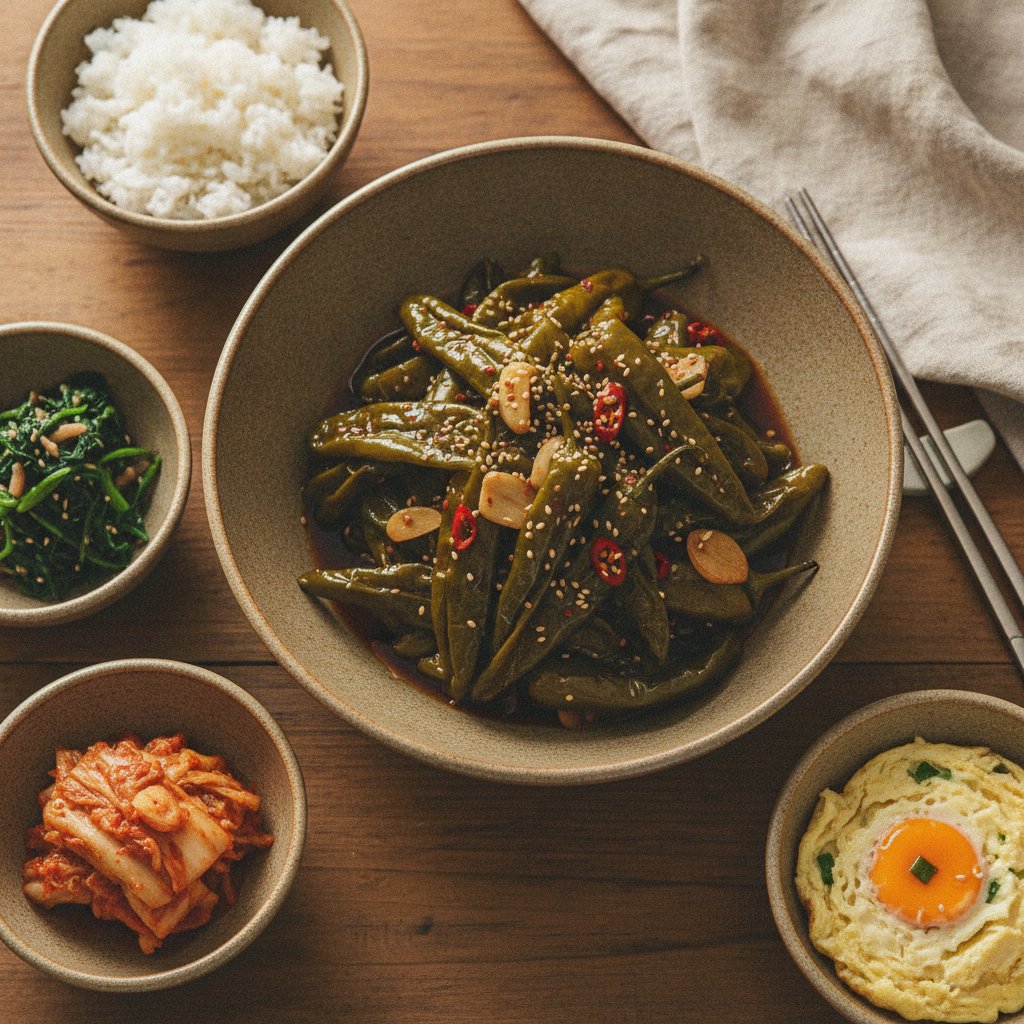
Every Korean refrigerator has a small glass container tucked in the back corner that smells faintly of toasted sesame oil and warm braised soy sauce. Inside, long green peppers sit crumpled and glistening, transformed from crisp fresh vegetables into tender, sweet, and savory bites. This is gochu jorim (braised soy sauce green chili peppers), one of the most beloved traditional banchan (side dishes) in Korean home cooking.
In Seoul homes, we classify certain dishes as bap dooduk, which translates literally to ‘rice thief.’ The idea is simple: a side dish so full of rich, savory umami that your bowl of warm white rice disappears before you even realize it. Gochu jorim is a classic rice thief. When you bite into a properly braised pepper, it yields effortlessly, releasing a burst of sweet-and-salty soy liquid that coats your palate. It is savory, slightly earthy, mildly spicy, and deeply satisfying.
Many people outside Korea assume Korean food is always red, bubbling, and fiery. While we certainly love our gochujang (fermented chili paste), everyday home cooking relies just as heavily on gently braised vegetables made with soy sauce, garlic, and subtle sweeteners. Korean braised chili peppers are eaten alongside everyday meals—served cold or at room temperature next to a steaming bowl of rice, a quick soup, or roasted fish. Best of all, a single batch takes less than twenty minutes to cook and keeps beautifully in your refrigerator for up to two weeks.
Why This Works
- Pricking the skins unlocks internal seasoning: Piercing each pepper with a toothpick or fork allows the savory braising liquid to flow inside the pepper cavity, seasoning it from the inside out while preventing steam pockets from bursting the pepper skins.
- A quick oil sear builds depth before braising: Searing the peppers briefly in a hot pan blisters the outer skin, softening the tough cell walls and creating micro-crevices that absorb the soy sauce reduction much faster.
- Adding sweetener at two different stages yields the ideal texture: Cooking the peppers with raw sugar breaks down the tough skins, while finishing with Korean rice syrup (moolyeot) at the very end locks in moisture and creates a glossy, non-sticky glaze.
Ingredients
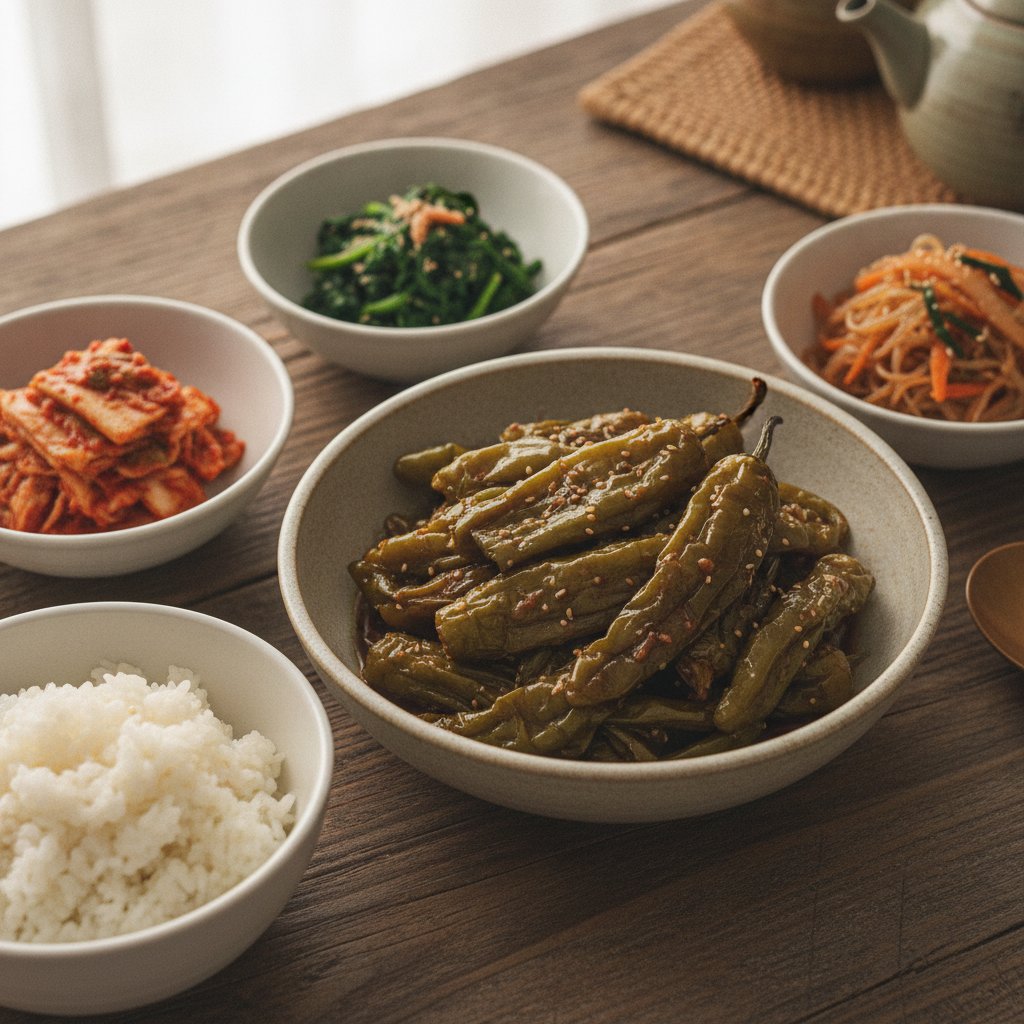
- 300 g (about 10.5 oz) shishito peppers or mild Korean green peppers (put-gochu)
- 15 g (about 0.5 oz / roughly 10–12 medium) dried large anchovies for soup broth (myeolchi), heads and guts removed (optional, but traditional)
- 3 tbsp (45 ml) soy sauce (jin-ganjang or regular soy sauce)
- 1 tbsp (15 ml) mirin or cooking rice wine
- 1 tbsp (12 g) brown sugar or granulated white sugar
- 2 tbsp (30 ml) Korean rice syrup (moolyeot), corn syrup, or oligo syrup
- 3 cloves garlic, finely minced
- 120 ml (1/2 cup) water or kelp broth
- 1 tbsp (15 ml) vegetable oil or neutral cooking oil
- 1 tbsp (15 ml) toasted sesame oil
- 1 tsp (3 g) toasted sesame seeds
Substitutions
If you cannot find mild Korean green peppers (put-gochu) or shishito peppers at your local store, fresh padron peppers make an outstanding alternative. Japanese shishito peppers are widely available at most Western supermarkets like Trader Joe’s or Whole Foods and work exceptionally well for this recipe because their thin skins soften quickly when simmered.
If you prefer a strictly vegetarian or vegan version, simply omit the dried anchovies and replace the plain water with a quick dried kelp (dashima) stock, or use a splash of vegetable broth. If you do not have Korean rice syrup (moolyeot), liquid honey, agave nectar, or brown rice syrup will work, though you should add honey after turning off the heat to preserve its delicate flavor.
🛒 Korean Braised Chili Peppers
As an Amazon Associate we earn from qualifying purchases.
Shop Ingredients & Tools →How to Make It
-
Wash and prepare the peppers: Wash 300 g (10.5 oz) of shishito peppers under cool running water. Pat them thoroughly dry with a clean kitchen towel. Trim the long stems, leaving about a quarter-inch cap attached to the top so the peppers stay intact during braising. Using a toothpick or the tip of a small paring knife, prick each pepper two or three times. Why this matters: Green pepper skins are waterproof and tough; poking small holes allows the sweet soy sauce to penetrate deep inside the cavity instead of sliding off the exterior surface.
-
Clean the dried anchovies (if using): If you are using dried broth anchovies, split each fish open along the belly with your thumbnail. Pull out and discard the dark black interior gut and remove the head. Discard the heads and guts, keeping only the split body fillets. Why this matters: The digestive tract of dried anchovies becomes bitter when boiled. Removing it ensures your braising broth remains clean, nutty, and savory without harsh bitterness.
-
Blister the peppers in oil: Place a wide skillet or pan over medium-high heat and add 1 tbsp (15 ml) of vegetable oil. Once the oil shimmers, add the prepared peppers. Pan-fry them, stirring frequently with tongs or a spatula, for about 3 to 4 minutes until the skins begin to blister, turn translucent in spots, and show light golden brown marks. Why this matters: Searing breaks down the glossy outer waxy layer of the pepper skin, allowing heat and liquid to break down the pepper’s internal fibers quickly during the braising phase.
-
Combine braising liquid and simmer: Lower the heat to medium. Add the cleaned dried anchovies, 3 minced garlic cloves, 3 tbsp (45 ml) soy sauce, 1 tbsp (15 ml) mirin, 1 tbsp (12 g) sugar, and 120 ml (1/2 cup) water into the pan with the peppers. Stir well to dissolve the sugar. Bring the liquid to a gentle boil, then lower the heat to medium-low. Cover the pan with a lid and let it simmer gently for 8 to 10 minutes, stirring once halfway through, until the peppers turn limp and darken into an olive-green shade.
-
Reduce and add the glaze finish: Remove the lid. Turn the heat back up to medium. Add 2 tbsp (30 ml) of Korean rice syrup. Stir continuously as the braising liquid rapidly bubbles and reduces down into a thick, shiny syrup that clings to the peppers, about 2 to 3 minutes. Why this matters: Adding liquid syrup at the very end rather than the beginning prevents the sugars from scorching or turning overly sticky, giving the banchan a dark, glossy coating.
-
Finish with aromatic oil and seeds: Turn off the heat completely. Drizzle 1 tbsp (15 ml) of toasted sesame oil over the peppers and sprinkle with 1 tsp (3 g) of toasted sesame seeds. Toss everything gently one final time to coat every pepper evenly. Allow the dish to cool slightly before serving.
Tips from a Korean Kitchen
Here are a few small details that make a noticeable difference in how your peppers turn out:
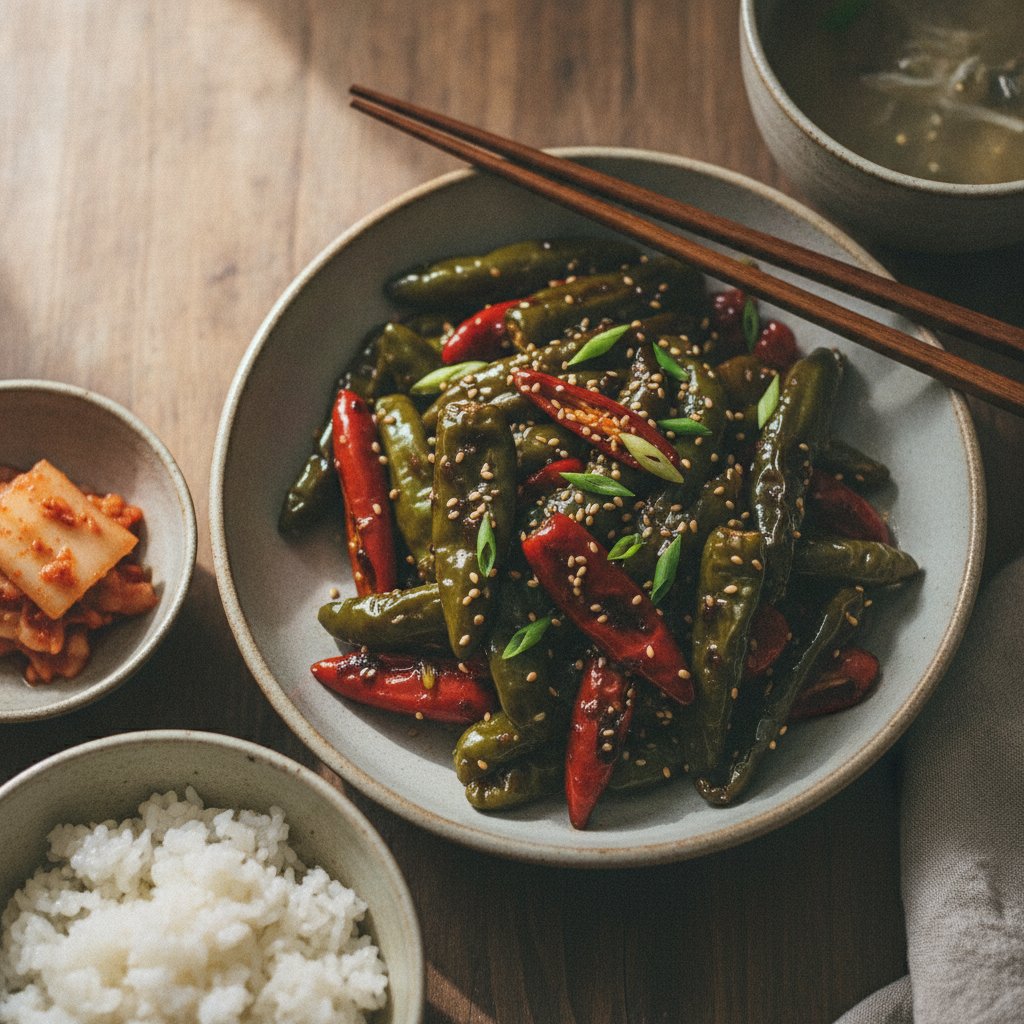
- Expect pepper roulette: Shishito peppers are generally very mild, but roughly one out of every ten peppers can carry a surprising kick of heat. If you are sensitive to spice, keep a close eye when tasting, or mix mild shishitos with a small handful of sliced sweet mini bell peppers for color and sweetness.
- Do not rush the reduction step: The hallmark texture of authentic gochu jorim is a soft, slightly shriveled pepper that holds onto liquid. If your peppers still feel springy or crisp after 10 minutes of simmering, put the lid back on and add 2 tablespoons of extra water to give them a few more minutes to break down fully before adding the syrup.
- Save the liquid gold in the pan: When transferring the cooked peppers into a storage container, spoon every drop of the thick soy reduction over the top. As the dish sits in the fridge, the peppers continue absorbing that seasoned sauce, tasting even better on day two and three.
- Try it over warm rice with butter: A favorite late-night meal in Korean households is taking a bowl of steaming fresh white rice, dropping in a tiny pat of unsalted butter, topping it with 3 or 4 braised peppers, and drizzling a spoonful of the soy pan sauce over everything. Stir it up and enjoy instantly.
Storage
Transfer the braised peppers and all remaining pan juices into a clean glass airtight container. Store in the refrigerator for up to 14 days. Because this is a high-sodium preserved banchan, it stays fresh for a long time. Gochu jorim is traditionally eaten cold straight from the fridge or brought to room temperature right before serving. Freezing is not recommended, as the delicate cellular structure of the peppers breaks down into a watery mash when thawed.
🛒 Korean Braised Chili Peppers
As an Amazon Associate we earn from qualifying purchases.
Shop Ingredients & Tools →FAQ
Can I use regular green bell peppers for this recipe?
Yes, you can use green bell peppers if you cannot find shishito or Korean peppers. Slice 2 large green bell peppers into bite-sized strips (about 1/2-inch wide) and follow the exact same recipe instructions. Reduce the initial searing time slightly, as bell pepper strips do not need as much time to soften as whole peppers.
Why did my braised peppers turn out tough and rubbery?
Peppers become rubbery if they are cooked over heat that is too high without enough moisture, causing them to dry out instead of braising. Ensure your pan stays covered during the initial 8 to 10-minute simmer stage so the trapped steam softens the pepper skins before you reduce the sauce down into a glaze.
Is gochu jorim supposed to be eaten hot or cold?
In Korea, gochu jorim is almost always served cold or at room temperature as part of a meal spread. When cooled down, the sweet soy glaze thickens slightly and clings better to the peppers, making the flavors feel richer alongside hot cooked rice and hot soups.
More Korean Recipes
- Creamy Korean Corn Cheese (콘치즈)
- Gyeran Jjim (Korean Steamed Eggs): Always Fluffy
- Jangjorim Recipe: Authentic Korean Soy-Braised Beef and Eggs
- Eomuk Bokkeum (Stir-Fried Fish Cakes): Your New Favorite Lunchbox Side Dish
🛒 Korean Braised Chili Peppers
As an Amazon Associate we earn from qualifying purchases.
Shop Ingredients & Tools →