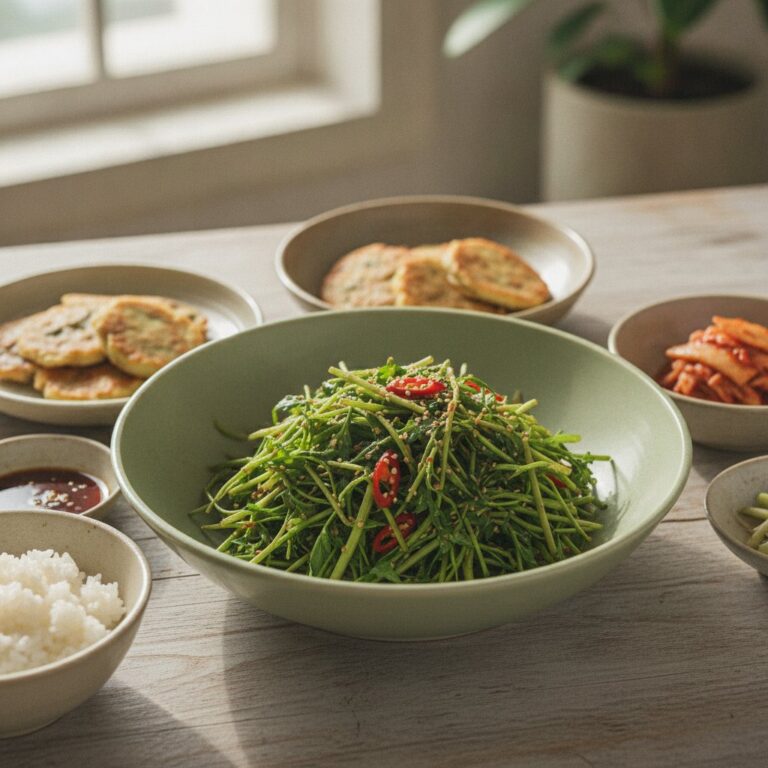
Sweet and Tangy Korean Seaweed Salad (Miyeok Muchim)
This post contains affiliate links. As an Amazon Associate, we earn from qualifying purchases at no extra cost to you.
At a glance
- In shortLearn how to make a crisp, refreshing Korean sweet and tangy cold seaweed salad.
- Best forHome cooks seeking an easy Korean cold side dish
- Time15 min
- DifficultyEasy
- HeatNot spicy
- Key pointsFlash blanch seaweed for 10-15 seconds to set emerald green color. · Wring out all water from seaweed to prevent a soggy, diluted dressing. · Pre-salt cucumbers and red onions to keep them crisp for days.
- Heads-upDo not use thick kombu sheets, as they will not soften properly for salad.
Crisp, Refreshing Seaweed Salad from a Seoul Home Kitchen
Whenever the summer humidity hits Seoul like a heavy, warm blanket, my mother clears off our small kitchen counter and pulls a humble blue bag of dried seaweed from the pantry. Within fifteen minutes, our small dining table gets an instant upgrade: a glistening bowl of miyeok muchim (sweet and sour seaweed salad). It is light, cold, wildly refreshing, and punches through the heavy heat with its sharp garlic-vinegar tang.
In Korea, miyeok (edible brown seaweed, often known as wakame in Japanese cooking) is best known as the star of miyeok-guk (seaweed soup), the soothing warm soup mothers eat after giving birth and everyone eats on their birthday. But when warm weather arrives, or when we are serving rich grilled meats like samgyeopsal (pork belly), we turn this rich ocean vegetable into a cold banchan (side dish). The word muchim simply means seasoned or tossed salad, and this sweet and tangy version is one of the easiest standard side dishes you will ever make at home.
If you have only ever tried the bright neon-green seaweed salads sold at Western sushi counters, prepare for a delightful surprise. Authentic homemade Korean seaweed salad relies on tender, real rehydrated fronds dressed in a raw garlic, sugar, and vinegar dressing—no food dyes, no heavy corn syrups, just pure clean taste and a delightful bite.

Why This Works
- Flash Blanching for Texture and Color: Dipping rehydrated seaweed into boiling water for mere seconds deactivates enzymes that cause sliminess, instantly transforming dull brown fronds into a brilliant emerald green while keeping a pleasant crisp snap.
- Aggressive Wringing: Removing every drop of trapped soaking water prevents your vinegar dressing from becoming diluted and watery down to the last bite.
- Balanced Garlic-Vinegar Base: Dissolving sugar completely in raw rice vinegar and soy sauce before tossing ensures every delicate strand is coated in a sharp, sweet syrup that cuts through rich meals.
🛒 Sweet and Tangy Korean Seaweed Salad
As an Amazon Associate we earn from qualifying purchases.
Shop Ingredients & Tools →Ingredients
- 20 g (0.7 oz / about 1 cup packed dried) dried seaweed fronds (miyeok or wakame)
- 50 g (1.7 oz / about 1/4 small) red onion, paper-thinly sliced
- 40 g (1.4 oz / about 1/2 small) Persian cucumber, sliced into thin half-moons
- 2.5 tbsp (37 ml) rice vinegar
- 1.5 tbsp (18 g) granulated sugar
- 1 tbsp (15 ml) soy sauce (preferably Korean soup soy sauce, guk-ganjang, or regular light soy sauce)
- 1 tsp (5 g) finely minced fresh garlic
- 1 tsp (5 ml) toasted sesame oil
- 1 tbsp (10 g) toasted white sesame seeds
- 0.5 tsp (3 g) fine sea salt (for drawing moisture from cucumber and onion)
Substitutions
Finding traditional Korean ingredients outside major cities has gotten much easier, but you can easily adapt this dish with regular supermarket staples:
- Dried Seaweed: Look for bags marked miyeok (미역) in Korean grocers or Asian aisles. Common reliable home brands include Ottogi or CJ. Japanese dried cut wakame is virtually identical and can be used in an exact 1:1 ratio. Avoid thick, rigid kombu/dashima sheets, as those are meant for broth brewing and will not soften properly for salad.
- Rice Vinegar: Unseasoned rice vinegar provides a delicate grain sweetness. If you only have apple cider vinegar or white wine vinegar at home, those work wonderfully—just reduce the total amount by half a teaspoon as Western vinegars tend to have a slightly higher acidity.
- Korean Soup Soy Sauce: Traditional guk-ganjang is saltier and lighter in color than standard soy sauce, allowing the green color of the seaweed to shine. If using standard all-purpose soy sauce, use 2 teaspoons instead of a full tablespoon so you do not overpower the color or mask the delicate seaweed flavor.
How to Make It
- Rehydrate the Seaweed (10 to 15 minutes)
Place your dried seaweed into a large mixing bowl and submerge it completely in plenty of cold water. Leave it undisturbed for about 10 to 15 minutes. Why: Dried miyeok is deceptively compact; it expands roughly eight to ten times its original volume. Soaking in cold water allows the cell walls to hydrate slowly, giving you a tender texture without turning mushy. - Prep and Salt the Crispy Vegetables
While the seaweed soaks, place your thinly sliced red onion and cucumber half-moons into a small bowl. Sprinkle with 0.5 teaspoon of fine sea salt, toss well, and let sit for 10 minutes. Afterwards, gently squeeze out the excess liquid with your hands. Why: Salting draws out raw vegetable water. This concentrates the cucumber crunch and removes the sharp burn from raw red onions, keeping the finished salad crisp for days instead of soggy. - Flash Blanch the Seaweed (10 to 15 seconds)
Bring a medium pot of water to a rolling boil. Drop the rehydrated seaweed into the boiling water and stir continuously with tongs or chopsticks for just 10 to 15 seconds until the brown color turns to a vivid emerald green. Immediately drain into a colander and rinse thoroughly under freezing cold running water. Why: Raw rehydrated seaweed can have a slight ocean fishiness and a slippery surface. Quick blanching destroys the surface mucilage and locks in a clean snap while setting a gorgeous green tone. Cold water stops cooking instantly. - Wring the Seaweed Completely Dry
Take small handfuls of the cooled seaweed and press them forcefully between your palms to wring out as much water as humanly possible. Transfer the dry wrung seaweed to a cutting board and slice it into bite-sized lengths, roughly 2 inches (5 cm) long. Why: Water is the enemy of any traditional Korean muchim. Excess trapped tap water dilutes your carefully balanced dressing, leaving your salad tasting plain and wet. Cutting long strands prevents awkward, long fronds when eating with chopsticks. - Mix the Sweet and Tangy Dressing
In a large salad bowl, combine the rice vinegar, granulated sugar, soy sauce, and finely minced fresh garlic. Whisk vigorously until the sugar crystals are completely dissolved. Why: Dissolving the sugar in vinegar prior to adding solid ingredients ensures an even distribution. Raw minced garlic blooms in the acid, mellowing its harshness into a pleasant savory bite. - Toss, Dress, and Finish
Add the wrung chopped seaweed, squeezed cucumbers, and red onions into the dressing bowl. Using clean hands or gloved hands, gently massage and toss the ingredients together for about 1 minute. Drizzle with toasted sesame oil and scatter toasted sesame seeds over top, tossing one last time. Why: Hand-tossing breaks up clumped seaweed clusters and ensures every ruffle absorbs the dressing. Adding sesame oil at the very end wraps the tangy dressing in a warm, nutty aroma without blocking the garlic-vinegar punch.

🛒 Sweet and Tangy Korean Seaweed Salad
As an Amazon Associate we earn from qualifying purchases.
Shop Ingredients & Tools →Tips from a Korean Kitchen
In Korean home cooking, small details transform an ordinary side dish into something you crave every week. Here are a few secrets passed down in my family:
- Do Not Skip the Final Hand Squeeze: It is easy to think draining in a colander is enough, but seaweed holds water like a sponge. Take the extra minute to squeeze small bundles in your fist. You will be amazed at how much water comes out.
- Grate or Paste Your Garlic: Because this is a raw cold salad, biting into a chunk of raw garlic can be harsh; microplaning or mincing finely allows it to meld smoothly with the acidic dressing.
If Something Goes Wrong
| Problem | Likely Cause | Fix |
|---|---|---|
| Salad turns watery within an hour | Trapped water in seaweed or un-salted cucumbers | Wring seaweed forcefully in fistfuls and salt/squeeze cucumbers before dressing. |
| Seaweed is slimy or dull brown | Skipped blanching or cooked too long | Flash blanch for exactly 10–15 seconds and shock immediately in cold water. |
| Garlic bite is too sharp | Garlic chopped too coarse or added last | Microplane garlic finely and dissolve it in the vinegar-sugar base first to bloom. |
Scaling & Make-Ahead
This recipe scales cleanly 1:1 if you wish to double or triple it for larger gatherings. For make-ahead prep, rehydrate, blanch, and wring the seaweed and salt the cucumbers up to 2 days ahead, storing them in airtight containers in the refrigerator. Keep the whisked dressing separate and toss 15 to 30 minutes before serving. Dressed leftovers keep well in the fridge for 3 to 4 days.
Key Takeaways
- Flash blanching is non-negotiable: A 10–15 second boil deactivates surface enzymes, removing slime and turning brown fronds a vibrant green with a crisp snap.
- Wring every drop of water: Thoroughly squeezing seaweed and salting cucumbers keeps the sweet-and-tangy dressing punchy rather than diluted.
- Bloom garlic in vinegar: Mixing garlic into the rice vinegar and sugar base mellows raw harshness into a smooth savory depth.
- Finish with toasted sesame: Adding sesame oil at the end coats the salad in a warm nutty finish without dampening the refreshing acidity.
🛒 Sweet and Tangy Korean Seaweed Salad
As an Amazon Associate we earn from qualifying purchases.
Shop Ingredients & Tools →More on Seasoned Namul & Salads
- Gochu Doenjang MuchimHow to make Gochu Doenjang Muchim, a quick and crunchy Korean seasoned pepper side dish.
- Korean Spinach Side Dish (Sigeumchi Namul)Learn how to make Sigeumchi Namul, an authentic Korean seasoned spinach side dish, using simple pantry ingredients.
- Kongnamul Muchim Two WaysLearn how to make classic Korean seasoned bean sprouts in both non-spicy and spicy versions.
See every Seasoned Namul & Salads post in our Banchan guide.
Handy toolsRecipe scaler · Measurement converter · Korean pantry guide · Recipe Finder
More Korean Recipes
- Melt-in-Your-Mouth Mu Jorim (Braised Korean Radish Recipe)
- Spicy Seasoned Yellow Radish (Danmuji Muchim)
- Soy Pickled Perilla Leaves (Kkaennip Jangajji) Recipe
- Yangpa Jangajji Recipe: Easy Korean Pickled Onions
🛒 Sweet and Tangy Korean Seaweed Salad
As an Amazon Associate we earn from qualifying purchases.
Shop Ingredients & Tools →