Korean Pan Fried Fish Recipe (Saengseon Jeon)
This post contains affiliate links. As an Amazon Associate, we earn from qualifying purchases at no extra cost to you.
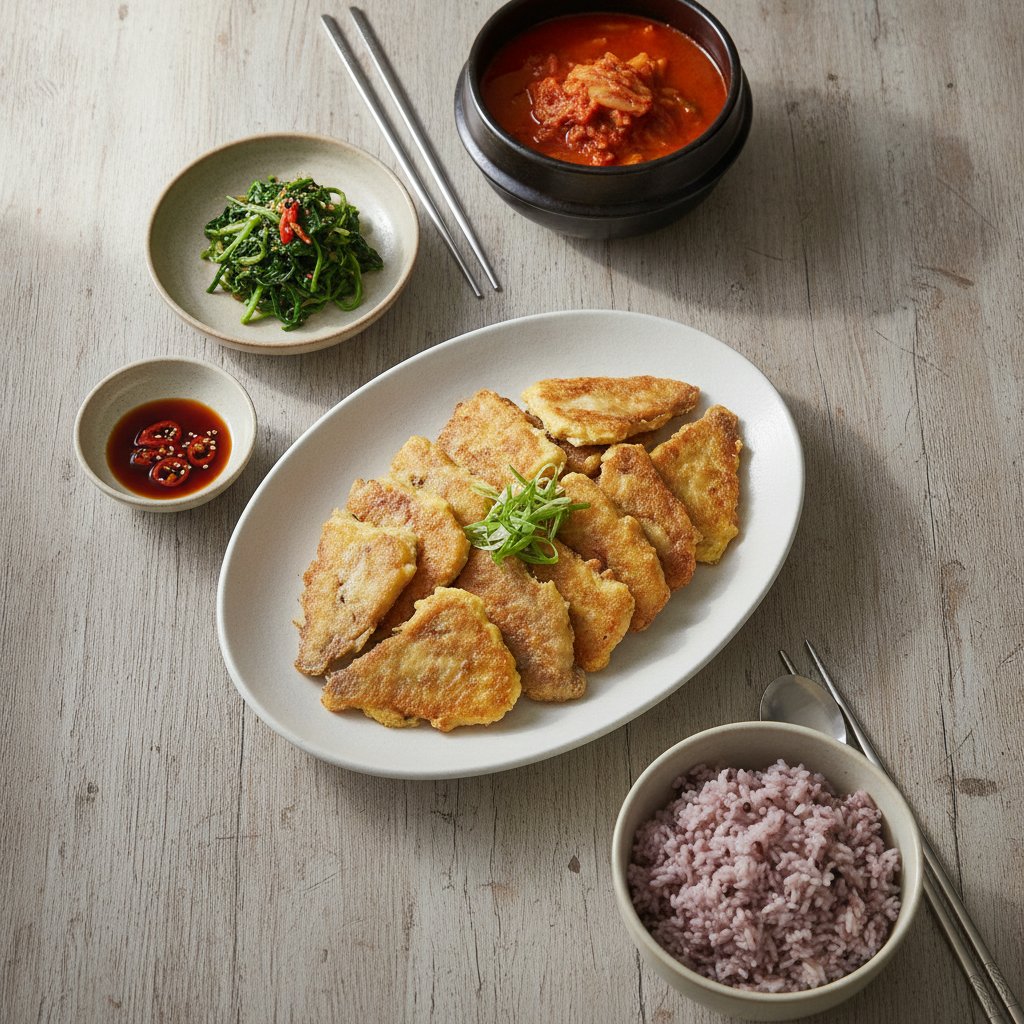
Every year around Chuseok (Korean Harvest Festival) and Seollal (Lunar New Year), my family kitchen in Seoul turns into an assembly line of pan-fried goodness. Among all the savory pancakes sizzling on the griddle, saengseon jeon (pan-fried fish fillets) is the one dish my grandmother always watched over with hawk-like precision. She believed that a properly made piece of fried fish should look bright yellow, remain tender inside, and never show a single spot of burnt egg batter.
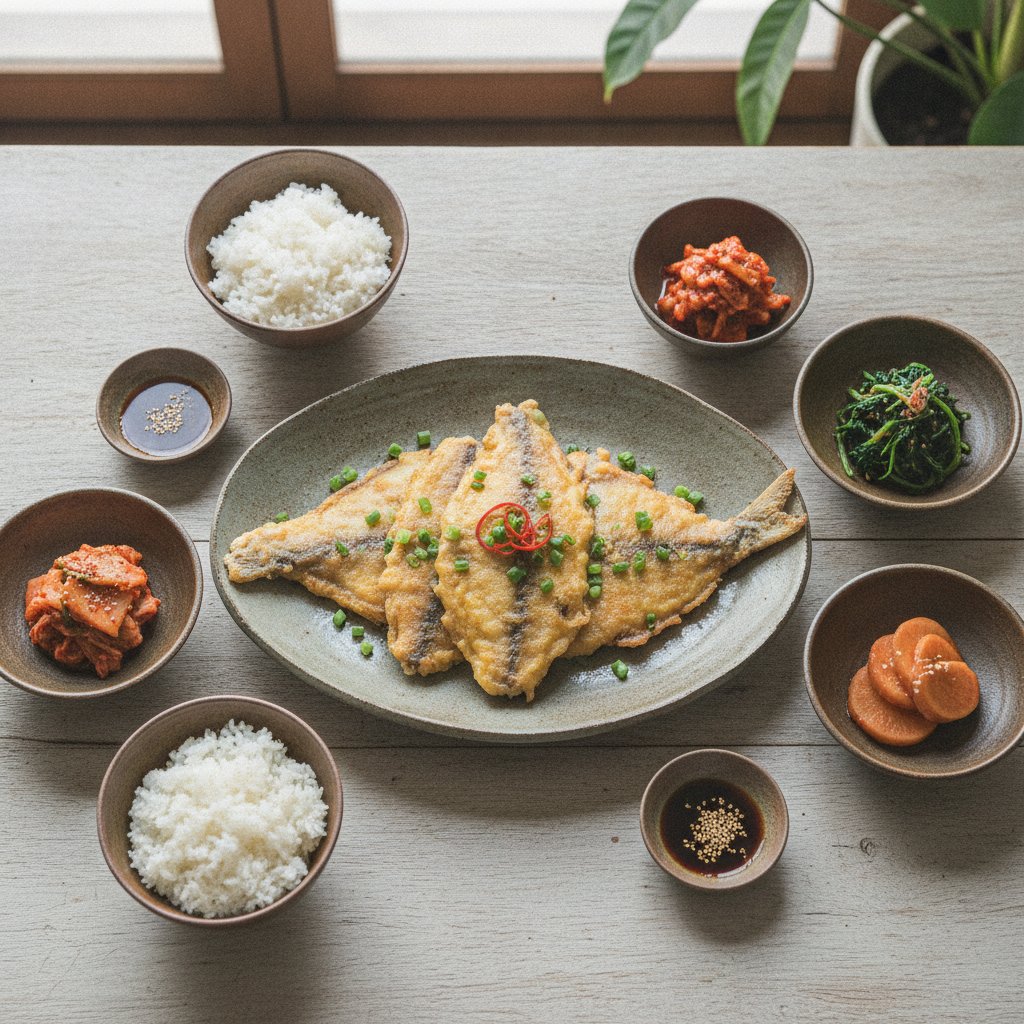
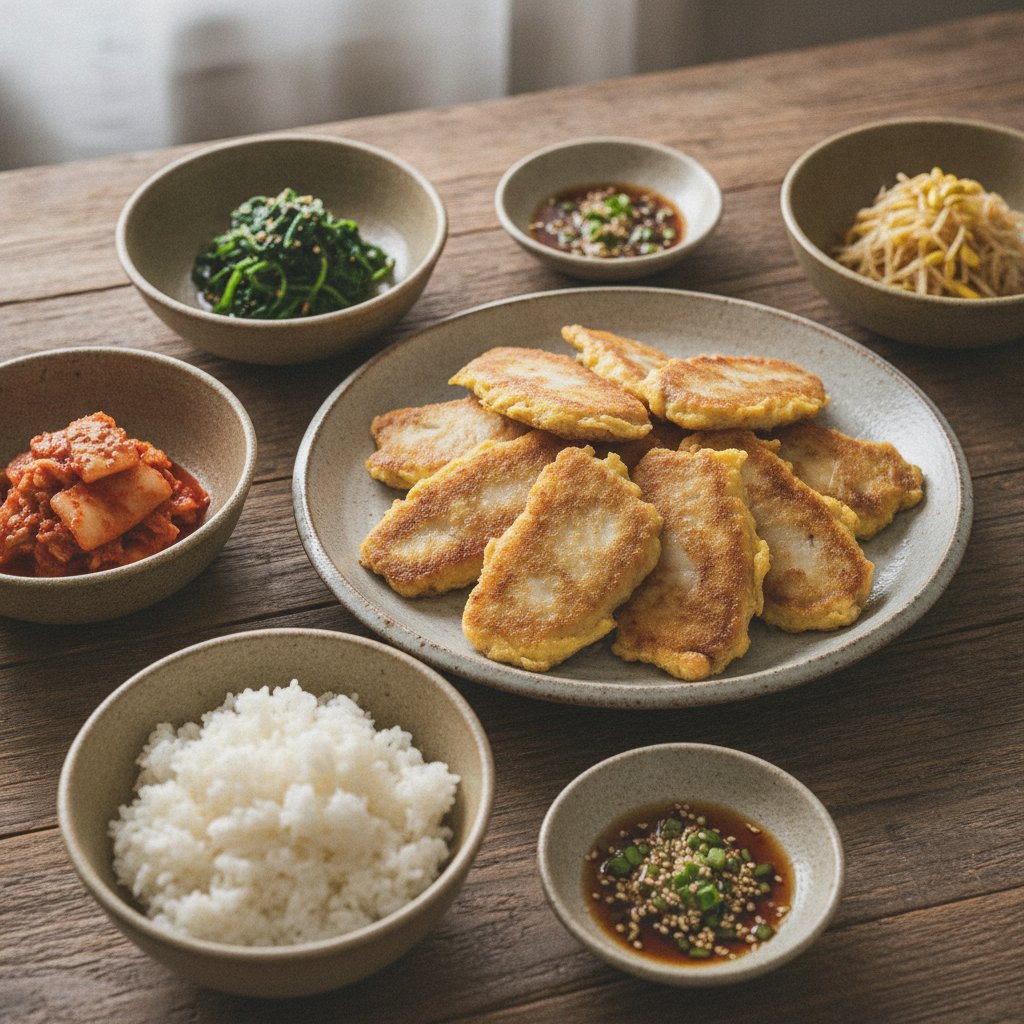
While saengseon jeon (생선전) holds a sacred place on holiday feast tables and ancestral ritual spreads (jesasang), it is also one of the easiest everyday side dishes (banchan) you can make at home. You take mild white fish, cut it into bite-sized pieces, light season it, coat it in a whisper of flour and beaten egg, and fry it gently in oil. Served fresh off the skillet alongside a tangy soy dipping sauce, it is delicate, savory, and wonderfully comforting. If you are learning how to build a classic home-cooked meal, this korean pan fried fish recipe is one of the most rewarding techniques to master.
Why This Works
- Salting and draining first: Drawing out surface moisture with salt firms up the delicate fish flesh, keeping the fillets from breaking apart in the pan while locking in natural flavors.
- The thin flour anchor: Dusting the fish with just enough flour creates a binding layer that prevents the wet egg wash from sliding right off during cooking.
- Gentle temperature control: Frying over medium-low heat cooks the fish through while preserving the vibrant golden color of the egg, avoiding bitter browned spots.
Ingredients
- 400 g (about 0.9 lbs) skinless white fish fillets, such as cod, flounder, sole, or tilapia
- 3 g (about 1/2 tsp) fine sea salt
- 1 g (about 1/4 tsp) finely ground white pepper or black pepper
- 35 g (about 1/4 cup) all-purpose flour
- 2 large eggs
- 1 fine red chili pepper, thinly sliced diagonally (optional, for garnish)
- 1-2 sprigs crown daisy (쑥갓 – ssukgat) or flat-leaf parsley leaves (optional, for garnish)
- 30 ml (2 tbsp) neutral cooking oil, such as canola, vegetable, or soybean oil
For the Choganjang Dipping Sauce:
- 15 ml (1 tbsp) soy sauce
- 15 ml (1 tbsp) water
- 5 ml (1 tsp) rice vinegar
- 1/2 tsp toasted sesame seeds
- 1/4 tsp Korean red pepper flakes (gochugaru), optional
Substitutions
If you cannot source fresh cod or flounder, any firm white-fleshed fish fillet from your local grocery store will work. Swai, haddock, or pollock are excellent choices. Avoid oily fish like salmon, mackerel, or tuna for this specific recipe, as their stronger natural oils overpower the subtle egg batter.
For a gluten-free variation, swap the all-purpose flour for an equal amount of potato starch, cornstarch, or gluten-free 1-to-1 baking flour. Potato starch is especially popular in modern Korean home kitchens because it yields a silky finish and keeps the egg layer firmly attached.
🛒 Korean Pan Fried Fish Recipe
As an Amazon Associate we earn from qualifying purchases.
Shop Ingredients & Tools →How to Make It
- Slice the fish fillets: Lay your fish fillets flat on a clean cutting board. Cut them on a 45-degree angle into bite-sized pieces about 0.5 cm (1/4 inch) thick and 5 cm (2 inches) long. Slicing on an angle creates a larger surface area, which helps the fish cook quickly and evenly without drying out.
- Season and draw out moisture: Arrange the cut fish slices in a single layer on a plate or baking sheet lined with paper towels. Lightly sprinkle both sides with the fine sea salt and pepper. Let the fish rest for 10 to 15 minutes. *Why:* The salt draws out excess water through osmosis while seasoning the meat deeply. Removing this surface moisture prevents the pan-fried fish from turning soggy.
- Pat thoroughly dry: After 15 minutes, gently press additional paper towels over the top of the fish slices to absorb all visible droplets of water. *Why:* Excess wetness will cause the flour to turn into a pasty sludge, which leads to the egg batter peeling off during frying.
- Dust with flour: Place the all-purpose flour on a shallow plate. Dredge each fish slice in the flour, coating both sides thoroughly, then gently shake off all extra flour. *Why:* You want the thinnest possible barrier. The flour acts as a double-sided glue, bonding with the damp fish protein on one side and the liquid egg protein on the other.
- Prepare the egg wash and pan: Whisk the eggs in a wide bowl until smooth without creating excessive foam. Heat 1 tablespoon of cooking oil in a non-stick skillet over medium-low heat. *Why:* High heat will scorch the egg long before the center of the fish fillet cooks through.
- Dip and fry: Dip the floured fish pieces into the egg wash, ensuring they are fully covered. Place them gently into the warmed skillet, working in batches so as not to overcrowd the pan. If using garnishes, immediately place a slice of red chili and a small green leaf onto the top side of each fish piece while the egg wash is still wet. *Why:* Placing garnishes on wet egg anchors them permanently to the crust as it sets.
- Pan-fry with care: Fry for about 2 to 3 minutes until the underside is set and light golden. Flip carefully with a flexible spatula and fry the second side for another 1 to 2 minutes until cooked through. Transfer to a wire rack or a plate lined with paper towels. Repeat with the remaining fish, wiping down the pan with a paper towel and adding fresh oil between batches. *Why:* Wiping the pan removes stray burnt egg bits that would otherwise stick to your next batch of fish.
- Mix dipping sauce and serve: In a small bowl, combine the soy sauce, water, rice vinegar, toasted sesame seeds, and *gochugaru*. Serve the *saengseon jeon* warm with the sauce on the side.
Tips from a Korean Kitchen
- Opt for white pepper: In traditional home cooking, we prefer white pepper over black pepper for *saengseon jeon*. Black pepper leaves dark specks on the bright yellow egg layer. White pepper blends in visually while offering a mild, clean warmth that complements seafood.
- Control your stove heat religiously: The biggest mistake beginners make with any Korean *jeon* recipe is rushing the process with high heat. Eggs brown very easily. Keep your burner set to medium-low, and do not hesitate to drop it to low if you hear the oil crackling too loudly.
- Don’t skip wiping the pan: Residual egg wash drips off the fillets into the oil and browns quickly. Wiping the pan clean with a folded paper towel held by tongs between batches keeps your final platter looking pristine and uniform.
- Serve alongside fresh banchan: While *saengseon jeon* is delicious on its own with rice, pairing it with acidic or spicy side dishes—like fresh Napa kimchi (*geotjeori*) or a spicy radish salad (*musaechae*)—cuts through the richness of the fried egg coating perfectly.
Storage
Freshly fried fish is always best enjoyed immediately while the egg coating is slightly tender and the fish is juicy. However, you can store leftovers in an airtight container lined with a paper towel in the refrigerator for up to 2 days.
To reheat, avoid the microwave at all costs, as it will make the fish rubbery and the egg coating soft and soggy. Instead, warm a non-stick skillet over low heat without adding extra oil. Place the leftover *saengseon jeon* in the pan and heat gentle for 1 to 2 minutes on each side until warmed through. Alternatively, reheat them in an air fryer set to 150°C (300°F) for 3 to 4 minutes.
🛒 Korean Pan Fried Fish Recipe
As an Amazon Associate we earn from qualifying purchases.
Shop Ingredients & Tools →FAQ
Can I use frozen fish fillets for this recipe?
Yes, frozen white fish fillets work very well. However, you must thaw them completely in the refrigerator overnight before cooking. Because frozen fish releases significantly more moisture than fresh fish, make sure to pat the thawed fillets dry with paper towels twice as thoroughly before seasoning.
Why is my egg coating sliding off the fish?
The egg layer usually slides off for two reasons: either the fish was still wet when you dredged it in flour, or you applied too thick a layer of flour. Make sure to pat the fish thoroughly dry before flouring, and shake off all excess flour so only a dusty film remains on the meat.
Can I make saengseon jeon ahead of time for a dinner party?
You can prepare the fish up to the salting and patting step a few hours in advance and keep it covered in the refrigerator. However, do not coat the fish in flour or egg until right before you plan to fry them. If floured fish sits too long, the flour absorbs moisture from the fish, turning gummy and ruining the delicate crust.
More Korean Recipes
- Creamy Korean Corn Cheese (콘치즈)
- Gyeran Jjim (Korean Steamed Eggs): Always Fluffy
- Jangjorim Recipe: Authentic Korean Soy-Braised Beef and Eggs
- Eomuk Bokkeum (Stir-Fried Fish Cakes): Your New Favorite Lunchbox Side Dish
🛒 Korean Pan Fried Fish Recipe
As an Amazon Associate we earn from qualifying purchases.
Shop Ingredients & Tools →