Easy Nabak Kimchi Recipe (Korean Water Kimchi)
This post contains affiliate links. As an Amazon Associate, we earn from qualifying purchases at no extra cost to you.
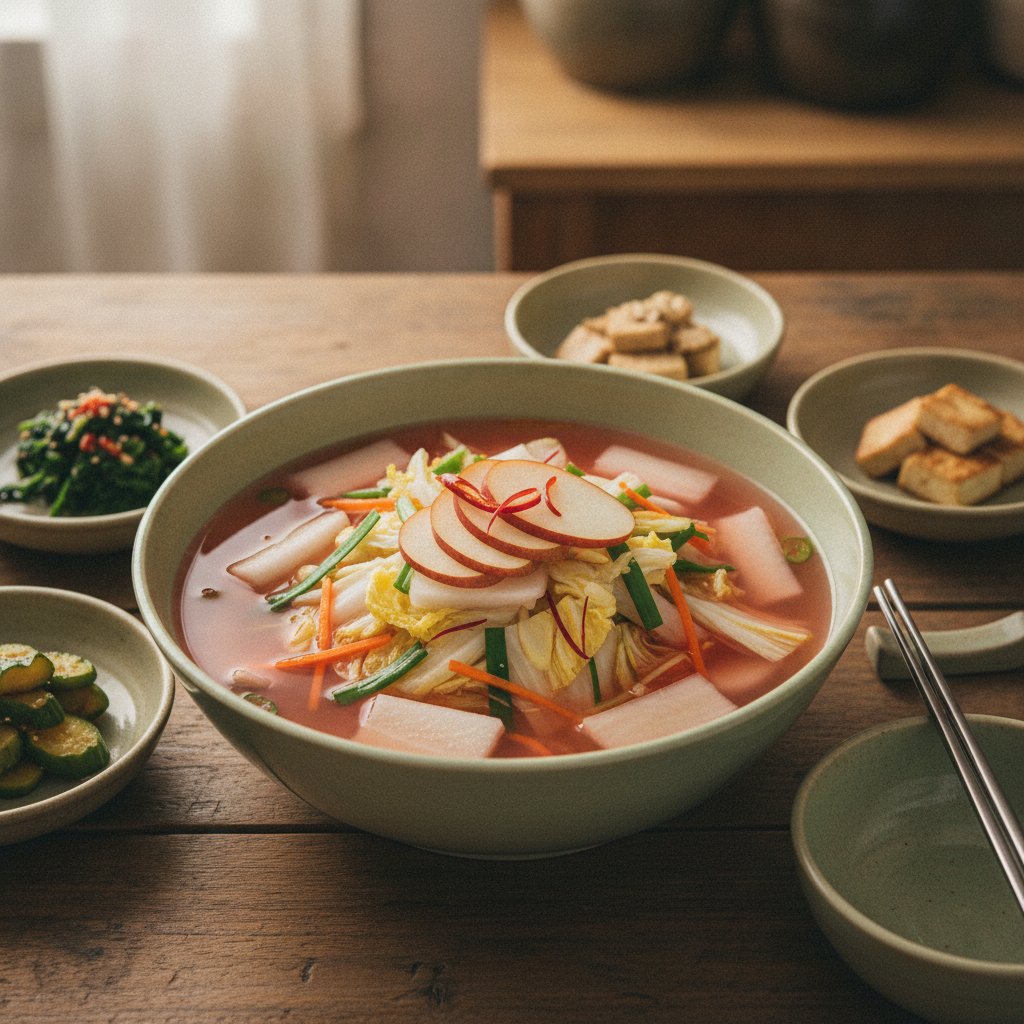
On humid summer afternoons in Seoul, my mother never reached for iced soda or shop-bought juice when we came running inside from playing in the alleyway. Instead, she opened the bottom drawer of our refrigerator, pulled out a heavy glass container, and ladled a chilled, sparkling coral broth into small porcelain bowls. Inside floated paper-thin, translucent squares of radish, tender cabbage, and crisp slices of sweet pear. One sip of that cold, fizzy, slightly tangy broth would instantly cool your entire body from the inside out.
That dish was nabak kimchi (pink water kimchi), one of the most beloved seasonal side dishes in Korean home cooking. The name comes from the Korean adverb nabak-nabak (나박나박), which describes slicing vegetables into small, thin, flat squares. Unlike traditional baechu kimchi (napa cabbage kimchi), which is heavily spiced, heavily salted, and aged for months, nabak kimchi is light, fast-fermenting, and served floating in a mild, seasoned water broth.
In Korea, we serve nabak kimchi year-round, but it is especially essential during major holidays like Seollal (Lunar New Year) and Chuseok (Harvest Festival). After a heavy feast of rich grilled meats or oily jeon (pan-fried savory pancakes), a small bowl of cold water kimchi acts as a natural digestif. The naturally occurring lactic acid enzymes soothe the stomach and refresh the palate. Best of all for home cooks living outside Korea, this quick version requires no complex stocks or hard-to-find seafood extracts. You can pull it together in about thirty minutes using ingredients found at standard Western grocery stores.
Why This Works
- Thin square cuts speed up seasoning: Slicing the radish and cabbage into thin, uniform 1-inch squares maximizes their surface area. This allows the vegetables to quick-pickle in under 30 minutes while staying extraordinarily crisp.
- Straining the spice keeps the broth crystal clear: Steeping the gochutgaru (Korean chili powder) through a fine mesh strainer or cheesecloth releases its vibrant red color and fruity aroma into the water without leaving gritty spice particles floating on top.
- A light rice starch base fuels fermentation: Cooking a tiny amount of sweet rice flour with water creates a subtle broth body that feeds beneficial lactic acid bacteria, ensuring a clean, tangy fizz within 24 to 36 hours.
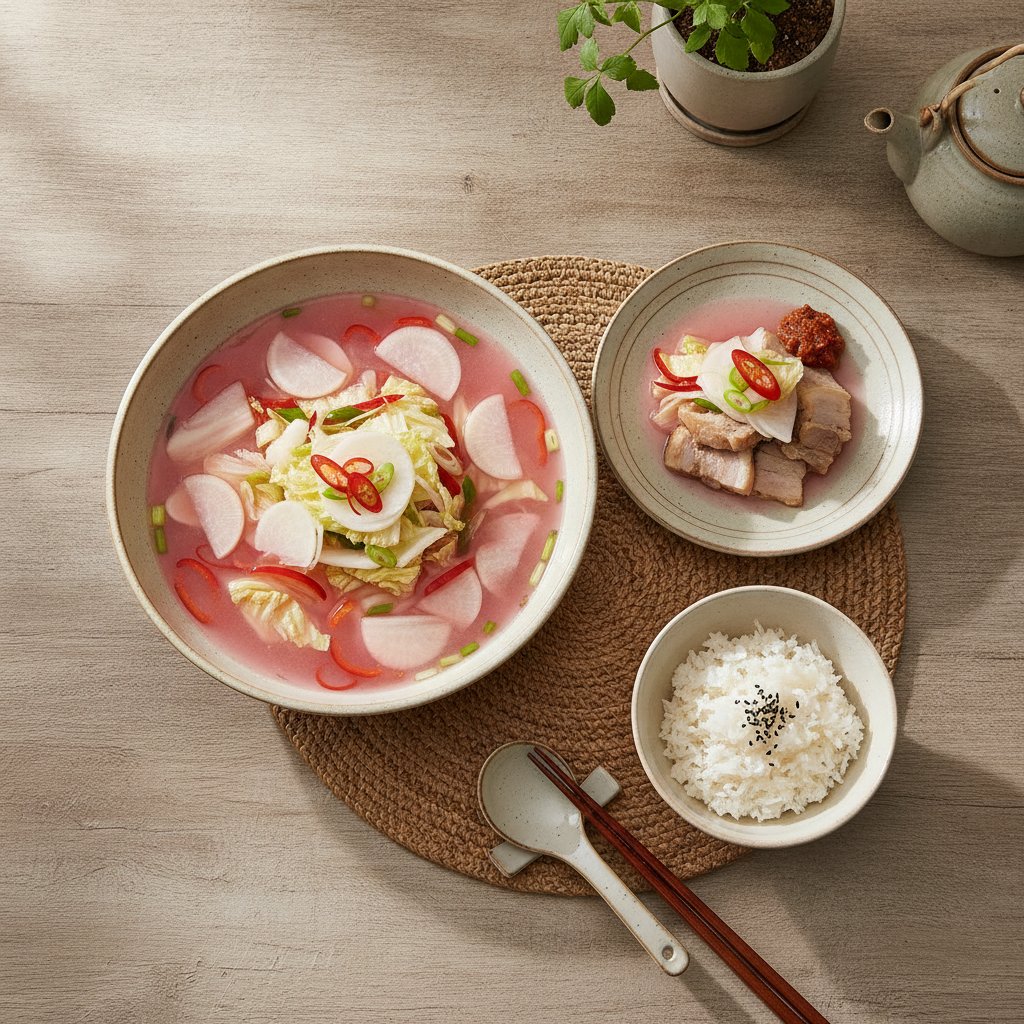
Ingredients
- 300 g (about 10 oz) Korean radish (mu) or daikon radish, peeled and sliced into 1-inch squares, 1/8-inch thick
- 300 g (about 10 oz) Napa cabbage leaves (baechu), trimmed and cut into matching 1-inch squares
- 1 medium Asian pear or sweet crisp apple (about 200 g / 7 oz), cored and thinly sliced into squares
- 2 scallions (green onions), cut into 1-inch (2.5 cm) lengths
- 4 cloves fresh garlic, peeled and thinly sliced
- 1 piece fresh ginger (about 10 g / 0.35 oz), peeled and cut into thin matchsticks
- 1 small fresh red chili (optional, for color), thinly sliced diagonally
- 2 tbsp coarse Korean sea salt (kkot-sogum) or coarse kosher salt (for dry salting)
- 1 tbsp granulated white sugar
- 1.5 liters (about 6 cups) cold filtered water
- 1.5 tbsp fine Korean red chili powder (gochutgaru)
- 1 tbsp sweet rice flour (chapssal-garu) or all-purpose flour
- 1.5 tsp coarse kosher salt (for seasoning the broth, adjust to taste)
Substitutions
If your local grocery store does not carry Korean specialty ingredients, these accessible swaps work brilliantly without sacrificing the core flavor profile:
- Korean Radish (Mu): Standard daikon radish is the best substitute. If neither is available, fresh red radishes (sliced thinly) add great crunch and a lovely pink hue, though they are slightly pepperier.
- Asian Pear: A firm Honeycrisp, Fuji, or Gala apple provides the exact sweetness and crispness needed to balance the tangy broth.
- Sweet Rice Flour (Chapssal-garu): Standard all-purpose white flour or cornstarch works equally well to create the light cooking paste used for fermentation.
- Korean Chili Powder (Gochutgaru): Look specifically for fine coarse-ground gochutgaru. Do not substitute with Western chili powder blends, hot cayenne pepper, or smoked paprika, as these contain added spices or smokiness that will ruin the delicate broth. If you cannot find fine gochutgaru, you can skip it entirely for a crystal-clear white water kimchi (baek-nabak-kimchi).
🛒 Easy Nabak Kimchi Recipe
As an Amazon Associate we earn from qualifying purchases.
Shop Ingredients & Tools →How to Make It
- Salt the core vegetables: In a large mixing bowl, combine the sliced radish and napa cabbage. Sprinkle with 2 tablespoons of coarse salt and 1 tablespoon of sugar. Toss thoroughly with your hands to coat every piece evenly. Set aside at room temperature for 25 to 30 minutes. Why you do this: Dry-salting draws out excess bitter water from inside the cell walls of the radish and cabbage. This softens them slightly so they absorb flavor while ensuring they retain a satisfying snapping crunch once submerged in broth. Do not rinse the vegetables afterward; the mild, sweet liquid that gathers at the bottom of the bowl is full of fresh vegetable juice and should be kept in the pot.
- Prepare the rice flour slurry: While the vegetables salt, whisk 1 tablespoon of sweet rice flour into 240 ml (1 cup) of cold water in a small saucepan until fully dissolved. Place over medium-low heat and cook, stirring constantly, for 2 to 3 minutes until the liquid thickens into a translucent, silky slurry. Remove from heat and let cool completely. Why you do this: Raw starch tastes chalky and turns cloudy. Cooking the starch gelatinizes it, giving the kimchi liquid a soft, luxurious mouthfeel rather than tasting like plain tap water. Crucially, allow it to cool fully before mixing; adding hot liquid to kimchi will kill the beneficial wild microbes required for fermentation.
- Tint and season the water base: In a large vessel or bowl, pour the remaining cold filtered water (about 1.25 liters / 5 cups). Place the 1.5 tablespoons of fine gochutgaru into a fine-mesh tea strainer, milk bag, or square of cheesecloth. Submerge the strainer into the water and gently rub or swirl the pepper powder inside the liquid for 2 to 3 minutes. Why you do this: Extracting the pigment and essential oils through a mesh screen tints the water a vibrant rose-pink while straining out coarse pepper seeds and flakes. This keeps the soup smooth and pleasant to drink. Stir in 1.5 teaspoons of salt and the cooled rice slurry until fully dissolved.
- Combine aromatic ingredients: Add the thinly sliced garlic, ginger matchsticks, sliced scallions, red chili slices, and Asian pear squares to the bowl containing the salted radish and cabbage (along with all drawn juices). Why you do this: Slicing the garlic and ginger into clean slivers—rather than mincing or crushing them—allows their aromatic oils to slowly infuse into the liquid over time without clouding the broth or leaving harsh raw bits in your mouth.
- Assemble and ferment: Pour the pink broth over the salted vegetables and aromatics. Stir gently with a clean spoon to blend everything together. Taste the liquid; it should taste comfortably seasoned, like a light cold soup, with a mild balance of salt and subtle sweetness. Transfer everything into a clean glass jar or food-grade airtight container, leaving at least 2 inches of space at the top. Cover tightly and let sit at room temperature out of direct sunlight for 12 to 24 hours. Why you do this: Room temperature starter fermentation encourages natural lactic acid bacteria to multiply rapidly. Look for sensory cues: when tiny air bubbles begin floating to the surface around the edges and the broth smells mildly sour and floral, it is ready.
- Chill and serve: As soon as you notice those tiny fermentation bubbles, transfer the container to the refrigerator and chill for at least 6 hours before eating. Why you do this: Cold temperatures slow down fermentation, locking in the ideal level of acidity while chilling the soup to a refreshing serving temperature.
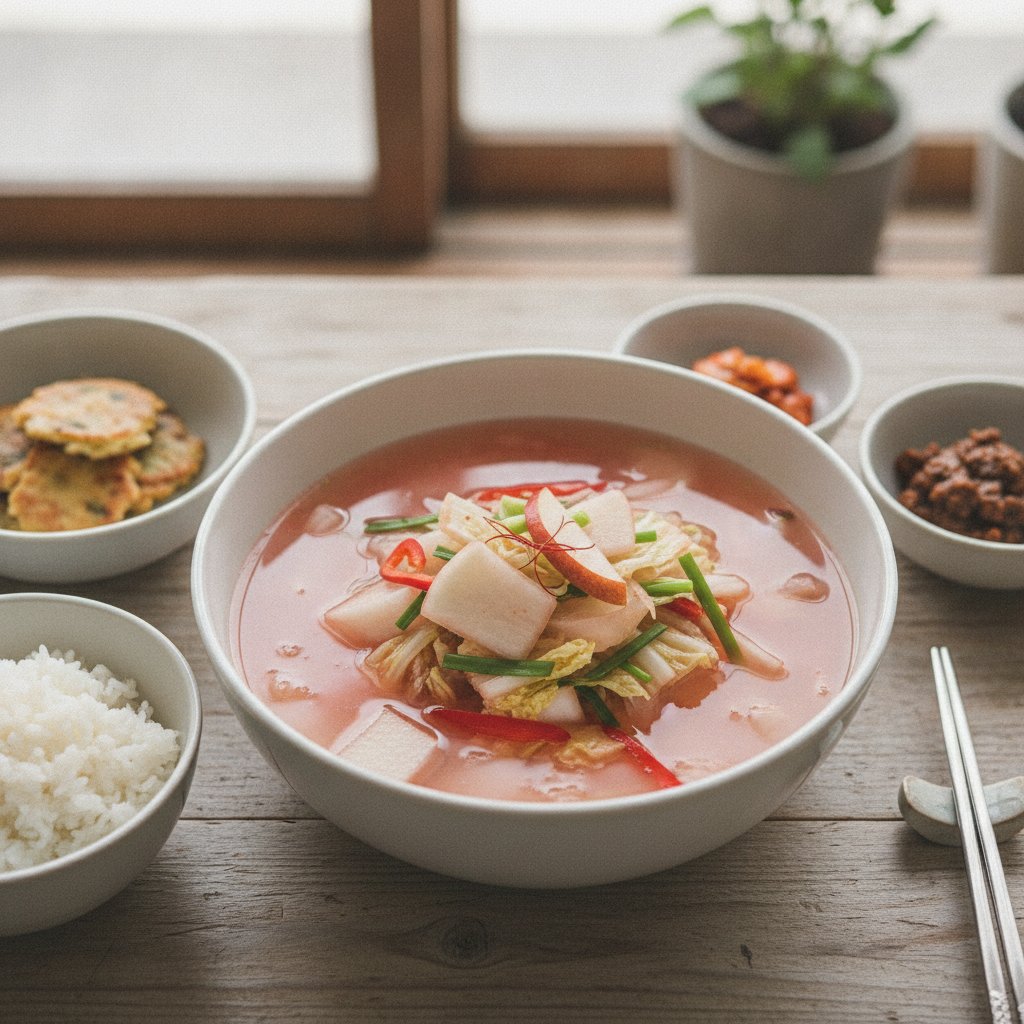
Tips from a Korean Kitchen
- Never use chlorinated tap water: Heavy chlorine or mineral content in un-filtered tap water can kill natural microflora and give your water kimchi a metallic taste. Always use filtered or bottled spring water for water kimchi.
- Slice fruit right before assembling: Pears and apples oxidize and turn brown quickly when exposed to air. Cut your fruit squares at the very last second before submerging them under the liquid to keep them bright white.
- Keep vegetables weighted submerged: Floating vegetables exposed to air for extended periods during room-temperature fermentation can soften or spoil. Place a small, clean glass plate directly on top of the vegetables inside the container to keep them pressed beneath the brine.
- Adjust salt to your climate: If your kitchen is very warm (above 24°C / 75°F), room-temperature fermentation can happen in as little as 8 to 10 hours. Check your kimchi early; if it smells tart, move it to the fridge immediately to avoid over-fermenting.
Storage
Nabak kimchi is designed as a fresh, short-term water kimchi rather than an aged winter storage kimchi. Keep it stored continuously in the coldest part of your refrigerator in an airtight glass container or plastic kimchi tub.
It will taste best between day 2 and day 14, when the vegetables are at their crispest and the broth maintains a lively, effervescent tang. It remains safe and delicious to eat for up to 4 weeks, though the vegetables will gradually soften and the broth will grow increasingly sour.
Do not freeze: Freezing water kimchi breaks down the delicate cell walls of raw radish, cabbage, and pear. Upon thawing, the vegetables will turn unpleasantly mushy and rubbery. Always serve nabak kimchi ice-cold directly from the refrigerator; never heat or warm this soup.
🛒 Easy Nabak Kimchi Recipe
As an Amazon Associate we earn from qualifying purchases.
Shop Ingredients & Tools →FAQ
Why did my water kimchi broth turn cloudy instead of clear?
Cloudiness usually happens for two reasons: either the rice flour slurry was added while still warm, or garlic and ginger were crushed/minced instead of sliced. Always let your rice paste cool completely to room temperature, and stick to clean, thin slices for your aromatic ingredients.
Can I make nabak kimchi without chili powder?
Yes! Omitting gochutgaru yields baek-nabak-kimchi (white water kimchi). It is completely non-spicy, crisp, and wildly popular for young children or anyone sensitive to spicy food. The preparation method remains identical—simply skip the red pepper straining step.
How do I serve nabak kimchi at the table?
Ladle 3 to 4 tablespoons of vegetables along with a generous scoop of cold broth into individual small shallow bowls for each person at the table. It is served alongside warm cooked rice and hot main dishes. Many Koreans love adding a few clean ice cubes directly into the serving bowl right before eating on hot summer days!
More Korean Recipes
- Creamy Korean Corn Cheese (콘치즈)
- Gyeran Jjim (Korean Steamed Eggs): Always Fluffy
- Jangjorim Recipe: Authentic Korean Soy-Braised Beef and Eggs
- Eomuk Bokkeum (Stir-Fried Fish Cakes): Your New Favorite Lunchbox Side Dish
🛒 Easy Nabak Kimchi Recipe
As an Amazon Associate we earn from qualifying purchases.
Shop Ingredients & Tools →