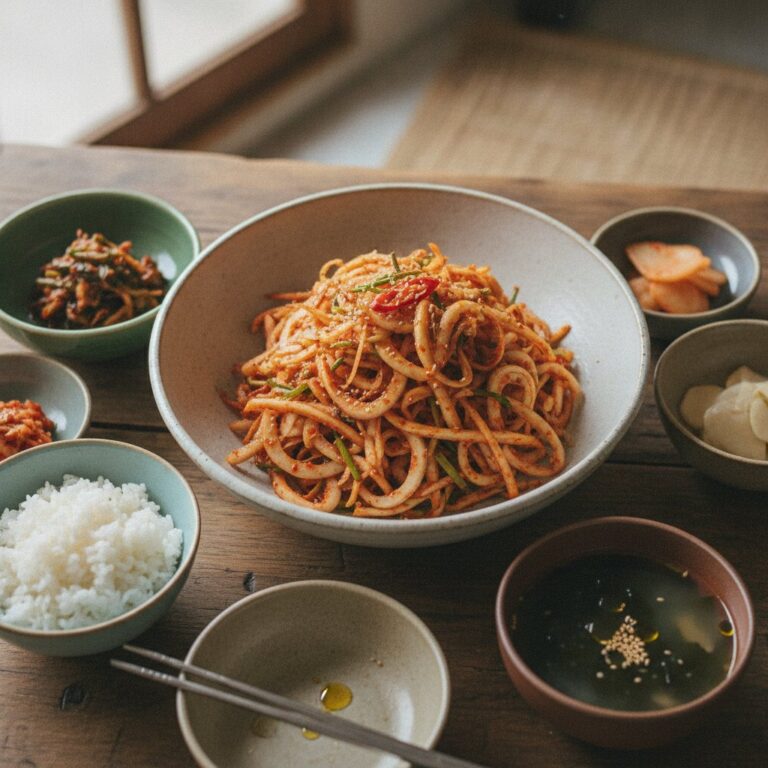
Spicy Seasoned Yellow Radish (Danmuji Muchim)
This post contains affiliate links. As an Amazon Associate, we earn from qualifying purchases at no extra cost to you.
At a glance
- In shortHow to make a quick Korean spicy seasoned yellow pickled radish side dish in under 10 minutes.
- Best forHome cooks seeking a fast Korean banchan recipe
- Time10 min
- DifficultyEasy
- HeatMedium
- Key pointsLightly squeeze the radish slices to remove excess surface brine. · Combine garlic, green onion, gochugaru, and syrup into a paste first. · Add toasted sesame oil and sesame seeds at the end to seal in flavor.
- Heads-upDo not freeze this dish, as freezing turns the crisp radish texture soft and spongy.
In Seoul, whenever my mother pulled out a half-used block of bright yellow pickled radish from the fridge crisp drawer, I knew dinner was going to be fast, simple, and satisfying. Plain pickled radish is sweet and crunchy, but tossed in garlic, red pepper, and nutty sesame oil, it becomes a fiery, savory staple that brightens up any meal. In Korean home kitchens, turning plain pantry staples into seasoned banchan (side dishes) is second nature, and this dish is one of the absolute quickest ways to do it.
If you have ever ordered a piping hot bowl of ramyeon (spicy Korean instant noodles) or a plate of rich jjajangmyeon (black bean noodles) at a Korean neighborhood diner, you have almost certainly seen bright yellow slices of danmuji (yellow pickled radish) sitting alongside your bowl. While eating it plain provides a clean, acidic palate cleanser, making danmuji muchim (spicy seasoned yellow radish) elevates those humble pickles into something complex and incredibly addictive.
This recipe takes less than ten minutes to pull together, requires zero actual cooking, and relies on basic Korean pantry ingredients you can easily find at your local Asian market or order online. It is sweet, tangy, savory, and nutty all at once—the exact kind of flavor contrast that keeps Korean home dining so lively.
Why This Works
- Light squeezing removes excess brine: Pressing liquid out of the radish slices prevents the seasonings from diluting into a watery mess at the bottom of your bowl.
- Layered garlic and chili paste coating: Mixing the dry red pepper flakes and fresh minced garlic with liquid sweetener first creates a thick paste that clings tightly to every slice.
- Finishing with toasted sesame oil: Drizzling sesame oil at the very end seals in the flavors and preserves the snappy, crisp texture of the radish without softening it.

Ingredients
- 300 g (about 10.5 oz) whole or pre-sliced danmuji (yellow pickled radish)
- 1.5 tbsp (about 8 g) gochugaru (Korean red pepper flakes)
- 1 tbsp (15 ml) toasted sesame oil (such as Ottogi or CJ brand)
- 1 tsp (5 ml) maesil-cheong (Korean green plum syrup) or granulated sugar
- 1 clove fresh garlic, finely minced
- 1 medium green onion (scallion), white and green parts finely chopped (about 15 g / 0.5 oz)
- 1 tbsp (9 g) toasted white sesame seeds
Substitutions
If you cannot find standard yellow Korean danmuji, Japanese takuan works perfectly as a direct substitute since both are pickled daikon radish with a similar sweet, vinegary crunch. Look for the bright yellow whole half-logs or pre-sliced tubs in the refrigerated produce or pickle section of Asian markets.
For gochugaru (Korean red pepper flakes), try to stick with authentic coarse Korean flakes if possible. Western chili powder contains added spices like cumin and oregano, which will ruin the dish. If you are stuck, coarse Aleppo pepper flakes or crushed red pepper flakes (used slightly more sparingly) offer a decent fruity heat substitute.
If you do not have maesil-cheong (Korean green plum syrup), do not worry. A splash of light honey, agave nectar, or plain white sugar works great to balance out the acidity of the radish pickle brine.
🛒 Spicy Seasoned Yellow Radish
As an Amazon Associate we earn from qualifying purchases.
Shop Ingredients & Tools →How to Make It
- Slice the radish uniformly: If you bought a solid half-log of danmuji, cut it lengthwise down the middle into two half-cylinders. Slice across into half-moon shapes roughly 3 mm (about 1/8 inch) thick. Why: Uniform thin slices ensure that every piece absorbs the spicy garlic paste evenly while maintaining enough bulk for a satisfying crunch.
- Drain and gently press the slices: Place the sliced radish between two sheets of paper towel, or lightly squeeze small handfuls over the sink to remove excess surface brine. Do not wring them out like a sponge; just remove the excess wetness. Why: Squeezing off extra surface moisture keeps your seasoning bold and concentrated, preventing the final dish from sitting in a pool of diluted vinegar.
- Build the seasoning paste: In a medium mixing bowl, combine the minced garlic, chopped green onion, gochugaru (Korean red pepper flakes), and maesil-cheong (or sugar). Stir with a spoon until a thick, fragrant paste forms. Why: Blending the aromatics and pepper flakes together before adding the radish ensures the dry flakes hydrate evenly and do not clump on just a few slices.
- Toss the radish: Add the prepped radish slices to the bowl with the seasoning paste. Put on a disposable food-safe glove and gently toss and rub the ingredients together by hand until every yellow slice is coated in a vibrant red layer. Why: Hand-tossing uses gentle heat and light pressure to massage the spicy coating into the glossy surface of the radish far better than a metal spoon can.
- Seal with sesame oil and seeds: Drizzle the toasted sesame oil over the seasoned radish and sprinkle in the toasted sesame seeds. Give everything one final gentle toss to combine. Why: Adding the fats at the very end coats the spices, locks in moisture, and ensures the nutty aroma of the roasted sesame hits your nose first when you serve it.
Tips from a Korean Kitchen
In Korean homes, simple banchan like this are made on rotation because they balance heavier meals. Here are a few small details that make a big difference in getting the flavor right:
First, pay close attention to your garlic. Always use freshly minced garlic rather than jarred pre-minced garlic. Because this is a raw, un-cooked side dish, jarred garlic can introduce a harsh, metallic acidity that overpowers the sweet crunch of the radish. Squeezing garlic through a press or chopping it finely right before mixing keeps the pungent kick clean and sweet.
Second, let the seasoned radish rest in the refrigerator for about 15 to 20 minutes before serving if you have the time. While you can eat it immediately out of the bowl, a short rest allows the gochugaru to soften, release its natural oil, and bloom against the cold, crisp radish slice.
Third, adjust your red pepper flakes based on coarseness. Coarse gochugaru gives the classic rustic appearance with little red specks floating against the bright yellow backdrop. Fine gochugaru (often used for making gochujang) will create a much darker, thicker red paste that coats the radish heavily and tastes slightly spicier. Coarse is generally preferred here for both look and mouthfeel.
If Something Goes Wrong
| Problem | Likely Cause | Fix |
|---|---|---|
| Dish is watery; coating slides off | Radish was not pressed enough before mixing | Gently squeeze radish slices in paper towels and drain off excess liquid before adding paste. |
| Garlic taste is harsh or metallic | Used pre-minced jarred garlic or overly large pieces | Let the dish rest refrigerated for 20 minutes to mellow, or add a tiny pinch of sugar. |
| Flavor is too sour or salty | Store-bought radish brine was especially pungent | Rinse sliced radish briefly in cold water, pat thoroughly dry, and resume recipe. |

🛒 Spicy Seasoned Yellow Radish
As an Amazon Associate we earn from qualifying purchases.
Shop Ingredients & Tools →Storage
Refrigeration
Transfer the seasoned danmuji muchim to a clean, airtight glass container and keep it stored in the refrigerator. Glass is preferred over plastic, as red pepper flakes and sesame oil can stain and leave lingering garlic smells in plastic containers.
The dish will stay fresh and crunchy for up to 7 to 10 days. As it sits, the radish will gradually release a bit more juice and soften slightly, but it remains delicious. Give it a quick stir with a spoon before serving to redistribute the sesame oil and garlic that may have settled at the bottom.
Freezing & Reheating
Do not freeze this dish. Freezing destroys the cellular structure of pickled daikon radish, turning its crisp, snappy texture soft and spongy once thawed. This is an unheated, cold side dish, so no freezing or reheating is needed.
Scaling & Make-Ahead
Scaling: You can easily double or triple the recipe without changing ingredient ratios. If making a double batch (600 g radish), double all seasonings proportionally.
Make-Ahead: Sliced and pressed radish can be prepped up to 2 days in advance and kept in an airtight container in the fridge. Alternatively, make the entire side dish a day early—the flavors integrate even better after a night in the refrigerator.
Key Takeaways
- Lightly squeeze before seasoning: Removing surface moisture prevents watered-down sauce and keeps every slice crisp.
- Build a thick spice paste: Mixing gochugaru, garlic, and plum syrup before tossing guarantees an even red coating.
- Finish with sesame oil last: Drizzle sesame oil and seeds at the end to seal in moisture and provide aromatic nuttiness.
- Store in glass for up to 10 days: Refrigerate in airtight glass to prevent staining; avoid freezing to protect the signature crunch.
🛒 Spicy Seasoned Yellow Radish
As an Amazon Associate we earn from qualifying purchases.
Shop Ingredients & Tools →More on Kimchi & Pickled Banchan
- Quick Fresh Napa Kimchi (Geotjeori)A guide and recipe for making quick, crisp Korean napa cabbage kimchi without long fermentation.
- Easy Korean Stuffed Cucumber KimchiA quick guide to making crispy, spicy Korean stuffed cucumber kimchi using a hot brine technique.
- Korean Pickled Garlic (Maneul Jangajji)How to make authentic Korean sweet soy pickled garlic using a traditional two-stage pickling method.
See every Kimchi & Pickled Banchan post in our Banchan guide.
Handy toolsRecipe scaler · Measurement converter · Korean pantry guide · Recipe Finder
More Korean Recipes
- Soy Pickled Perilla Leaves (Kkaennip Jangajji) Recipe
- Yangpa Jangajji Recipe: Easy Korean Pickled Onions
- Dubu Gangjeong: Korean Sweet and Spicy Tofu Recipe
- Crunchy Korean Soy Pickled Radish (Mu Jangajji)
🛒 Spicy Seasoned Yellow Radish
As an Amazon Associate we earn from qualifying purchases.
Shop Ingredients & Tools →