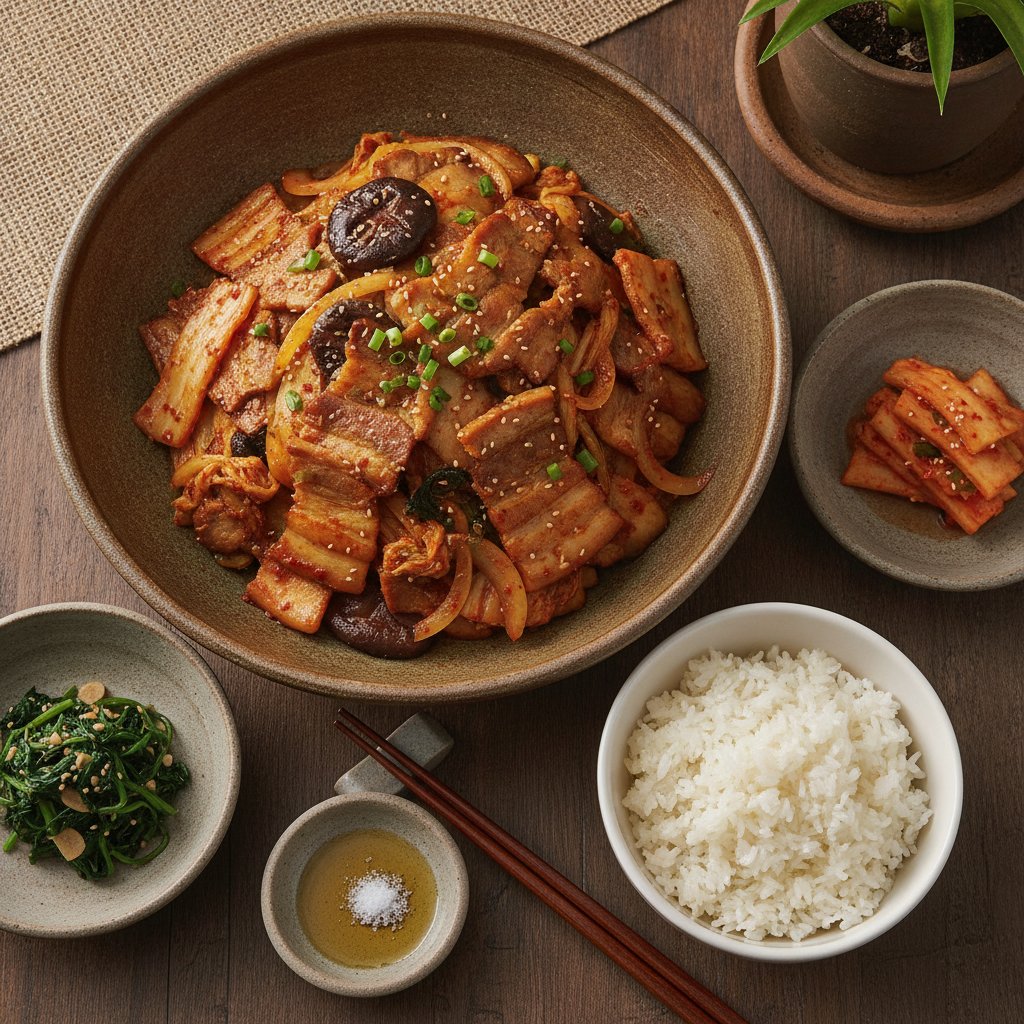
Pork Belly Kimchi Stir Fry (Dweji Kimchi Bokkeum)
This post contains affiliate links. As an Amazon Associate, we earn from qualifying purchases at no extra cost to you.
When rainy weather rolls into Seoul, my grandmother always pulls out two things from the fridge: a heavy cast-iron pan and a tub of sour, month-old kimchi that is far past its prime for fresh eating. The fat rendered from thick pork belly softens the sharp tang of aged cabbage, filling the kitchen with an aroma that instantly brings everyone to the dinner table. You do not need years of cooking experience or rare equipment to recreate this classic home meal—just an understanding of how fat, acid, and high heat interact in a skillet.
In Korea, dweji kimchi bokkeum (pork belly kimchi stir-fry) is the ultimate comfort food. It sits right at the intersection of everyday family dinners and late-night anju (food cooked specifically to accompany drinks like cold beer or rice wine). While jeyuk bokkeum (spicy pork stir-fry) relies mostly on a heavy chili paste marinade applied directly to thin meat cuts, this stir-fry lets the deep, complex acidity of fermented cabbage do the heavy lifting. The end result is a pan full of rich, caramelized pork wrapped in silky, savory-sweet cabbage that begs for a steaming bowl of freshly steamed white rice.
Many home cooks outside Korea worry that their stir-fry will turn out soggy or overly sharp. In my family, we follow a simple sequence that guarantees tender meat and glossy, deeply flavored kimchi every single time. Here is the exact approach we use in our Seoul kitchen.
Why This Works
- Rendering fat first: Searing the raw pork belly before adding any vegetables renders liquid lard directly into the skillet, which coats the raw kimchi fibers and browns them without scorching the garlic or spices.
- A dash of sugar for acidity control: A small measure of granulated sugar neutralizes the harsh lactic acid of well-aged kimchi, unlocking a balanced savory-sweet umami profile.
- High-heat flash reduction: Cooking down reserved kimchi brine at the very end concentrates the seasoned juices into a glossy glaze that clings to every piece of meat.
Ingredients
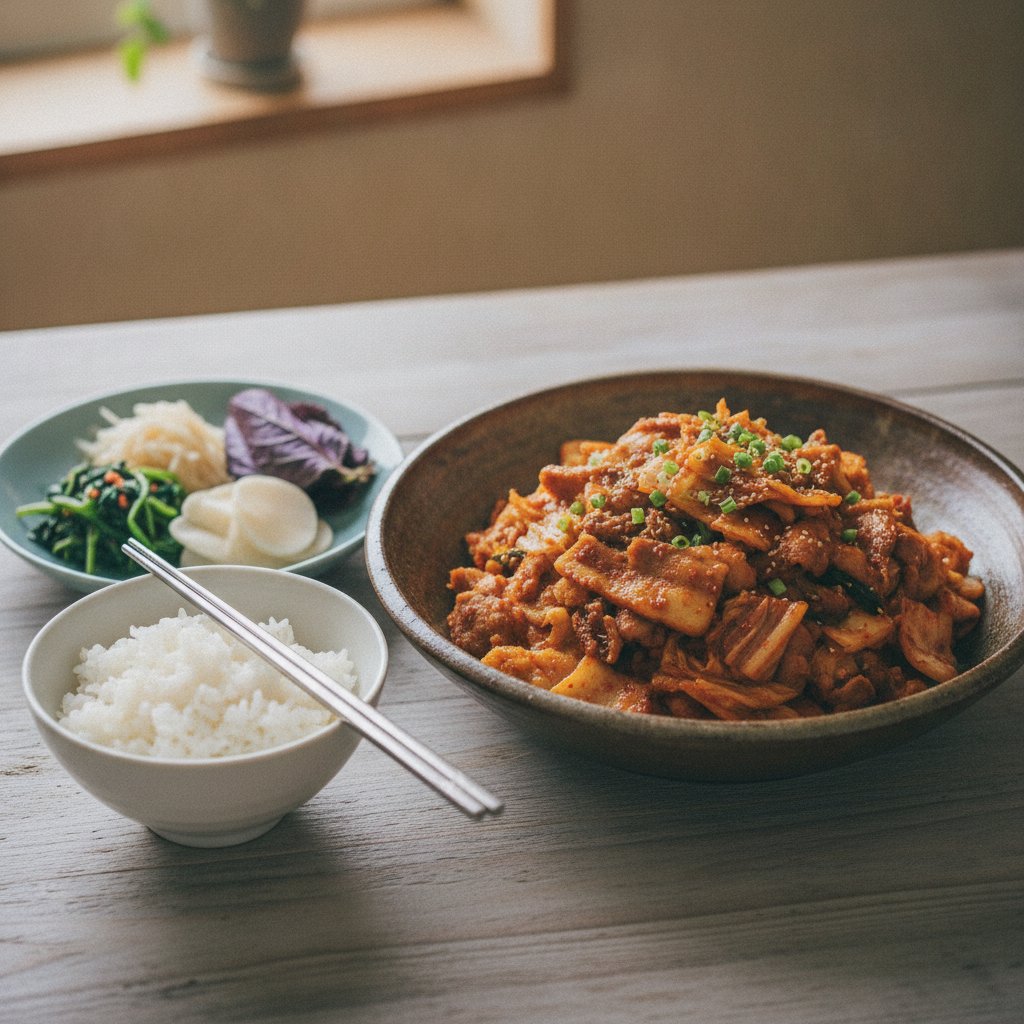
- Pork belly: 450 g (about 1 lb) pork belly, cut into bite-sized strips roughly 1/2 inch (1.2 cm) thick
- Aged kimchi: 400 g (about 2.5 cups packed) fully fermented sour kimchi, chopped into 1.5-inch pieces
- Kimchi juice: 60 ml (1/4 cup) kimchi brine strained directly from your container
- Yellow onion: 1 medium yellow onion (about 150 g / 5 oz), sliced into 1/2-inch wedges
- Scallions: 3 green onions, cut diagonally into 2-inch pieces
- Garlic: 4 cloves fresh garlic, finely minced
- Gochugaru (Korean chili flakes): 15 g (1 tbsp) coarse Korean red pepper flakes
- Gochujang (Korean chili paste): 15 g (1 tbsp) Korean red pepper paste (such as CJ Haechandle or Sunchang)
- Soy sauce: 15 ml (1 tbsp) regular soy sauce
- Sugar: 12 g (1 tbsp) granulated white sugar (adjust slightly based on how sour your kimchi is)
- Mirin: 15 ml (1 tbsp) cooking mirin or Korean cooking wine (matsool)
- Toasted sesame oil: 15 ml (1 tbsp) quality Korean sesame oil (such as Ottogi)
- Sesame seeds: 5 g (1 tsp) toasted white sesame seeds for finishing
- Tofu (optional garnish): 300 g (about 10.5 oz) medium-firm or firm block tofu
Substitutions
Pork belly: If pork belly is too rich or hard to locate at your local Western supermarket, boneless pork shoulder (pork butt) sliced thinly works wonderfully. Because pork shoulder contains less fat, heat 1 tablespoon of neutral oil (like canola or avocado oil) in the pan before cooking the meat.
Aged kimchi: Fresh, crisp kimchi straight from a brand-new tub will not produce the meltingly tender texture or deep tangy background required here. If your store-bought kimchi tastes mild and fresh, leave the jar sealed on your kitchen counter at room temperature for 24 to 48 hours until the lid slightly bows and it smells distinctly tart.
Gochugaru: Standard Western chili powder contains added spices like cumin and oregano, while cayenne pepper is far too spicy. If you cannot find gochugaru, a combination of mild smoked paprika mixed with a small pinch of crushed red pepper flakes offers color without overwhelming heat.
Gochujang: Red pepper paste provides fermentation depth and body. In a pinch, combine 1 tablespoon of red miso paste with 1/2 teaspoon of sriracha and a tiny drop of honey, though an authentic red tub of gochujang from an Asian market or online seller remains the ideal choice.
🛒 Pork Belly Kimchi Stir Fry
As an Amazon Associate we earn from qualifying purchases.
Shop Ingredients & Tools →How to Make It
-
Prep the kimchi and aromatics: Chop your well-fermented kimchi into bite-sized pieces over a cutting board. Gently press the chopped cabbage in a mesh strainer set over a small bowl to collect 60 ml (1/4 cup) of pure kimchi juice. Set the juice and cabbage aside separately.
Why: Squeezing out extra liquid prevents the pork from steaming in excess water during the initial stir-fry, allowing the pork belly and cabbage edges to brown crisp and caramelize properly. -
Mix the flavor paste: In a small bowl, combine the minced garlic, gochugaru, gochujang, soy sauce, sugar, and mirin. Stir with a spoon until it forms a thick, smooth sauce.
Why: Premixing your dry and wet seasonings ensures uniform spice distribution across every ingredient without burning delicate garlic cloves in the hot pan. -
Render the pork belly fat: Place a large skillet or wok over medium-high heat. Lay the sliced pork belly in a single layer across the dry pan. Let it cook undisturbed for 3 to 4 minutes until the bottom takes on a rich golden color, then flip the slices and cook for another 2 to 3 minutes until fat renders out freely.
Why: Starting without oil extracts natural pork fat into the skillet. This liquid lard seasons the entire dish, creating an authentic flavor base that vegetable oils cannot match. -
Stir-fry the kimchi and onions: Add the chopped kimchi cabbage and sliced yellow onions directly into the pan with the rendered pork fat. Stir continuously over medium-high heat for 4 to 5 minutes until the onion edges soften and the cabbage turns slightly translucent.
Why: Searing the cabbage directly in high-temperature animal fat breaks down tough plant fibers and caramelizes the natural sugars inside the aged kimchi. -
Simmer with sauce and reserved brine: Pour the prepared spice paste and reserved 1/4 cup of kimchi juice directly over the pork and vegetables. Reduce the burner heat to medium. Toss thoroughly for 3 to 4 minutes as the liquid bubbles and thickens into a shiny, clinging glaze.
Why: Reducing the acidic kimchi brine coats the ingredients evenly, driving deep savory flavors into the meat while forming a luscious sauce naturally without cornstarch fillers. -
Finish with scallions and sesame oil: Add the diagonal scallion pieces to the pan, toss once, and immediately turn off the heat source. Drizzle the toasted sesame oil over the hot stir-fry and give it one final quick fold.
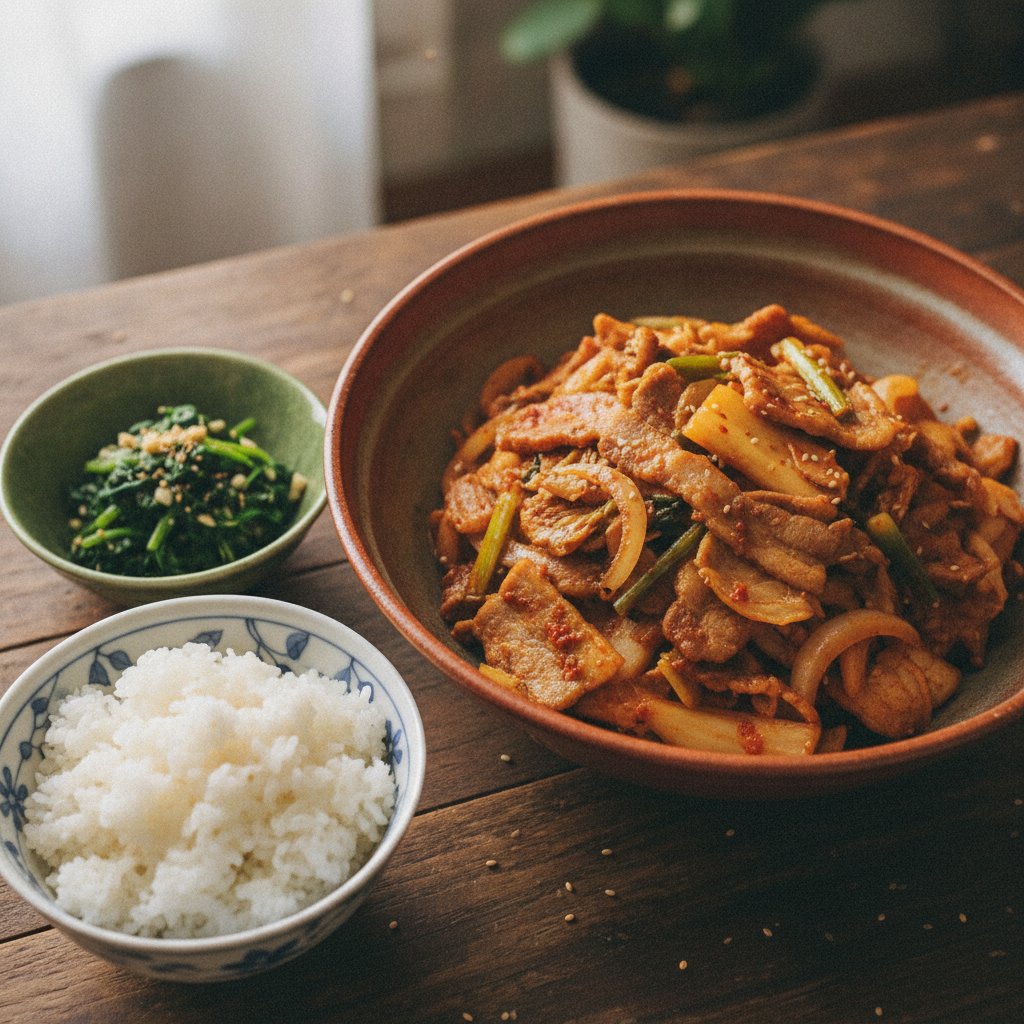
Why: Toasted sesame oil contains delicate aromatic compounds that break down under harsh heat; adding it after turning off the burner keeps its warm, nutty scent vibrant. - Plate and serve: Transfer the steaming stir-fry to a wide serving platter and sprinkle toasted sesame seeds across the top. Serve immediately alongside bowls of hot white rice.
Tips from a Korean Kitchen
Embrace super sour kimchi: Never discard kimchi that has sat in your refrigerator for months and turned unpleasantly tart to eat plain. In Korean home cooking, overly aged sour kimchi (called mugi-ji) is considered a prized cooking ingredient because its aggressive acidity mellows out perfectly when exposed to heat and pork fat.
Maintain pan heat: Keep your stove heat high during the initial stir-fry stages. If your burner output is too low, the vegetables will dump liquid into the pan, resulting in soggy boiled cabbage rather than a glossy, seared stir-fry. Cook in batches if your skillet is under 10 inches wide.
Adjust sugar to taste: Always taste a piece of your uncooked kimchi before starting. If it makes your eyes squint from sharp acidity, increase the sugar in step 2 by an extra half teaspoon. If your kimchi is relatively young, reduce the sugar slightly so the dish does not taste sweet.
Serve with warm tofu (Duba Kimchi style): In Seoul taverns, this exact stir-fry is frequently served as duba kimchi (tofu with stir-fried pork and kimchi). Gently boil a block of medium-firm tofu in salted water for 3 minutes, slice it into 1/2-inch thick slabs, and arrange them around the outer border of your serving dish. Taking a bite of warm plain tofu alongside the spicy, rich pork creates a wonderful balance.
Storage and Reheating
Refrigeration: Allow leftover stir-fry to cool to room temperature, then transfer it into an airtight glass container. Avoid soft plastic containers, as kimchi pigments and garlic oils will permanently stain them. Store in the refrigerator for up to 4 days; the flavors meld and deepen overnight, making day-two leftovers exceptionally tasty.
Freezing: While you can freeze cooked pork belly kimchi stir fry in a sealed freezer bag for up to 1 month, frozen cabbage loses some of its crisp structural integrity upon thawing. For best results, thaw completely in the refrigerator overnight before heating.
Reheating: Warm the stir-fry in a small nonstick skillet over medium heat with a splash of water or fresh stock for 3 to 4 minutes until heated through. You can also microwave leftovers on medium power in 60-second intervals, stirring between bursts. If you have a small portion left over, chop the pork and kimchi into small bits in the pan, add cooked rice, and fry everything together for quick kimchi fried rice (kimchi bokkeumbap).
🛒 Pork Belly Kimchi Stir Fry
As an Amazon Associate we earn from qualifying purchases.
Shop Ingredients & Tools →FAQ
Can I make pork belly kimchi stir fry with fresh kimchi?
You can make it, but the dish will lack the signature sour punch and silky texture that fermented kimchi provides. Fresh cabbage retains too much water and won’t soften or brown the same way. If you must use fresh kimchi, add 1 teaspoon of rice vinegar to your spice mixture to simulate the fermented tartness of aged cabbage.
What other cuts of meat can I use besides pork belly?
Pork shoulder (pork butt) and pork collar are the best alternatives because they have enough intramuscular fat to keep the meat juicy during cooking. Thinly sliced beef brisket or even canned SPAM cut into cubes are very popular secondary options used in Korean households for quick weeknight meals.
How spicy is this stir-fry, and can I lower the heat?
This dish features a moderate, warming spice level (roughly a 3 out of 5 for most palates). The heat comes from gochugaru and gochujang rather than raw hot peppers. To make a milder version, cut the gochugaru amount in half and rely on a full tablespoon of soy sauce and tomato paste mixed into the kimchi brine.
More Korean Recipes
- Crunchy & Refreshing Kkakdugi Recipe (Cubed Radish Kimchi)
- Kimchi Storage (김치 보관법) & Sour Kimchi Tips
- Quick Oi Muchim (Cucumber Kimchi) in 15 Minutes
- How to Make Kimchi (김치) at Home: A Small-Batch Beginner’s Guide
🛒 Pork Belly Kimchi Stir Fry
As an Amazon Associate we earn from qualifying purchases.
Shop Ingredients & Tools →