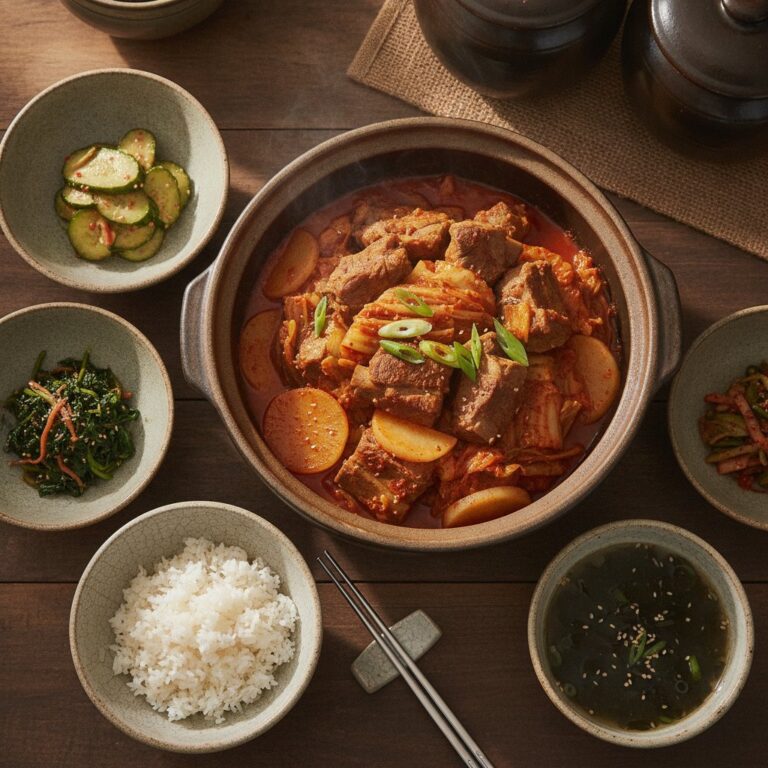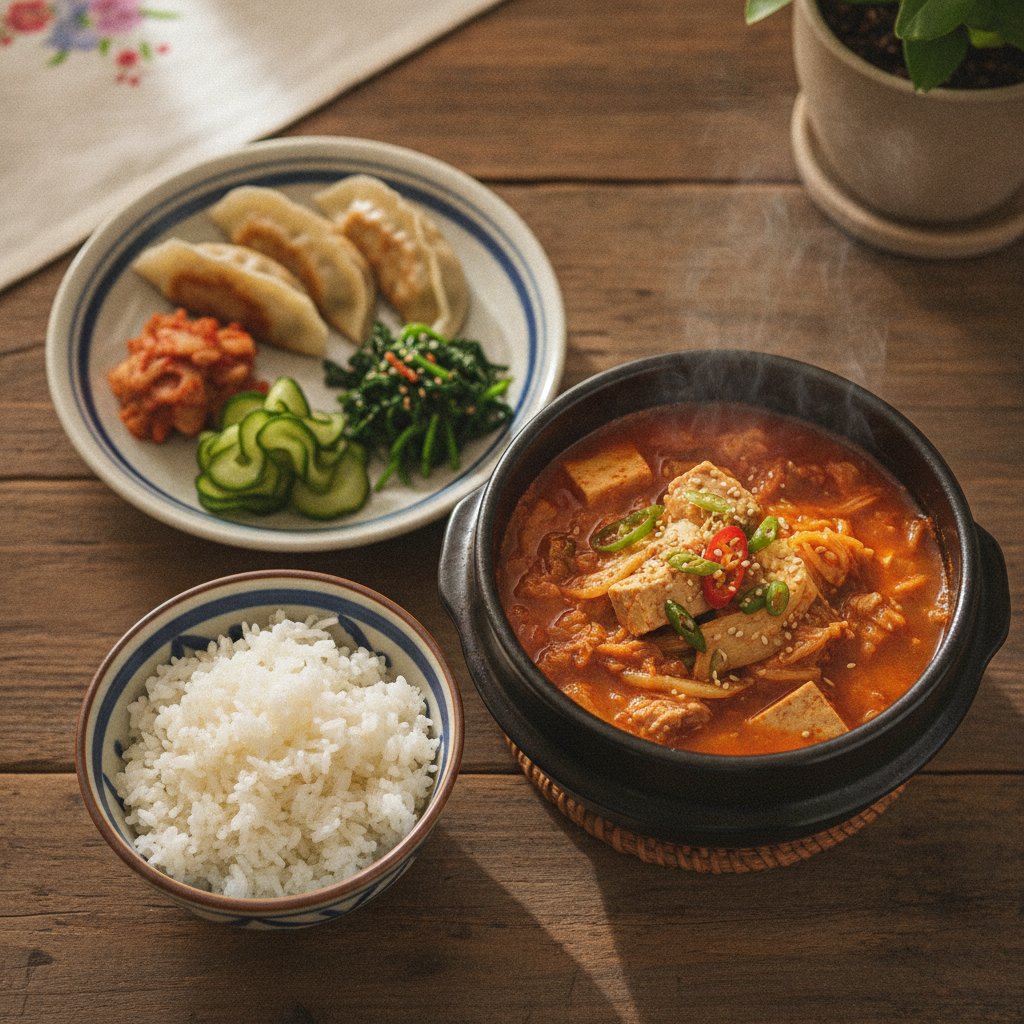
Quick Tuna Kimchi Jjigae (Korean Kimchi Stew Recipe)
This post contains affiliate links. As an Amazon Associate, we earn from qualifying purchases at no extra cost to you.
Quick Tuna Kimchi Jjigae for Busy Weeknights
When my mother didn’t feel like spending an hour over the stove on a rainy Tuesday evening in Seoul, she would head straight for the refrigerator, open the bottom drawer, and pull out a glass jar filled with sour, deeply fermented cabbage. Next came a single yellow can of tuna from the pantry. Within fifteen minutes, our small kitchen would fill with the intoxicating, savory aroma of bubbling stew. That dish was chamchi kimchi jjigae (tuna kimchi stew), and to this day, it remains the ultimate Korean comfort food when time and energy are short.
While pork belly is a famous addition to Korean stews, tuna is actually what Koreans reach for most often on busy weeknights. Canned tuna is inexpensive, shelf-stable, and naturally packed with umami. When combined with well-aged kimchi, it creates a rich, complex broth in less time than it takes to order takeout. You do not need to spend hours simmering an anchovy broth or scouring specialty markets for rare ingredients to get an authentic taste. With a basic jar of Korean kimchi and a few everyday pantry staples, you can recreate this classic home-cooked meal in about twenty minutes.
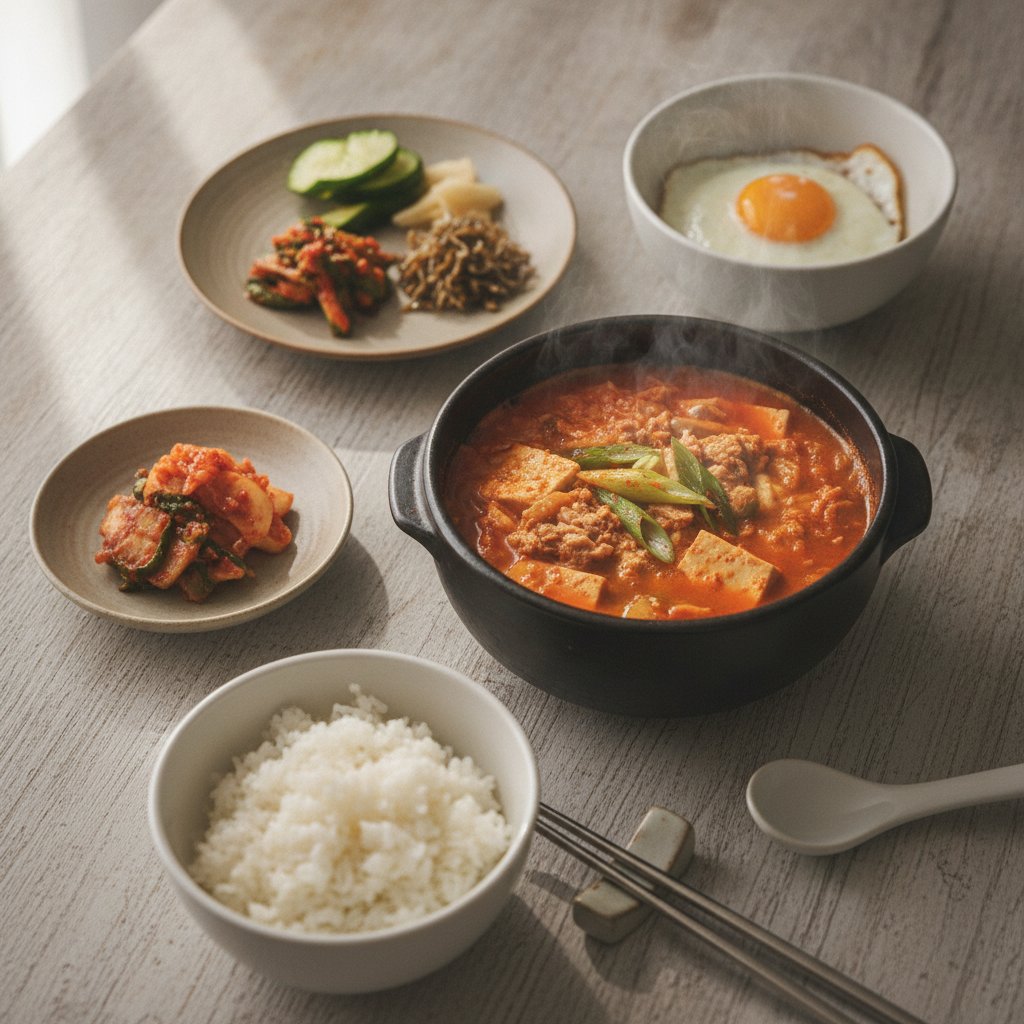
Why This Works
- Sautéing in tuna oil: Stir-frying sour kimchi directly in the oil drained from the tuna can mellows harsh lactic acidity and develops a rich, savory base without requiring a time-consuming homemade stock.
- Kimchi juice integration: Using the brine from your kimchi jar seasons the broth naturally with fermented garlic, ginger, and chili while delivering an authentic depth of flavor.
- Staggered ingredients: Adding the tuna protein and delicate tofu during the final five minutes preserves their texture so the tuna stays in satisfying chunks and the tofu remains tender.
- Rice water trick: Utilizing starchy rice-washing water (*ssalddeumul*) binds the floating oils into the broth, giving the stew a velvety mouthfeel and preventing separation.
🛒 Quick Tuna Kimchi Jjigae
As an Amazon Associate we earn from qualifying purchases.
Shop Ingredients & Tools →Ingredients
- 300 g (about 2 cups, packed) aged, sour cabbage kimchi (*tongbaechu-kimchi*), coarsely chopped
- 120 ml (about 1/2 cup) fermented kimchi juice, strained directly from the jar
- 1 can (150 g / 5 oz) canned tuna in oil (such as Dongwon, Ottogi, or standard Western brands like Bumble Bee), liquid reserved
- 300 g (about 10.5 oz) medium-firm or firm tofu, cut into 1/2-inch thick slices
- 1/2 medium yellow onion (about 100 g / 3.5 oz), thinly sliced
- 2 green onions (scallions), cut on the bias into 1-inch lengths
- 2 cloves fresh garlic, finely minced
- 1 tbsp (15 ml) toasted Korean sesame oil (*cham-gireum*)
- 1 tbsp (7 g) Korean red pepper flakes (*gochugaru*)
- 1 tsp (5 ml) Korean soup soy sauce (*guk-ganjang*) or standard light soy sauce
- 1/2 tsp (2.5 g) granulated sugar (optional, used only if kimchi is extremely sour)
- 480 ml (about 2 cups) water or starchy rice-washing water (*ssalddeumul*)
Substitutions
If you cannot find specific items at your local supermarket, here are realistic swaps that preserve the authentic character of the stew:
Korean Soup Soy Sauce (*Guk-Ganjang*): This soy sauce is saltier and lighter in color than regular soy sauce, designed specifically to season soups without darkening the broth. If you do not have it, use standard light soy sauce combined with a small pinch of fine sea salt.
Tuna in Oil: Korean cooks strongly prefer tuna packed in vegetable oil because the fat absorbs chili color and flavor during sautéing. If you only have tuna packed in spring water, drain the water thoroughly and add an extra tablespoon of neutral cooking oil (such as canola or avocado oil) along with your sesame oil when frying the kimchi.
Korean Red Pepper Flakes (*Gochugaru*): Gochugaru provides vibrant red color and a mild, smoky heat. Western chili powder or cayenne pepper is far too spicy and contains unwanted spices like cumin. If you cannot source gochugaru from an Asian market or online, substitute with mild coarse red pepper flakes or sweet paprika mixed with a pinch of cayenne.
How to Make It
- Sauté the Kimchi and Aromatics: Set a medium saucepan or traditional Korean earthenware pot (*ttukbaegi*) over medium heat. Pour in 1 tablespoon of toasted sesame oil along with the oil drained directly from your tuna can. Add the chopped aged kimchi and minced garlic. Stir-fry continuously for 4 to 5 minutes until the cabbage leaves soften, turn slightly translucent around the edges, and lose their raw pungency.
Why: Raw kimchi carries a sharp, bitey acidity and tough texture. Frying it in fat first breaks down the tough plant fibers, mellows the harsh raw garlic notes, and caramelizes the natural sugars, creating a sweet and savory base.
- Bloom the Red Pepper Flakes: Lower the heat to medium-low. Sprinkle 1 tablespoon of *gochugaru* over the frying kimchi. Stir constantly for 1 minute until the oil absorbs the red color and smells fragrant.
Why: Gochugaru is oil-soluble, meaning its flavor and deep crimson color release best when exposed to warm fat. Keeping the heat low prevents the delicate pepper flakes from scorching and turning bitter.
- Build and Simmer the Broth Base: Pour in 480 ml (2 cups) of water or rice-washing water, along with 120 ml (1/2 cup) of reserved kimchi juice and the sliced yellow onions. Stir well, scraping up any delicious browned bits stuck to the bottom of the pot. Turn the heat up to high and bring the stew to a rolling boil. Once boiling, cover the pot with a lid, turn the heat down to medium-low, and let it simmer for 10 to 12 minutes.
Why: Covering the pot traps steam and allows the onions to release their natural sweetness into the liquid. Simmering gives the tough cabbage core time to turn velvety soft while infusing the water with rich kimchi brine.
- Incorporate the Tuna and Tofu: Uncover the pot. Carefully add the canned tuna meat, keeping it in medium-sized chunks rather than breaking it apart completely. Gently slide the tofu slices into the bubbling broth around the edges of the pot. Stir in 1 teaspoon of soup soy sauce. Taste the broth carefully: if your kimchi was excessively aged and sharp, stir in 1/2 teaspoon of sugar to round out the taste profile. Let the stew simmer uncovered for another 4 to 5 minutes.
Why: Adding canned tuna at the very end prevents it from disintegrating into fine specks that cloud the soup. Simmering uncovered for a few minutes allows the soft, porous tofu to absorb the spicy broth without breaking apart.
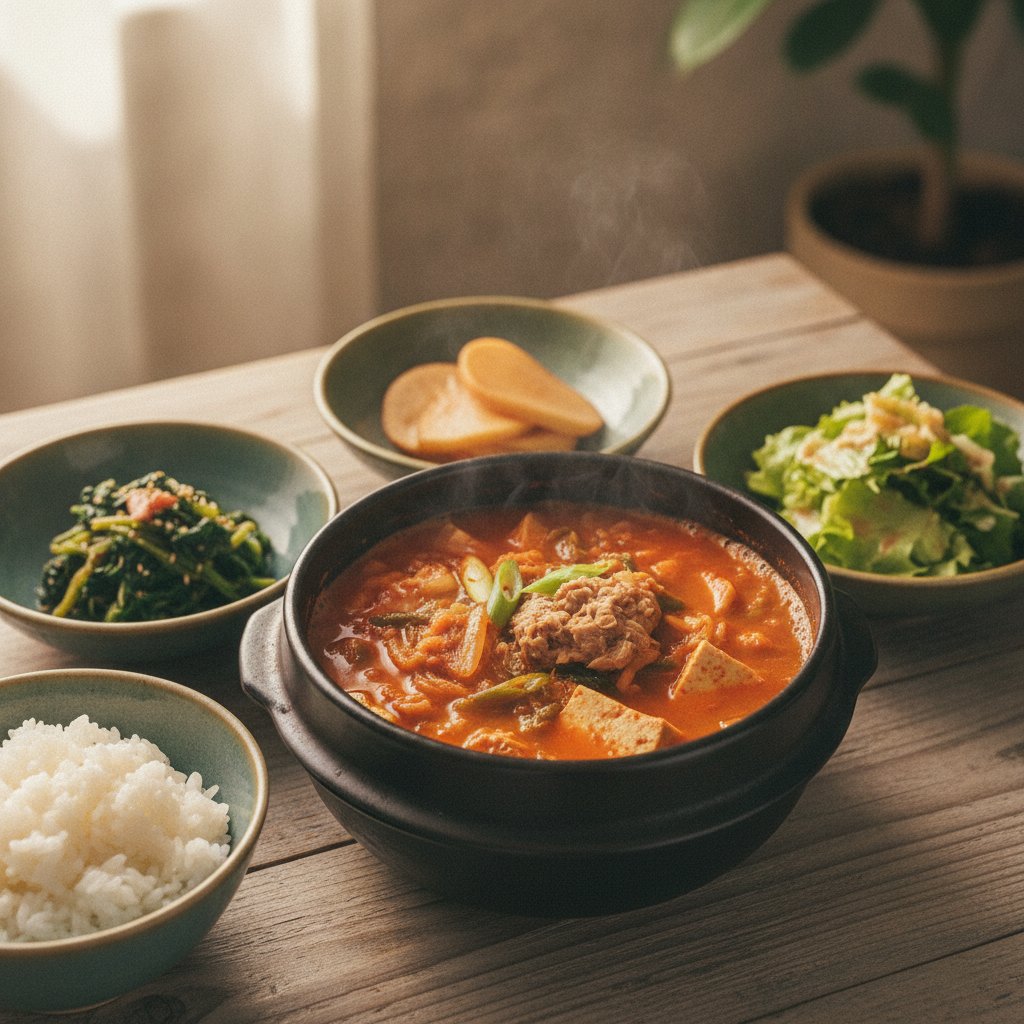
- Garnish and Finish: Scatter the sliced green onions over the top of the simmering stew. Let them cook for just 1 minute until they turn bright green and slightly wilted, then immediately remove the pot from the heat.
Why: Green onions cook almost instantly. Adding them at the very last second preserves their fresh, oniony bite and vibrant color contrast against the rich red broth.
🛒 Quick Tuna Kimchi Jjigae
As an Amazon Associate we earn from qualifying purchases.
Shop Ingredients & Tools →Tips from a Korean Kitchen
Making a great *chamchi kimchi jjigae* relies heavily on adjusting to the ingredients you have on hand. Here are four practical techniques used in Korean home kitchens:
Use Well-Aged Kimchi (*Mook-Eun-Ji*): Freshly made kimchi (*geotjeori*) lacks the developed lactic acid needed for a flavorful stew broth. Look for a jar in your fridge that has been sitting for at least three to four weeks—the kind that smells intensely sour and whose cabbage looks somewhat translucent. If your kimchi is too fresh, your stew will taste like hot water mixed with salad.
Save Your Rice-Washing Water (*Ssalddeumul*): When preparing white short-grain rice to serve with your meal, rinse the grains in a bowl. Discard the first rinse (which removes dust), then save the cloudy liquid from the second and third rinses. The dissolved starches in this water naturally emulsify the oil from the tuna and sesame oil into the broth, yielding a soup with a smoother, body-rich texture.
Do Not Shred the Tuna: Canned tuna is delicate. When you add it to the pot, place it gently on top of the cabbage and let the boiling broth heat it through. If you stir vigorously, the tuna will dissolve into tiny flakes, making the broth cloudy and giving the dish a mealy mouthfeel instead of satisfying, meaty bites.
Balance Acidity with Care: If your kimchi is extremely old (several months fermented), the stew may turn out pucker-inducing sour. Do not throw it away! A small pinch of granulated sugar or a tiny dab of butter stirred in at the end neutralizes excess acidity without making the dish taste noticeably sweet.
Storage and Reheating
Like many home-style stews, kimchi jjigae tastes even better the next day as the flavors continue to meld together in the refrigerator.
Refrigeration: Allow the stew to cool completely to room temperature. Transfer it to an airtight container and store it in the refrigerator for up to 4 days. The tofu will continue to absorb the spicy broth, becoming even more flavorful.
Freezing: You can freeze tuna kimchi jjigae for up to 1 month. However, frozen tofu changes its texture dramatically, becoming spongy and chewy upon thawing. If you plan to freeze a batch, cook the stew without tofu, freeze it in a freezer-safe container, and simply add fresh tofu when reheating on the stovetop.
Reheating: Pour the stew into a small pot over medium heat. As the liquid evaporates during storage, add 2 to 3 tablespoons of water or extra kimchi juice to loosen the broth. Bring to a gentle boil for 3 to 4 minutes until steaming hot throughout.
FAQ
Can I use tuna packed in spring water instead of oil?
Yes, you can use tuna packed in water, but you will need to compensate for the missing fat. Drain the water completely from the can, then add an extra tablespoon of neutral cooking oil or toasted sesame oil when sautéing the kimchi. Fat is essential because it absorbs the red pepper color and mellows the harsh sourness of aged kimchi during the initial stir-frying step.
Why is my kimchi jjigae too sour or bland?
If your stew is too sour, your kimchi was very mature; fix this by adding 1/2 teaspoon of sugar or a small splash of heavy cream or butter to balance the lactic acid. If your stew tastes bland or watery, your kimchi was likely too fresh, or you did not add enough kimchi juice. Boost the flavor by adding an extra dash of soup soy sauce, a pinch of salt, or a teaspoon of *gochujang* (Korean red pepper paste).
Do I need to make an anchovy stock for tuna kimchi stew?
No, you do not need anchovy stock (*myeolchi-yuksuk*) when making tuna kimchi jjigae. While pork kimchi stews often rely on kelp and dried anchovy stock to build complexity, canned tuna supplies plenty of natural glutamates and savory flavor on its own. Using plain water or starchy rice water is the standard, traditional method for weeknight tuna stew in Korean homes.
🛒 Quick Tuna Kimchi Jjigae
As an Amazon Associate we earn from qualifying purchases.
Shop Ingredients & Tools →More Korean Recipes
- Crunchy & Refreshing Kkakdugi Recipe (Cubed Radish Kimchi)
- Kimchi Storage (김치 보관법) & Sour Kimchi Tips
- Quick Oi Muchim (Cucumber Kimchi) in 15 Minutes
- How to Make Kimchi (김치) at Home: A Small-Batch Beginner’s Guide
🛒 Quick Tuna Kimchi Jjigae
As an Amazon Associate we earn from qualifying purchases.
Shop Ingredients & Tools →