
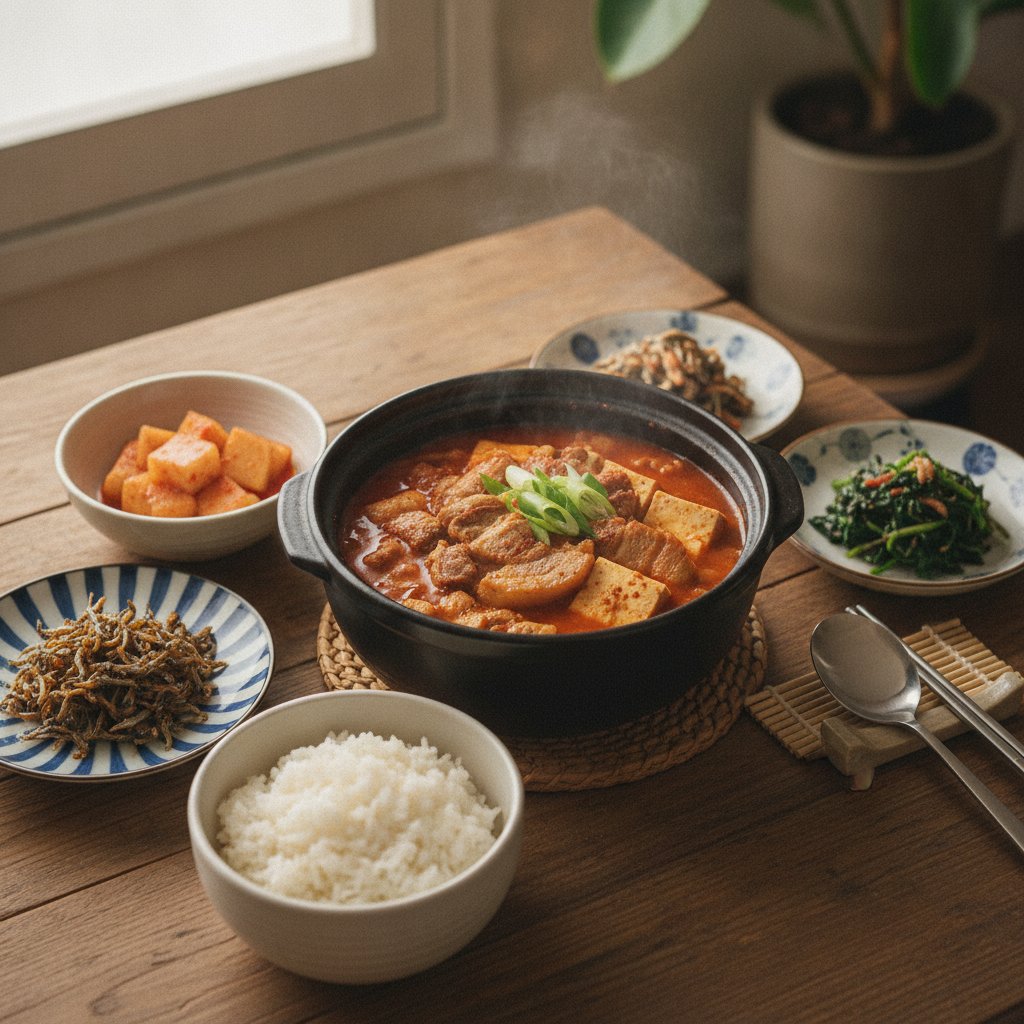
Classic Pork Belly Kimchi Jjigae (Korean Kimchi Stew)
This post contains affiliate links. As an Amazon Associate, we earn from qualifying purchases at no extra cost to you.
On rainy Tuesday evenings in Seoul, when nobody in my household wants to spend an hour standing over a stove, my mother always reaches for the back corner of the refrigerator. There sits a glass tub of kimchi so sour and fizzy that opening it releases a sharp, vinegary punch into the kitchen. To someone unfamiliar with Korean cooking, that sour napa cabbage might look like it past its prime. In a Korean home, however, that deeply aged kimchi is pure gold. It is the absolute foundation of a soul-warming bowl of pork belly kimchi jjigae (kimchi stew).
Kimchi jjigae (김치찌개) is arguably the most frequently served stew on Korean dinner tables. We eat it when we are tired, when we are hungover, when the winter wind bites outside, or simply when we need something deeply comforting paired with a hot bowl of freshly steamed white rice. While you can make kimchi stew with tuna, canned ham, or seafood, nothing matches the luscious richness of pork belly. As the pork simmers, its fat slowly renders into the spicy, acidic broth, transforming harsh sourness into a round, velvety soup that coats your tongue.
If you have tried making this at home and felt your stew tasted thin, flat, or harsh, you are not alone. Cooking a truly great broth at home does not require chef-level knife skills, but it does require understanding how acid, pork fat, and heat interact. Here is how we make it in everyday Korean kitchens so you can recreate that exact neighborhood-restaurant depth in your own home.
Why This Works
- Sautéing before simmering: Cooking the sour cabbage and pork in sesame oil before adding liquid breaks down tough cabbage fibers and caramelizes the natural sugars, taming harsh acidity into a complex, savory base.
- Leveraging rendered pork fat: Starting with raw pork belly in a warm pan allows the pork fat to render completely, creating an emulsion with the spicy broth that delivers a rich, silky mouthfeel without needing heavy broths.
- Kimchi brine as seasoning: Using the fermented juice straight from the kimchi jar adds instant umami, lactic acid, and salt that water alone can never replicate.
Ingredients
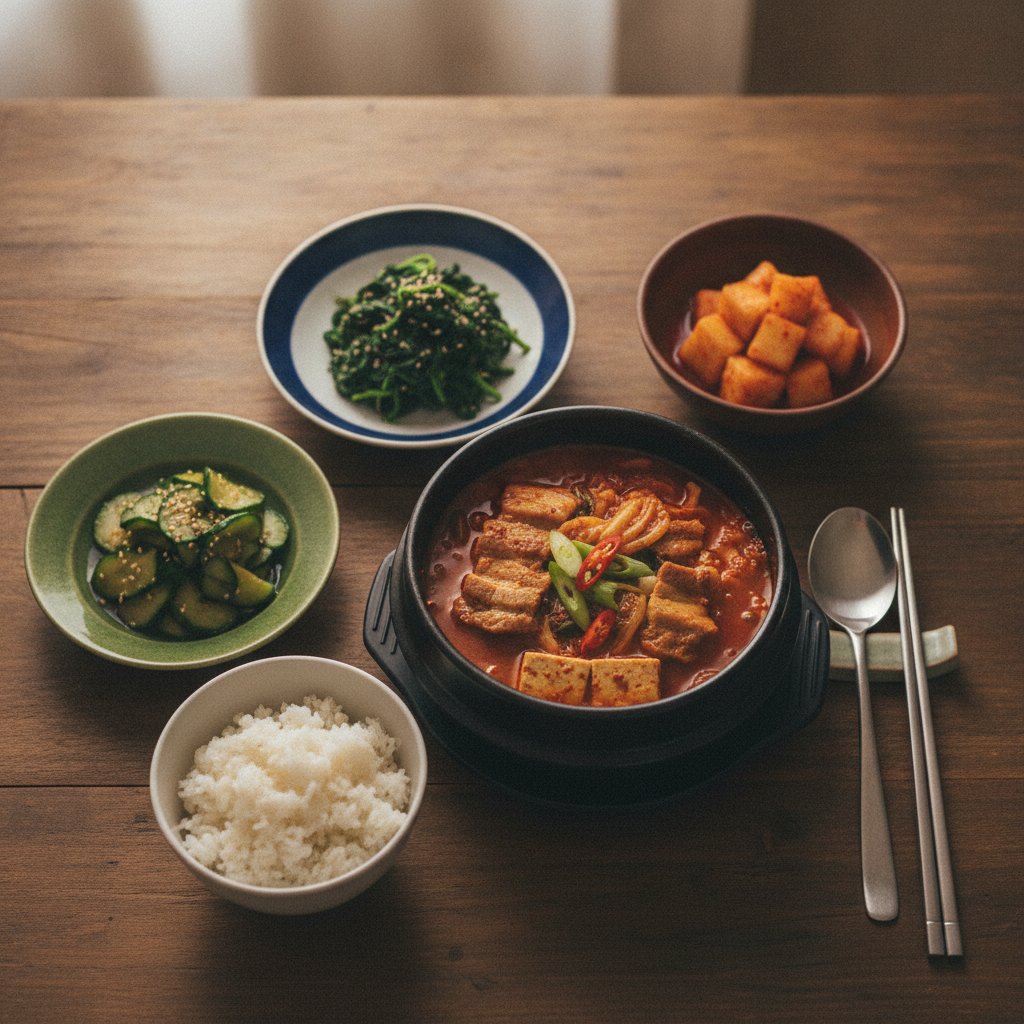
- 300 g (about 2.5 cups, tightly packed) well-aged napa cabbage kimchi: Cut into 1.5-inch pieces. It must be old, sour kimchi (mugi-ji) for best results.
- 120 ml (about 1/2 cup) fermented kimchi brine: Strained directly from your kimchi container.
- 250 g (about 1/2 lb) skinless pork belly: Cut into bite-sized slices, about 1/4-inch thick.
- 200 g (about 7 oz) medium-firm tofu: Cut into thick 1/2-inch rectangular slices.
- 1/2 medium yellow onion (about 100 g): Thinly sliced.
- 2 green onion stalks: Diagonally sliced into 2-inch pieces, white and green parts separated.
- 15 g (about 1.5 tbsp) Korean chili flakes (gochugaru): Adjust to taste for heat level.
- 15 g (about 1 tbsp) minced garlic: Approximately 4 large cloves.
- 15 ml (1 tbsp) regular soy sauce or Korean soup soy sauce (guk-ganjang): For depth and saltiness.
- 15 ml (1 tbsp) toasted sesame oil: For initial sautéing.
- 5 g (1 tsp) granulated sugar: Essential for cutting sharp acidity in aged kimchi.
- 700 ml (about 3 cups) rice washing water (ssal-ttumul) or kelp-anchovy stock: Water works fine in a pinch.
Substitutions for Western Grocery Shoppers
Finding every traditional Korean item isn’t always easy outside major cities, but you can still make an exceptional stew with smart grocery store swaps:
- Pork Belly: If thick, uncured pork belly isn’t at your meat counter, ask the butcher or buy whole pork shoulder (pork butt) and slice it thinly. Avoid pre-sliced American breakfast bacon if possible, as the heavy hickory smoked flavor dominates the subtle fermented notes of the broth. If using bacon, select unsmoked or thick-cut low-sodium varieties.
- Rice Washing Water: Instead of plain tap water, use the cloudy water from rinsing your white rice (collect the water from the second and third rinse). The starches left behind help bind the fat and broth together, preventing the oil from floating separately on top. Alternatively, chicken stock or unsalted vegetable broth adds a lovely body.
- Korean Chili Flakes (Gochugaru): Korean chili flakes have a unique smoky, slightly sweet, and mild heat. If you cannot find them at an Asian market or online, substitute with a 3:1 mixture of sweet Hungarian paprika and cayenne pepper to match the color and moderate heat.
🛒 Classic Pork Belly Kimchi Jjigae
As an Amazon Associate we earn from qualifying purchases.
Shop Ingredients & Tools →How to Make It
-
Render the pork belly fat: Place a medium pot or heavy Dutch oven over medium heat. Add the sliced pork belly and toasted sesame oil. Cook, stirring occasionally, until the pork loses its pink color and starts releasing its clear liquid fat, about 4 to 5 minutes. Why: Rendering the pork fat in sesame oil first ensures the meat stays tender and provides a flavorful lipid base to sear the vegetables.
-
Sauté the kimchi and aromatics: Add the chopped sour kimchi, sliced yellow onions, minced garlic, and sugar to the pot with the pork. Turn the heat up slightly to medium-high and stir-fry everything together for about 5 to 7 minutes until the kimchi cabbage looks translucent and soft. Why: Raw kimchi boiled in water tastes acidic and watery. Sautéing caramelizes the sugars, softens tough cabbage leaves, and deepens the overall flavor profile.
-
Bloom the chili flakes: Sprinkle the Korean chili flakes (gochugaru) over the sautéed mixture and stir constantly for 1 minute until fragrant. Why: Warming chili powder in oil releases fat-soluble flavor compounds and gives the stew its brilliant red color without scorching the spices.
-
Add liquid and simmer: Pour in the 700 ml of rice water (or stock) along with the 120 ml of kimchi brine and soy sauce. Bring the pot to a rolling boil over high heat, then drop the heat to medium-low, cover with a lid, and let it simmer undisturbed for 15 to 20 minutes. Why: A low, covered simmer allows the collagen in the pork belly to break down while encouraging the kimchi to release its full savory potency into the liquid.
-
Add tofu and finish: Uncover the pot, arrange the tofu slices and the white parts of the green onions neatly on top of the bubbling stew. Cook uncovered on medium heat for another 5 minutes so the tofu absorbs the red broth without breaking apart. Why: Adding delicate tofu near the end keeps it from disintegrating during the long simmer while letting it absorb heat and flavor.
-
Garnish and serve: Scatter the green tops of the sliced green onions over the top, turn off the heat, and serve immediately alongside hot bowls of steamed rice. Why: The fresh green onions add a crisp bite and bright aroma right before eating.
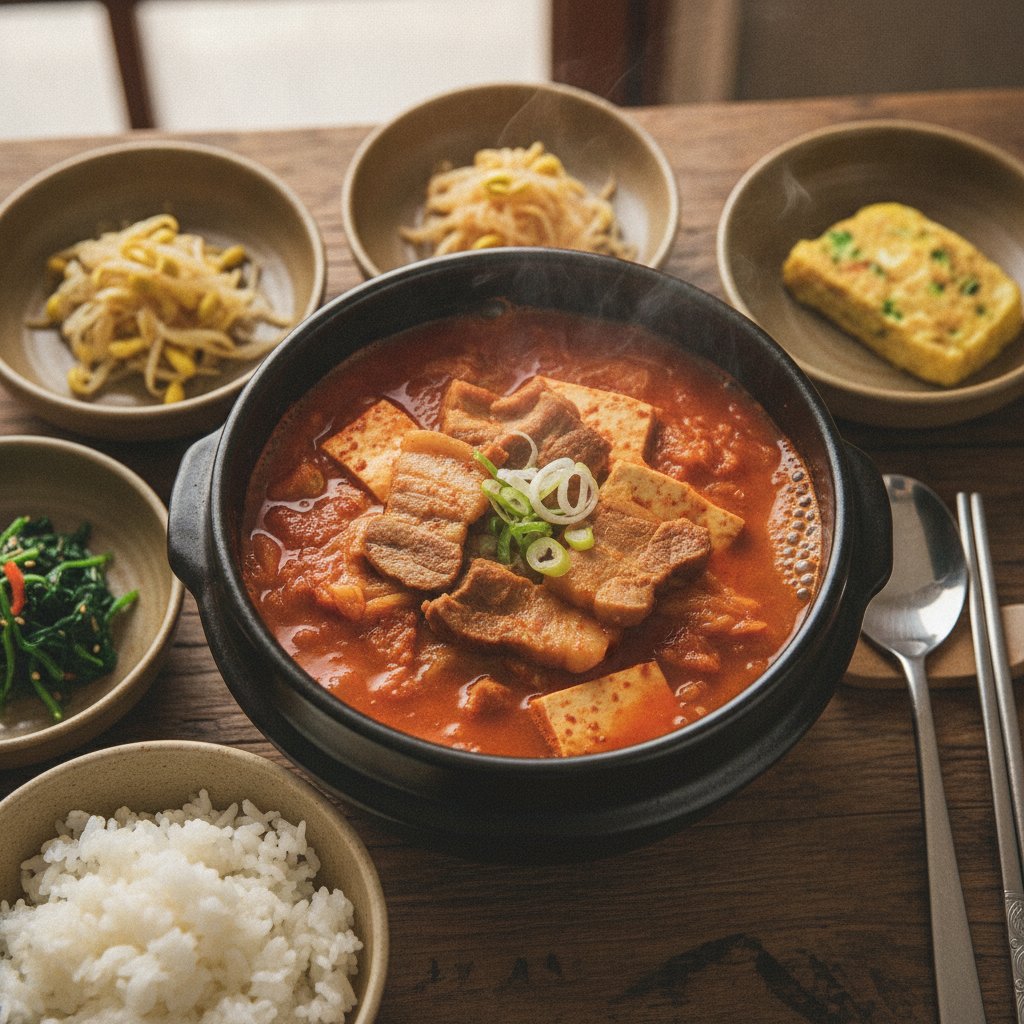
Tips from a Korean Kitchen
In Korea, making jjigae is second nature, but subtle adjustments elevate a good home meal into something memorable:
- Age is everything: Freshly made kimchi (geotjeori) will yield a bland, crunchy soup that tastes like hot water poured over salad. Always use kimchi that has sat in your fridge for at least 3 to 4 weeks, preferably when the leaves look dark and softened.
- Do not fear the sugar: If your stew tastes sharp or unpleasantly sour, do not pour in more soy sauce or salt. Add sugar in 1/2 teaspoon increments. Sugar chemically balances lactic acid, transforming sourness into rich warmth.
- Keep the fat layer: You might be tempted to skim off the orange oil floating at the top of your pot. Resist the urge! That oil carries all the fat-soluble flavor from the chili flakes, pork belly, and garlic. Stir it back into the stew before ladling.
Storage
Kimchi jjigae is famous for tasting even better the next day after the flavors have spent hours melding together in the refrigerator.
- Refrigerator: Store leftover stew in an airtight glass container for up to 4 to 5 days. Reheat in a small pot over medium heat, adding 2 to 3 tablespoons of fresh water if the liquid has reduced too much.
- Freezer: You can freeze the broth, pork, and kimchi for up to 3 months. However, remove the tofu before freezing, as freezing changes tofu’s cellular structure, making it rubbery and spongy upon thawing. Add fresh tofu when reheating.
🛒 Classic Pork Belly Kimchi Jjigae
As an Amazon Associate we earn from qualifying purchases.
Shop Ingredients & Tools →FAQ
Can I use fresh kimchi if I don’t have sour kimchi?
While sour kimchi is heavily preferred, you can mock the acidity of aged kimchi if you only have fresh store-bought kimchi. Sauté your fresh kimchi with 1 teaspoon of white vinegar or rice vinegar along with the sugar during Step 2 of the recipe. This simulates the sharp fermented bite necessary for an authentic flavor profile.
Why is my kimchi jjigae broth thin and watery?
A thin broth usually happens for two reasons: not sautéing the cabbage long enough before adding liquid, or using plain cold tap water without enough simmering time. Using rice washing water, anchovy-kelp stock, or letting the stew simmer covered for at least 20 minutes ensures the pork fat and cabbage starches emulsify properly into a richer broth body.
Is pork belly kimchi jjigae very spicy?
The heat level in this stew is moderate compared to other Korean dishes. Most of the heat comes from the gochugaru (chili flakes). If you prefer a mild stew, reduce the chili flakes to 1/2 tablespoon and ensure you pick a mild commercial brand of kimchi. You can always pass extra chili flakes at the table for spice lovers.
More Korean Recipes
- Crunchy & Refreshing Kkakdugi Recipe (Cubed Radish Kimchi)
- Kimchi Storage (김치 보관법) & Sour Kimchi Tips
- Quick Oi Muchim (Cucumber Kimchi) in 15 Minutes
- How to Make Kimchi (김치) at Home: A Small-Batch Beginner’s Guide
🛒 Classic Pork Belly Kimchi Jjigae
As an Amazon Associate we earn from qualifying purchases.
Shop Ingredients & Tools →


