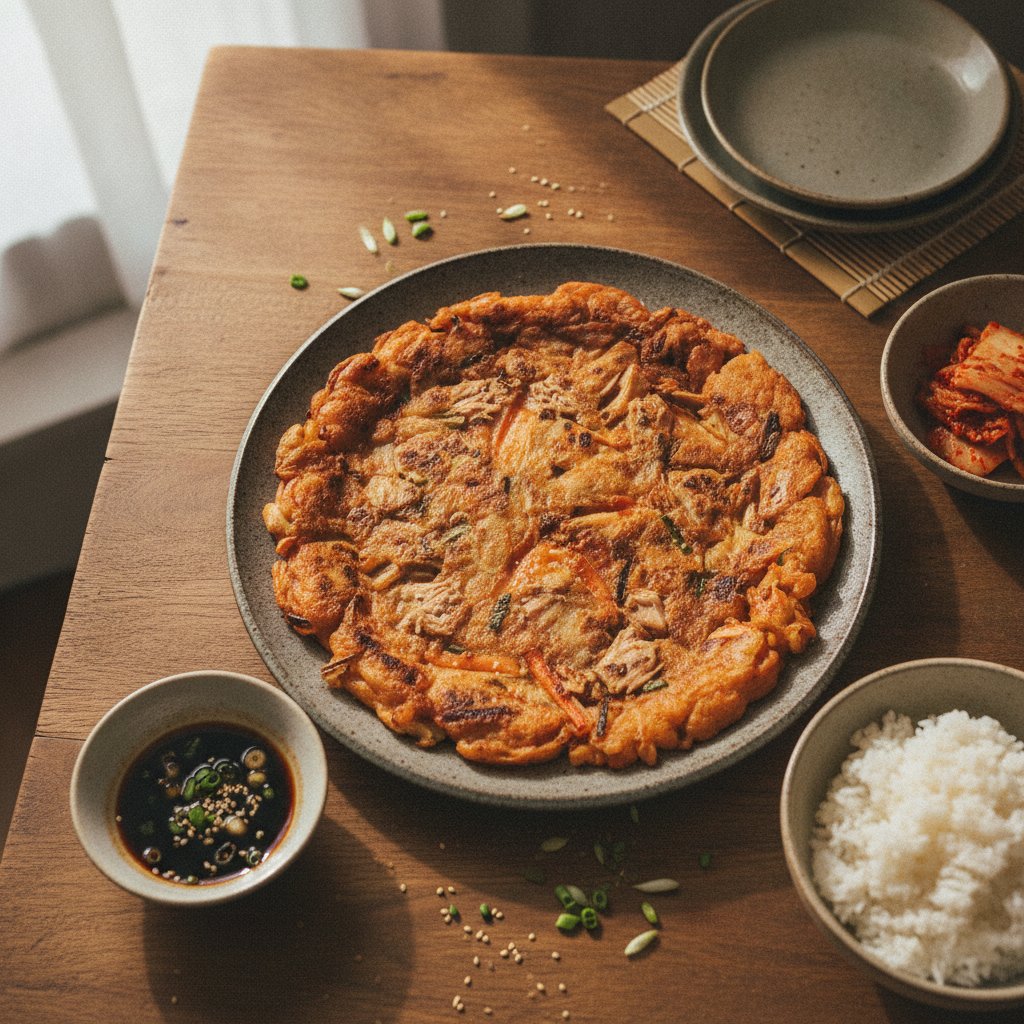
Crispy Tuna Kimchi Pancakes (Chamchi Kimchi Jeon)
This post contains affiliate links. As an Amazon Associate, we earn from qualifying purchases at no extra cost to you.
Whenever grey clouds roll over the Han River and rain begins to patter against my apartment windows in Seoul, my mind immediately turns to the sound of sizzling oil. In Korea, rainy days are universally accepted as pancake weather. The sound of heavy raindrops hitting the pavement mirrors the pleasant crackle of batter crisping up in a hot skillet. While classic vegetable or seafood pancakes are wonderful, the ultimate cozy comfort in my family has always been chamchi kimchi jeon (tuna kimchi pancake).
This is the dish every Korean home cook turns to when the fridge looks sparse. All you need is a jar of sour kimchi sitting in the back of your refrigerator and a standard tin of pantry tuna. The saltiness and rich oils from the tuna melt into the spicy, tangy cabbage, transforming basic canned fish into a savory delicacy. This recipe gives you ultra-crispy edges and a tender, deeply flavorful center every single time using basic ingredients you can find at any local supermarket.
Why This Works
- Ice-cold batter contrast: Mixing flour and starch with ice water stops gluten from developing, guaranteeing a delicate, shattering crispiness when the batter hits hot oil.
- Tuna oil integration: Flaking the tuna directly into the vegetable mixture lets the savory juices coat the kimchi, seasoning every bite without making the batter watery.
- Starch blending: Replacing a quarter of the all-purpose flour with potato or cornstarch creates a crispier exterior that stays crunchy long after leaving the skillet.
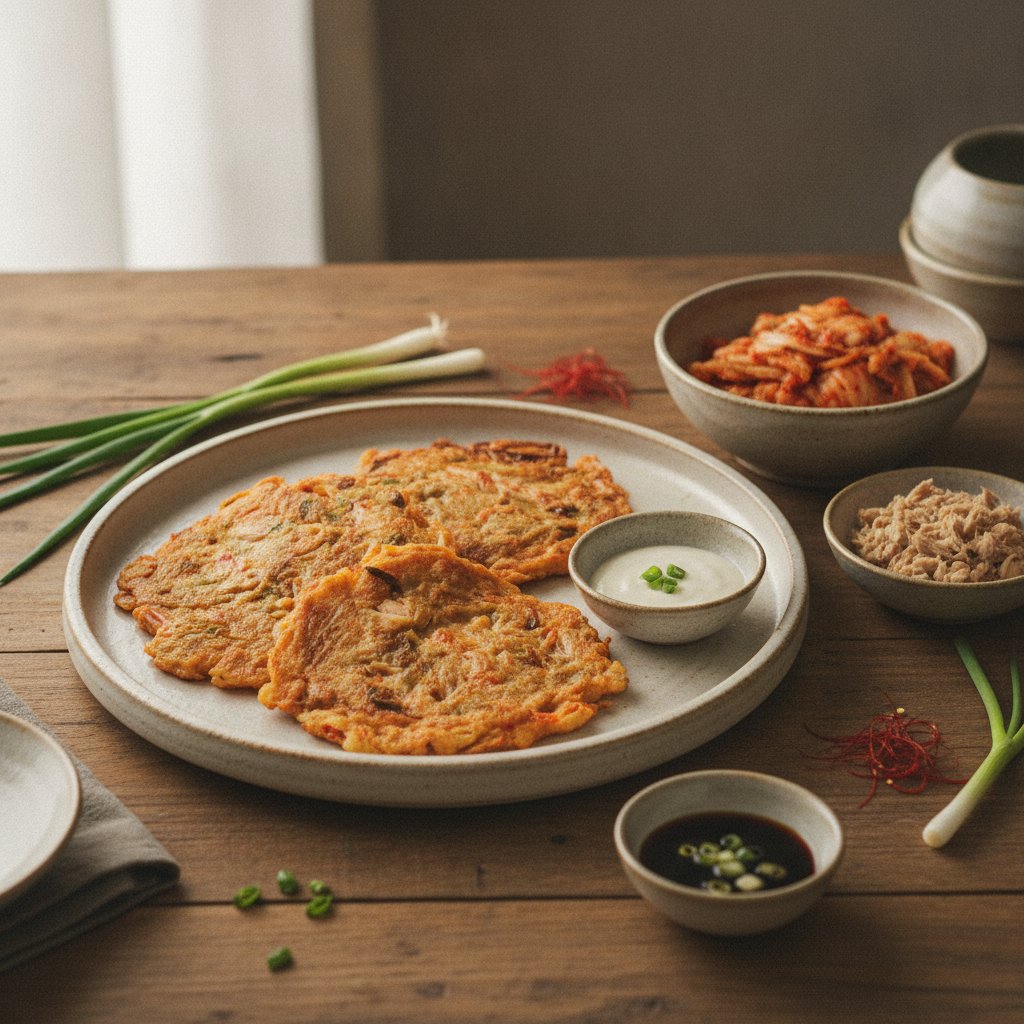
Ingredients
- 200 g (about 1.5 cups) well-ripened, sour kimchi, finely chopped
- 60 ml (about 1/4 cup) aged kimchi juice from the jar
- 1 tin (150 g / about 5.3 oz) canned tuna, oil-packed or water-packed, lightly drained
- 120 g (about 1 cup) all-purpose flour
- 30 g (about 1/4 cup) potato starch (or cornstarch)
- 180 ml (about 3/4 cup) ice-cold water
- 2 green onions (scallions), cut into 2-inch (5 cm) long strips
- 1/2 medium yellow onion, thinly sliced
- 2 g (about 1/2 tsp) granulated sugar
- 2 g (about 1/2 tsp) gochugaru (Korean red pepper flakes), optional for heat
- 45–60 ml (about 3–4 tbsp) neutral cooking oil (canola, vegetable, or sunflower oil) for frying
- Dipping Sauce: 15 ml (1 tbsp) soy sauce, 15 ml (1 tbsp) rice vinegar, 5 ml (1 tsp) water, 2 g (1/2 tsp) toasted sesame seeds
Substitutions
If you cannot find Korean potato starch, standard cornstarch from any Western grocery store works as an equal 1:1 replacement. If your kimchi is fresh rather than sour, mix in 1/2 teaspoon of white vinegar or apple cider vinegar along with the sugar to mimic the bright acidity of aged mukeunji (aged sour kimchi). For the tuna, standard oil-packed or water-packed tuna from brands like Starkist or Bumble Bee will work, though Korean brands like Dongwon or Ottogi are slightly chunkier if you happen to visit an Asian market.
🛒 Crispy Tuna Kimchi Pancakes
As an Amazon Associate we earn from qualifying purchases.
Shop Ingredients & Tools →How to Make It
-
Prepare the kimchi and vegetables: Squeeze your chopped kimchi gently over a bowl to yield about 1/4 cup of rich juice. In a large mixing bowl, combine the chopped kimchi, sliced yellow onions, and green onions. Squeezing excess liquid keeps your pancake batter under control so it doesn’t turn soggy.
-
Add the tuna and seasonings: Open the canned tuna and drain off most of the liquid, leaving just a little moisture behind for flavor. Flake the tuna into the bowl with the vegetables. Sprinkle in the sugar and gochugaru (if using). The small amount of sugar softens the intense sour tang of fermented cabbage without making the dish sweet.
-
Prepare the dry base and ice water: Whisk together the all-purpose flour and potato starch in a separate small bowl. Pour the flour mixture over the tuna and vegetables, tossing everything together lightly so the ingredients are thinly coated in dry flour. Pour in the ice water and reserved kimchi juice. Mixing cold liquid into pre-coated ingredients prevents overworking the flour, which keeps gluten low and crispiness high.
-
Mix gently: Stir the batter with a spoon or spatula just until no dry flour spots remain. The batter should look slightly thick yet pourable, clinging loosely to the vegetables. If it feels like thick cake batter, add one extra tablespoon of ice water.
-
Heat the pan generously: Place a large non-stick skillet or cast-iron skillet over medium-high heat. Pour in 2 tablespoons of neutral oil. Wait until the oil shimmers and flows easily across the pan, about 1 to 2 minutes. Adequate warm oil is essential; the pancake needs to shallow-fry, not bake, to get iconic golden edges.
-
Ladle and spread the batter: Pour half of the batter into the hot skillet. Immediately use the back of a spoon to spread the batter out into a thin, even circle, about 8 to 9 inches (20 to 22 cm) in diameter. Pushing the heavy kimchi pieces toward the edges ensures uniform cooking and prevents a dense, doughy center.
-
Fry until golden brown: Cook undisturbed for 3 to 4 minutes. You will see the edges turn translucent, firm up, and take on a deep golden color. Shake the pan gently; the entire pancake should slide freely. If the center feels soft, lower heat to medium and cook for another minute.
-
Flip and press: Carefully slide a wide spatula underneath and flip the pancake in one confident motion. Swirl an additional tablespoon of oil around the edges of the pan so oil runs underneath the newly flipped side. Press down lightly with your spatula to ensure the bottom makes full contact with the skillet. Fry for another 3 minutes until both sides are deeply golden and crispy.
-
Serve immediately: Transfer the pancake to a cutting board lined with paper towels for 30 seconds to absorb excess surface oil. Slice into small squares or wedges and serve hot alongside the mixed dipping sauce.
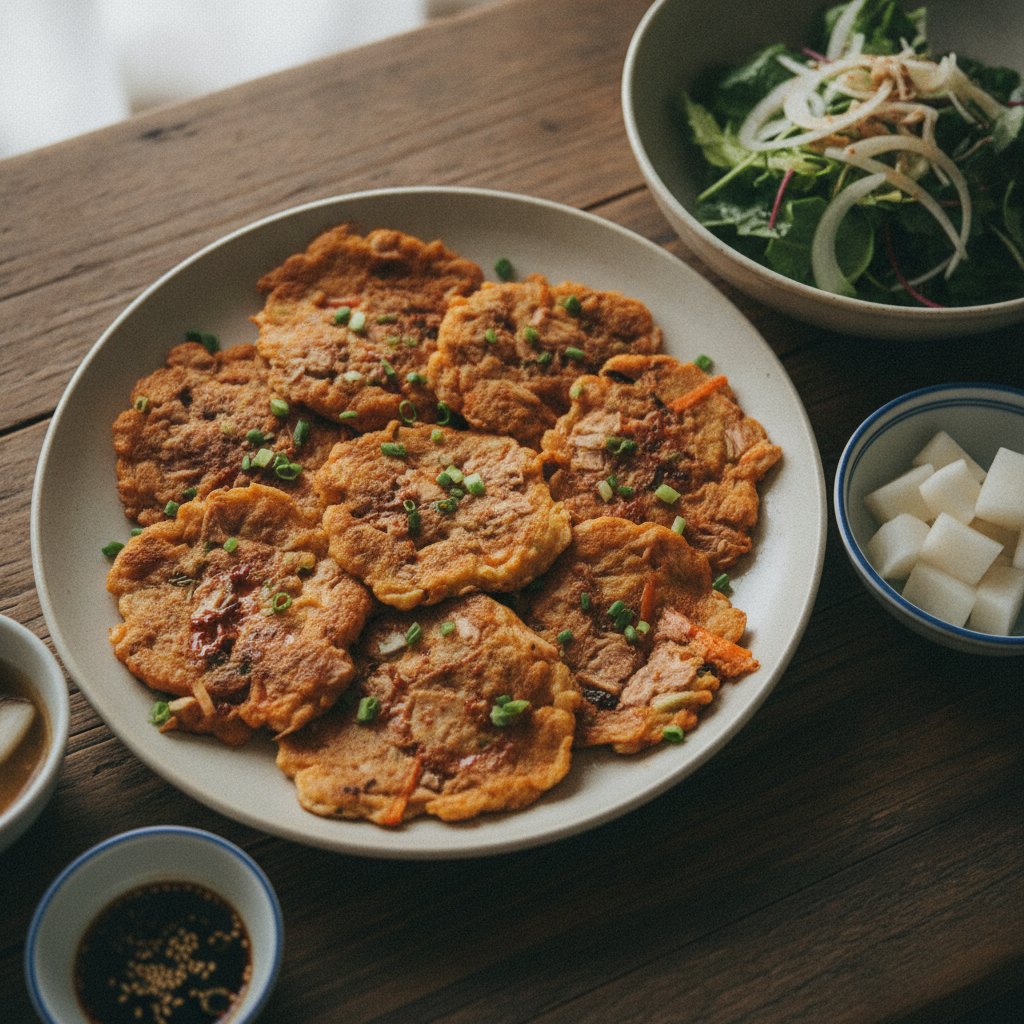
Tips from a Korean Kitchen
In Korean home cooking, making jeon (savory pan-fried pancakes) is more about technique than rigid measurements. The first mistake people make is using too little oil. Jeon is essentially shallow-fried, so if your pan looks dry, your pancake will absorb grease rather than crisping up. Don’t be afraid to add another splash of oil around the outer ring right after flipping.
Second, resist the urge to constantly press down on the pancake with your spatula while it cooks. Pressing repeatedly forces out natural moisture from the kimchi and tuna, causing the steam to make the crisp surface soft. Press firmly just once right after you flip to set the shape, then let the heat do its job.
Third, keep your water genuinely icy. I usually drop two ice cubes into a measuring cup of cold tap water, stir, and measure out the liquid right before pouring. That drastic temperature difference between the cold batter and hot oil creates micro-bubbles that yield maximum crunch.
Storage
Leftover tuna kimchi pancakes keep well in an airtight container in the refrigerator for up to 3 days. To freeze, stack cooked and cooled pancake wedges between sheets of parchment paper in a freezer-safe bag for up to 1 month.
Never reheat kimchi pancakes in a microwave, as the trapped steam will make the dough rubbery and limp. Instead, reheat them in a dry skillet over medium heat for 2 to 3 minutes per side until the surface bubbles and crisps up again. You can also pop them into an air fryer set to 375°F (190°C) for 3 to 4 minutes.
🛒 Crispy Tuna Kimchi Pancakes
As an Amazon Associate we earn from qualifying purchases.
Shop Ingredients & Tools →FAQ
Why are my tuna kimchi pancakes soggy instead of crispy?
Sogginess usually comes from three factors: overmixing the flour (which creates chewy gluten), using water that isn’t cold enough, or cooking in a cool pan with too little oil. Make sure your oil is shimmering hot before adding the batter, and replace some flour with potato starch or cornstarch for better structural crispiness.
Can I use fresh kimchi for kimchi jeon?
You can, but aged sour kimchi yields far superior flavor. Fresh kimchi lacks the developed lactic acid that gives these savory pancakes their signature tangy kick. If you only have fresh kimchi, chop it up and toss it with 1/2 teaspoon of white vinegar or lemon juice, then let it sit at room temperature for 15 minutes before mixing your batter.
What kind of canned tuna works best for Korean pancakes?
Oil-packed tuna provides the best rich flavor and keeps the fish tender during frying, but water-packed tuna works completely fine as long as you drain it thoroughly. Just avoid flavored tunas (like lemon pepper or hickory) so they don’t clash with the garlic and ginger flavors already present in your kimchi.
More Korean Recipes
- Crunchy & Refreshing Kkakdugi Recipe (Cubed Radish Kimchi)
- Kimchi Storage (김치 보관법) & Sour Kimchi Tips
- Quick Oi Muchim (Cucumber Kimchi) in 15 Minutes
- How to Make Kimchi (김치) at Home: A Small-Batch Beginner’s Guide
🛒 Crispy Tuna Kimchi Pancakes
As an Amazon Associate we earn from qualifying purchases.
Shop Ingredients & Tools →