Volcano Cheese Kimchi Fried Rice (Kimchi Bokkeumbap)
This post contains affiliate links. As an Amazon Associate, we earn from qualifying purchases at no extra cost to you.
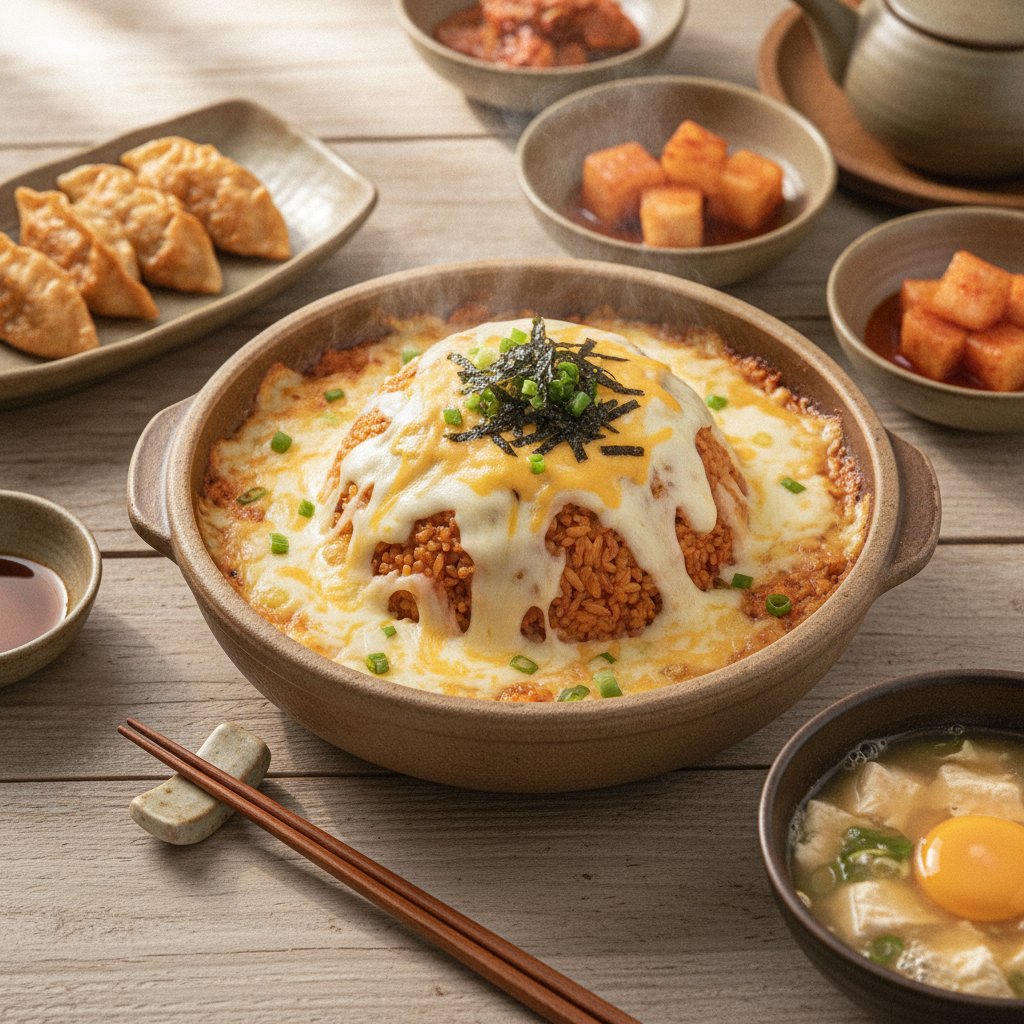
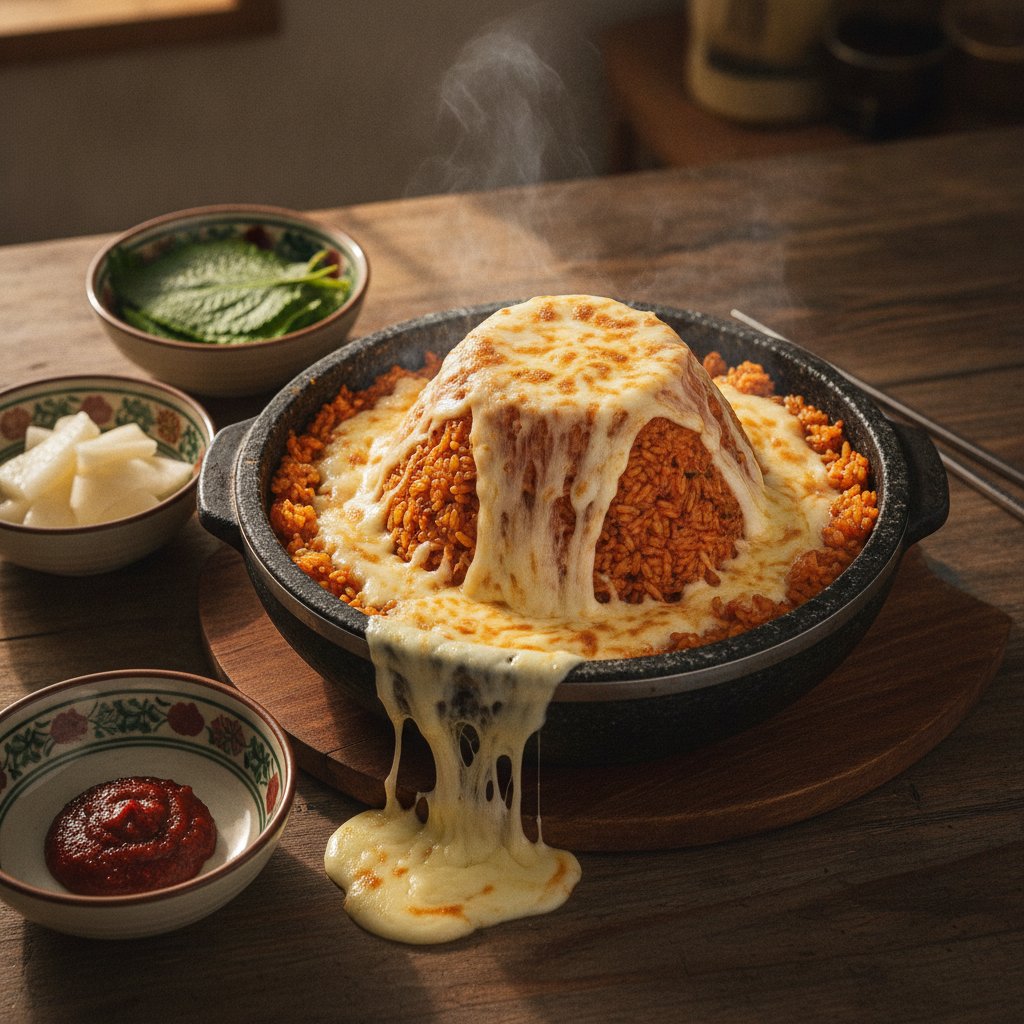
Late at night in Seoul, after a long work week or a evening out with friends in Hongdae, there is one dish everyone craves when stepping into a neighborhood boonsik-jip (snack bar) or Korean BBQ joint: cheese kimchi bokkeumbap (cheese kimchi fried rice). In recent years, a playful variation called "volcano" fried rice—originally popularized near Jeju Island's Mount Halla—has taken over Korean social media and domestic dinner tables alike. It features a mountain of fiery, savory kimchi fried rice surrounded by a moat of silky scrambled egg and a thick blanket of gooey, melted mozzarella.
In my own home kitchen in Seoul, this is the ultimate comfort meal I make when the fridge looks nearly empty. All you need are a few basic staples, aged kimchi, and leftover rice. The beauty of this recipe lies in how the mild, creamy egg and stretchy cheese cut through the sharp tang and heat of cooked fermented cabbage, creating a balanced bite every single time.
Why This Works
- Searing sour kimchi in pork fat: Frying well-ripened kimchi in rendered pork fat or butter mellows out its sharp raw acidity and caramelizes its natural sugars, creating a deep savory base.
- Using chilled, low-moisture rice: Cold, day-old short-grain rice allows individual grains to sear cleanly in the spicy oil without breaking down into a mushy texture.
- Gentle steam-melting: Pouring the liquid egg mixture directly into the hot pan around the sculpted rice cone cooks the eggs into soft curds while trapping steam to melt the cheese thoroughly without burning the pan bottom.
Ingredients
- 400 g (about 2.5 cups cooked, or 2 individual portions) day-old short-grain white rice, chilled
- 300 g (about 1.5 cups) aged sour kimchi (mukeunji), finely chopped
- 60 ml (about 1/4 cup) aged kimchi juice from the jar
- 100 g (about 3.5 oz) Spam, thick-cut bacon, or pork belly, cut into tiny 1/4-inch cubes
- 15 ml (1 tbsp) gochujang (Korean red chili paste, such as CJ Haandreq or Sunchang)
- 10 ml (2 tsp) gochugaru (Korean red chili flakes)
- 5 ml (1 tsp) granulated sugar (adjust based on how sour your kimchi is)
- 15 ml (1 tbsp) toasted sesame oil
- 15 ml (1 tbsp) neutral cooking oil or unsalted butter
- 3 large eggs
- 30 ml (2 tbsp) whole milk or water
- 100 g (about 1 cup) shredded low-moisture mozzarella cheese
- 1 stalk green onion (scallion), thinly sliced
- 15 g (1 tbsp) toasted sesame seeds
- 1 sheet gim (roasted seasoned seaweed snack), crushed into small flakes (optional)
Substitutions
If you cannot find every traditional Korean item at your local grocery store, here are reliable swaps that maintain the spirit of the dish:
- Kimchi: Look for store-bought cabbage kimchi in the refrigerated produce section. If it tastes fresh and crunchy, leave the jar on your kitchen counter for 24 to 48 hours to speed up fermentation until it smells sharp and sour.
- Spam or Pork: You can substitute diced smoked bacon, ham, or pan-seared extra-firm tofu for a vegetarian variation.
- Gochujang & Gochugaru: While gochujang provides that unmistakable savory-sweet depth, a mixture of Sriracha mixed with a small pinch of brown sugar and soy sauce can work in a pinch. However, standard tubs of Korean chili paste are widely available online via Amazon or at most Asian markets.
- Mozzarella: Low-moisture shredded mozzarella gives the absolute best stretchy pull common in Seoul restaurants, but mild white cheddar or Monterey Jack melt equally well.
🛒 Volcano Cheese Kimchi Fried Rice
As an Amazon Associate we earn from qualifying purchases.
Shop Ingredients & Tools →How to Make It
- Prep the rice and kimchi: Chop your fermented kimchi into small, uniform pieces (roughly 1/2-inch). Ensure your cooked short-grain rice is cold from the fridge. If the rice is stuck together in a hard lump, gently break it up with wet hands into individual grains so it cooks evenly later.
- Render the fat and sear the meat: Place a large skillet or non-stick wok over medium heat. Add the neutral oil (or butter) and diced Spam or pork belly. Cook for 3 to 4 minutes, stirring occasionally, until the pork turns golden brown and renders its savory fat into the pan.
- Caramelize the kimchi: Add the chopped kimchi and granulated sugar to the pan. Cook over medium heat for about 4 to 5 minutes until the kimchi turns translucent and soft. The sugar neutralizes extreme tartness, while frying in fat develops rich umami flavors.
- Build the flavor base: Turn the heat down to medium-low. Add the gochujang, gochugaru, and 60 ml (1/4 cup) of reserved kimchi juice directly into the hot kimchi mixture. Stir continuously for 1 minute until a rich, crimson paste coats everything in the pan. Cooking the red pepper paste briefly removes raw starchiness and deepens the color.
- Fold in the rice: Add the cold rice to the pan. Using a wooden spoon or spatula, press and break up the rice, folding it thoroughly into the chili-kimchi mixture until every grain turns a uniform red color. Turn the heat up to medium and let the rice sit undisturbed for 2 minutes to toast slightly on the bottom, creating subtle crispy bits (nurungji).
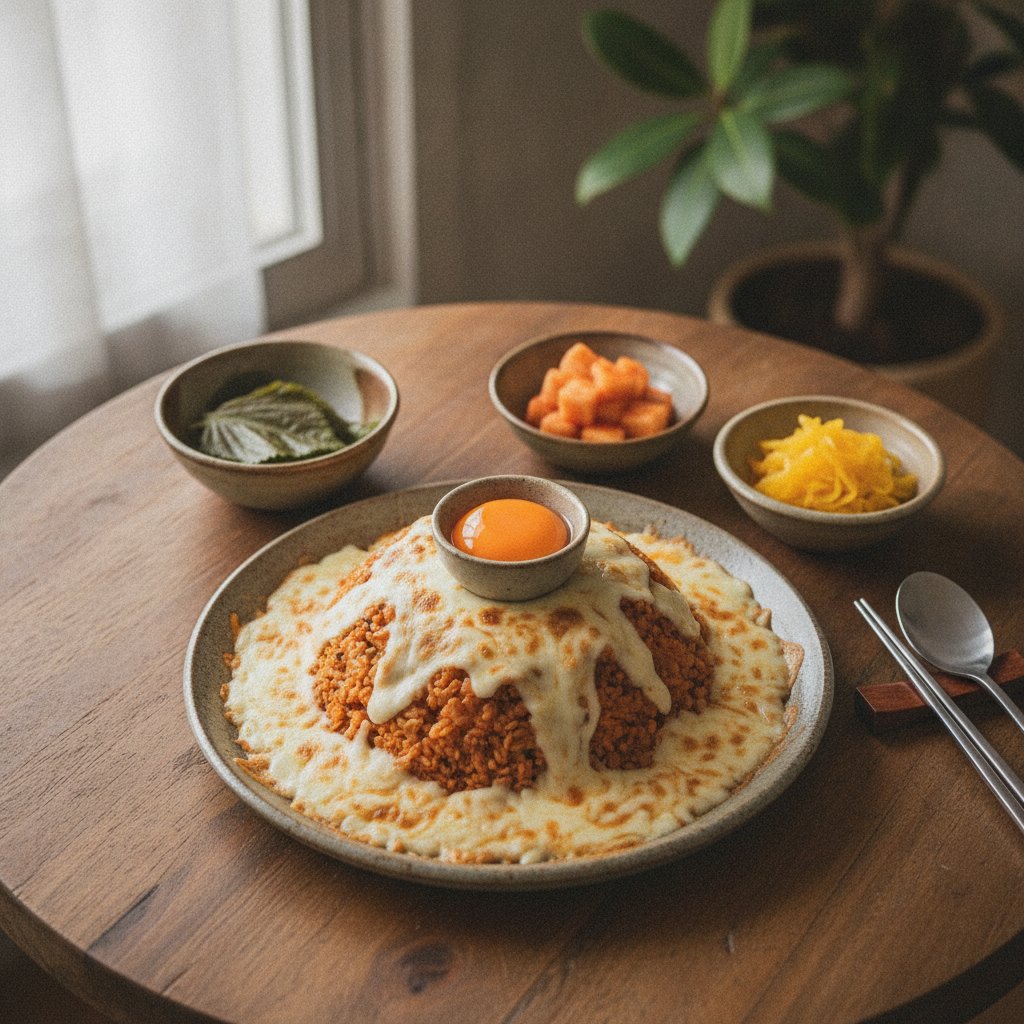
- Shape the volcano: Stir in the toasted sesame oil, then gather the rice into the center of the skillet. Pack it gently into a neat mountain or cone shape. Using the back of a spoon, make a slight indentation or "crater" at the top of the rice mound.
- Prepare the egg moat: In a small bowl, whisk together the 3 eggs, milk (or water), and a small pinch of salt until smooth and light.
- Pour the lava ring: Reduce the burner heat to low. Pour the egg mixture slowly around the outer rim of the pan, encircling the base of your rice mountain. Sprinkle the shredded mozzarella cheese generously into the egg liquid and around the base of the rice cone.
- Cover and steam: Place a tight-fitting lid over the skillet and let it steam over low heat for 3 to 4 minutes. The steam will gently set the eggs into a delicate custard while completely melting the cheese into a bubbly white moat.
- Garnish and serve: Remove the lid. Sprinkle the top of your rice crater and melted cheese ring with sliced green onions, toasted sesame seeds, and crushed gim (roasted seaweed). Serve immediately right from the pan while hot and melty.
Tips from a Korean Kitchen
In Korean homes, simple stir-fried rice dishes are treated with as much care as slow-simmered stews. Here are a few practical rules we follow in Seoul for perfect results:
- Never use fresh, sweet kimchi: Freshly made kimchi (geotjeori) lacks lactic acid. When fried, fresh kimchi releases too much plain water and leaves the dish tasting bland. If your kimchi isn’t sour yet, add 1 teaspoon of rice vinegar to the pan along with the kimchi juice to simulate fermentation aging.
- Short-grain rice is essential: Long-grain varieties like Jasmine or Basmati are wonderfully aromatic, but they lack the sticky starch quality needed to pack the rice into a sturdy volcano shape. Use medium or short-grain white rice (often labeled as Calrose or Sushi rice).
- Manage the heat during egg cooking: If your burner is too high when you pour the eggs into the pan, the bottom of the egg ring will burn before the mozzarella on top has a chance to melt. Keep the burner on low and let the trapped steam under the lid do the work.
Storage
Leftover kimchi fried rice keeps well in an airtight container in the refrigerator for up to 3 days. If possible, try to store the rice separate from the egg and cheese ring, as eggs can lose their tender texture upon reheating.
To reheat, heat a skillet over medium heat with a tiny splash of oil, add the rice, and stir until heated through. Alternatively, microwave covered with a damp paper towel for 1.5 to 2 minutes. Freezing is not recommended for the egg ring, but plain kimchi fried rice (without toppings) can be frozen in portioned containers for up to 1 month.
🛒 Volcano Cheese Kimchi Fried Rice
As an Amazon Associate we earn from qualifying purchases.
Shop Ingredients & Tools →FAQ
Why is my kimchi fried rice soggy?
Sogginess usually comes from using fresh, warm rice or adding too much liquid at once. Always use cold, chilled leftover rice, which has lost surface moisture in the fridge. Also, make sure to fry your kimchi until its liquid has evaporated before folding in the rice.
Can I make volcano kimchi fried rice without Spam or meat?
Yes! Simply omit the meat and add 1 tablespoon of extra butter or neutral oil to fry the kimchi. Diced king oyster mushrooms, shiitake mushrooms, or cubed firm tofu make excellent vegetarian protein additions that absorb the spicy flavor base well.
What kind of cheese do Korean restaurants use for kimchi fried rice?
Most Korean restaurants and home cooks use low-moisture shredded mozzarella cheese. Its mild flavor pairs perfectly with spicy foods without overwhelming the delicate fermented flavor of the kimchi, and it provides the famous stretchy cheese pull popular in Korean food photography.
More Korean Recipes
- Crunchy & Refreshing Kkakdugi Recipe (Cubed Radish Kimchi)
- Kimchi Storage (김치 보관법) & Sour Kimchi Tips
- Quick Oi Muchim (Cucumber Kimchi) in 15 Minutes
- How to Make Kimchi (김치) at Home: A Small-Batch Beginner’s Guide
🛒 Volcano Cheese Kimchi Fried Rice
As an Amazon Associate we earn from qualifying purchases.
Shop Ingredients & Tools →