Nabak Kimchi Recipe: Mild Korean Water Kimchi
This post contains affiliate links. As an Amazon Associate, we earn from qualifying purchases at no extra cost to you.
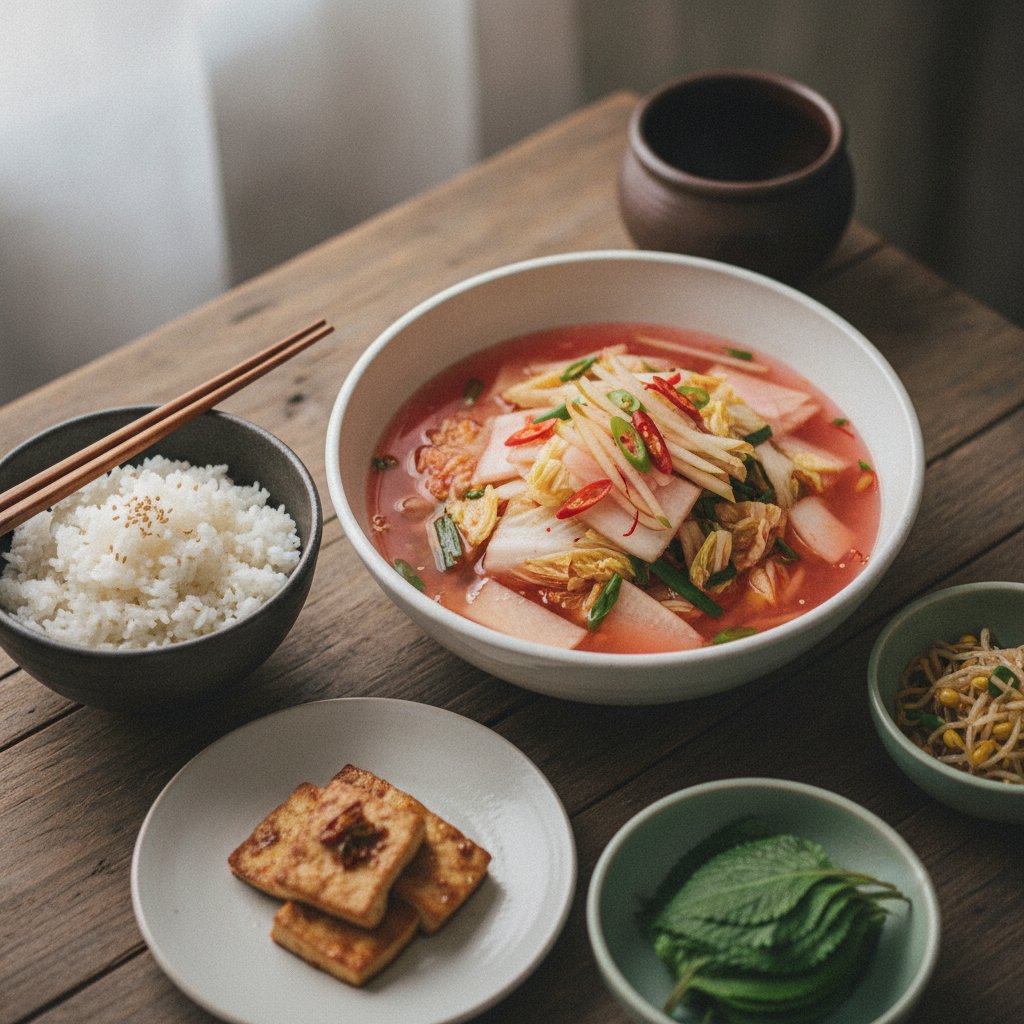
When spring comes to Seoul, my mother always pulls out her square glass storage containers and slices Napa cabbage into thin, flat tiles. In our family, the arrival of warmer weather means it is time for nabak kimchi (mild spring water kimchi), a crisp, cold broth kimchi that clears the palate and brings a quiet brightness to the dinner table. Unlike the thick, fiery baechu kimchi (napa cabbage kimchi) that warms us through long winters, this light water kimchi is clean, delicate, and subtly tangy.
The name comes from the traditional Korean term nabak-ssigi, which describes the action of cutting vegetables into thin, square shapes. In Korean homes, you will see this served in small individual soup bowls alongside hot grilled meats, rich stews, or festive holiday meals like Seollal (Lunar New Year) and Chuseok (Autumn Harvest Festival). It acts as both a refreshing side dish and a gentle digestive tonic. If you have been searching for a reliable nabak kimchi recipe that yields a crystal-clear rosy broth and delightfully crisp vegetables using everyday kitchen tools, this traditional home cook method is exactly what you need.
Why This Works
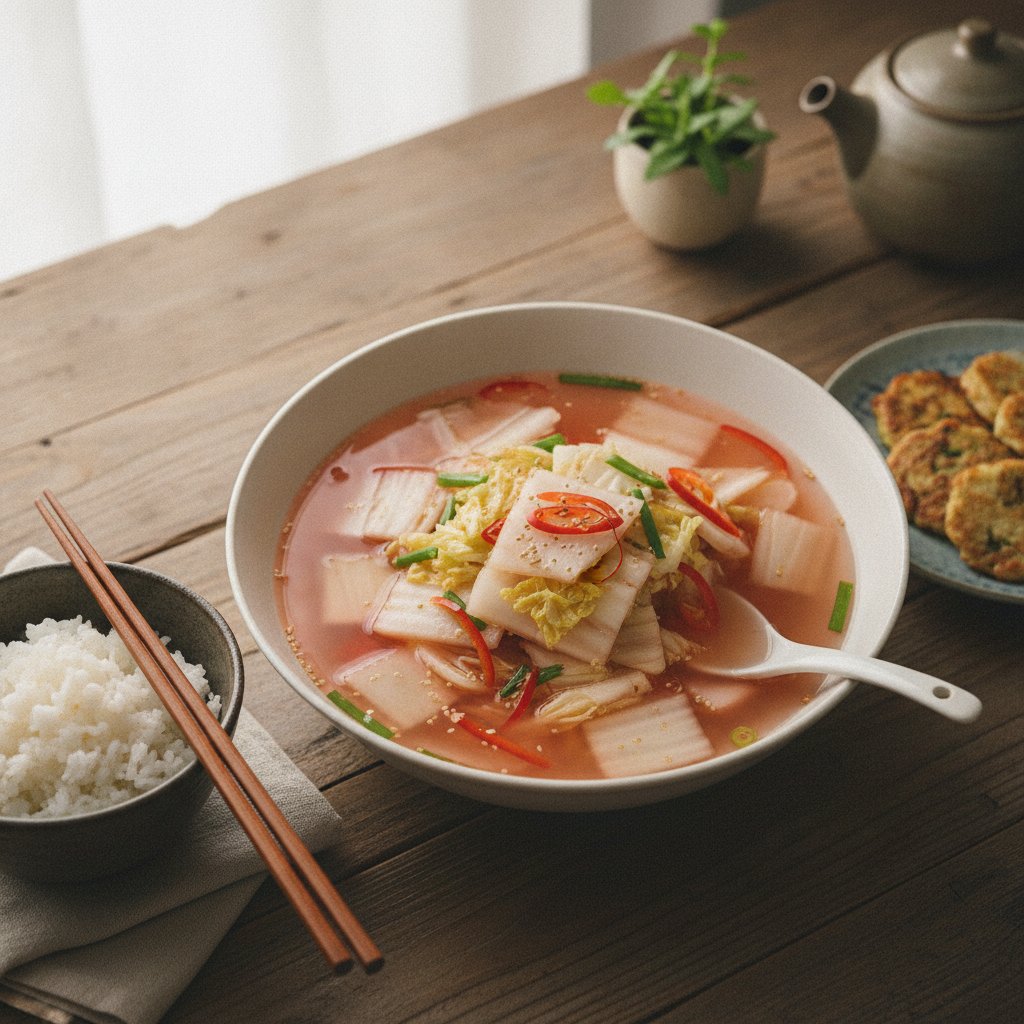
- Straining the pepper through broth cloth: Instead of tossing chili powder straight into the liquid, we infuse warm water with gochugaru (Korean chili flakes) using a fine mesh strainer or cheesecloth. This creates a shimmering, pale pink broth without any gritty sediment floating around.
- Quick dual-salting technique: Salting both the cabbage and radish together for just 20 minutes softens them slightly while preserving maximum snap. The resulting brine is kept in the dish, anchoring the salt base without stripping away natural vegetable juices.
- Garlic and ginger slicing over mincing: Slicing aromatics into thin slivers instead of mashing them keeps the water broth remarkably clear and prevents the harsh, metallic raw bite that minced garlic can create during short fermentation.

Ingredients
- 300 g (about 0.66 lb) Napa cabbage: Use the tender inner leaves, cut into 3 cm (1.2 in) square tiles.
- 300 g (about 0.66 lb) Korean radish (mu): Peeled and cut into matching 3 cm (1.2 in) thin square tiles.
- 1.5 liters (about 6.3 cups) filtered cold water: Quality water is essential for clean-tasting water kimchi.
- 25 g (about 1.5 tbsp) Korean coarse sea salt (chunjilyeom): Divided for salting and broth seasoning.
- 12 g (about 1 tbsp) granulated sugar: Feeds beneficial lactic bacteria and balances the brine.
- 15 g (about 2 tbsp) gochugaru (Korean chili flakes): Mild to medium spice level for color and gentle warmth.
- 3 cloves garlic: Thinly sliced length-wise.
- 5 g (about 1 tsp) fresh ginger: Peeled and cut into thin matchsticks.
- 3 scallions: Cut into 3 cm (1.2 in) lengths.
- 1/2 sweet Korean pear (or Asian pear): Sliced into thin squares matching the cabbage size.
- 1 fresh red chili (optional): Seeded and thinly sliced diagonally for visual contrast.
Substitutions
If you cannot source Korean radish (mu), crisp Japanese daikon radish makes a wonderful substitute. If Korean pears are out of season or unavailable at your local market, a crisp Bosc pear or Fuji apple provides the ideal balance of natural sweetness and crunch. Korean coarse sea salt is preferred because it dissolves cleanly without additives, but non-iodized kosher salt works well—just adjust slightly by weight. For a herbal pop, traditional cooks often add a small handful of minari (water dropwort), but fresh watercress or thin celery tops from a regular grocery store offer a very similar fresh bite.
🛒 Nabak Kimchi Recipe
As an Amazon Associate we earn from qualifying purchases.
Shop Ingredients & Tools →How to Make It
- Prep the cabbage and radish tiles: Wash your Napa cabbage and Korean radish thoroughly. Slice the radish thinly—about 2 mm (0.08 in) thick—into 3 cm squares. Do the same with the tender cabbage leaves. Cutting them into uniform, thin shapes ensures that every bite cures evenly and fits comfortably on a soup spoon.
- Salt the vegetables to build texture: Place the sliced cabbage and radish into a large mixing bowl. Sprinkle with 15 g (about 1 tbsp) of Korean coarse sea salt and 6 g (about 0.5 tbsp) of sugar. Toss gently with your hands and let it sit at room temperature for 20 minutes. You will notice the vegetables glistening and releasing a small amount of sweet liquid. Do not rinse them! This natural brine forms the initial flavor foundation.
- Extract the chili color and warmth: In a separate bowl, pour 500 ml (about 2 cups) of lukewarm filtered water. Place the gochugaru inside a fine-mesh strainer, nut milk bag, or a piece of clean cheesecloth. Submerge the cloth in the water and massage or rub it gently between your fingers for 3-4 minutes until the liquid turns a brilliant, translucent ruby-pink. Discard the spent pepper flakes left in the cloth. This step gives you the characteristic rosy hue of nabak kimchi without leaving gritty red specks floating in your bowl.
- Assemble the water kimchi base: To the bowl with the salted vegetables and their naturally accumulated juices, add the remaining 1 liter (about 4.3 cups) of cold filtered water, the pink chili-infused liquid, the remaining 10 g of sea salt, and the remaining 6 g of sugar. Stir gently until the salt and sugar fully dissolve.
- Add the fresh aromatics and fruit: Float the sliced garlic, ginger matchsticks, scallions, red chili slices, and sweet pear tiles directly into the container. The fruit provides natural fructose that fuels smooth fermentation while adding a delicate floral sweetness to the cold broth.
- Ferment at room temperature: Cover the container loosely with a lid. Leave it on your kitchen counter away from direct sunlight. In a warm kitchen (around 20°C or 68°F), fermentation takes about 15 to 24 hours. You will know it is ready for the fridge when small, tiny bubbles start appearing at the edges of the container and the broth smells subtly tangy and aromatic rather than raw.
- Chill thoroughly before serving: Once the slight sourness develops, seal the container tightly and transfer it immediately to the coldest part of your refrigerator for at least 12 hours. Water kimchi must be served ice-cold to appreciate its crisp, restorative quality.
Tips from a Korean Kitchen
Chill quickly once fermented: Unlike heavy cabbage kimchi that loves a long, deep fermentation, nabak kimchi is a quick, short-term seasonal kimchi. If left at room temperature for too long, the vegetables turn soft and the liquid becomes overly sour. Move it to the fridge as soon as you taste that gentle tang.
Keep the aromatics restrained: It is tempting to add extra garlic or onions, but heavy garlic can easily overpower the clean aquatic freshness of this soup. Slicing—rather than mincing or crushing—allows the garlic and ginger to release a soft essence without muddying the liquid.
Use quality filtered water: Because you are drinking the brine directly as a cold soup, municipal tap water treated with heavy chlorine can ruin the subtle sweet-and-sour harmony. Filtered spring water yields the cleanest flavor profile.
Add pear right before the fridge phase: If you plan to keep the kimchi for longer than a few days, slice the pear freshly and float it in right before chilling. Pear slices soften faster than cabbage, so keeping them firm preserves that joyous texture contrast.
Storage
Store nabak kimchi in an airtight glass container or dedicated kimchi tub in the back of your refrigerator, where the temperature stays consistently cold (around 1°C to 3°C or 34°F to 37°F). It is best enjoyed within 1 to 2 weeks while the vegetables retain their snappy crunch and the broth is brightly effervescent. Never freeze water kimchi; freezing breaks down the cellular structure of the cabbage and radish, turning them mushy and ruining the clear broth texture once thawed. Serve cold directly from the fridge—do not reheat!
🛒 Nabak Kimchi Recipe
As an Amazon Associate we earn from qualifying purchases.
Shop Ingredients & Tools →FAQ
Why did my water kimchi turn thick or slimy?
Slimy or viscous broth usually happens when too much sugar or raw fruit puree was added during hot weather, or when tap water high in certain minerals was used. Keep fruit slices modest, stick to coarse sea salt without anti-caking agents, and move the batch to the refrigerator promptly when small bubbles first form.
Is nabak kimchi naturally vegan?
Yes! While many Korean kimchis rely on myeolchi-aekjeot (anchovy fish sauce) or saeujeot (salted shrimp) for savory depth, authentic nabak kimchi relies purely on sea salt, natural vegetable juices, and fruit for its clean taste. This recipe is 100% plant-based and vegan-friendly naturally.
Can I make this without gochugaru?
Absolutely. Leaving out the red chili flakes turns this into a white water kimchi variation. It will be completely non-spicy, crystal clear, and exceptionally mild, making it a wonderful choice for young children or anyone sensitive to heat.
More Korean Recipes
- Crunchy & Refreshing Kkakdugi Recipe (Cubed Radish Kimchi)
- Kimchi Storage (김치 보관법) & Sour Kimchi Tips
- Quick Oi Muchim (Cucumber Kimchi) in 15 Minutes
- How to Make Kimchi (김치) at Home: A Small-Batch Beginner’s Guide
🛒 Nabak Kimchi Recipe
As an Amazon Associate we earn from qualifying purchases.
Shop Ingredients & Tools →