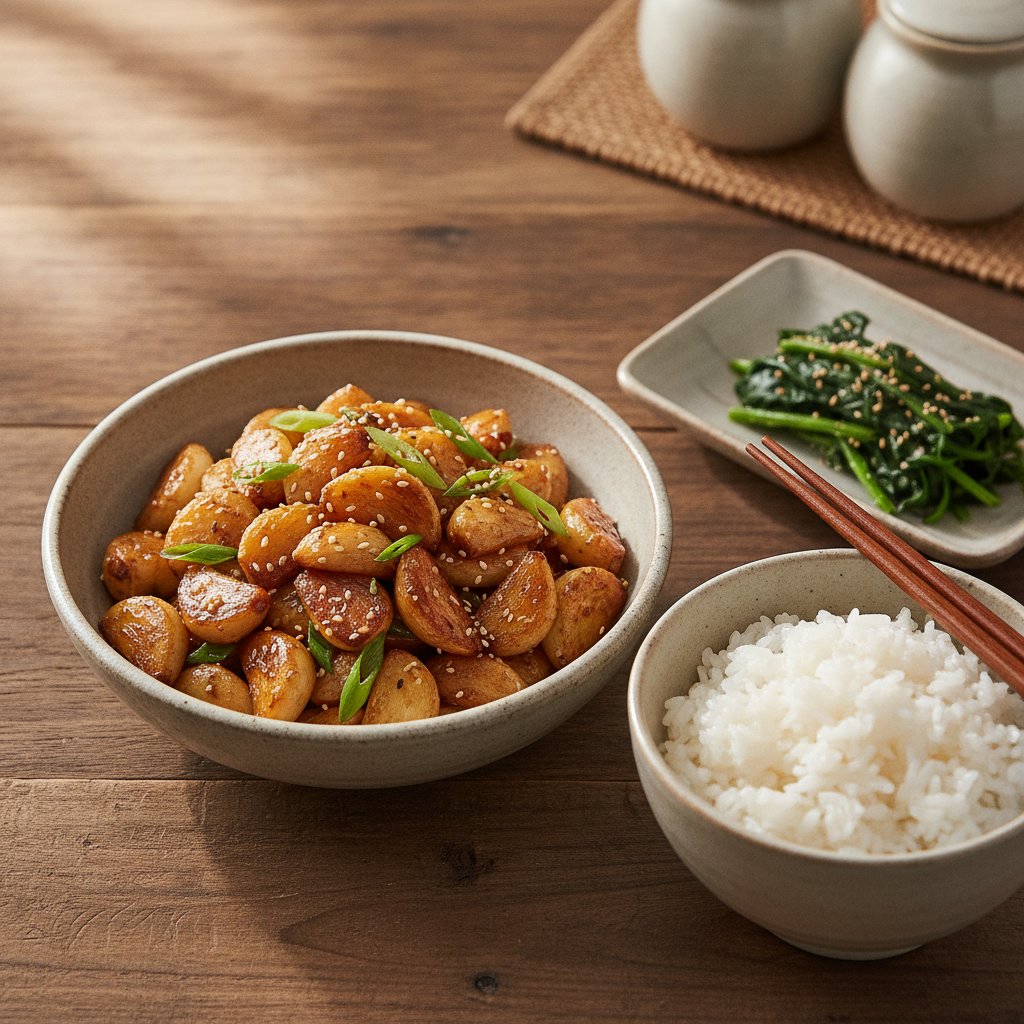
Korean Stir Fried Garlic Side Dish (Maneul Bokkeum)
This post contains affiliate links. As an Amazon Associate, we earn from qualifying purchases at no extra cost to you.
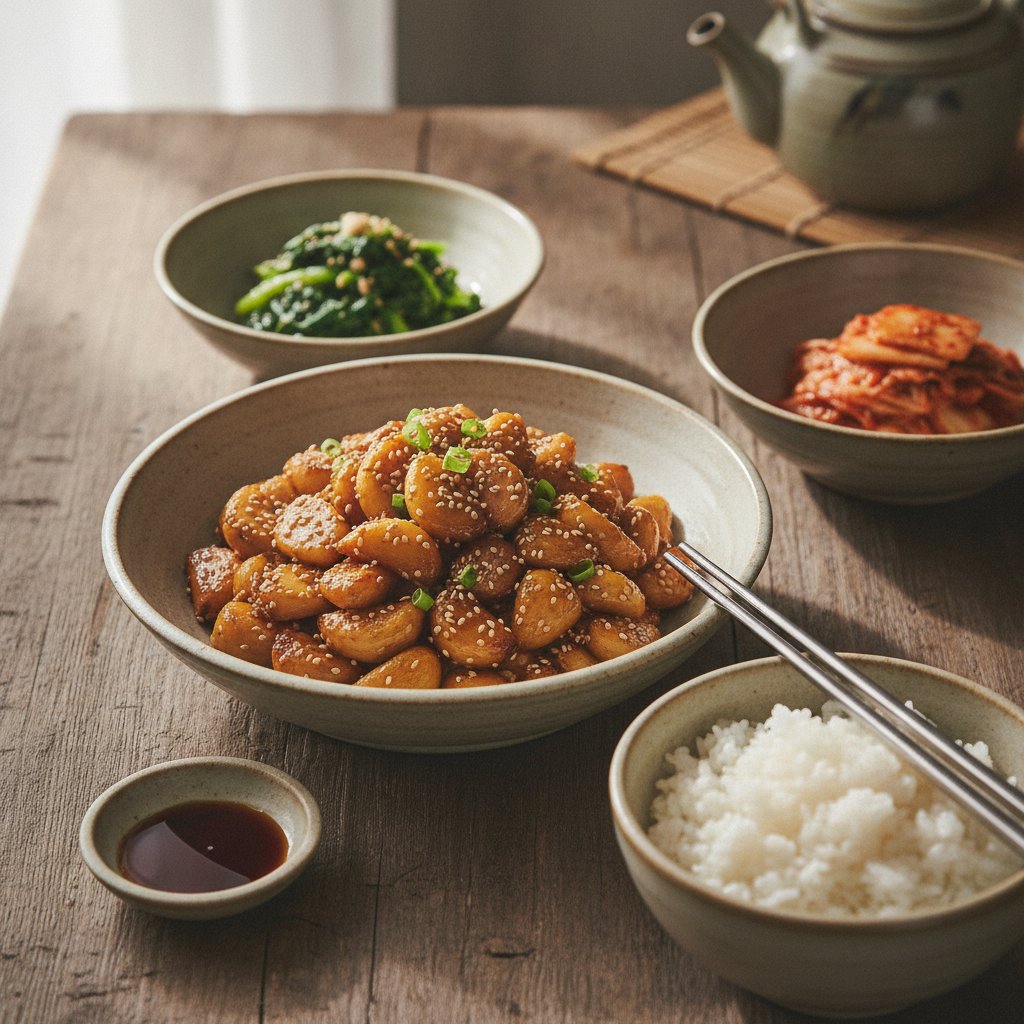
When my mom made grilled pork belly at home in Seoul, half the tabletop grill was always taken up by whole garlic cloves slowly turning sweet and golden in the rendered fat. Garlic isn’t just an aromatic base in Korea; it is often the main event. Maneul bokkeum (stir-fried garlic cloves) takes that exact buttery, savory flavor and turns it into one of our favorite everyday banchan (side dishes).
If the thought of eating whole garlic cloves makes you hesitate, rest assured that cooking garlic this way completely changes its chemistry. Raw garlic carries a sharp, fiery bite caused by allicin released when cell walls break. But when whole cloves are gently simmered and stir-fried, that harshness melts away into a mellow, nut-like sweetness with a texture almost like roasted chestnuts. Tossed in a simple glossy glaze of soy sauce, rice syrup, and toasted sesame oil, this Korean stir fried garlic side dish adds a delicious punch to any meal.
In Korean homes, we keep a container of this dish in the fridge throughout the week. It pairs effortlessly with fresh bowl of steamed white rice, complements rich grilled meats, and brings life to simple soups. Best of all, you can make a full batch in about fifteen minutes using basic ingredients from your local grocery store.
Why This Works
- A quick parboil step softens the garlic structure, taming its harsh sulfur bite and ensuring the thick cloves cook through to a tender, chestnut-like center before the pan gets too hot.
- Slowly pan-searing over medium-low heat caramelizes the outer layer of the cloves gently, avoiding the bitter, burnt taste that happens when garlic meets high heat.
- Adding the soy-honey glaze at the very end coats each clove in a sticky, mirror-like sheen without scorching the natural and added sugars in the pan.
Ingredients
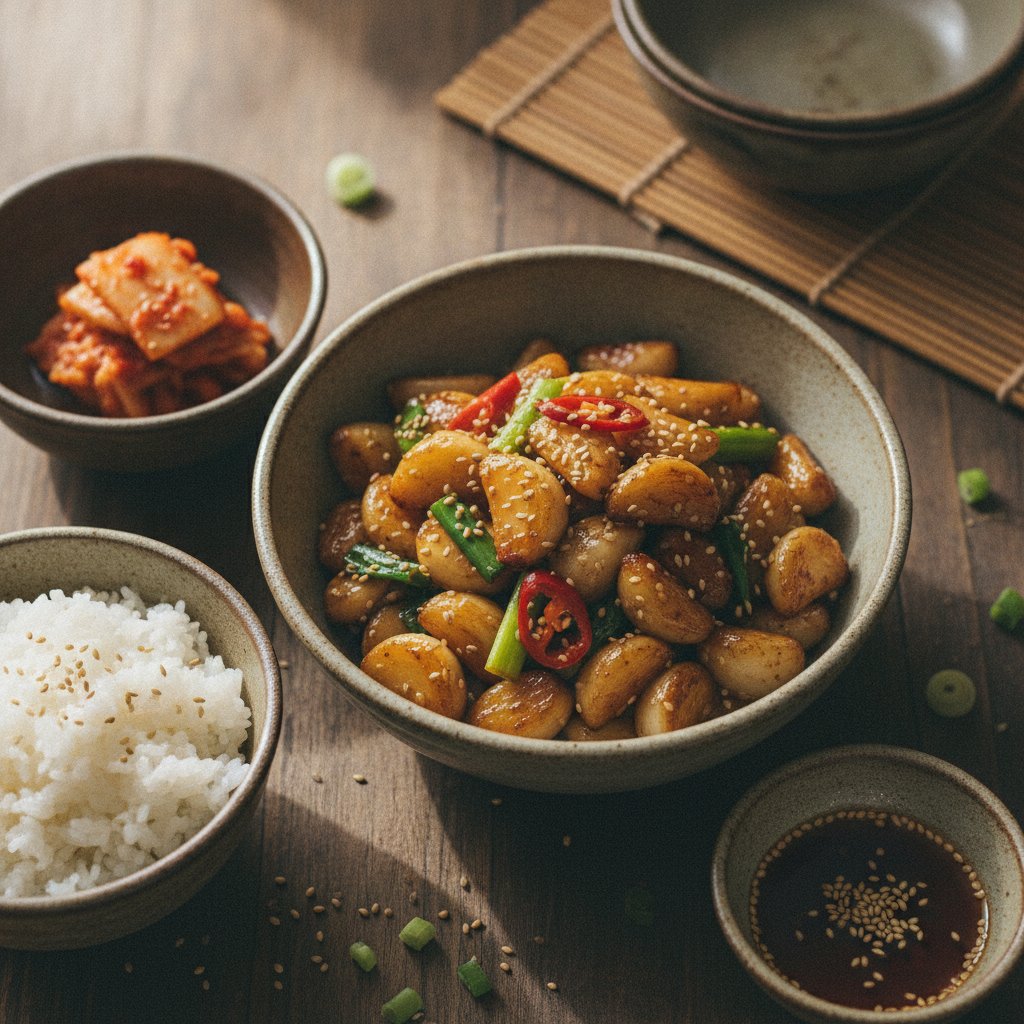
- 300 g (about 10 oz or 2 full cups) whole garlic cloves, peeled
- 15 ml (1 tbsp) cooking oil (neutral oil like vegetable, canola, or avocado)
- 30 ml (2 tbsp) soy sauce (Korean jin-ganjang or standard all-purpose soy sauce)
- 15 ml (1 tbsp) rice syrup, dark corn syrup, or honey
- 7 g (1 tsp) granulated sugar
- 15 ml (1 tbsp) water
- 5 ml (1 tsp) toasted sesame oil
- 3 g (1 tsp) toasted sesame seeds
- 1 fresh red chili pepper (about 15 g), thinly sliced (optional, for color and gentle heat)
Substitutions
If you don’t have an Asian supermarket nearby, here is how you can substitute key items using regular supermarket staples:
- Rice Syrup (Ssal-jocheong): Korean cooks love rice syrup because it gives side dishes a glossy coating without making them overly sweet. Honey or light corn syrup works as a 1:1 substitute. If using honey, note that its floral flavor will be slightly more prominent.
- Soy Sauce: Standard dark or all-purpose soy sauce (such as Kikkoman) works perfectly here. If you keep a gluten-free kitchen, tamari or coconut aminos are direct substitutes.
- Garlic: Look for bags of fresh peeled whole garlic cloves in the produce section of your local store to save prep time. Avoid pre-minced garlic sold in water or oil jars, as those will not yield whole, tender cloves.
🛒 Korean Stir Fried Garlic Side Dish
As an Amazon Associate we earn from qualifying purchases.
Shop Ingredients & Tools →How to Make It
- Prep the garlic: Inspect the garlic cloves and trim away any small, hard woody stems at the root base using a paring knife. Why: The root end stays tough and fibrous even after cooking, so removing it ensures a uniform, pleasant texture in every bite.
- Parboil for tenderness: Bring a small pot of water to a roll boil. Drop in the garlic cloves and cook for 60 to 90 seconds. Drain thoroughly and pat dry with a paper towel. Why: Parboiling neutralizes raw sulfur compounds and softens the interior of the garlic. Drying them well afterwards prevents hot oil from splattering when they hit the pan.
- Gently sear the cloves: Place a medium non-stick skillet over medium-low heat and add 15 ml (1 tbsp) of neutral cooking oil. Add the dried garlic cloves. Cook for 5 to 7 minutes, stirring or shaking the pan frequently, until the surfaces turn pale golden brown and soften. Why: Garlic contains delicate natural sugars that scorch easily over high heat, becoming bitter. Low heat builds flavor slowly while cooking the centers through.
- Mix the glaze base: While the garlic cooks, stir together the soy sauce, rice syrup (or honey), sugar, and water in a small bowl until the sugar dissolves. Why: Combining liquid ingredients before adding them to the hot pan prevents individual ingredients from burning or reducing unevenly.
- Reduce and glaze: Turn the heat up to medium and pour the sauce mixture directly over the browned garlic cloves. Add the sliced red chili if using. Let the sauce bubble and simmer rapidly for 2 to 3 minutes, stirring constantly to coat the cloves. Why: As the water evaporates, the sugars concentrate into a glossy syrup that clings tightly to the smooth skin of the garlic.
- Finish with aromatics: Once the sauce reduces to a thick glaze at the bottom of the skillet, turn off the heat completely. Drizzle in the toasted sesame oil and sprinkle with toasted sesame seeds. Stir well and transfer to a serving dish. Why: High direct heat can dull the nutty top notes of toasted sesame oil, so adding it off the heat preserves its aroma.
- Keep the heat under control: The single most common mistake with this dish is using medium-high heat. Burned garlic leaves an unpleasant metallic aftertaste that ruins the dish. If you see dark spots forming on the garlic before 4 minutes have passed, drop your heat setting lower immediately.
- Use medium or large garlic cloves: Tiny cloves cook down too fast and can dry out into chewy nubs. If your garlic heads have mixed sizes, split the very large cloves in half lengthwise so everything cooks at the same rate.
- Don’t skip the water in the glaze: It might seem counterintuitive to add water to a dish you want to reduce, but that tablespoon of water gives the soy sauce and sugar time to blend and heat up smoothly before caramelizing into a syrup.
- Shake the pan rather than constant scraping: Softened garlic cloves can dent or split if hit hard with a rigid spatula. Shaking the skillet encourages them to roll around smoothly for even browning.
- Creamy Korean Corn Cheese (콘치즈)
- Gyeran Jjim (Korean Steamed Eggs): Always Fluffy
- Jangjorim Recipe: Authentic Korean Soy-Braised Beef and Eggs
- Eomuk Bokkeum (Stir-Fried Fish Cakes): Your New Favorite Lunchbox Side Dish
Refining steps and notes finished correctly.
Tips from a Korean Kitchen
Storage
Maneul bokkeum stores extraordinarily well, making it a great meal-prep banchan. Transfer cooled leftovers into a clean glass container with a tight-fitting lid and store in the refrigerator for up to 10 days. The garlic will continue to absorb flavor from the glaze as it rests.
You can eat this dish cold straight from the fridge, at room temperature, or warm. If you prefer it warm, microwave a portion for 10 to 15 seconds or toss it quickly in a warm skillet. Freezing is not recommended, as the cellular structure of garlic breaks down when thawed, leaving the cloves mushy.
🛒 Korean Stir Fried Garlic Side Dish
As an Amazon Associate we earn from qualifying purchases.
Shop Ingredients & Tools →FAQ
Is this stir fried garlic side dish very spicy?
Not at all. Raw garlic is sharp and pungent, but thorough cooking converts those harsh compounds into mild, sweet flavors. Unless you add hot chili peppers, the dish itself is sweet, savory, and mild enough for kids to enjoy.
Can I make this dish using unpeeled garlic heads?
No, you need fully peeled whole cloves so the liquid glaze directly coats the garlic surface. Peeling whole heads by hand can take time, so buying pre-peeled fresh garlic cloves from the produce section is a great shortcut.
Why is my garlic stir fry tough or chewy instead of soft?
If your garlic turned out tough, it likely didn’t cook long enough at a lower temperature or missed the parboiling step. Garlic needs gentle, sustained heat for its firm fibers to break down into a soft, buttery texture.
More Korean Recipes
🛒 Korean Stir Fried Garlic Side Dish
As an Amazon Associate we earn from qualifying purchases.
Shop Ingredients & Tools →