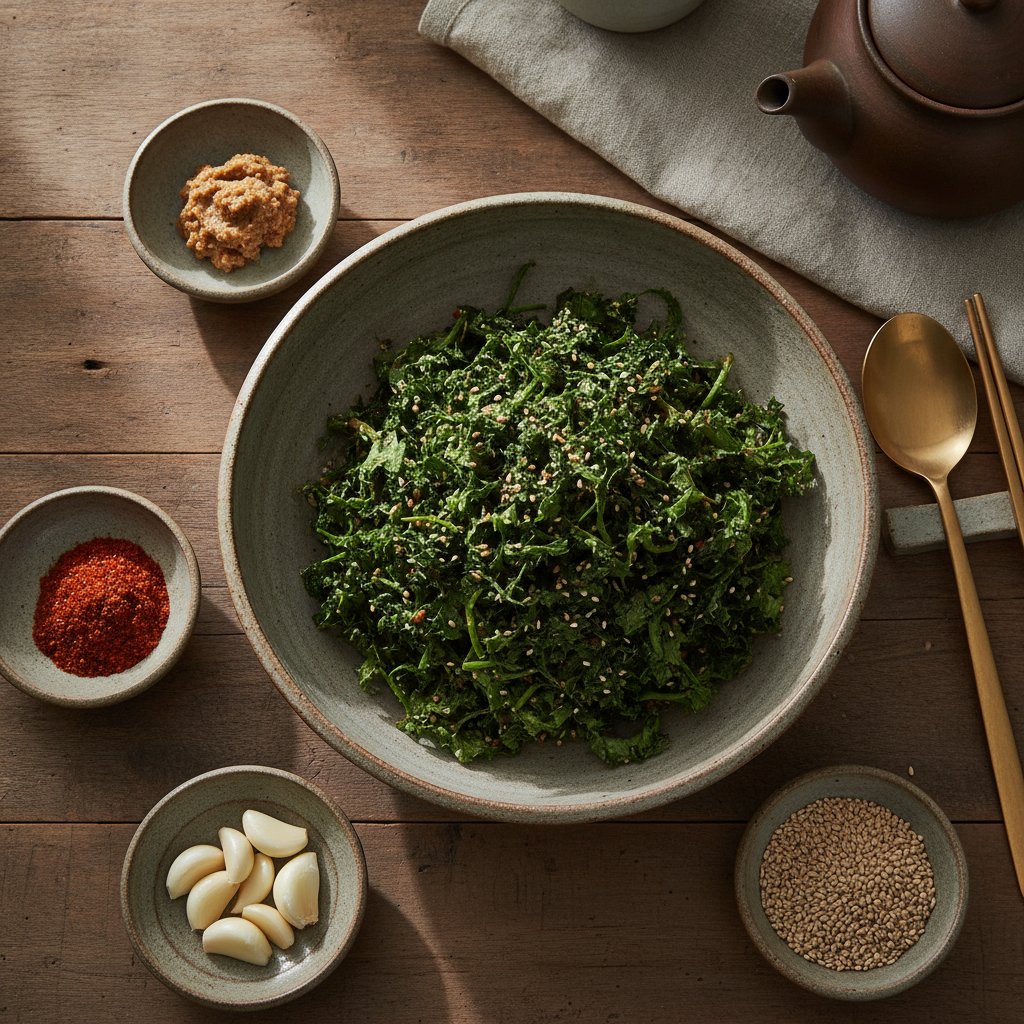
Seasoned Wild Aster Recipe (Chwi Namul Muchim)
This post contains affiliate links. As an Amazon Associate, we earn from qualifying purchases at no extra cost to you.
Korean Seasoned Wild Aster (Chwi Namul Muchim)
Every spring in Seoul, when the lingering chill of winter finally breaks, traditional spots like Mangwon Market and Gyeongdong Market transform into vibrant seas of green. Wooden crates overflow with wild mountain herbs brought straight from the sunny slopes of Gangwon Province. Among these prized spring greens, chwi namul (seasoned wild aster) stands out as an absolute favorite among home cooks. It has a distinct, herbal aroma with a subtle pine-like fragrance and a mild, pleasant bitterness that feels remarkably cleansing.
While Koreans eagerly await fresh chwi namul in early spring, we also enjoy this dish year-round using dried wild aster leaves. In fact, on Jeongwol Daeboreum (the first full moon of the lunar new year), serving a array of rehydrated dried greens, known as gon-namul, is a centuries-old tradition meant to bring good health and help the body handle the heat of the upcoming summer. Whether you are using fresh leaves or rehydrating dried ones you found at a local Asian grocery store or online, this chwi namul muchim (seasoned wild aster side dish) brings an authentic taste of Korean mountain cuisine directly to your home table.
In my family, we prefer a light, savory seasoning style that highlights the herb’s natural forest flavor rather than smothering it in heavy paste. This recipe uses Korean soup soy sauce, fresh garlic, toasted sesame oil, and toasted sesame seeds. It is simple, fragrant, and provides the perfect earthy contrast to rich Korean main dishes like grilled belly pork or spicy stews.
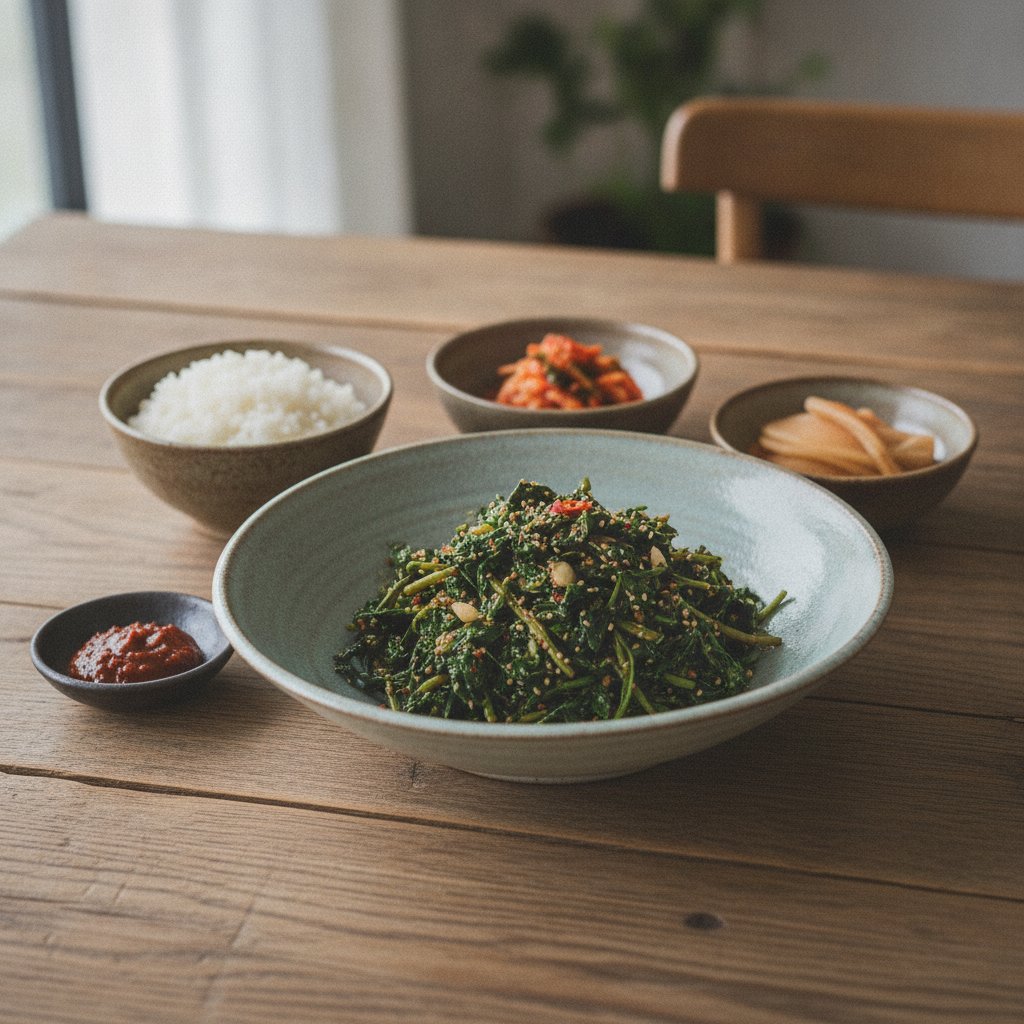
Why This Works
- Staged rehydration and boiling: Soaking dried aster leaves before simmering softens their tough mountain fibers while preserving their delicate, tea-like herbal perfume.
- Sequential seasoning order: Massaging the greens with salt and soy sauce before adding sesame oil ensures the seasonings penetrate the leaf tissue deeply, rather than sliding off an oily coating.
- Controlled moisture retention: Leaving a tiny amount of moisture in the leaves after squeezing prevents a dry, stringy side dish and keeps the finished salad juicy.
🛒 Seasoned Wild Aster Recipe
As an Amazon Associate we earn from qualifying purchases.
Shop Ingredients & Tools →Ingredients
- Dried wild aster leaves (chwi namul): 50 g (1.8 oz) dried — yields approximately 250 g (8.8 oz) rehydrated. (If using fresh wild aster, use 250 g / 8.8 oz fresh leaves).
- Korean soup soy sauce (guk-ganjang): 15 ml (1 tbsp)
- Finely minced garlic: 10 g (2 tsp, about 2 small cloves)
- Scallion (green onion): 15 g (1 tbsp), finely chopped
- Toasted sesame oil (cham-gireum): 15 ml (1 tbsp)
- Toasted sesame seeds (kkae): 5 g (1 tsp), coarsely crushed between your fingers
- Fine sea salt: 1 g (about 1/4 tsp), added only if extra seasoning is needed at the end
Substitutions
If you cannot source dried or fresh wild aster leaves, you can apply this exact seasoning method to dandelion greens, curly kale, or lacinato kale. While kale lacks the signature piney aroma of wild aster, its hearty structure handles the savory dressing exceptionally well.
If you do not have Korean soup soy sauce (guk-ganjang), do not substitute regular dark soy sauce in equal amounts, as dark soy sauce adds too much sweetness and deep caramel color. Instead, mix 10 ml (2 tsp) of regular light soy sauce with 5 ml (1 tsp) of fish sauce or a pinch of salt to match the clean, sharp saltiness of traditional Korean soup soy sauce.
How to Make It
- Rehydrate the dried greens thoroughly. Place the dried chwi namul in a large pot and submerge it in cold water. Bring it to a rolling boil over medium-high heat, then reduce the heat to medium and let it simmer uncovered for 20 to 25 minutes. Why: Boiling breaks down the tough cell walls of mountain herbs that ambient-temperature soaking cannot penetrate.
- Soak in residual heat. Turn off the burner, cover the pot with a lid, and let the greens sit in the hot water for at least 2 to 3 hours (or overnight if preparing ahead). Why: This slow cooling process allows the fibers to absorb moisture deeply to the core without turning the outer leaves mushy.
- Rinse and trim. Drain the soaked greens and rinse them under cool running water 2 to 3 times to flush out any trapped soil or grit. Pinch the woody bottom ends of the stems; if any feel excessively thick or tough, trim them away with a knife. Why: Wild greens grow close to the ground and accumulate fine silt in their crinkled leaves, so thorough washing is essential for a clean texture.
- Squeeze out excess water gently. Gather the greens into a firm ball and squeeze gently using your hands. You want to remove about 85% of the water—the greens should feel damp like a wrung-out sponge, not completely bone-dry. Why: Over-squeezing destroys the juicy mouthfeel, while leaving too much water dilutes your seasoning dressing immediately.
- Cut into manageable pieces. Lay the clumped greens on a cutting board and slice them 2 or 3 times into 5 cm (2-inch) lengths. Why: Mountain herbs have long, fibrous stems that can be hard to chew and awkward to pick up with chopsticks if left whole.
- Massage with primary seasonings. Transfer the chopped greens to a wide mixing bowl. Fluff them up with your fingers so the leaves are not stuck together. Add the soup soy sauce, minced garlic, and chopped scallion. Work the seasonings into the leaves using a firm massaging motion with your hand for about 1 minute. Why: Rubbing the seasonings directly into the plant fibers ensures the salt and garlic penetrate deep into the leaf mass rather than coating only the outer surface.
- Finish with aromatics. Drizzle the toasted sesame oil over the seasoned greens and sprinkle in the crushed sesame seeds. Mix gently using your fingertips to distribute the oil evenly. Taste a leaf; add a small pinch of fine sea salt if you prefer a sharper salt profile. Why: Adding the sesame oil last seals in the water-soluble seasonings and creates a protective glossy sheen that keeps the greens looking fresh.
🛒 Seasoned Wild Aster Recipe
As an Amazon Associate we earn from qualifying purchases.
Shop Ingredients & Tools →Tips from a Korean Kitchen
Master the squeeze test: The most common mistake beginners make with Korean green side dishes (namul muchim) is leaving too much water in the leaves. If water pools at the bottom of your mixing bowl after you add the soy sauce, you need to drain it off and adjust your salt slightly upward.
Crush your sesame seeds: Whole toasted sesame seeds pass right through your digestive system without releasing their full potential. Rubbing the seeds between your thumb and index finger right as you sprinkle them over the greens releases aromatic oils that make a noticeable difference in flavor profile.
Respect the garlic ratio: Raw garlic can easily overpower delicate wild herbs. Stick to finely minced fresh garlic rather than garlic powder, and do not exceed the recommended amount, as the raw garlic taste will sharpen as the dish rests in the refrigerator.
Storage
Refrigeration
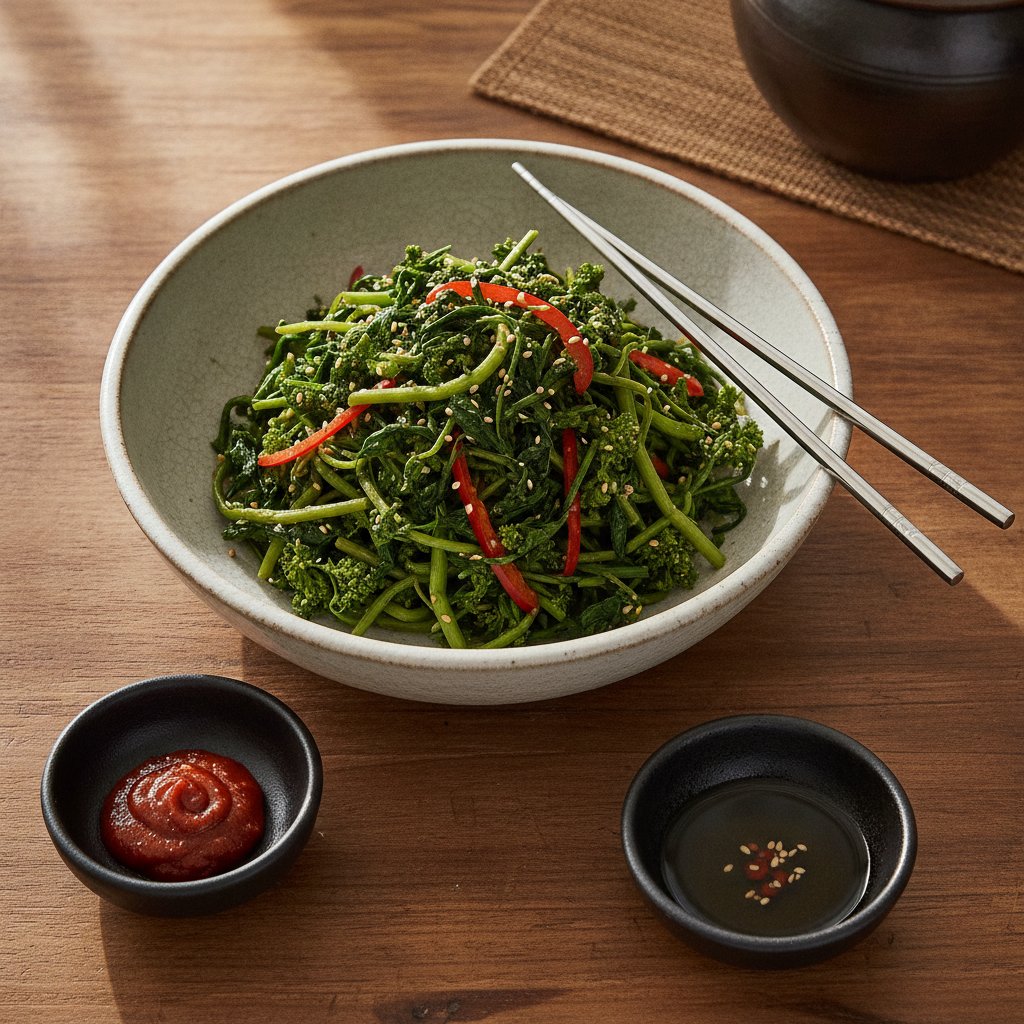
Store your prepared chwi namul muchim in a sealed glass container in the refrigerator for up to 4 to 5 days. Glass containers are ideal because plastic can absorb the pungent garlic and sesame aromas. Serve cold directly from the fridge, or let it sit at room temperature for 10 minutes before eating to allow the sesame oil aromas to blossom.
Freezing
Do not freeze the finished, seasoned side dish, as raw garlic and sesame oil degrade quickly in the freezer and the leaves will become watery upon thawing. However, you can freeze unseasoned, boiled, and squeezed wild aster leaves. Pack squeezed portions tightly into freezer-safe bags with a tablespoon of fresh water and freeze for up to 6 months. Thaw overnight in the fridge before seasoning as directed.
🛒 Seasoned Wild Aster Recipe
As an Amazon Associate we earn from qualifying purchases.
Shop Ingredients & Tools →FAQ
What does chwi namul taste like?
Chwi namul has an earthy, slightly nutty flavor with a delicate herbal aroma reminiscent of mild pine needles and green tea. It features a pleasant, very mild bitterness that is balanced by the rich, nutty notes of toasted sesame oil and garlic.
Can I use regular soy sauce instead of Korean soup soy sauce?
Standard Korean brewed soy sauce (yangjo-ganjang) or regular Japanese soy sauce is sweeter and less salty than Korean soup soy sauce (guk-ganjang). If you must use regular soy sauce, use two-thirds of the specified amount and add a pinch of salt to replicate the clean, savory sharpness needed for mountain greens.
Where can I buy wild aster leaves outside of Korea?
Dried chwi namul is widely available year-round in package form at most Korean grocery chains (such as H-Mart) in the dried vegetable section. You can also easily find it online through Korean ingredient importers on Amazon or specialty Asian food websites.
More Korean Recipes
- Creamy Korean Corn Cheese (콘치즈)
- Gyeran Jjim (Korean Steamed Eggs): Always Fluffy
- Jangjorim Recipe: Authentic Korean Soy-Braised Beef and Eggs
- Eomuk Bokkeum (Stir-Fried Fish Cakes): Your New Favorite Lunchbox Side Dish
🛒 Seasoned Wild Aster Recipe
As an Amazon Associate we earn from qualifying purchases.
Shop Ingredients & Tools →