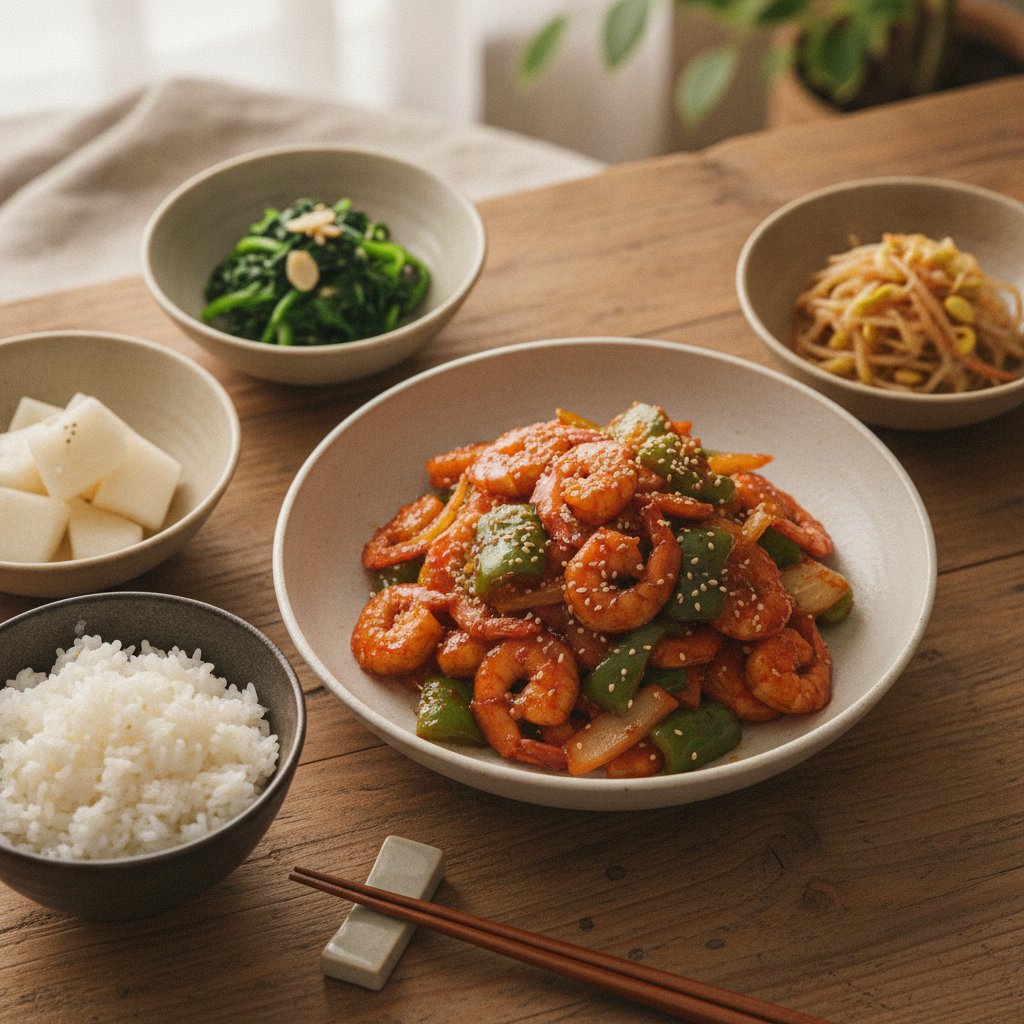
Korean Dried Shrimp Side Dish (Geon Saeu Bokkeum)
This post contains affiliate links. As an Amazon Associate, we earn from qualifying purchases at no extra cost to you.
When I opened my middle school lunchbox on cold Seoul winters, my mother had almost always tucked a small stainless steel container of crisp, glistening dried shrimp in the corner. While my classmates traded slices of rolled egg or fried sausage, I secretly guarded my dried shrimp stir-fry. Crisp, savory, slightly sweet, and punchy with garlic and chili paste, a single tiny shrimp had enough intense umami to carry two full mouthfuls of warm white rice.
This classic dish is called geon saeu bokkeum (sweet and spicy dried shrimp stir-fry), and it is one of Korea’s most treasured mitbanchan—the foundational side dishes that sit in your refrigerator, ready to bring any quick meal to life. Dried seafood is a cornerstone of traditional Korean home cooking because it preserves the rich harvest of our coasts, concentration turning humble ingredients into natural flavor bombs.
If you have ever tried making a Korean dried shrimp side dish at home only to end up with a sticky, jaw-breaking clump or a soggy, overly fishy mess, do not worry. The traditional technique relies on two critical temperature controls that transform tough, dry shrimp into delicate, crunchy morsels coated in a silky red glaze.
Why This Works
- Dry-toasting before saucing: Toasting the dry shrimp in a bare skillet drives off trapped ocean moisture, eliminates stale seafood odor, and crisp-cooks the thin shells so they shatter pleasanty instead of feeling prickly.
- Sifting out the shell dust: Shaking toasted shrimp through a mesh strainer removes fine leg fragments and antenna dust that would otherwise burn in the pan and make your sauce gritty.
- Off-heat sugar glazing: Combining the hot toasted shrimp with the simmered glaze off the direct heat prevents the sugars from reducing into hard candy, keeping the coating smooth and glossy even after days in the fridge.
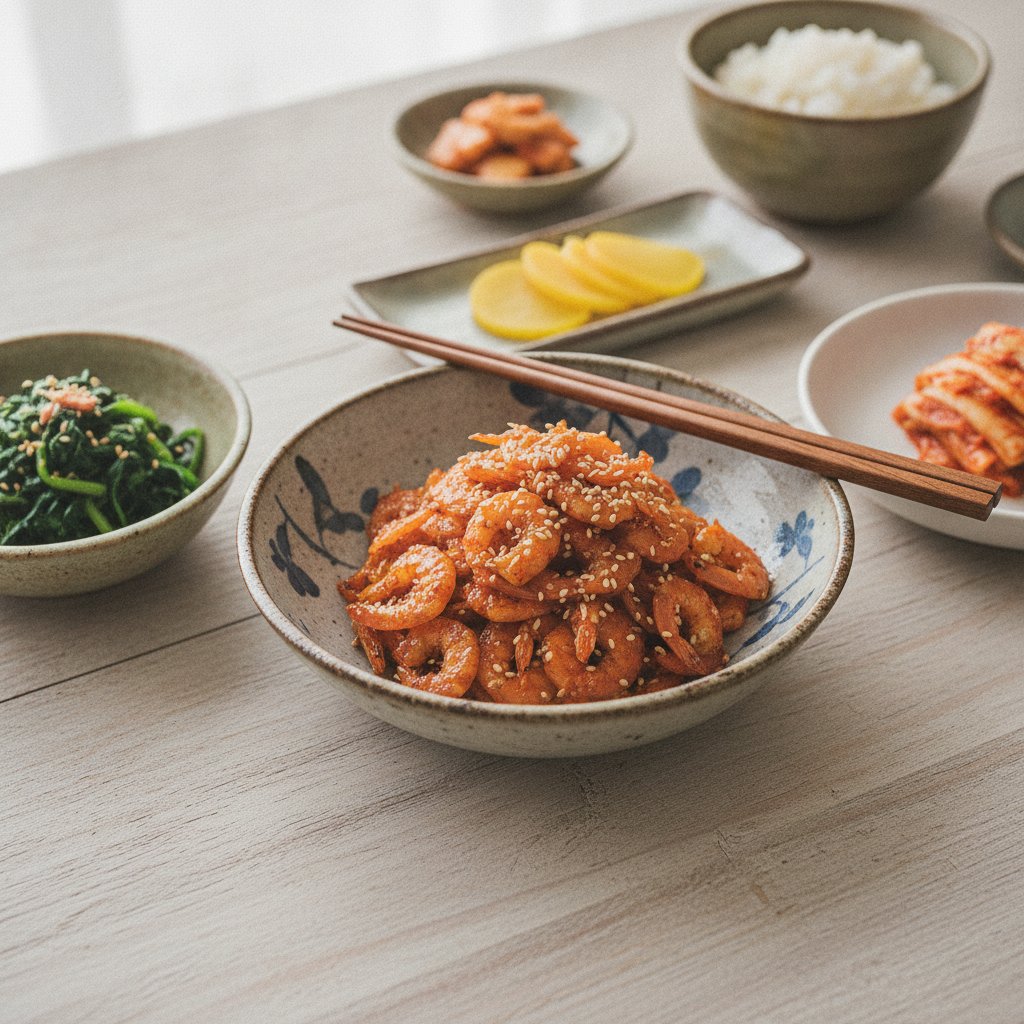
Ingredients
- 60 g (about 2 oz or 2 packed cups) small to medium dried shrimp (geon saeu)
- 1 tbsp (15 ml) neutral cooking oil (such as canola, vegetable, or avocado oil)
- 1 tbsp (15 ml) toasted sesame oil (cham-gireum)
- 1 tbsp (15 g) Korean chili paste (gochujang, such as Sunchang or CJ Haandrep)
- 1 tbsp (15 ml) soy sauce (standard Korean soy sauce or all-purpose soy sauce)
- 1.5 tbsp (22 ml) Korean rice syrup (ssal-jocheong), corn syrup, or oligoperose syrup
- 1 tbsp (12 g) granulated sugar or light brown sugar
- 1 tbsp (15 ml) finely minced garlic (about 3 medium cloves)
- 1 tbsp (15 ml) cold water
- 1 tsp (3 g) toasted white sesame seeds (kkae)
- 1 fresh green chili pepper (such as Cheongyang chili or serrano), thinly sliced on a diagonal (optional, for fresh heat)
Substitutions
Finding the right dried shrimp is the most important step for this dish. Look for small, light pink or orange-red dried shrimp in the refrigerated or frozen seafood section of Asian markets. In Korean markets, these are often labeled as bori-saeu or stir-fry dried shrimp. If you do not have an Asian grocer nearby, look for Mexican camarón seco (dried shrimp) in regular Western supermarkets with an expanded international aisle or at Latin markets. Select the smallest size available, preferably headless and thin-shelled.
For the sweetener, Korean rice syrup (ssal-jocheong) delivers an unmatched glossy shine and gentle sweetness without hardening. If you cannot find rice syrup, light corn syrup works perfectly as a 1:1 replacement. Honey can also be used, though its floral notes will subtly alter the flavor; if using honey, reduce the amount to 1 tablespoon so it does not overpower the dish.
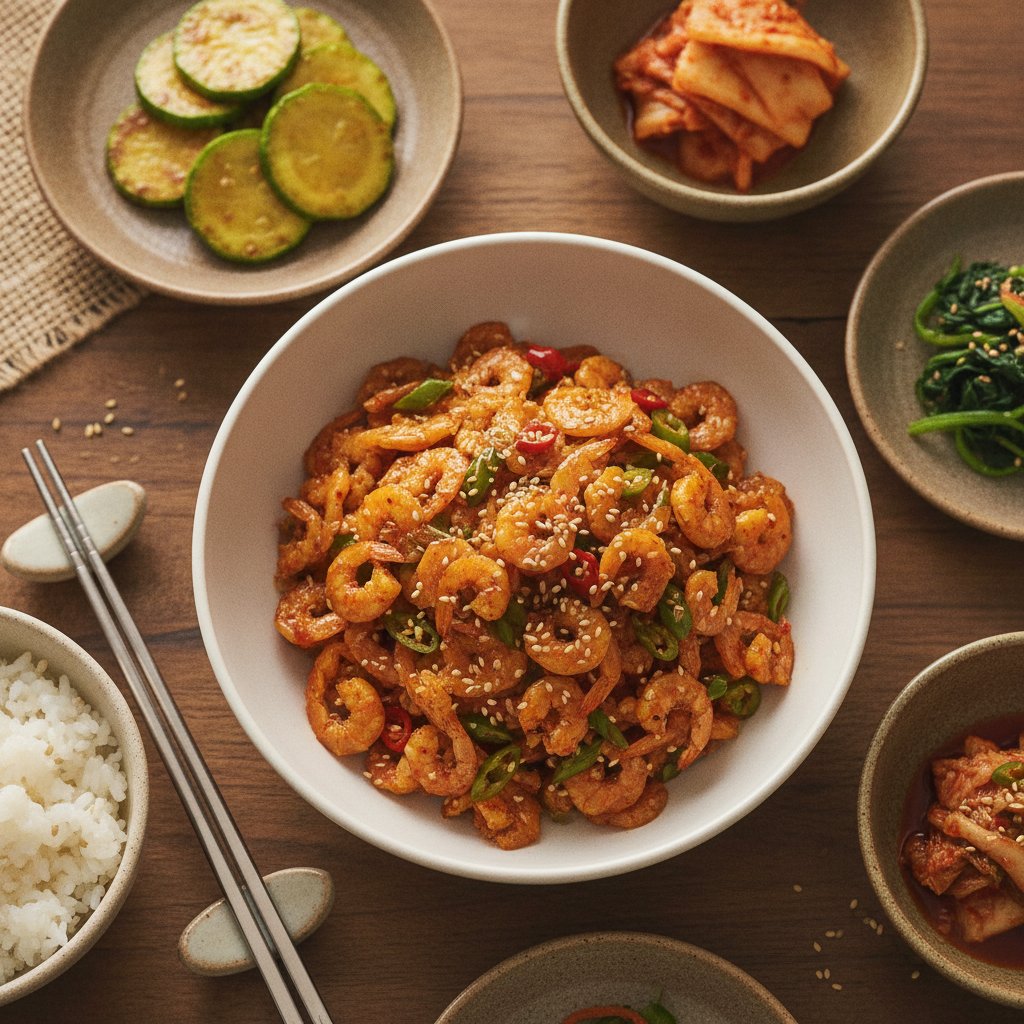
🛒 Korean Dried Shrimp Side Dish
As an Amazon Associate we earn from qualifying purchases.
Shop Ingredients & Tools →How to Make It
- Dry-toast the shrimp in a bare pan: Place a wide dry skillet over medium-low heat and add the 60 g of dried shrimp. Toast them gently, stirring continuously with a spatula, until they smell nutty and fragrant, about 3 to 4 minutes. Why you do this: Dried seafood retains ambient humidity from packaging. Dry-toasting evaporates this moisture to restore crispness and drives off off-flavors. It also makes the fine antennae brittle so they break off easily.
- Sift the shrimp to clean them: Transfer the toasted shrimp directly from the pan into a fine-mesh strainer set over a bowl or sink. Shake the strainer vigorously for 10 seconds. Why you do this: Tiny broken legs, feelers, and shell dust fall through the mesh. If left in the pan, this fine dust absorbs your cooking oil, burns into bitter black specks, and gives the final sauce a sandy texture.
- Simmer the sauce emulsion: Wipe out your skillet with a dry paper towel. Add 1 tbsp neutral oil, 1 tbsp gochujang, 1 tbsp soy sauce, 1 tbsp sugar, 1 tbsp minced garlic, and 1 tbsp water to the pan. Turn heat to medium-low and whisk gently until the sugar dissolves and the mixture begins to bubble steadily across the surface, about 1 to 2 minutes. Why you do this: Simmering raw garlic cooks away its harsh sulfurous bite, while combining oil and water-based seasonings at a gentle simmer forms a smooth emulsion that coats the shrimp evenly without separating.
- Toss shrimp off the heat: As soon as the sauce bubbles into a thick glaze, turn the heat off completely and remove the pan from the hot burner. Immediately dump the sifted dried shrimp and sliced green chili (if using) into the skillet. Pour in 1.5 tbsp rice syrup. Toss swiftly with two spoons or tongs until every single shrimp is glossy and coated. Why you do this: High heat caramelizes sugars and boils away water too fast, turning syrup into hard candy once cooled. Adding the rice syrup and tossing off the burner uses lingering residual heat to warm the syrup just enough to coat the shrimp while keeping the texture soft and chewy.
- Finish with sesame oil and seeds: Drizzle 1 tbsp toasted sesame oil over the coated shrimp and sprinkle with 1 tsp toasted sesame seeds. Give the mixture one final gentle toss, then transfer to a plate to cool completely. Why you do this: Sesame oil’s subtle aromatic compounds evaporate quickly when exposed to direct cooking flames; adding it right at the end preserves its toasted nutty scent.
Tips from a Korean Kitchen
In Korean homes, a batch of geon saeu bokkeum is built to last several weeks, but small errors in preparation can ruin its shelf life or mouthfeel. Keep these practical tips in mind:
- Check shrimp size before cooking: Micro-sized dried shrimp (often used for kimchi making) are too tiny and will scorch in seconds. Large soup-stock dried shrimp are too tough and have sharp, hard shells that poke your gums. Aim for shrimp roughly the length of a small paperclip (1 to 1.5 cm long).
- Adjust soy sauce based on salty shrimp: Taste one plain dried shrimp before cooking. Commercial dried shrimp vary wildly in salt content depending on how they were cured at sea. If your shrimp taste very salty straight out of the bag, cut the soy sauce in half to 1/2 tablespoon.
- Cool completely before storing: Never put warm stir-fried dried seafood directly into a sealed glass or plastic storage container. The rising steam will trap condensation inside the lid, dripping back down and turning your crispy shrimp soggy within hours. Leave the pan open on your counter until room temperature.
- Don’t skip the water in the sauce: Adding a single tablespoon of water to your sauce mixture seems tiny, but it prevents the gochujang from scorching while the garlic cooks through.
Storage
Transfer the fully cooled shrimp into a clean, airtight container. Keep it stored in the main compartment of your refrigerator (not the door, where temperature fluctuates). It keeps remarkably well for 3 to 4 weeks without losing its flavor or signature chew.
Do not freeze this dish, as ice crystals break down the structure of the shrimp and release water when thawed, destroying the texture. Serve directly from the fridge chilled or allow it to sit on the counter for 5 minutes to take off the chill. Never microwave this side dish—heat will cause the sugars in the glaze to boil instantly, hardening the shrimp into a solid block.
2>FAQ
Why is my dried shrimp stir-fry sticky and hard like candy?
This happens when the sweet sauce is cooked over direct heat for too long after adding the syrup or sugar. Sugars reduce rapidly, reaching hard-ball candy stage. To fix this next time, always turn off the flame completely before stirring in your rice syrup and cooked shrimp.
Can I make this Korean dried shrimp side dish non-spicy?
Yes, absolutely. To make a mild, savory-sweet version (called ganjang geon saeu bokkeum), leave out the gochujang and green chilies entirely. Increase the soy sauce to 1.5 tablespoons and add 1 extra tablespoon of water to compensate for the lost volume of sauce.
Where can I buy dried shrimp if I don’t have a Korean grocery store near me?
You can buy dried shrimp online through Amazon or Asian grocer delivery services. Alternatively, check local Latin American markets or large supermarkets with a Hispanic section—look for small dried shrimp (camarón seco), which are widely available and work wonderfully in this recipe.
🛒 Korean Dried Shrimp Side Dish
As an Amazon Associate we earn from qualifying purchases.
Shop Ingredients & Tools →More Korean Recipes
- Creamy Korean Corn Cheese (콘치즈)
- Gyeran Jjim (Korean Steamed Eggs): Always Fluffy
- Jangjorim Recipe: Authentic Korean Soy-Braised Beef and Eggs
- Eomuk Bokkeum (Stir-Fried Fish Cakes): Your New Favorite Lunchbox Side Dish
🛒 Korean Dried Shrimp Side Dish
As an Amazon Associate we earn from qualifying purchases.
Shop Ingredients & Tools →