Fresh Perilla Leaf Side Dish (Kkaennip Muchim)
This post contains affiliate links. As an Amazon Associate, we earn from qualifying purchases at no extra cost to you.
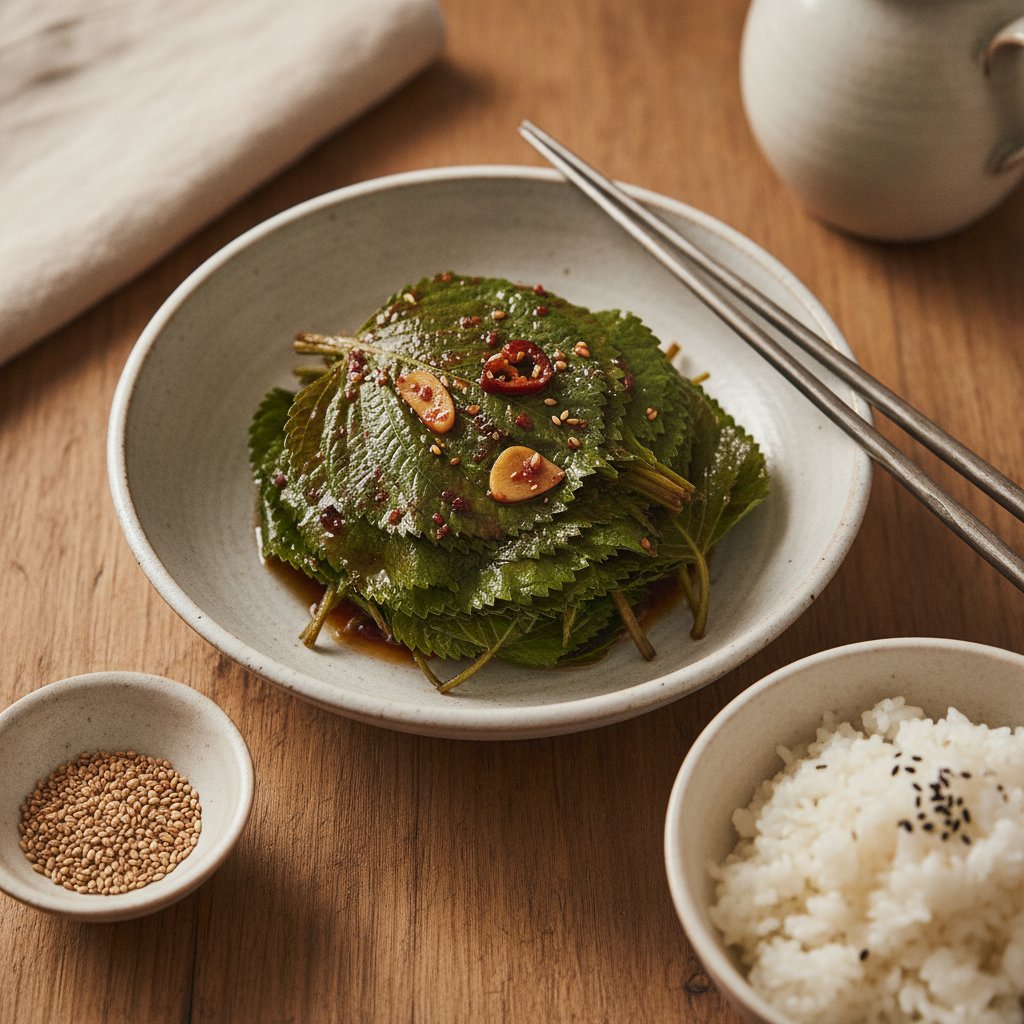
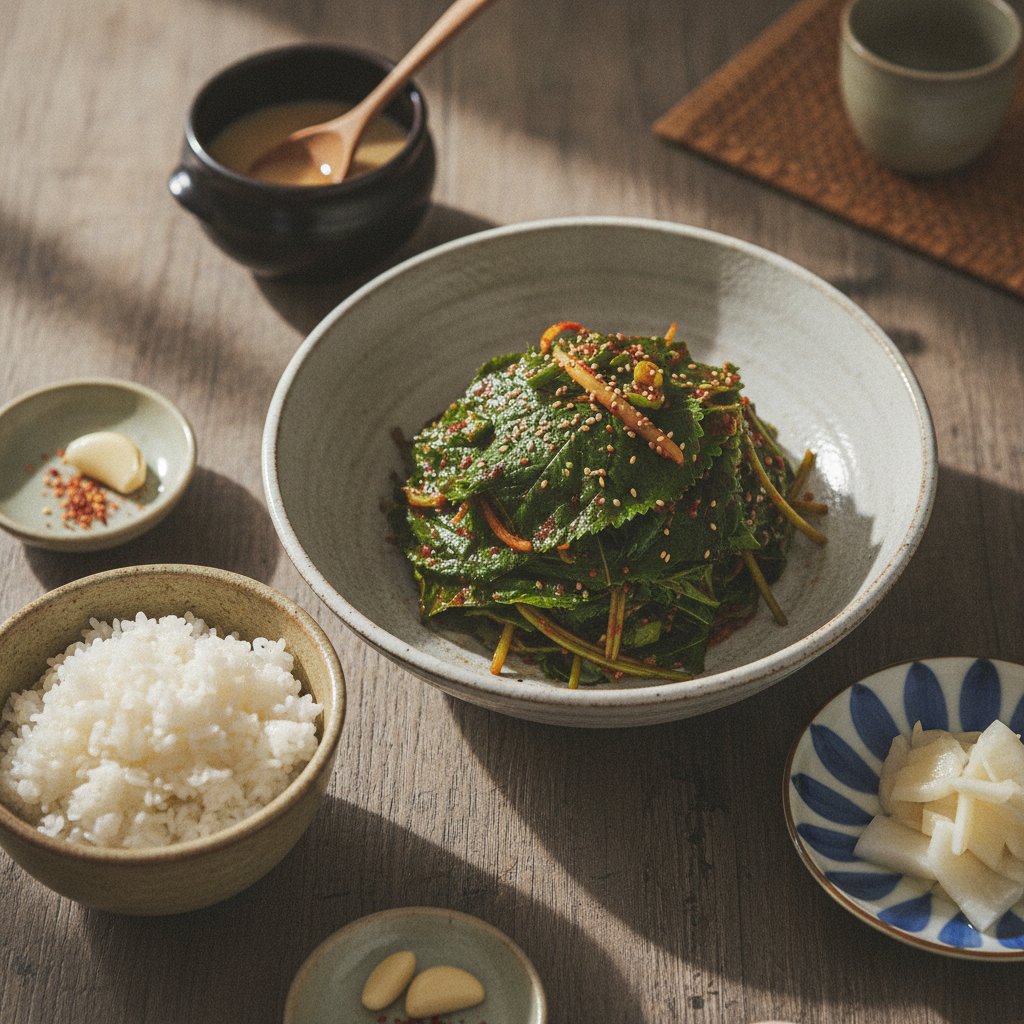
My grandmother kept a dedicated stack of rectangular glass containers sitting right on the middle shelf of her refrigerator, filled with kkaennip muchim (seasoned fresh perilla leaves). The moment the heavy fridge door swung open, the sharp, herbal, almost nutty fragrance of raw perilla leaves mixed with garlic and sesame oil hit the air before you could even see what was inside. In my family, we never treated this banchan (side dish) as an afterthought. It was the hero of simple weekday lunches, draped over steaming spoonfuls of freshly cooked white rice.
If you have ever visited a Korean household or sat down at a traditional dining table in Seoul, you know that perilla leaves are an absolute staple. Belonging to the mint family, perilla leaves—known as kkaennip—have an unmistakable flavor profile: herbal, slightly earthy, with subtle licorice and anise notes. While Koreans eat them raw as wrap leaves for samgyeopsal (grilled pork belly) or steam them in long-term soy pickles (kkaennip jangajji), this raw, quick-seasoned version known as kkaennip muchim is prized for retaining the leaf’s fresh, vibrant bite while infusing every layer with an aromatic marinade.
Making a fresh perilla leaf side dish at home is surprisingly effortless once you understand the basic technique of layering the sauce rather than tossing the leaves like a Western salad. Tossing perilla leaves bruise their delicate skin and clumps them into a messy ball. Instead, brushing small spoonfuls of vibrant chili-soy marinade between leaf layers preserves their structure and ensures every single bite is perfectly balanced.
Why This Works
- Layering instead of tossing: Spreading seasoned marinade between pairs of stacked leaves protects the raw green texture, preventing the herb from bruising or wilting prematurely into a soggy clump.
- Liquid hydration for gochugaru: Mixing Korean chili flakes with a touch of kelp broth or water allows the dried pepper flakes to bloom into a moist marinade paste that clings effortlessly to glossy leaf surfaces.
- Balanced umami punch: Combining soy sauce with fish sauce (or soup soy sauce) creates deep savory complexity that tempers the natural bitterness and strong aromatic oils of fresh perilla.
Ingredients
- 50 g (about 30 to 40 fresh leaves / 1.8 oz) fresh perilla leaves (kkaennip)
- 45 ml (3 tbsp) soy sauce
- 15 ml (1 tbsp) Korean fish sauce (myeolchi-aekjeot) or soup soy sauce (guk-ganjang)
- 15 g (2 tbsp) Korean chili flakes (gochugaru)
- 15 ml (1 tbsp) Korean plum syrup (maesil-cheong) or 10 g (2 tsp) brown sugar
- 15 ml (1 tbsp) toasted sesame oil (cham-gireum)
- 10 g (1 tbsp) toasted sesame seeds
- 15 g (about 3 cloves) garlic, finely minced
- 30 g (about 2 stalks) green onions, finely chopped
- 30 ml (2 tbsp) water or dashima (dried kelp) broth
- 1/2 small red chili pepper, finely diced (optional, for color)
Substitutions
If you cannot source every specific Korean staple at your local grocery store, here are reliable swaps that maintain the authentic flavor profile of this fresh perilla leaf side dish:
- Fresh Perilla Leaves: Korean perilla leaves are distinct from Japanese green shiso. Shiso is smaller, sweeter, and more citrusy. If you cannot find Korean perilla at an Asian market, fresh shiso works in a pinch, though the overall flavor will be brighter and mintier. Do not substitute with basil or grape leaves, as the flavor profile deviates too far.
- Korean Plum Syrup (Maesil-cheong): This fermented plum extract adds gentle acidity and sweetness. You can replace it with an equal amount of raw honey, maple syrup, or sugar dissolved directly into the soy sauce.
- Fish Sauce: If you follow a vegan diet, replace fish sauce with Yondu (vegetable seasoning sauce) or Korean soup soy sauce (guk-ganjang). Regular light soy sauce works as well; just add a pinch of salt to match the salinity.
- Dashima Broth: Plain cold water is completely fine for diluting the marinade, though soaking a small dried kelp square in cold water for 10 minutes gives the sauce extra savory richness.
🛒 Fresh Perilla Leaf Side Dish
As an Amazon Associate we earn from qualifying purchases.
Shop Ingredients & Tools →How to Make It
- Wash and dry the leaves thoroughly: Submerge the perilla leaves in a bowl of cold water with a drop of white vinegar for 5 minutes to remove any fine soil trapped in the textured veins. Rinse each leaf individually under cold running water. Shake off excess moisture and gently pat every single leaf completely dry with clean kitchen towels. WHY: Water left on raw leaves dilutes the seasoning, prevents the oil and soy marinade from adhering, and speeds up spoilage in the refrigerator.
- Trim the stems: Stack 5 to 10 dried leaves together and trim the woody end of the stems using kitchen shears, leaving about half an inch of stem attached. WHY: Leaving a small stub of stem makes it much easier to pick up individual leaves with chopsticks at the dinner table while removing the tough, chewy bottom ends.
- Bloom the dry spices and build the marinade: In a small mixing bowl, combine the minced garlic, chopped green onions, chopped red chili pepper, Korean chili flakes (gochugaru), soy sauce, fish sauce, plum syrup, toasted sesame oil, sesame seeds, and water (or kelp broth). Stir well and allow the mixture to sit for 5 minutes. WHY: Allowing gochugaru to hydrate in the liquid components releases its vibrant red pigments and softens its sandy texture so it spreads smoothly over raw greens.
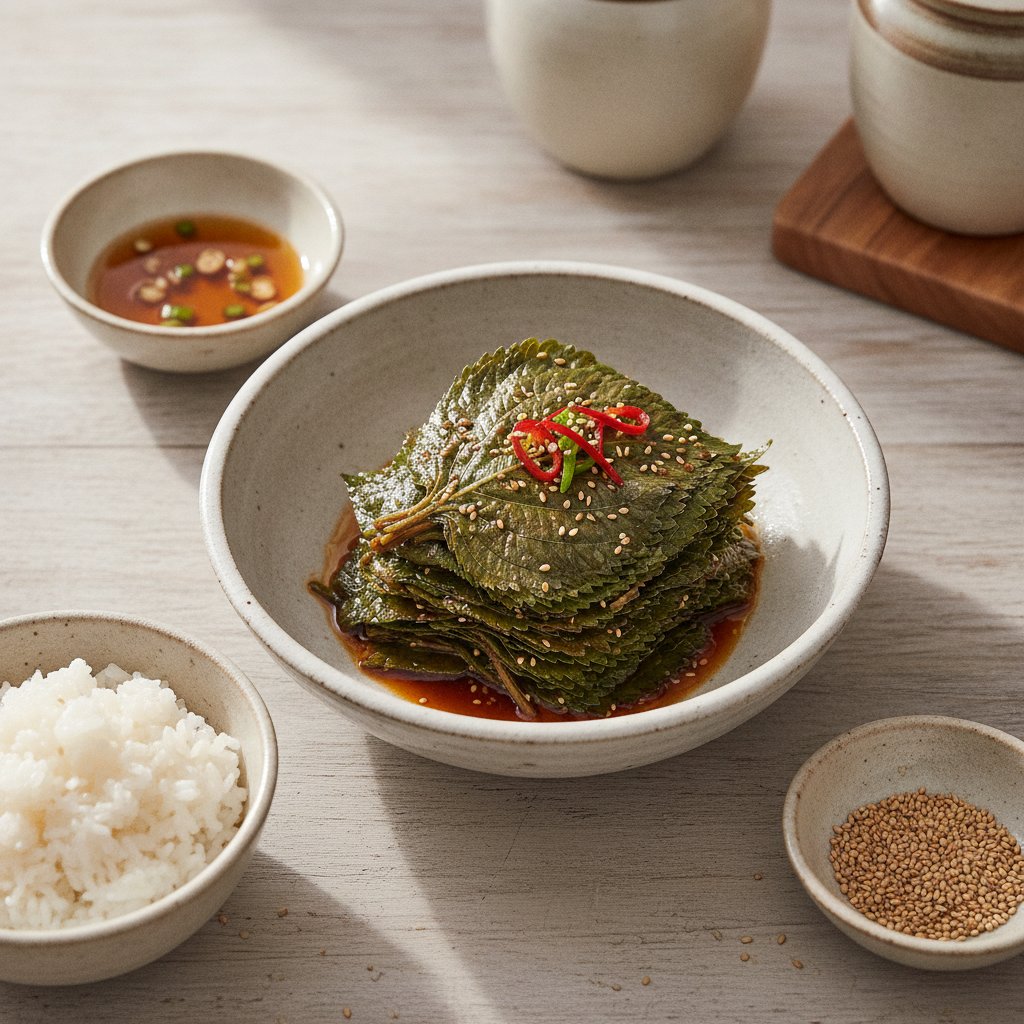
- Layer and season in pairs: Place two perilla leaves side-by-side or slightly overlapping on the bottom of a wide glass storage container. Spoon about half a teaspoon of marinade over the top leaf, spreading it lightly across the surface with the back of your spoon or a pastry brush. Place another pair of leaves on top, slightly offsetting them, and layer another thin smear of marinade. Repeat this process until all leaves and sauce are used. WHY: Layering two leaves at a time saves preparation time while creating the ideal ratio of bold seasoning to fresh herb leaf when dining.
- Rest and cure briefly: Press down gently on the stack with the back of a spoon to settle the layers. Seal the container with a tight lid and let it sit at room temperature for 15 to 30 minutes before serving, or transfer straight to the fridge. WHY: A brief ambient rest draws out just enough moisture from the leaf surface to soften stiff leaf veins while letting raw garlic and soy permeate the greens.
Tips from a Korean Kitchen
In Korean homes, making banchan is about efficiency, flavor balance, and shelf longevity. Here are key details that elevate this simple side dish from good to exceptional:
- Dryness is paramount: If you skip thoroughly drying your leaves, water will accumulate at the bottom of your container within two hours. This diluted liquid washes away the fragrant sesame oil and turns crisp leaves soft and soggy. Use a salad spinner if preparing large batches.
- Offset leaf orientation when stacking: When layering your leaves inside the dish, alternate the direction of the stems (stems pointing left for layer one, stems pointing right for layer two). This keeps the stack flat and level inside your container, ensuring sauce distributes evenly rather than pooling in the center.
- Adjust heat with seed removal: If you prefer a milder banchan, ensure your green onions and optional red chilies are completely deseeded, and stick strictly to standard coarse gochugaru rather than fine spicy chili powder.
- Use freshly ground sesame seeds: Lightly crushing toasted sesame seeds between your fingertips or in a small mortar before tossing them into the marinade releases aromatic oils that pre-packaged whole seeds cannot match.
Storage
Keep your seasoned perilla leaves stored in an airtight glass container in the coldest section of your refrigerator. Stainless steel or glass containers are strongly recommended over plastic, as perilla leaves and gochugaru easily stain and absorb unwanted odors from plasticware.
Fresh kkaennip muchim stays remarkably crisp and flavorful for up to 5 to 7 days in the fridge. Over time, the leaves will continue to cure in the salt and soy sauce, darkening slightly into a deeper olive green while shrinking in volume. While still delicious on day seven, the texture shifts from fresh herb salad to a tender light pickle. This dish should not be frozen; freezing breaks down the cellular structure of raw leaves, causing them to thaw into an unappealing, mushy mass.
🛒 Fresh Perilla Leaf Side Dish
As an Amazon Associate we earn from qualifying purchases.
Shop Ingredients & Tools →FAQ
Can I eat seasoned fresh perilla leaves right away or should I wait?
You can eat kkaennip muchim immediately after making it if you enjoy a bright, snappy texture with raw herbal bite. However, resting the dish for 20 to 30 minutes allows the leaf fibers to soften slightly, absorbing the soy sauce and balancing the sharp kick of raw garlic.
Why are my perilla leaves turning dark brown after a couple of days?
Perilla leaves naturally oxidation when exposed to salt, air, and acid over time. Darkening is a natural curing process similar to pickling. As long as the dish has been refrigerated in an airtight container and smells fragrant and nutty, brown-tinted leaves are safe and delicious to eat.
What is the best way to serve kkaennip muchim at a Korean meal?
Serve this side dish cold or at cool room temperature. To eat it like a local Korean home cook, take a single leaf by its stem stub, lay it flat over a spoonful of hot, freshly cooked white rice, fold the leaf around the rice using your chopsticks, and lift the entire wrapped bite together.
More Korean Recipes
- Creamy Korean Corn Cheese (콘치즈)
- Gyeran Jjim (Korean Steamed Eggs): Always Fluffy
- Jangjorim Recipe: Authentic Korean Soy-Braised Beef and Eggs
- Eomuk Bokkeum (Stir-Fried Fish Cakes): Your New Favorite Lunchbox Side Dish
🛒 Fresh Perilla Leaf Side Dish
As an Amazon Associate we earn from qualifying purchases.
Shop Ingredients & Tools →