
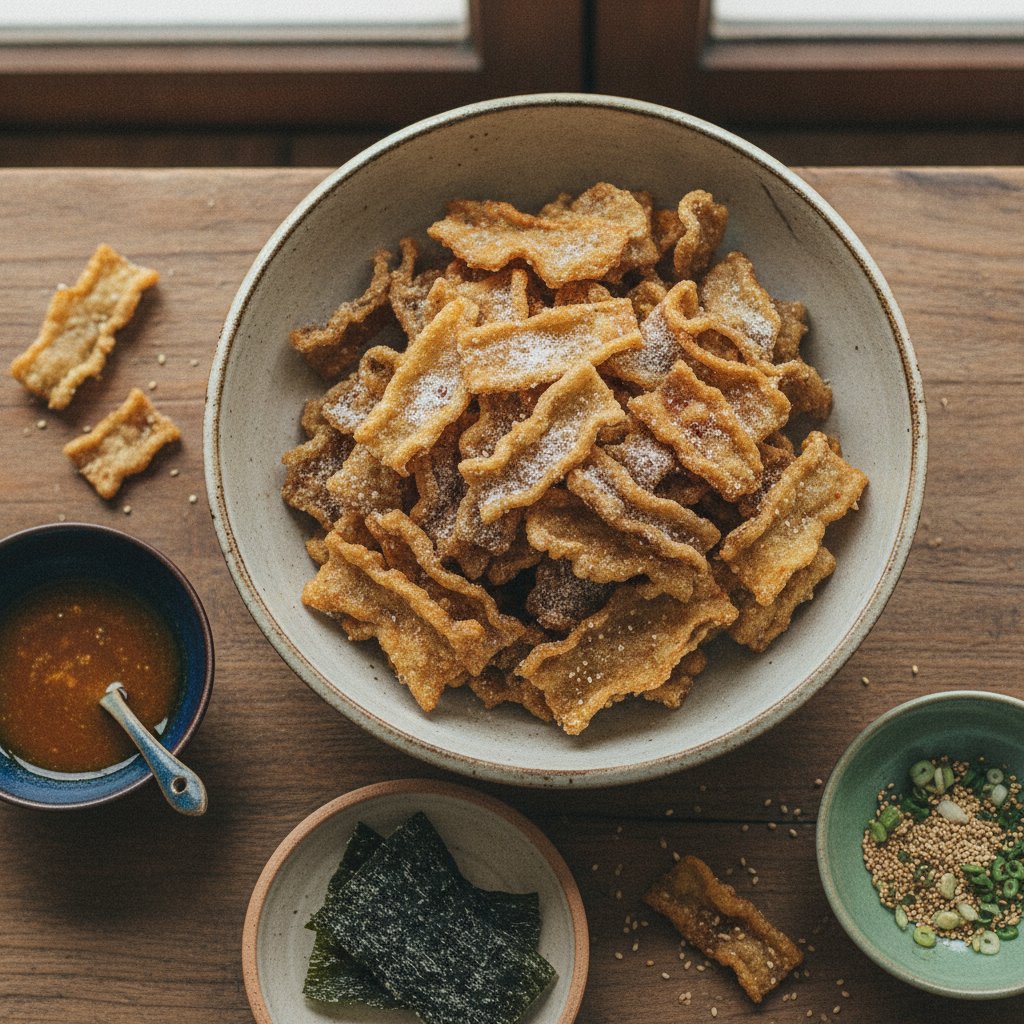
How to Make Dasima Bugak (Crispy Korean Sea Kelp Snack)
This post contains affiliate links. As an Amazon Associate, we earn from qualifying purchases at no extra cost to you.
Crispy Fried Sea Kelp Chips (Dasima Bugak)
When I was growing up in Seoul, rainy autumn afternoons meant one thing in my grandmother’s kitchen: the gentle sizzle of dasima bugak (crispy sea kelp chips) frying in a shallow aluminum skillet. While my friends ate store-bought potato chips, my grandmother would reach into a tall glass jar on her pantry shelf, pull out dry squares coated in white rice paste, and flash-fry them for mere seconds. They bloomed instantly into light, puffy, crackling bite-sized snacks that tasted savory, sweet, and rich with natural sea flavor all at once.
In Korea, bugak refers to a traditional style of crispy vegetable or seaweed chips prepared by brushing ingredients with glutinous rice paste (chapssal-pul), drying them completely, and deep-frying them briefly in hot oil. It is an ancient technique rooted in Korean temple cuisine (sachal eumsik), where Buddhist monks developed clever preservation methods to keep seasonal vegetables and sea greens crisp and nutritious through long winters.
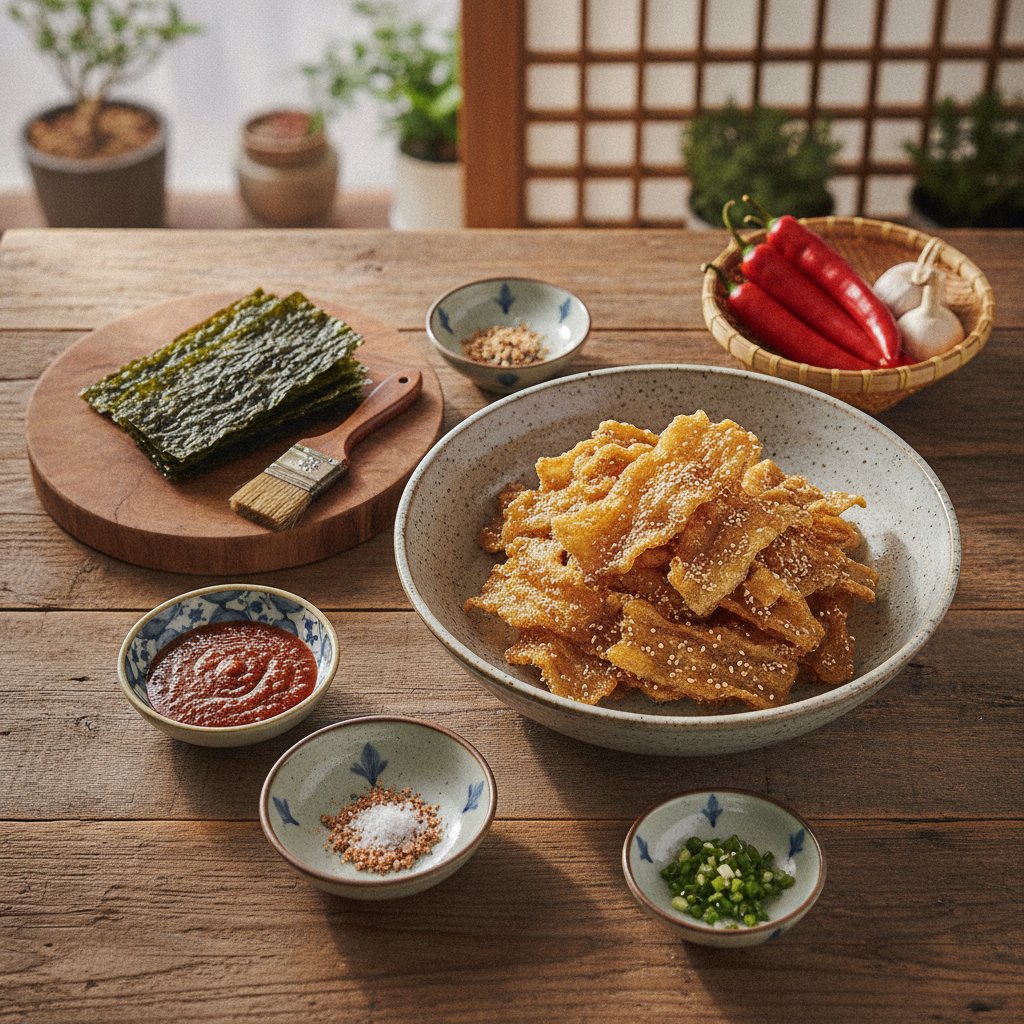
While you can make bugak with perilla leaves, chili peppers, or lotus root, dasima bugak made from thick dried kelp is easily the most satisfying. It serves as a light snack, an elegant tea refreshment, a crunch topping over rice, or an addictive anju (a savory snack paired with cold beer or traditional Korean rice wine). If you love a savory Korean crispy seaweed kelp snack, this traditional homemade version will completely ruin mass-produced seaweed sheets for you forever.
Why This Works
- Microwaved starch gelation: Preparing the glutinous rice paste in short bursts in the microwave gelatinizes the starches in under two minutes, saving you 20 minutes of simmering over a hot stove while producing a smooth, glossy glue that bonds tightly to dry kelp.
- Damp-wipe surface prep: Gently wiping the raw dried kelp with a wet cloth removes excess surface salt and white powder (mannitol) without hydrating the thick seaweed, ensuring the kelp doesn’t turn rubbery or splash dangerously in hot oil.
- Flash-fry technique: Submerging fully dried, rice-coated kelp in hot oil at 175°C (350°F) for just 3 to 5 seconds causes trapped starch moisture to expand into an airy, glass-like crunch before the heat can scorch the delicate seaweed underneath.
🛒 How to Make Dasima Bugak
As an Amazon Associate we earn from qualifying purchases.
Shop Ingredients & Tools →Ingredients
- 50 g (1.8 oz) dried kelp sheets / kombu (dasima)
- 30 g (about 3 tbsp) glutinous rice flour / sweet rice flour (chapssal-garu)
- 120 ml (1/2 cup) cold water
- 2 g (1/2 tsp) fine sea salt
- 5 g (1 tsp) granulated sugar (optional, for sweet dusting)
- 15 g (1 tbsp) toasted white sesame seeds
- 500 ml (2 cups) neutral cooking oil with high smoke point (canola, corn, or vegetable oil)
Substitutions
If you shop at standard Western supermarkets, here is how to navigate the ingredients seamlessly:
Glutinous Rice Flour: Look for sweet rice flour (often sold under the Koda Farms Mochiko brand in regular flour aisles or Asian food sections). Do not use regular white rice flour, as it lacks the sticky amylopectin needed to cling to dried kelp and puff up into a delicate shell. If you cannot find sweet rice flour anywhere, cornstarch or potato starch whisked into cold water makes a decent backup, producing a harder, crunchier coat rather than a light puffed paste.
Dried Kelp (Dasima): You will find this labeled as dasima in Korean markets or kombu in Japanese sections and regular supermarkets. Look for broad, flat, dark green-black sheets. Avoid thin roasted gim or nori sheets for this recipe, as thin seaweed will burn instantly in frying oil without providing the required structural crunch.
How to Make It
-
Clean and cut the kelp: Take your dried kelp sheets and gently wipe both sides with a barely damp paper towel. Do not submerge or wash the kelp under running water. Cut the kelp into 5×4 cm (2×1.5 inch) rectangles using sharp kitchen shears. Why: Wiping removes surface dust and excess powdery deposits without softening the kelp. Washing kelp in running water activates its sticky natural mucilage and saturates the fibers, which prevents the rice paste from adhering and creates hazardous oil splatters during frying.
-
Prepare the glutinous rice paste (chapssal-pul): Whisk the glutinous rice flour, salt, and cold water together in a small microwave-safe bowl until completely smooth with no lumps remaining. Microwave on high in 30-second intervals, whisking thoroughly after each burst. After about 60 to 90 seconds, the thin liquid will suddenly transform into a glossy, thick paste that resembles craft glue. Let it cool for 5 minutes until warm to the touch. Why: Pre-cooking gelatinizes the starch granules. Raw starch paste applied to dried kelp will slide right off in hot oil and fail to puff up properly.
-
Coat and garnish the kelp: Using a pastry brush or the back of a spoon, spread a thin, translucent layer of warm rice paste across one side of each kelp rectangle. While the paste is still wet, sprinkle toasted sesame seeds across the coated surface. Why: Coating only one side allows the unpaste-coated seaweed side to contact hot oil directly for instant expansion, while the paste-coated top expands into an airy, delicate white crest. Thick paste makes chips dense and hard to chew.
-
Dry the coated kelp completely: Place the coated kelp pieces in a single layer on parchment-lined baking sheets, paste-side up. Allow them to air-dry in a warm, dry room for 4 to 6 hours, or dry them in a food dehydrator (or oven on the lowest warm setting with the door cracked) at 60°C (140°F) for 1 to 2 hours. They are ready when the paste becomes transparent, brittle, and totally dry to the touch. Why: Any residual water trapped beneath the paste will generate steam in the hot pan, turning your crispy snack into a chewy, tough leather strip instead of a delicate chip.
-
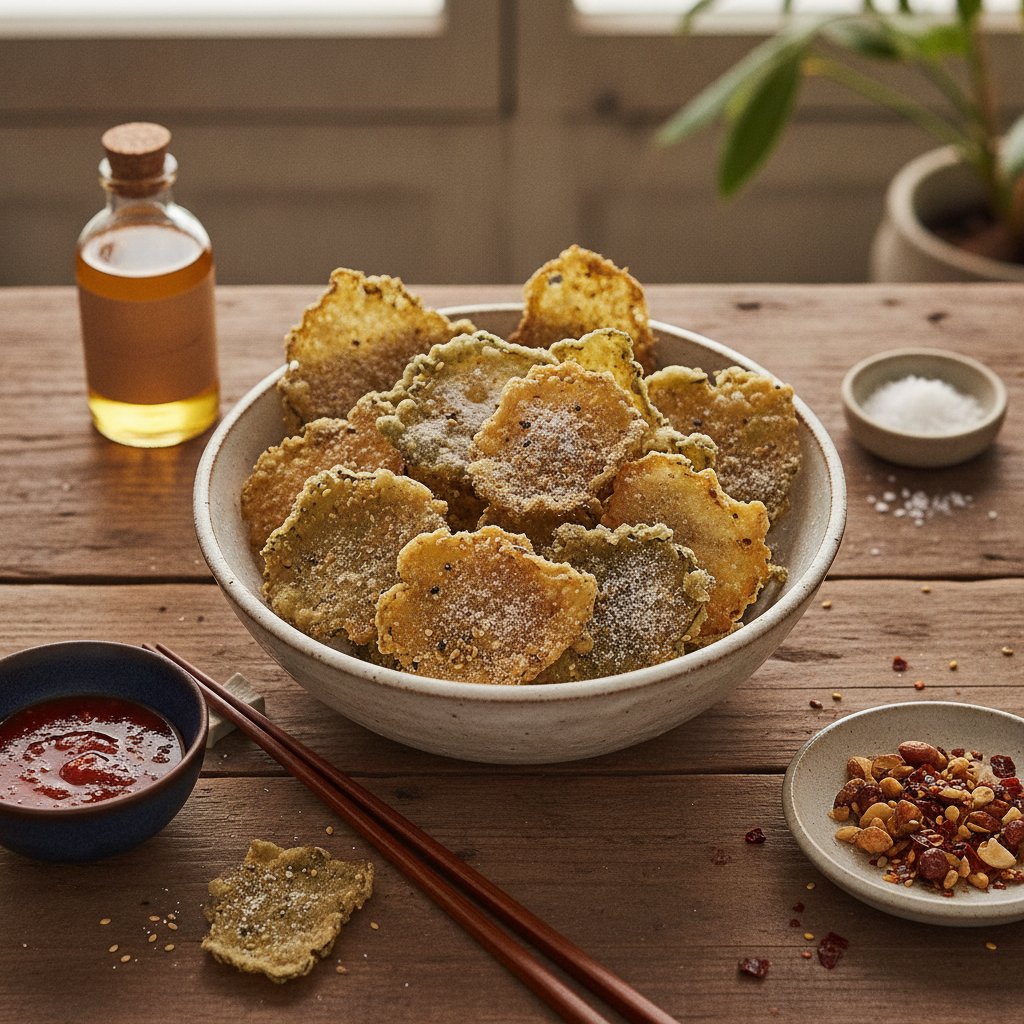
Flash-fry the chips: Fill a deep skillet or pot with about 2 inches of neutral oil and heat to 175°C–180°C (350°F–355°F). Drop 3 to 4 dried kelp pieces into the hot oil at a time, paste-side down. The pieces will curl, sink briefly, and instantly swell into white, puffy bubbles within 3 to 5 seconds. Flip quickly using tongs or a mesh strainer, cook for 2 more seconds on the reverse side, and skim them out immediately onto a wire cooling rack. Why: Kelp contains delicate natural compounds that turn unpleasantly bitter when exposed to high heat for longer than 6 to 8 seconds. Rapid frying swells the rice starch while retaining the sweet, rich umami taste of sea kelp.
-
Season and cool: Dust the hot fried chips immediately with a tiny pinch of extra fine salt or granulated sugar while they are hot out of the skillet. Allow them to cool completely for 5 minutes before serving. Why: A light dusting of sugar neutralizes any raw ocean brine, creating that iconic Korean sweet-and-salty balance (dan-jjan). Residual surface oil helps seasonings bond instantly.
🛒 How to Make Dasima Bugak
As an Amazon Associate we earn from qualifying purchases.
Shop Ingredients & Tools →Tips from a Korean Kitchen
- Test your oil temperature carefully: If your oil is under 170°C (340°F), the kelp will absorb grease like a sponge and become soggy. If it’s over 190°C (375°F), the kelp will turn black and bitter before the starch paste gets a chance to puff. Drop a small chip of dried rice paste into the pan: if it sinks to the bottom and stays there, wait longer; if it drops halfway and immediately pops up expanding white bubbles, your temperature is ideal.
- Keep the brush strokes sheer: The biggest mistake beginners make is glopping on thick layers of rice glue thinking it makes bigger chips. Thick paste turns rock-hard after frying. Aim for a sheer coat where you can still clearly see the dark color of the kelp underneath.
- Batch control is everything: Do not overcrowd your frying pan. Drop no more than four or five pieces at a time. Because dasima bugak cooks in under five seconds, putting too many pieces in the oil at once means half of them will burn before you can scoop them out.
Storage
Because humidity is the enemy of fried rice starch, store your fully cooled dasima bugak in a rigid, airtight glass or plastic container lined with a paper towel. Add a food-safe silica gel packet if you have one on hand. Stored at cool room temperature away from direct sunlight, these chips stay exceptionally crisp for up to two weeks.
You can also store fried chips in a sealed freezer bag in the freezer for up to two months. Amazingly, because of the zero-moisture deep-fry process, frozen bugak does not freeze solid—you can eat them straight out of the freezer for an ultra-crispy treat! Never store them in the refrigerator, as fridge moisture makes the puffed starch sticky and soft.
If your chips lose crispness due to humid weather, revive them by placing them on a baking sheet in an oven or air fryer preheated to 140°C (280°F) for 2 minutes. Let them cool completely to regain their signature snap.
FAQ
Is dasima bugak the same as dried nori seaweed snacks?
No, they are quite different. Nori snacks (gim-gu-i) are made from very thin red algae sheets that are seasoned with oil and salt and roasted. Dasima bugak is made from thick brown sea kelp (dasima/kombu) coated in a cooked rice starch batter, dried, and deep-fried, resulting in a significantly thicker, crunchier, and fluffier texture.
Why did my kelp chips turn out tough and rubbery?
Rubbery or chewy chips are almost always caused by inadequate drying before frying or wet kelp. If the rice paste still contains internal moisture when dropped into hot oil, the starch steams rather than swells, leaving you with a leathery texture. Ensure your chips are bone-dry and brittle to the touch before frying.
Can I make this Korean crispy seaweed kelp snack in an air fryer without oil?
While you can dry the coated kelp in an air fryer at low heat, you cannot successfully expand the dried rice paste into fluffy bugak without hot oil frying. The rapid thermal transfer of hot oil is required to instantly flash-cook the starch matrix into an airy lattice. Air frying dried pieces results in hard, dense, unchewable squares.
🛒 How to Make Dasima Bugak
As an Amazon Associate we earn from qualifying purchases.
Shop Ingredients & Tools →More Korean Recipes
- Creamy Korean Corn Cheese (콘치즈)
- Gyeran Jjim (Korean Steamed Eggs): Always Fluffy
- Jangjorim Recipe: Authentic Korean Soy-Braised Beef and Eggs
- Eomuk Bokkeum (Stir-Fried Fish Cakes): Your New Favorite Lunchbox Side Dish
🛒 How to Make Dasima Bugak
As an Amazon Associate we earn from qualifying purchases.
Shop Ingredients & Tools →


