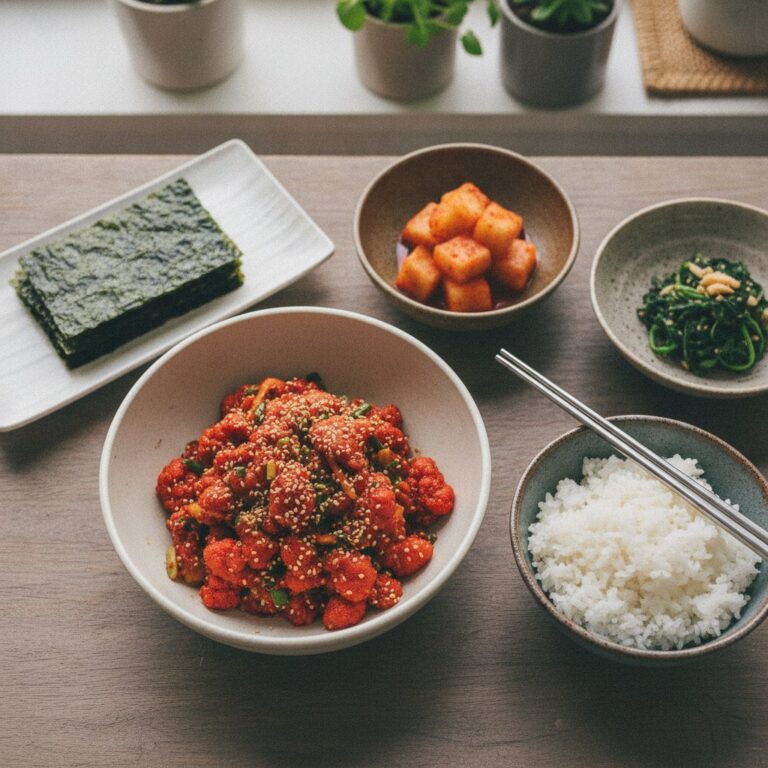
Gochu Doenjang Muchim (Crunchy Korean Peppers)
This post contains affiliate links. As an Amazon Associate, we earn from qualifying purchases at no extra cost to you.
At a glance
- In shortHow to make Gochu Doenjang Muchim, a quick and crunchy Korean seasoned pepper side dish.
- Best forHome cooks looking for a quick Korean side dish
- Time10 min
- DifficultyEasy
- HeatNot spicy
- Key pointsDry the sliced peppers completely so the savory soybean sauce sticks. · Toss the peppers immediately before serving to maintain maximum snap. · Use Korean doenjang rather than Japanese miso for the proper bold flavor.
- Heads-upAlways use freshly minced garlic rather than pre-minced jarred garlic.
On hot summer afternoons in Seoul, when the humidity hangs heavy and nobody wants to turn on the stove, my mother would reach into the crisper drawer for a bundle of long, pale green peppers. In less than five minutes, without a single puff of heat or flame, she would transform them into gochu doenjang muchim (crunchy peppers in soybean paste). She would snap off the green stems, cut the peppers into chunky bite-sized coins, and toss them in a rich sauce made from aged Korean soybean paste, toasted sesame oil, and a touch of minced garlic.
In Korean home cooking, this dish sits in a special category of side dishes called muchim, which literally translates to “seasoned” or “tossed.” While many classic Korean banchan require blanching, simmering, or fermenting over several days, gochu doenjang muchim is all about raw, immediate freshness. It offers an irresistible sensory contrast: crisp, juicy peppers bursting with cool moisture against the deep, earthy, savory umami of fermented soybean paste.
You will find this dish served at almost every Korean barbecue house across Seoul. When eaten alongside rich, fatty meats like samgyeopsal (grilled pork belly) or galbi (marinated short ribs), the sharp crunch and savory punch of the dressed peppers cut through the fat effortlessly. But in Korean homes, we eat it just as often with a simple bowl of warm steamy rice, or stirred into cold water-rice (mul-marun-bap) on sweltering days when our appetite is lagging. It is quick, humble, and deeply satisfying.
Making this dish outside Korea is remarkably simple once you know how to select your ingredients at your local grocery store. You do not need complex knife skills or hard-to-find equipment. With just five core ingredients and a few simple technique tweaks, you can bring authentic Korean home cooking to your table in under ten minutes.
Why This Works
- Drying the peppers thoroughly: Excess water on raw vegetables dilutes the soybean paste and causes it to slide off into a watery pool. Drying the pepper pieces completely ensures the glossy dressing clings to every bite.
- Balancing salty doenjang with rice syrup: Commercial *doenjang* can be aggressively salty and pungent. A subtle touch of Korean rice syrup or honey rounds off those sharp edges and creates a smooth paste without making the side dish taste dessert-sweet.
- Tossing right before serving: Salt naturally extracts moisture from fresh vegetables. Dressing the peppers immediately before bringing them to the table preserves their maximum snap and keeps the sauce rich and thick.
- Leaving the seeds intact: Keeping the soft inner seeds provides pleasant textural variation and preserves the juicy sweetness found near the core of fresh peppers.

Ingredients
- 300 g (about 10.5 oz, or 6 to 8 medium) Korean crunchy green peppers (asagi gochu), or mild Western substitutes
- 3 tbsp (about 50 g) Korean fermented soybean paste (doenjang, such as CJ Haandrepl or Sunchang)
- 1 tbsp (15 ml) toasted sesame oil
- 1 tbsp (15 ml) Korean rice syrup (ssal-jocheong), corn syrup, or wildflower honey
- 1 tsp (about 3 g) finely minced fresh garlic
- 1 tsp (about 2 g) mild Korean chili flakes (gochutgaru), optional for warmth and color
- 1 tsp (about 3 g) toasted white sesame seeds
Substitutions and Ingredient Notes
Finding the right pepper is the most critical step for this recipe. In Korea, we use asagi gochu (often called cucumber peppers because of their mildness and high water content) or young put-gochu (green chili peppers). These peppers have thick, crisp walls and virtually no capsaicin heat, allowing you to eat them like raw celery sticks.
If your local market does not stock Korean green peppers, look for Italian frying peppers, Cubanelle peppers, or mild Anaheim peppers. Cubanelle peppers are particularly fantastic because they match the thick-walled, juicy crunch of Korean cucumber peppers. Shishito peppers also work well, though they are slightly smaller and carry an occasional spicy surprise. Avoid standard Western green bell peppers if possible; while crisp, their skin is tough and their flavor lacks the subtle grassiness needed for this dish. Never use jalapeños unless you want an intensely fiery side dish!
For the paste, stick strictly to Korean doenjang. Japanese miso is made through a different fermentation process (often using barley or rice kofi cultures alongside soybeans), resulting in a much sweeter, milder paste. Doenjang is fermented using pure soybean blocks (meju) and salt, yielding a funkier, bolder, and saltier profile that stands up to raw garlic and crunchy vegetables.
🛒 Gochu Doenjang Muchim
As an Amazon Associate we earn from qualifying purchases.
Shop Ingredients & Tools →How to Make It
- Wash and dry the peppers thoroughly: Wash 300 g (10.5 oz) of green peppers under cold tap water to remove any surface dust. Next, grab a clean kitchen towel or paper towel and wipe each pepper until completely dry. Water remaining on the outer skin will create a barrier that stops the savory paste from adhering properly.
- Slice into bite-sized rounds: Slice off and discard the green stem caps. Cut the peppers into thick rounds approximately 2 cm (about 3/4 inch) wide. Cutting them into chunky pieces gives you the ideal ratio of crunchy vegetable to rich soybean coating. Do not hollow out the seeds; Korean pepper seeds are soft, sweet, and completely edible. After slicing, gently dab the cut edges with a paper towel to absorb stray juices.
- Mix the savory doenjang dressing: In a wide mixing bowl, combine 3 tbsp (50 g) Korean soybean paste, 1 tbsp (15 ml) toasted sesame oil, 1 tbsp (15 ml) rice syrup, 1 tsp (3 g) minced garlic, and 1 tsp (2 g) gochutgaru (if using). Stir vigorously with a spoon for about 30 seconds until the mixture transforms into a smooth, shiny paste. Pre-mixing the sauce ensures the garlic and sweetener distribute evenly before meeting the peppers.
- Toss the peppers gently: Add the dried pepper pieces to the bowl with the sauce. Using a soft spatula or gloved hands, gently fold the peppers into the dressing until every piece is generously coated in the glossy brown sauce. Avoid pressing down or over-mixing, which can crush the cells of the peppers and cause them to release water prematurely.
- Garnish and serve fresh: Sprinkle 1 tsp (3 g) toasted sesame seeds over the dressed peppers and give the bowl one final gentle toss. Transfer the dish to a small serving plate and serve immediately alongside warm rice or grilled pork.
Tips from a Korean Kitchen
The beauty of gochu doenjang muchim lies in its simplicity, but small culinary details make the difference between a soggy side dish and a crisp restaurant-style banchan. Here are the principles we follow in home kitchens across Seoul:
First, judge your soybean paste before mixing. Every brand of doenjang has a slightly different salt concentration and aging time. Traditional artisanal pastes are darker and saltier, while commercial brands like Sunchang or CJ tend to be slightly sweeter and smoother. Taste a tiny speck of your paste on the tip of your spoon. If it tastes overwhelmingly salty, increase the rice syrup by half a teaspoon to round out the taste.
Second, prioritize garlic freshness. Because this is a quick raw salad, the garlic flavor is front and center. Pre-minced garlic from a glass jar often has an unpleasant acidic or metallic tang from preservatives that ruins the subtle sweetness of the peppers. Always grate or mince a fresh garlic clove right before mixing your sauce.
Third, keep your ingredients chilled until the last second. Cold peppers crunch far better than room-temperature ones. Keep your green peppers in the crisper drawer until you are ready to wash, slice, and toss.
Scaling & Make-Ahead
If serving a crowd, double the dressing and pepper amounts proportionally. For make-ahead prep, mix the doenjang sauce in advance and store it sealed in the refrigerator for up to two weeks. You can wash and dry the peppers ahead of time, but cut and toss them with the dressing right before serving to maintain maximum crispness.
If Something Goes Wrong
| Problem | Likely Cause | Fix |
|---|---|---|
| Dressing turns watery and pools at bottom | Peppers were wet or dressed too far in advance | Pat sliced peppers completely dry; toss with dressing right before serving. |
| Taste is overly salty or harsh | Artisanal or highly concentrated doenjang used | Stir in an extra 1/2 tsp of rice syrup or honey to round out the flavor. |
| Peppers lack a fresh, firm crunch | Warm peppers or over-mixing | Keep peppers chilled until assembly; fold gently into dressing to prevent cell crushing. |
🛒 Gochu Doenjang Muchim
As an Amazon Associate we earn from qualifying purchases.
Shop Ingredients & Tools →Key Takeaways
- Thorough drying is essential: Surface moisture prevents the glossy doenjang sauce from clinging properly to the peppers.
- Adjust sweetener to taste: Balance the variable saltiness of different doenjang brands using small tweaks of rice syrup.
- Dress immediately before eating: Salt draws out moisture quickly, so coat the peppers right before serving to protect their sharp crunch.
- Choose thick, mild peppers: Asagi gochu or Cubanelles provide the ideal juicy crunch without overwhelming spiciness.
More on Seasoned Namul & Salads
- Korean Spinach Side Dish (Sigeumchi Namul)Learn how to make Sigeumchi Namul, an authentic Korean seasoned spinach side dish, using simple pantry ingredients.
- Kongnamul Muchim Two WaysLearn how to make classic Korean seasoned bean sprouts in both non-spicy and spicy versions.
- Musaengchae: Korean Radish SaladLearn how to make Musaengchae, a crisp, sweet, tangy, and mildly spicy Korean shredded radish salad.
See every Seasoned Namul & Salads post in our Banchan guide.
Handy toolsRecipe scaler · Measurement converter · Korean pantry guide · Recipe Finder
🛒 Gochu Doenjang Muchim
As an Amazon Associate we earn from qualifying purchases.
Shop Ingredients & Tools →More Korean Recipes
- Sweet and Tangy Korean Seaweed Salad (Miyeok Muchim)
- Melt-in-Your-Mouth Mu Jorim (Braised Korean Radish Recipe)
- Spicy Seasoned Yellow Radish (Danmuji Muchim)
- Soy Pickled Perilla Leaves (Kkaennip Jangajji) Recipe
🛒 Gochu Doenjang Muchim
As an Amazon Associate we earn from qualifying purchases.
Shop Ingredients & Tools →