Cold Kimchi Noodle Soup (Kimchi Mali Guksu)
This post contains affiliate links. As an Amazon Associate, we earn from qualifying purchases at no extra cost to you.
On a stifling July evening in Seoul, when humidity hangs over the Han River like a wet blanket, nobody wants to turn on a gas burner for long. In my family, these are the nights my mother would reach straight for the bottom drawer of the kimchi refrigerator. She would pull out a jar of heavily aged, sour cabbage, pour the vibrant crimson brine into a stainless steel bowl, and stash it in the freezer while she boiled a pot of thin wheat noodles. Twenty minutes later, we were sitting on the bamboo floor mats slurp-slurping bowls of ice-cold broth, the sharp tang of garlic and lacto-fermentation cutting through the oppressive summer heat.
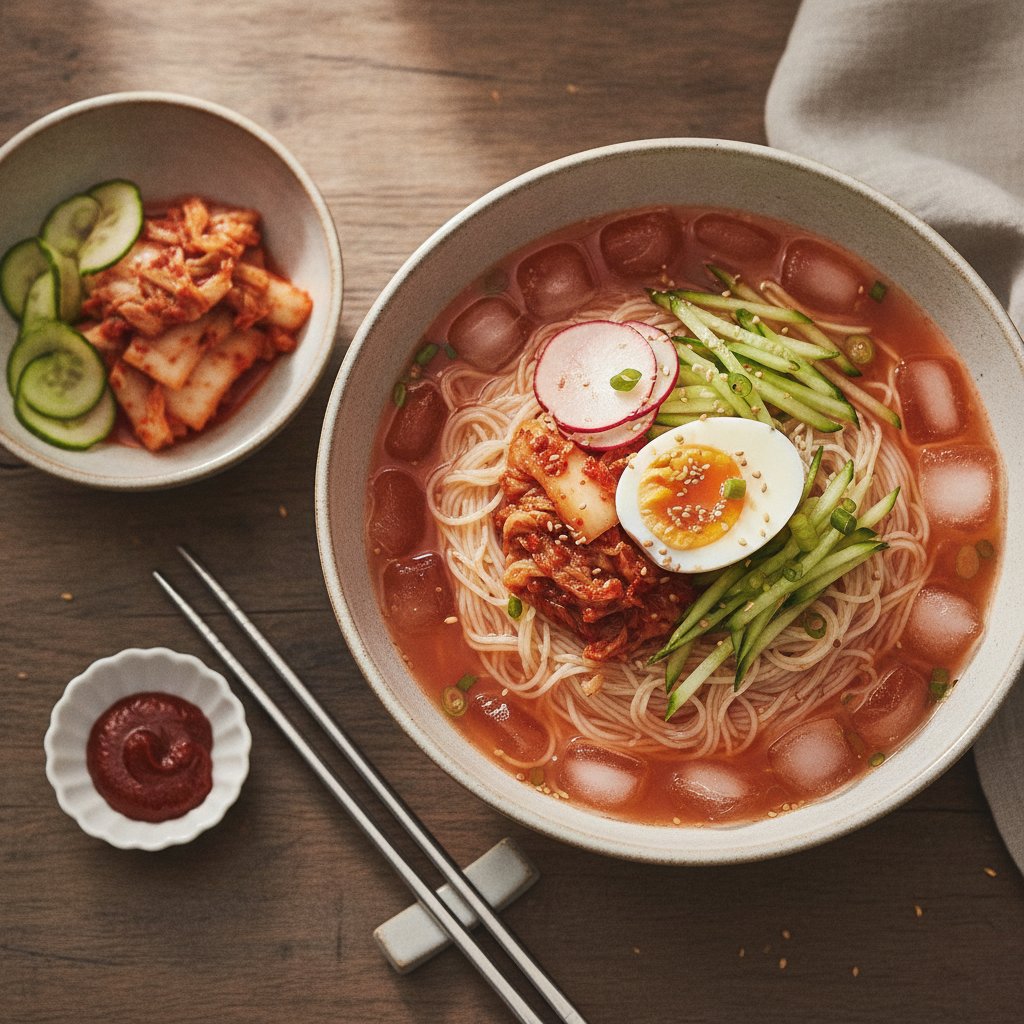
This dish is kimchi mali guksu (chilled kimchi noodle soup), one of Korea’s most beloved seasonal comfort foods. Unlike heavier hot soups or sweet-and-spicy dry-rubbed noodles like bibim guksu (spicy mixed noodles), kimchi mali guksu balances deep savory depth with a refreshing, icy bite. The magic lies in combining aged kimchi juice with a seasoned cold broth, poured over springy wheat noodles called somyeon (thin wheat noodles). If you love Korean food but have only ever experienced kimchi cooked in hot stews, this ice-chilled presentation will completely change how you think about fermented vegetables.
Why This Works
- Slushy Broth Technique: Mixing seasoned anchovy-kelp or beef broth with kimchi brine and chilling it in the freezer for 30 minutes creates tiny ice crystals that keep the soup cold without diluting the flavor like plain ice cubes do.
- Starch Scrubbing: Rinsing boiled somyeon vigorously in ice-cold water removes surface starch, locking in a chewy, firm texture that prevents the noodles from growing soggy in the liquid.
- Balanced Punch: Seasoning the chopped kimchi separately with sesame oil and a touch of sugar tempers harsh acidity, creating harmony between the sour broth and the nutty toppings.
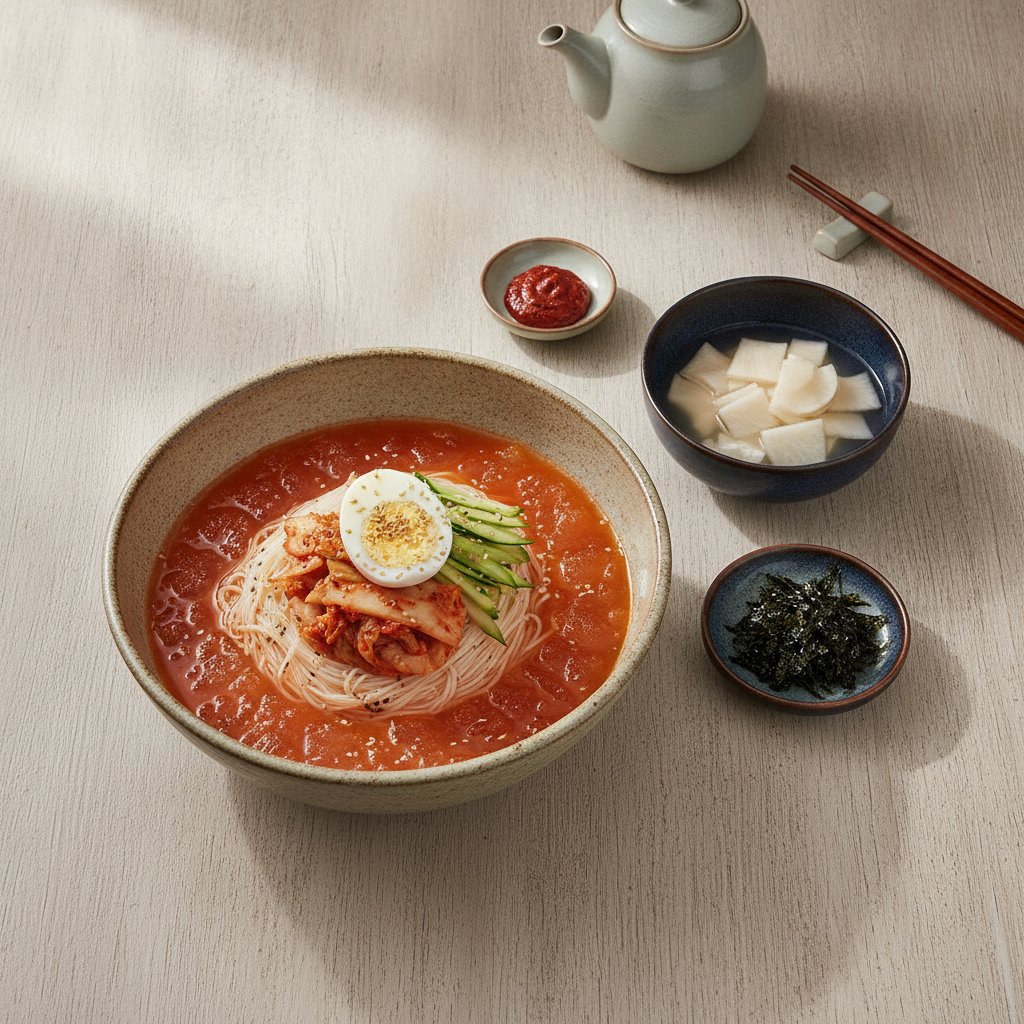
Ingredients
Here is what you will need to make authentic kimchi mali guksu (chilled kimchi noodle soup) for two generous servings. Measurements are provided in both metric and standard US units for accuracy.
- 200 g (7 oz) somyeon (thin Korean wheat flour noodles)
- 150 g (about 1 cup) aged napa cabbage kimchi (shin kimchi), finely chopped
- 120 ml (1/2 cup) sour kimchi juice strained directly from the jar
- 400 ml (1 3/4 cups) cold dashima (kelp) and dried anchovy broth, or low-sodium beef broth
- 150 ml (about 2/3 cup) dongchimi (radish water kimchi) broth, or carbonated sparkling water mixed with 1 tsp rice vinegar
- 15 g (1 tbsp) granulated sugar (adjust depending on how sour your kimchi is)
- 15 ml (1 tbsp) rice vinegar or apple cider vinegar
- 15 ml (1 tbsp) toasted sesame oil
- 5 g (1 tsp) gochugaru (Korean chili flakes)
- 1/2 tsp fine sea salt or soy sauce for seasoning (to taste)
For garnish:
- 1 hard-boiled egg, halved
- 50 g (1/3 cup) English cucumber, cut into thin matchsticks
- 1 tbsp toasted white sesame seeds, crushed between your fingers
- 1 sheet toasted roasted seaweed (gim), snipped into thin strips
Substitutions
If you live far from an Asian supermarket, here is how you can adapt these traditional elements using items from regular Western grocery stores:
- Somyeon Noodles: You can find Ottogi or CJ brand somyeon at Asian markets. If unavailable, substitute with Japanese thin wheat noodles (somen) or very thin angel hair pasta. If using angel hair pasta, cook it slightly past al dente so it stays pliable when chilled.
- Korean Broth Base: Traditional Korean home cooks brew a quick broth from dried anchovies and dashima (kelp). A clear, low-sodium beef broth or vegetable broth works brilliantly as a Western supermarket alternative. Keep it lean—excess fat will solidify into unpleasant specks when frozen.
- Dongchimi Broth: Korean restaurants often mix dongchimi water into the soup for effervescence and tangy sweetness. Unflavored sparkling mineral water mixed with a splash of apple cider vinegar reproduces that crisp, bubbling mouthfeel amazingly well.
- Aged Kimchi: If your store-bought kimchi is too fresh and lacking sourness, leave the tub at room temperature on your kitchen counter for 24 to 36 hours until the container expands slightly and smells pleasantly sour.
🛒 Cold Kimchi Noodle Soup
As an Amazon Associate we earn from qualifying purchases.
Shop Ingredients & Tools →How to Make It
- Prepare and freeze the broth base: In a medium mixing bowl, whisk together 400 ml (1 3/4 cups) of cold broth, 120 ml (1/2 cup) of strained kimchi juice, 150 ml (2/3 cup) of dongchimi broth (or sparkling water with 1 tsp vinegar), 15 g (1 tbsp) of sugar, and 15 ml (1 tbsp) of rice vinegar. Taste the liquid; it should taste tangy, slightly salty, and mildly sweet. Adjust with a pinch of salt if needed. Place the bowl flat in your freezer for 45 to 60 minutes until ice crystals form around the edges. Why: Freezing the flavored liquid directly gives you a slushy texture that coats the noodles without diluting the seasoning with melting plain water.
- Season the chopped kimchi: Combine the 150 g (1 cup) of finely chopped aged kimchi, 5 g (1 tsp) of gochugaru, and 15 ml (1 tbsp) of toasted sesame oil in a small bowl. Toss well and set aside at room temperature. Why: Coating the cabbage in sesame oil coats the raw edges and creates a savory flavor bridge between the cold broth and the wheat noodles.
- Boil the somyeon: Bring 1.5 liters (about 6 cups) of plain water to a rolling boil in a large pot. Add 200 g (7 oz) of somyeon noodles, fanning them out so they do not stick together. Stir gently. When the pot foams up and threatens to boil over (about 2 minutes in), pour in 100 ml (1/3 cup) of cold water. Repeat this process when it boils over a second time. Cook until the noodles are translucent and tender, about 3 to 4 minutes total. Why: Adding cold water twice drops the temperature abruptly, preventing the water from boiling over while cooking the noodle core evenly without making the outside mushy.
- Rinse and shock the noodles: Immediately drain the cooked noodles into a colander. Run cold tap water over them for 30 seconds. Drop the noodles into a bowl filled with cold water and ice cubes. Vigorous rubbing is required here: take small handfuls of noodles between your palms and rub them briskly underwater. Drain thoroughly and squeeze out excess moisture, dividing the noodles into two neat nests. Why: Washing somyeon under running cold water strips off surface wheat starches. Squeezing out extra water prevents your delicious chilled soup broth from getting watered down.
- Assemble the bowls: Place one noodle nest into the center of a wide, chilled soup bowl. Retrieve your kimchi broth from the freezer and stir it to break up the frozen slush. Pour half of the slushy broth around the base of the noodles. Top the noodles with a generous mound of the seasoned kimchi, cucumber matchsticks, half a hard-boiled egg, crushed toasted sesame seeds, and seaweed strips. Serve immediately while ice cold.
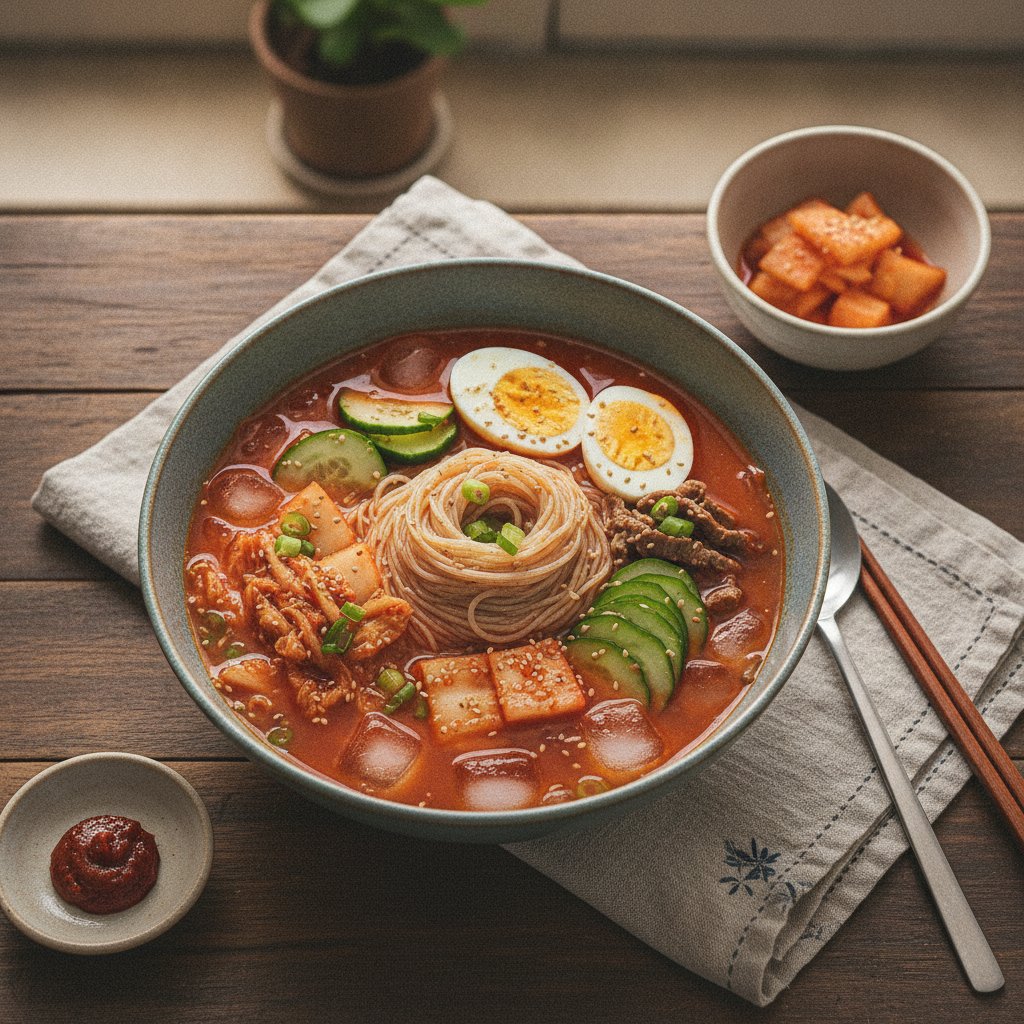
Tips from a Korean Kitchen
Making a memorable bowl of cold kimchi noodle soup comes down to managing temperature, texture, and fermentation levels. Keep these practical kitchen tips in mind:
- Use well-fermented kimchi: Freshly made kimchi (geotjeori) lacks the lactic acid needed to give cold kimchi noodle soup its signature lip-smacking flavor. Look for kimchi with a manufacturing date at least 3 to 4 weeks old, or leaves that look translucent rather than opaque white.
- Chill your serving bowls: Cold soups lose their appeal quickly in warm room temperatures. Stash your porcelain or stainless steel serving bowls in the freezer for 15 minutes before plating your dish.
- Crush the sesame seeds: Do not drop whole toasted sesame seeds straight into the soup. Instead, crush them between your thumb and index finger over the bowl. Releasing the seed’s interior oils adds an indispensable fragrant aroma to the cold broth.
- Keep noodle portions tight: Somyeon expands quickly once submerged in liquid. Serve the noodles immediately after plating so they retain their bouncy chew.
Storage
Because noodles absorb liquid rapidly, cold kimchi noodle soup should always be assembled right before eating. However, you can make components ahead of time to save dinner prep time:
- Broth Mixture: You can mix the broth, kimchi juice, vinegar, and sugar together and store it in a sealed container in the refrigerator for up to 4 days. Do not add carbonated water until right before chilling in the freezer.
- Seasoned Kimchi: The chopped seasoned kimchi can be stored in an airtight glass container in the fridge for up to a week.
- Noodles: Cooked somyeon noodles do not store well in the fridge; they break apart and turn soft. Always cook, shock, and drain the noodles fresh when ready to serve.
🛒 Cold Kimchi Noodle Soup
As an Amazon Associate we earn from qualifying purchases.
Shop Ingredients & Tools →FAQ
What kind of kimchi is best for cold noodle soup?
Standard napa cabbage kimchi (baechu kimchi) that has fully fermented is ideal. You want kimchi that tastes distinctly sour and has plenty of deep red brine at the bottom of the jar. Avoid fresh kimchi, as it lacks the acidity required for a cold soup base.
Can I make this cold kimchi noodle soup recipe vegetarian or vegan?
Yes, absolutely. Standard kimchi and traditional broth often contain anchovies or fish sauce. To make it vegan, use a store-bought vegan kimchi and substitute the anchovy stock with a quick broth made from steeping dried kombu (kelp) and dried shiitake mushrooms in cold water for 30 minutes.
What should I do if my kimchi isn’t sour enough?
If your kimchi is fresh and mild, you can fake the sour depth by adding an extra tablespoon of rice vinegar and a tiny pinch of salt directly into the kimchi juice mixture. Alternatively, let your kimchi sit in its container on your counter overnight to accelerate fermentation before making the soup.
More Korean Recipes
- Crunchy & Refreshing Kkakdugi Recipe (Cubed Radish Kimchi)
- Kimchi Storage (김치 보관법) & Sour Kimchi Tips
- Quick Oi Muchim (Cucumber Kimchi) in 15 Minutes
- How to Make Kimchi (김치) at Home: A Small-Batch Beginner’s Guide
🛒 Cold Kimchi Noodle Soup
As an Amazon Associate we earn from qualifying purchases.
Shop Ingredients & Tools →