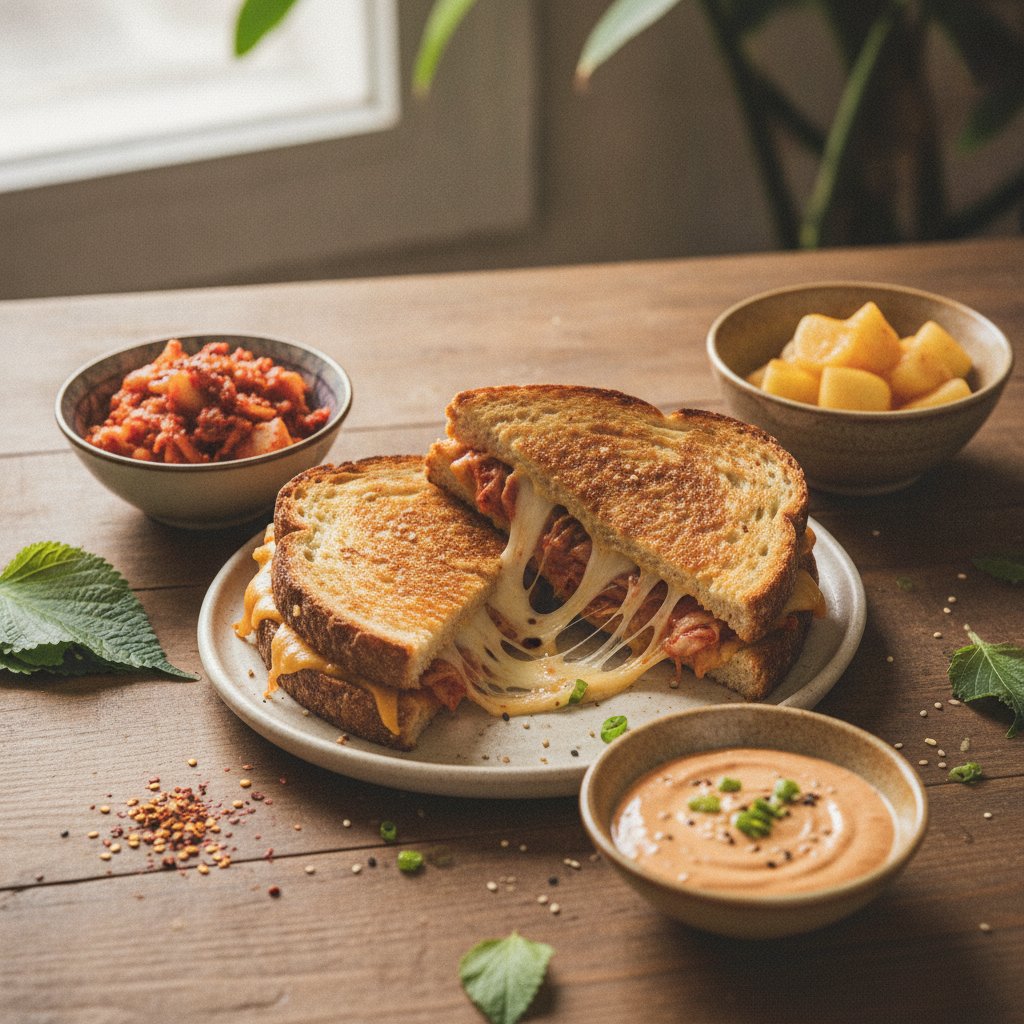
Crispy Kimchi Grilled Cheese (Kimchi Chijeu Tosteu)
This post contains affiliate links. As an Amazon Associate, we earn from qualifying purchases at no extra cost to you.
On damp, chilly evenings in Seoul, when nobody in my family felt like cooking a full spread of side dishes, my mother would reach straight for the back corner of the refrigerator. That was where the shin kimchi (sour, well-aged cabbage kimchi) lived in a dark glass jar. She would chop up a handful of that fiery, fermented cabbage, fry it in a pan with a splash of sesame oil, and sandwich it between buttered slices of bakery bread with whatever cheese we had on hand. In Korea, we call variations of this comfort food kimchi chijeu tosteu (kimchi cheese toast), a close relative of the famous late-night gilgeori tosteu (street food toast) sold near subway stations.
A proper kimchi grilled cheese is not just a standard American grilled cheese with raw kimchi slapped in the middle. If you put cold, wet kimchi directly onto bread with cheese, the moisture leaches out as it heats, leaving you with soggy, lukewarm bread and unmelted cheese. The secret to making this dish work lies in treating the kimchi as a warm, cooked filling first. Sautéing the kimchi concentrates its natural sugars, mellows out the harsh garlic raw edge, and drives off excess water before it ever touches the bread. When paired with rich, salty cheese, the sharp lactic acidity of the fermented cabbage cuts right through the fat, creating a perfectly balanced snack that is crispy on the outside and molten on the inside.
Why This Works
- Sautéing and squeezing the kimchi: Cooking the kimchi in a little fat renders out excess liquid so the sandwich stays crunchy rather than soggy, while caramelizing its natural sugars to round out sharp sour notes.
- The mayo-crust method: Spreading mayonnaise on the exterior surfaces of the bread delivers an even, edge-to-edge golden crust with a higher smoke point than butter alone, preventing scorched spots.
- Dual-cheese dynamic: Combining sharp cheddar for punchy flavor with low-moisture mozzarella for a gooey cheese pull creates the ideal structural melt without overwhelming the kimchi.
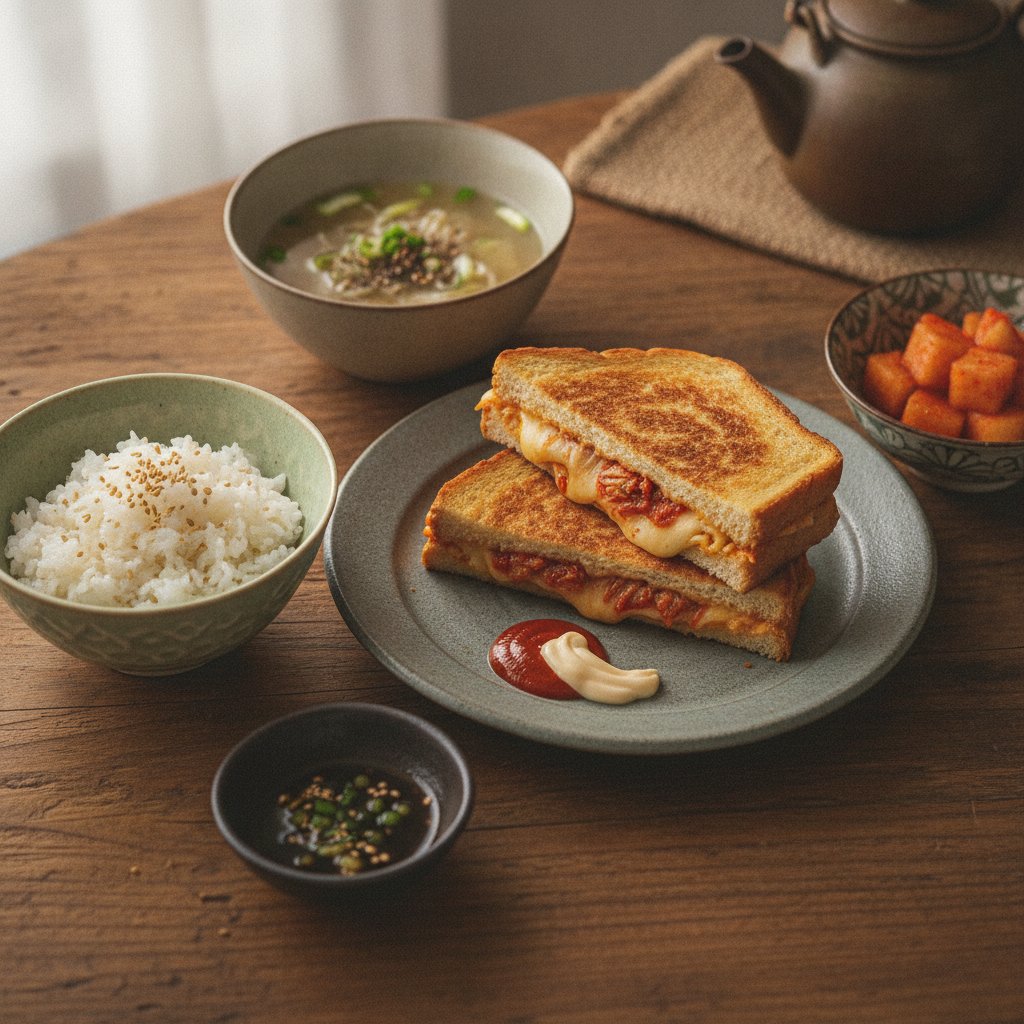
Ingredients
- 150 g (about 3/4 cup) well-aged napa cabbage kimchi, squeezed dry and finely chopped
- 4 slices thick-cut white bread or sourdough (about 120 g / 4.2 oz total)
- 15 g (about 1 tbsp) unsalted butter
- 30 g (about 2 tbsp) mayonnaise (such as Kewpie or standard Western mayonnaise)
- 60 g (about 1/2 cup) low-moisture shredded mozzarella cheese
- 60 g (about 1/2 cup) sharp cheddar cheese, shredded
- 5 g (about 1 tsp) gochujang (Korean chili paste), optional for extra depth
- 5 g (about 1 tsp) honey or granulated sugar
- 5 ml (about 1 tsp) toasted sesame oil
Substitutions
If you cannot find well-aged kimchi, purchase standard store-bought napa cabbage kimchi (such as Jongga or CJ Haechandle brands, often found in regular Western supermarkets now) and let it sit sealed in your refrigerator for an extra week or two to develop sourness. For bread, standard sandwich bread works fine, but a sturdy milk bread or sourdough holds up best to the heavy filling. If you do not have mozzarella and cheddar, substitute with Provolone, Fontina, or Monterey Jack. Avoid fresh mozzarella in brine, as its water content will ruin the crispiness of the toast.
🛒 Crispy Kimchi Grilled Cheese
As an Amazon Associate we earn from qualifying purchases.
Shop Ingredients & Tools →How to Make It
-
Prep and squeeze the kimchi: Take your aged kimchi and press it gently inside a mesh strainer or between clean paper towels to remove excess juice. Reserve a tablespoon of the juice for later if you like a stronger kick. Finely chop the squeezed kimchi into bite-sized bits. Why: Kimchi holds a massive amount of free water. Squeezing it prevents steam from trapping inside the sandwich, which would make the bread soft instead of crisp.
-
Sauté the filling: Set a small skillet over medium heat and melt the unsalted butter with the toasted sesame oil. Add the chopped kimchi, honey (or sugar), and gochujang if using. Cook, stirring constantly, until the cabbage softens, turns slightly translucent around the edges, and smells aromatic, about 4 to 5 minutes. Remove from heat and transfer the mixture to a plate to cool slightly. Why: Raw kimchi produces a sharp thermal contrast inside the sandwich, staying cold while the cheese melts. Pre-cooking softens the dense cabbage ribs and caramelizes its sugars, creating a savory jam-like consistency that bonds with the melting cheese.
-
Assemble the sandwiches: Lay the four bread slices flat on a cutting board. Evenly distribute half of the shredded mozzarella and cheddar over two of the slices. Layer the warm sautéed kimchi over the cheese, then top with the remaining cheese. Close the sandwiches with the top slices of bread and press down gently to compact the layers. Why: Placing cheese both below and above the kimchi acts as a moisture barrier and glues the bread slices to the filling on both sides as it melts.
-
Spread the outer crust coat: Evenly spread mayonnaise over the top exterior slice of each sandwich, making sure to coat all the way to the crust edges. Why: Mayonnaise is an emulsion of oil and egg protein. It spreads far more smoothly than cold butter, ensuring total surface contact with the pan for a uniform, golden-brown crust without burning.
-
Toast low and slow: Heat a skillet (cast iron or non-stick) over medium-low heat. Place the sandwiches mayo-side down into the skillet. While the bottom side cooks, spread the remaining mayonnaise over the ungreased top slices. Cover the pan with a lid for about 3 to 4 minutes until the bottom is deep golden brown. Why: Covering the pan traps ambient heat, giving the dense cheeses enough ambient temperature to fully melt before the bottom bread burns.
-
Flip and finish: Remove the lid, flip the sandwiches carefully with a spatula, and cook uncovered on the second side over medium-low heat for another 3 to 4 minutes until golden brown and crisp. Press down gently with the back of the spatula a couple of times to reinforce the bond. Slice diagonally and serve immediately while hot. Why: Leaving the lid off during the second half of cooking allows any trapped steam to escape, ensuring both outer crusts achieve maximum crunch.
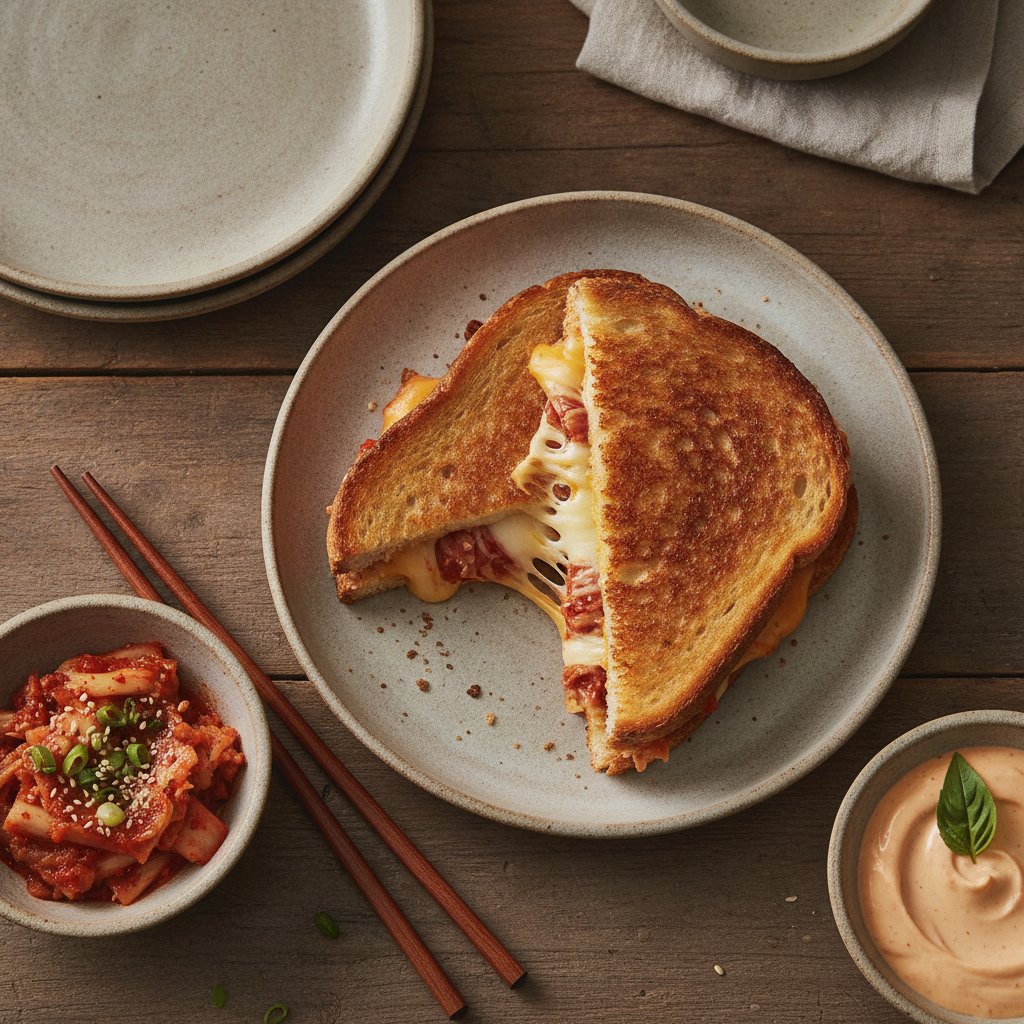
Tips from a Korean Kitchen
In Korean home cooking, balance is everything. Kimchi varies wildly in saltiness, heat, and sourness depending on how long it has fermented in your fridge. Here are key adjustments to keep in mind:
- Check your kimchi sourness: If your kimchi is young and fresh (it tastes crunchy, sweet, and lightly salted), add a tiny splash of rice vinegar along with the sugar when sautéing to mimic the tangy punch of true aged kimchi. If your kimchi is extremely old and sharp (muk-eun-ji), double the sugar or honey to tame the harsh acidity.
- Do not rush the flame: High heat is the enemy of a thick grilled cheese. Because kimchi is dense and holds heat differently than processed cheese, cooking over medium-low flame gives the inner core enough time to reach molten temperature before the sugars in the mayo and bread scorch.
- Grate your own cheese: Pre-shredded bagged cheeses are coated in cellulose anti-caking agents that prevent them from melting smoothly. Grating blocks of cheddar and mozzarella at home yields a far superior cheese pull and better emulsion with the spicy kimchi oils.
- Add a sprinkle of roasted sea salt or seaweed: For an extra layer of savory flavor, dust the toasted exterior with a pinch of crushed gim (roasted seasoned seaweed) right after taking the sandwich out of the pan.
Storage
A grilled cheese sandwich is always best eaten hot right off the stove. However, if you have leftover cooked kimchi filling, you can store it in a sealed container in the refrigerator for up to 5 days; simply warm a portion in a pan before assembling a fresh sandwich. If you must reheat an already cooked sandwich, do not use a microwave, which turns the bread rubbery. Warm it in a dry skillet over medium-low heat for 2 to 3 minutes per side, or bake in an air fryer at 175°C (350°F) for 3 to 4 minutes until the exterior regains its crunch and the center warms through.
🛒 Crispy Kimchi Grilled Cheese
As an Amazon Associate we earn from qualifying purchases.
Shop Ingredients & Tools →FAQ
What is the best type of kimchi to use for grilled cheese?
Well-fermented napa cabbage kimchi (baechu kimchi) is ideal. Look for kimchi that has been in your fridge for at least 2 to 3 weeks. The active lactic acid bacteria lower the pH, giving the cabbage a sour flavor that cuts through rich cheeses like cheddar and mozzarella better than fresh kimchi.
Can I make this kimchi grilled cheese without gochujang?
Yes. Gochujang adds a sweet, earthy depth and extra heat, but it is entirely optional. The kimchi itself provides plenty of flavor, garlic, and spice on its own. If you want heat without the savory soybean paste flavor of gochujang, you can add a small pinch of gochugaru (Korean red pepper flakes) or a drop of Sriracha instead.
Why is my kimchi grilled cheese turning out soggy?
Sogginess happens when excess liquid from the kimchi steams into the bread. To avoid this, always squeeze the kimchi thoroughly before chopping, sauté it in a pan to drive off remaining water, and place melted cheese layers on both sides of the kimchi to act as a seal against the bread.
More Korean Recipes
- Crunchy & Refreshing Kkakdugi Recipe (Cubed Radish Kimchi)
- Kimchi Storage (김치 보관법) & Sour Kimchi Tips
- Quick Oi Muchim (Cucumber Kimchi) in 15 Minutes
- How to Make Kimchi (김치) at Home: A Small-Batch Beginner’s Guide
🛒 Crispy Kimchi Grilled Cheese
As an Amazon Associate we earn from qualifying purchases.
Shop Ingredients & Tools →