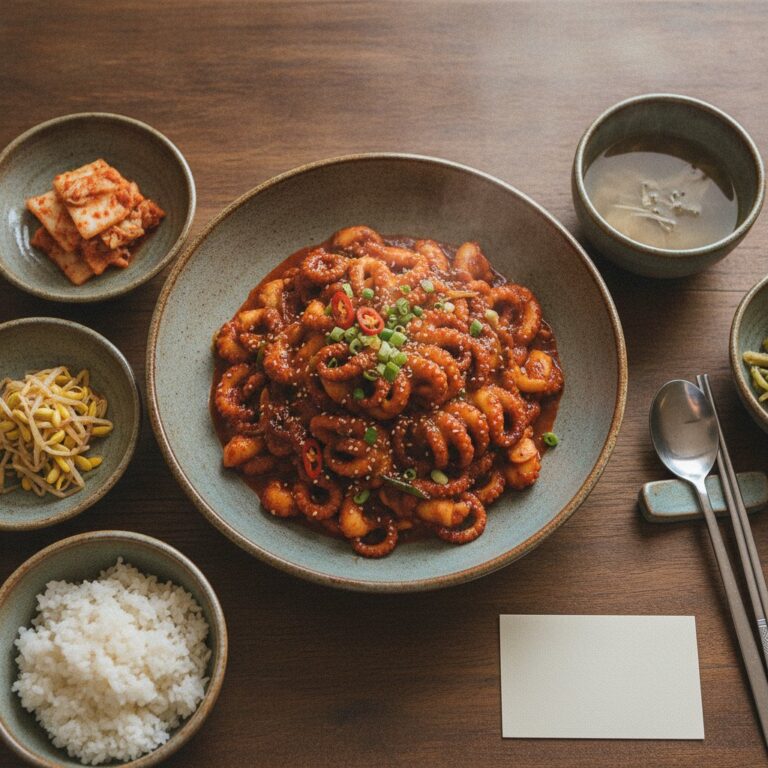
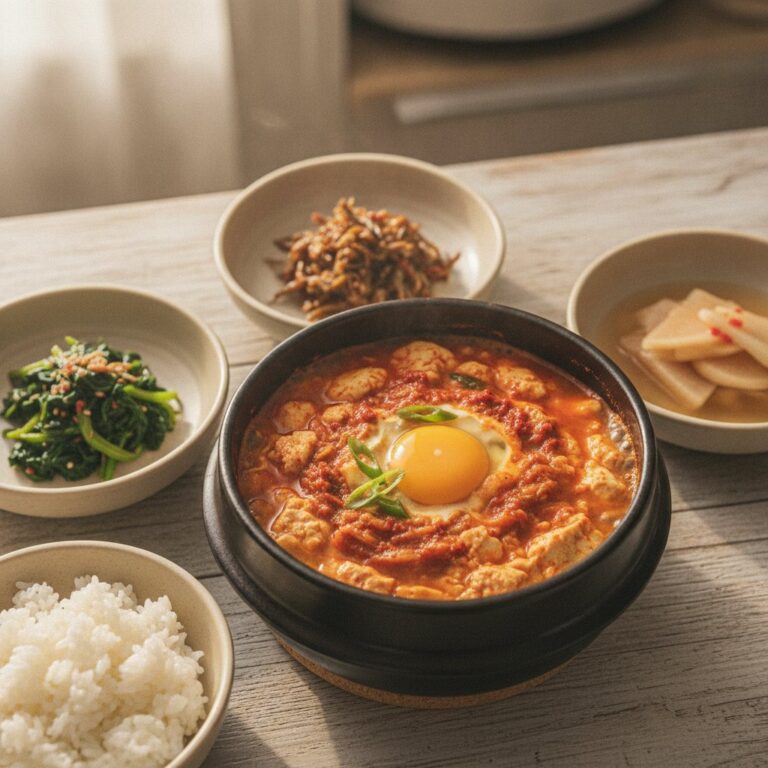
Korean Spicy Braised Flounder (Gajami Jorim) Recipe
This post contains affiliate links. As an Amazon Associate, we earn from qualifying purchases at no extra cost to you.
At a glance
- In shortLearn how to make Gajami Jorim, a comforting Korean spicy braised flounder with radish.
- Best forHome cooks looking to prepare Korean spicy braised fish
- DifficultyEasy
- HeatMedium
- Key pointsPlace radish under the fish to prevent sticking and burning in the pot. · Pre-mix gochugaru with liquids to hydrate the spice and smooth the sauce. · Baste the fish with broth instead of stirring to preserve delicate fillets.
- Heads-upCheck saltiness if using frozen flounder, as it may be pre-treated with brine.
Savoring Gajami Jorim at the Korean Family Table
On cold, windy evenings in Seoul, my grandmother always placed a shallow, dented brass pot right in the center of our kitchen table. Inside, thick cutlets of tender flounder simmered in a shimmering, crimson broth alongside glossy, translucent slabs of sweet radish. The fragrant steam alone—rich with garlic, toasted sesame, soy sauce, and sea kelp—was enough to bring everyone rushing to the table with bowls of hot white rice ready in hand.
This iconic dish is gajami jorim (spicy braised flounder fish), a cornerstone of Korean jipbap (home-style cooking). In Korea, flatfish like flounder or sole are prized for their delicate, naturally sweet flesh and lean texture. When braised long and slow over a bed of summer or winter radish, the fish yields a sweet softness while absorbing every bit of the savory, punchy sauce.
If you have ever felt intimidated by cooking whole fish or worried about fishy smells lingering in your home, this recipe is designed specifically for you. By using easily accessible store-bought flounder fillets or steaks and standard pantry staples, you can recreate this comforting Korean classic right on your home stove without any complicated setup.

Why This Works
- Layering the radish on the bottom: Placing heavy radish slices underneath the flounder creates a natural barrier that prevents the delicate fish skin from sticking or burning on the bottom of the pot, while allowing the radish to cook until buttery-soft.
- Pre-blooming the spice mixture: Mixing the gochugaru (Korean red pepper flakes) with liquid seasonings and warm kelp broth before braising hydrates the pepper flakes, eliminating raw bitter notes and producing a smooth, glossy red sauce.
- Gentle basting instead of stirring: Spooning sauce over the top of the flounder rather than turning the fish keeps delicate flatfish cuts completely intact throughout the simmering process.
🛒 Korean Spicy Braised Flounder Recipe
As an Amazon Associate we earn from qualifying purchases.
Shop Ingredients & Tools →Ingredients
- 600 g (about 1.3 lbs) fresh or thawed flounder fillets or bone-in steaks (gajami)
- 300 g (about 10 oz) Korean radish (mu), peeled and cut into 1/2-inch thick semi-circles
- 150 g (about 1 medium / 5.3 oz) yellow onion, sliced into 1/2-inch wedges
- 3 stalks green onion, cut into 2-inch long pieces
- 1 fresh red chili pepper, sliced diagonally (optional, for heat)
- 1 fresh green chili pepper or jalapeño, sliced diagonally
- 500 ml (about 2 cups) water or quick kelp broth
- 1 piece (about 5×5 cm / 2×2 inches) dried kelp (dashima)
For the Braising Sauce
- 3 tbsp (approx. 20 g) Korean red pepper flakes (gochugaru)
- 3 tbsp (45 ml) dark soy sauce (jin-ganjang, such as CJ or Sempio brand)
- 1 tbsp (15 ml) Korean soup soy sauce (guk-ganjang) or regular fish sauce
- 2 tbsp (30 ml) mirin or cooking rice wine
- 1.5 tbsp (about 4-5 cloves) freshly minced garlic
- 1/2 tsp (about 2 g) finely grated fresh ginger
- 1 tbsp (12 g) white or brown sugar
- 1 tbsp (15 ml) Korean plum syrup (maesil-cheong) or rice syrup
- 1 tsp (5 ml) toasted sesame oil
Substitutions
If you cannot source every specific item from an Asian grocery market, these everyday supermarket alternatives keep the authentic spirit of the dish:
- Flounder (Gajami): You can easily substitute Dover sole, petrale sole, cod, turbot, or swai fillets. Sole is closest in texture to traditional Korean flounder.
- Korean Radish (Mu): Standard Japanese daikon radish is widely available in regular supermarkets and works wonderfully. In a pinch, white turnips can also be used, though they cook slightly faster.
- Korean Plum Syrup (Maesil-cheong): Swap with an equal amount of raw honey or maple syrup mixed with a tiny drop of lemon juice to replicate the subtle fruity acidity.
- Gochugaru: There is no exact direct substitute for authentic Korean red pepper flakes because they offer a unique balance of mild fruitiness and warmth. However, you can use mild red chili flakes or coarse ancho chili powder mixed with a pinch of paprika as a emergency swap.
How to Make It
- Build the rapid kelp broth base: In a wide, shallow pot or deep skillet, combine 500 ml of water, the dried kelp piece, and your prepared radish slices. Bring to a boil over medium-high heat.
Why this step matters: Korean radish takes much longer to soften than delicate flounder. Par-boiling the radish first extracts flavor into the broth while ensuring the radish achieves an almost melt-in-your-mouth tenderness without overcooking the fish later.
- Prepare the red seasoning sauce: While the radish begins to simmer, combine the gochugaru, dark soy sauce, soup soy sauce (or fish sauce), mirin, minced garlic, grated ginger, sugar, plum syrup, and sesame oil in a small bowl. Stir vigorously into a thick, uniform paste.
Why this step matters: Allowing dry gochugaru to hydrate in the liquid seasonings for 5 to 10 minutes unlocks its rich color and rounds out harsh spicy edges before it touches heat.
- Remove kelp and layer the aromatics: After 7 to 8 minutes of boiling, the radish should be slightly translucent around the edges when tested with a chopsticks tip. Remove and discard the dried kelp piece. Scatter the sliced yellow onions evenly over the bed of radish.
Why this step matters: Leaving kelp in boiling water for too long can release bitter, slimy compounds. The onion layer acts as an aromatic cushion for the fish.
- Arrange flounder and apply sauce: Lay your flounder cutlets or fillets in a single layer directly over the onions and radish. Spoon the prepared seasoning paste evenly over the surface of each piece of fish.
Why this step matters: Stacking fish pieces leads to uneven cooking and breakage. Keeping them in a single flat layer allows every portion to absorb heat and flavor uniformly.
- Simmer uncovered initially: Turn heat to medium. Let the pot simmer uncovered for 5 minutes, frequently using a large spoon to scoop up liquid from the bottom and pour (baste) it over the exposed fish.
Why this step matters: Cooking uncovered during the first few minutes allows undesirable raw seafood aromas to evaporate off into the air rather than condensing back down into your pot.
- Cover and reduce: Cover the pot with a tight-fitting lid, turn the heat down to medium-low, and let it braise gently for 10 to 12 minutes. The broth will gradually concentrate into a glossy red sauce as the fish flakes tenderly.
- Add final garnishes and rest: Uncover the pot, scatter the chopped green onions and fresh sliced chilies over the fish, and baste once more with broth. Simmer uncovered for another 2 minutes until the green onions turn vibrant green. Turn off the heat and let the pan rest for 3 to 5 minutes before serving.
Why this step matters: Resting allows the fish protein fibers to relax and soak up the concentrated sauce from the pan bottom.

🛒 Korean Spicy Braised Flounder Recipe
As an Amazon Associate we earn from qualifying purchases.
Shop Ingredients & Tools →Tips from a Korean Kitchen
- Choose a wide, shallow vessel: Always pick a shallow braising pan, wide saute pan, or traditional Korean shallow clay pot (ttukbaegi). Deep, narrow saucepans force you to stack fish layers, which results in smashed fillets.
- Handle salt with care: Commercial frozen flounder fillets are sometimes pre-treated with a light brine solution. Taste your braising sauce before adding extra salt or soy sauce to prevent the final reduction from becoming overly salty.
- Master the gentle basting motion: Never stir this dish with a spatula or spoon after adding the fish. Flounder flesh is very fragile; simply tilt the pan slightly and spoon the red liquid over the top.
- Pair with plain steamed rice: The rich, savory, and spicy notes of gajami jorim are designed to be eaten alongside hot, plain short-grain rice. Pour a few spoonfuls of the pan sauce and soft cooked radish right over your rice bowl.
Storage
In the Fridge: Store leftovers in an airtight glass container for up to 2 days. Seafood dishes are best enjoyed fresh, but cooked braised fish keeps well if chilled promptly.
Reheating: Transfer the fish, radish, and sauce into a small skillet. Add 2 to 3 tablespoons of fresh water or broth to loosen up the jelly-like cold reduction. Cover and warm gently over low heat until steam rises, about 5 to 6 minutes. Avoid microwave reheating as it tends to make tender flatfish tough and rubbery.
Freezing: Freezing cooked gajami jorim is not recommended because the radish loses its appealing texture and becomes watery upon thawing.
FAQ
Can I make gajami jorim with skinless flounder fillets?
Yes! Skinless fillets work wonderfully and cook slightly faster than bone-in cuts. Just keep a close eye on your cook time—reduce the covered braising step to about 7-8 minutes so the delicate skinless fish does not dry out.
Why did my fish fall apart during cooking?
Flounder has very fragile muscular structure. Flipping or stirring the fish with utensils while it boils is the primary reason it breaks apart. Always keep the fish undisturbed on top of the radish bed and use a spoon to pour hot liquid over it instead.
Is gajami jorim extremely spicy?
It has a warm, medium kick, but it is easily adjustable. Korean gochugaru offers rich flavor without intense scorching heat. To make it milder for kids or sensitive palates, simply reduce the gochugaru to 1.5 tablespoons and omit the fresh chili pepper garnish completely.
🛒 Korean Spicy Braised Flounder Recipe
As an Amazon Associate we earn from qualifying purchases.
Shop Ingredients & Tools →More on Soups, Stews & Braises
- Korean Garlic Boiled Whole Chicken (Dak Baeksuk)Learn how to make classic Korean garlic boiled chicken stuffed with sweet glutinous rice in a rich, simple broth.
- Quick Seolleongtang RecipeLearn how to make authentic Korean ox bone soup in under an hour using a simple broth shortcut.
- Spicy Braised Pollock (Kkodari Jorim)How to make kkodari jorim, a traditional Korean spicy braised semi-dried pollock dish with radish.
See every Soups, Stews & Braises post in our Main Dishes guide.
Handy toolsRecipe scaler · Measurement converter · Korean pantry guide · Recipe Finder
More Korean Recipes
- Korean Beef Chop Steak Recipe (Chop Seuteikeu)
- Dweji Duruchigi Recipe: Korean Spicy Pork Stir-Fry
- Sujeobi Recipe: Easy Korean Hand-Torn Noodle Soup
- Crispy Godeungeo Gui: Pan-Seared Korean Mackerel
🛒 Korean Spicy Braised Flounder Recipe
As an Amazon Associate we earn from qualifying purchases.
Shop Ingredients & Tools →