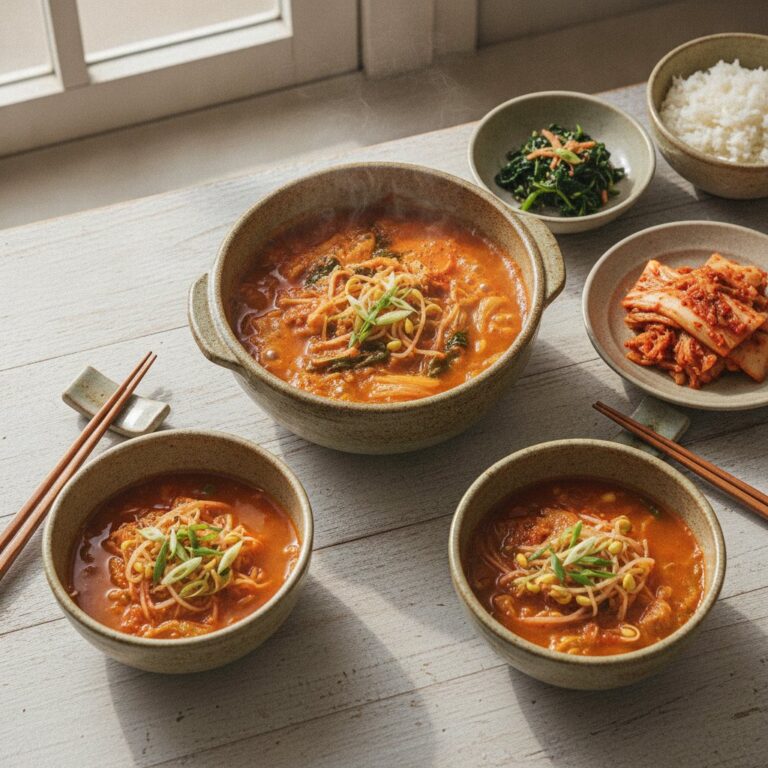
Cozy Kimchi Mandu Jjigae (Korean Dumpling Stew)
This post contains affiliate links. As an Amazon Associate, we earn from qualifying purchases at no extra cost to you.
At a glance
- In shortA quick Korean home-cooking recipe for kimchi dumpling stew made with aged kimchi and frozen mandu.
- Best forHome cooks seeking a quick, satisfying Korean stew
- Time20 min
- DifficultyEasy
- HeatMedium
- Key pointsSauté aged kimchi in sesame oil to soften acidity into deep umami. · Drop frozen mandu directly into boiling broth for the final 6 minutes. · Use well-fermented kimchi aged at least 3 to 4 weeks for optimal flavor.
- Heads-upDo not thaw frozen dumplings before cooking, as thawed wrappers tear easily.
When freezing winter winds blow off the Han River and sweep through Seoul, every apartment building seems to smell like bubbling kimchi broth around six in the evening. On those nights, nobody in my family wants an elaborate dinner that takes two hours to prep. We want something that comes together in twenty minutes using what is already sitting in our refrigerator door and freezer drawer. That is where kimchi mandu jjigae (kimchi dumpling stew) shines.
This dish is the ultimate quick-fix comfort food in Korean home cooking. It combines two of Korea’s most beloved staples: deeply fermented kimchi and plump, juicy mandu (dumplings). The dumplings cook directly in the fiery broth, releasing their savory juices and starchy outer wrappers to create a soup that feels rich, restorative, and instantly warming. Whether you are recovering from a long workday or simply craving authentic Korean flavors, this hearty stew delivers maximum depth with minimal effort.
Why This Works
- Sautéing the aged kimchi first: Frying sour kimchi in a touch of sesame oil breaks down its sharp acidity and transforms raw pungency into deep, caramelized umami before liquid is ever added.
- Timing the dumplings perfectly: Dropping frozen dumplings straight into the boiling broth during the final six minutes ensures tender wrappers and juicy fillings without them dissolving or turning mushy.
- Starch-thickened broth: As the dumpling skins cook, they release just enough surface starch to give the broth a velvety, comforting body without needing artificial thickeners.
- Balanced acidity with kimchi juice: Relying on brine directly from the kimchi jar gives the stew its characteristic tangy bite that cuts through rich pork and savory dumplings.

Ingredients
- Well-fermented kimchi: 300 g (about 2 cups), cut into bite-sized pieces
- Kimchi juice: 120 ml (1/2 cup), strained from your kimchi container
- Pork belly or pork shoulder: 150 g (about 5 oz), sliced into thin, bite-sized strips
- Frozen Korean dumplings (mandu): 8 to 10 pieces (approx. 250 g / 9 oz), pork or vegetable filling
- Medium-firm tofu: 200 g (about 7 oz), sliced into 1/2-inch thick slabs
- Anchovy-kelp stock: 720 ml (3 cups) — or quick stock made with stock coins/powder
- Korean red pepper flakes (gochugaru): 15 g (1 tbsp)
- Korean red pepper paste (gochujang): 15 g (1 tbsp), such as CJ Haandorigae or Sunchang brand
- Minced garlic: 15 g (1 tbsp, about 4 cloves)
- Soup soy sauce (guk-ganjang): 15 ml (1 tbsp) — or regular soy sauce
- Toasted sesame oil: 15 ml (1 tbsp)
- Green onions: 2 stalks, cut diagonally into 1-inch pieces
- Enoki or shiitake mushrooms (optional): 100 g (3.5 oz), trimmed
- Granulated sugar: 2 g (1/2 tsp), optional to balance sourness
Substitutions
If you cannot find every traditional Korean ingredient at your local supermarket, these realistic swaps will keep your stew delicious:
- Anchovy-kelp stock: Substitute with low-sodium chicken broth, vegetable broth, or water mixed with a splash of fish sauce. In Korea, modern cooks frequently use convenient broth tablets (anchovy stock coins) dissolved in hot water.
- Guk-ganjang (Korean soup soy sauce): Substitute with equal parts regular soy sauce and a small pinch of salt, or a few drops of fish sauce for extra depth.
- Korean mandu: Asian-style frozen dumplings, potstickers, or Japanese gyoza from any regular grocery store work wonderfully. Pork and chive or vegetable varieties are ideal.
- Gochugaru: There is no exact match for the sweet-smoky heat of Korean chili flakes, but a blend of 3 parts sweet paprika and 1 part cayenne pepper provides a similar visual color and mild heat.
🛒 Cozy Kimchi Mandu Jjigae
As an Amazon Associate we earn from qualifying purchases.
Shop Ingredients & Tools →How to Make It
- Sauté the pork and kimchi: Heat a medium-sized pot or traditional clay pot (ttukbaegi) over medium heat. Add 15 ml (1 tbsp) of toasted sesame oil, followed by the sliced pork and 300 g of chopped kimchi. Sauté for 4 to 5 minutes until the pork loses its pink color and the edges of the kimchi turn translucent. Why: Caramelizing aged kimchi in fat softens its fibrous texture and converts harsh acetic acid into round, savory flavors.
- Build the spice foundation: Stir in 15 g (1 tbsp) of minced garlic, 15 g (1 tbsp) of gochugaru, 15 g (1 tbsp) of gochujang, and 2 g (1/2 tsp) of sugar if your kimchi is exceptionally sour. Stir constantly for 1 minute to bloom the chili paste in the warm fat. Why: Heating red pepper flakes and paste in oil before adding liquid releases their essential oils, deepening both color and flavor profile.
- Add the liquids and simmer: Pour in 720 ml (3 cups) of anchovy-kelp stock, 120 ml (1/2 cup) of kimchi juice, and 15 ml (1 tbsp) of soup soy sauce. Bring the pot to a rolling boil over high heat, then lower the heat to medium-low, cover with a lid, and let it simmer gently for 10 minutes. Why: A short simmer allows the pork fat and rich kimchi juice to meld into a cohesive, flavorful broth base.
- Add tofu and frozen dumplings: Gently arrange the sliced tofu slabs and 8 to 10 frozen mandu into the bubbling broth. Ensure the dumplings are mostly submerged. Cover and cook over medium heat for 5 to 6 minutes, until the dumpling wrappers turn glossy and translucent and the centers are piping hot. Why: Adding frozen dumplings too early will cause them to absorb too much liquid, overcook, and split open, muddying your broth.
- Finish with fresh greens: Scatter the sliced green onions and mushrooms across the top of the stew. Let them cook uncovered in the bubbling broth for 1 to 2 minutes until just wilted. Remove from heat and serve immediately while boiling hot. Why: Adding delicate fresh vegetables at the very end preserves their vibrant color, crisp bite, and clean aroma.

Tips from a Korean Kitchen
Making a showstopping kimchi mandu jjigae comes down to understanding a few golden rules of Korean home cooking:
- Use old, sour kimchi (shin kimchi): Freshly made kimchi lacks the developed lactic acid that makes stew broth mouthwatering. Look for kimchi that has been sitting in your fridge for at least 3 to 4 weeks, with a sour aroma and softened leaves.
- Do not thaw frozen dumplings beforehand: Dropping dumplings straight from the freezer into hot boiling broth preserves the structural integrity of the wrapper. Thawed dumplings become sticky, fragile, and tear easily when handled.
- Control the broth salt carefully: Store-bought dumplings and kimchi vary significantly in sodium content. Taste your broth right before adding the dumplings, and adjust with additional water or a splash of soy sauce only after the dumplings have finished cooking.
- Skim the top foam: Use a shallow spoon to skim off excess foam or orange fat that floats to the surface while simmering. This simple step creates a clean, bright presentation without losing any savory depth.
Storage
Kimchi mandu jjigae is best enjoyed immediately after cooking when the dumplings are at their peak texture. However, leftovers can be handled easily:
- Refrigerator: Store leftover stew in an airtight container for up to 3 days. Note that cooked dumplings will continue to absorb liquid in the fridge. If you anticipate having leftovers, consider boiling the dumplings separately and adding them to individual serving bowls.
- Freezing: Freezing fully assembled stew with tofu and dumplings is not recommended, as freezing destroys the structural cell walls of tofu (making it rubbery) and turns dumpling wrappers mushy. You can, however, freeze the cooked kimchi broth base for up to 2 months and add fresh dumplings and tofu when reheating.
- Reheating: Warm leftovers in a small saucepan over medium-low heat. Add 60–80 ml (1/4 cup) of fresh stock or water to replenish the liquid absorbed by the dumplings while standing.
🛒 Cozy Kimchi Mandu Jjigae
As an Amazon Associate we earn from qualifying purchases.
Shop Ingredients & Tools →FAQ
Can I make kimchi mandu jjigae vegetarian?
Yes, easily. Omit the pork belly and replace the anchovy stock with a robust mushroom and kelp broth (simmer dried shiitake mushrooms and dried kelp in water for 15 minutes). Use vegetable-filled Korean mandu and check that your kimchi was made without fish sauce or salted shrimp.
What kind of dumplings are best for kimchi mandu jjigae?
Korean pork and vegetable dumplings (gogi mandu) or kimchi dumplings (kimchi mandu) are traditional choices. Frozen potstickers or gyoza with thin-to-medium wrappers work best. Avoid western-style soup dumplings (xlb) or very thick-skinned northern Chinese boiled dumplings, as their dough ratio alters the broth consistency.
Why did my dumplings break open while cooking?
Dumplings split open when boiled too aggressively or cooked for too long. Keep the stew at a steady medium simmer rather than a violent rolling boil after adding the dumplings, and stir gently around the edges of the pot rather than directly poking the dumpling centers.
More on Stews & Hot Pots
- Korean Beef Mushroom Hot PotA guide to making authentic Korean beef mushroom hot pot with homemade kelp stock and sweet mustard sauce.
- Easy Dubu Jjigae RecipeHow to make classic Korean spicy block tofu stew with pork belly in under 30 minutes.
- Shrimp Doenjang JjigaeA quick recipe for making authentic Korean shrimp soybean paste stew in under 30 minutes.
See every Stews & Hot Pots post in our Soups & Stews guide.
Handy toolsRecipe scaler · Measurement converter · Korean pantry guide · Recipe Finder
🛒 Cozy Kimchi Mandu Jjigae
As an Amazon Associate we earn from qualifying purchases.
Shop Ingredients & Tools →More Korean Recipes
- Honghap Tang Recipe (Clear Korean Mussel Soup)
- Comforting Hobak Juk (Korean Sweet Pumpkin Porridge)
- Rich Chadol Doenjang Jjigae (Beef Brisket Stew)
- Easy Seolleongtang Recipe (Korean Ox Bone Soup)
🛒 Cozy Kimchi Mandu Jjigae
As an Amazon Associate we earn from qualifying purchases.
Shop Ingredients & Tools →