Kimchi Storage (김치 보관법) & Sour Kimchi Tips
This post contains affiliate links. As an Amazon Associate, we earn from qualifying purchases at no extra cost to you.
At a glance
- In shortGuide on proper kimchi storage techniques and turning overly sour kimchi into a classic Korean stew.
- Best forHome cooks seeking kimchi storage tips and stew recipes
- DifficultyEasy
- HeatMedium
- Key pointsKeep kimchi submerged under brine in airtight containers in the fridge. · Cold temperatures slow fermentation and help preserve kimchi flavor longer. · Transform overly sour kimchi into flavorful kimchi jjigae stew with pork.
- Heads-upAlways keep kimchi submerged under its brine to prevent mold and drying out.
An Essential Guide to Kimchi Storage and Revival
Annyeonghaseyo, everyone! It’s your friend from Korean Recipe Lab, straight from my kitchen here in Seoul. Today, we’re talking about something absolutely fundamental to Korean cuisine: kimchi (김치). For us Koreans, kimchi isn’t just a side dish; it’s a living, breathing part of every meal. We eat it with rice, with noodles, in stews, as a pancake, even in fried rice! From its crisp, vibrant freshness to its deeply fermented, sour tang, kimchi has a journey, and knowing how to store it properly is key to enjoying every stage.
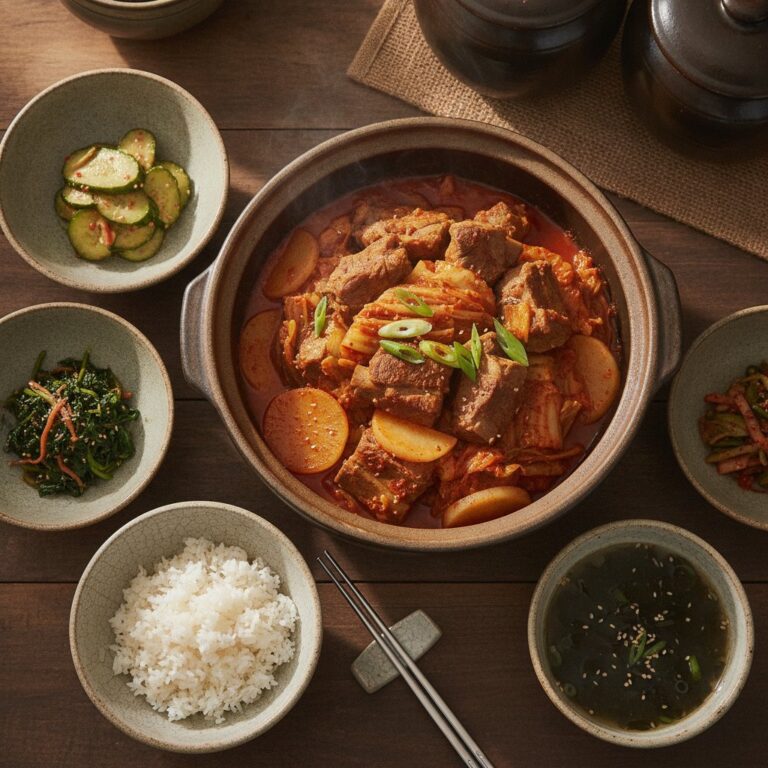
You might be wondering, “My kimchi is getting really sour! Is it still good?” The answer is a resounding YES! In fact, sour kimchi is a treasure. While fresh kimchi is delightful on its own, well-fermented, sour kimchi is the secret ingredient that transforms simple dishes into comforting, soul-warming Korean classics. Think kimchi jjigae (kimchi stew) or kimchi bokkeumbap (kimchi fried rice) – these are often at their best when made with kimchi that’s had a good, long ferment. We Koreans rarely waste kimchi; we embrace its sourness and give it a delicious new life.
Today, I’ll share how we actually store kimchi at home to maximize its shelf life and keep its flavors vibrant, whether it’s for eating fresh or for cooking. And for that beloved sour kimchi, I’ll show you how to turn it into one of Korea’s most iconic and comforting dishes: kimchi jjigae (kimchi stew), so you’ll never let a single precious leaf go to waste again.

Ingredients
For proper kimchi storage and transforming sour kimchi into a delicious stew:
- 1-2 heads (approx. 2-3 kg / 4.4-6.6 lb) baechu kimchi (napa cabbage kimchi), any stage of fermentation
- Airtight containers (glass or BPA-free plastic are best)
- Optional: Plastic wrap or a clean plastic bag (for extra sealing)
- For Kimchi Jjigae (Sour Kimchi Stew):
- 200 g (about 7 oz) fatty pork (belly, shoulder, or neck), cut into bite-sized pieces
- 300 g (about 10.5 oz) very sour kimchi, cut into 1-inch pieces
- 1/2 medium onion, thinly sliced
- 2-3 cloves garlic, minced
- 1-2 tablespoons gochujang (Korean chili paste), to taste (e.g., CJ Haechandle or Sempio)
- 1 teaspoon gochugaru (Korean chili powder), optional, for extra heat and color
- 500 ml (about 2 cups) anchovy broth or vegetable/chicken broth (or just water)
- 1 block (about 300 g / 10.5 oz) firm or extra-firm tofu, cut into 1/2-inch thick slices
- 1-2 green onions, chopped
- 1 tablespoon sesame oil (optional, for serving)
Substitutions
- Airtight Containers: While specialized kimchi containers (often red plastic with a double lid) are popular in Korea, any good quality airtight container will work. Glass jars are excellent for preventing odor absorption.
- Fatty Pork: If pork belly or shoulder is hard to find or not preferred, you can use beef short ribs (for a richer flavor), or even omit meat for a vegetarian version. If omitting meat, consider adding a tablespoon of doenjang (Korean soybean paste) for umami depth.
- Anchovy Broth: This is a traditional base for kimchi jjigae, providing deep umami. If you don’t have it, good quality chicken or vegetable broth works well. You can even use plain water, especially if your kimchi is very flavorful.
- Gochujang & Gochugaru: These are essential for authentic Korean flavor. They are widely available at Asian grocery stores or online (e.g., on Amazon). While there aren’t direct substitutes, if absolutely necessary, you might experiment with a small amount of another chili paste, but the flavor profile will differ significantly.
🛒 Kimchi Storage & Sour Kimchi Tips
As an Amazon Associate we earn from qualifying purchases.
Shop Ingredients & Tools →How to Make It
Part 1: Storing Your Kimchi Properly
Taking a few minutes to store your kimchi correctly will make a huge difference in how long it stays delicious and fresh.
- Transfer from Original Packaging: Many kimchi are sold in plastic bags. Once you open it, immediately transfer the kimchi to a clean, airtight container. Why? The original bag often isn’t truly airtight once opened, allowing air to get in and strong kimchi odors to escape into your fridge. An airtight container prevents this and slows down further fermentation.
- Press Down Firmly: Using clean hands or a spatula, press the kimchi down into the container so that it’s submerged under its own brine. Why? Exposing kimchi to air can lead to mold growth and cause it to dry out and lose its vibrant color and texture. Keeping it submerged is like giving it a protective blanket.
- Layer with Plastic Wrap (Optional but Recommended): For an extra layer of protection, place a piece of plastic wrap directly on top of the kimchi, pressing it down to create an additional seal before putting on the lid. Why? This further minimizes air exposure and acts as a barrier against strong odors. In my family, we sometimes even use a smaller plastic bag (like a produce bag) inverted over the kimchi.
- Refrigerate Immediately and Keep Cold: Place your sealed kimchi container in the coldest part of your refrigerator. Why? Cold temperatures significantly slow down the fermentation process. While kimchi is a fermented food, too much warmth will cause it to sour much faster than desired for raw consumption. Traditional Korean homes often have dedicated kimchi refrigerators that maintain an even colder, stable temperature specifically for this purpose!
- Minimize Opening: Try not to open your kimchi container more than necessary. When you do, use clean tongs or chopsticks to remove only the amount you need. Why? Frequent opening introduces air and fluctuations in temperature, both of which accelerate fermentation and can introduce unwanted bacteria.
Part 2: Transforming Sour Kimchi into Kimchi Jjigae (Kimchi Stew)
Don’t despair when your kimchi gets super sour! It’s calling out for a transformation into this ultimate comfort food.
- Prepare Your Ingredients: Cut your very sour kimchi into 1-inch (2.5 cm) pieces. If using pork, cut it into bite-sized pieces. Slice your onion and mince your garlic. Cut tofu into 1/2-inch (1.25 cm) thick slices and chop your green onions. Why? Prepping everything ensures a smooth cooking process and even cooking. Cutting kimchi into smaller pieces makes it easier to eat in a stew.
- Sauté the Pork: Heat a medium pot or Korean dolsot (stone pot) over medium-high heat. Add the pork and sauté until it’s browned and some of its fat has rendered out, about 5-7 minutes. If your pork is lean, add a tiny bit of neutral oil. Why? Browning the pork adds depth of flavor to the stew and the rendered fat will carry the flavors of the kimchi beautifully.
- Add Kimchi and Aromatics: Push the pork to one side and add the sliced onion to the other. Sauté for about 2-3 minutes until translucent. Then, add the chopped sour kimchi and minced garlic. Sauté everything together for another 5-7 minutes, stirring occasionally. Why? Sautéing the kimchi mellows its intense sourness, caramelizes its flavors, and allows it to release its delicious juices, creating a richer broth base. Cooking the garlic and onion with the kimchi builds a fragrant foundation.
- Build the Stew Base: Add the gochujang and gochugaru (if using) to the pot. Stir well to combine with the sautéed kimchi and pork. Pour in the anchovy broth (or other broth/water). Bring to a boil. Why? Gochujang adds a complex sweet, savory, and spicy kick that perfectly complements the sour kimchi. Gochugaru enhances the color and heat. The broth is crucial for creating the stew liquid and distributing flavors.
- Simmer and Add Tofu: Reduce the heat to medium-low, cover, and let the stew simmer for at least 15-20 minutes, or even longer (up to 30-40 minutes) for deeper flavor, until the pork is tender and the kimchi is very soft. Then, gently add the tofu slices on top. Simmer for another 5-10 minutes, uncovered, until the tofu is heated through. Why? Slow simmering allows all the flavors to meld together beautifully and the kimchi to become fork-tender. Adding tofu later prevents it from breaking apart and allows it to absorb the stew’s flavor.
- Finish and Serve: Taste the stew and adjust seasoning if needed (you might add a pinch of salt or a bit more gochujang if it’s too bland). Stir in the chopped green onions. Drizzle with a little sesame oil right before serving, if desired. Serve immediately with a bowl of hot rice. Why? A final taste adjustment ensures the stew is perfectly balanced for your preference. Green onions add freshness and a slight oniony bite, and sesame oil provides a lovely nutty aroma.

Tips from a Korean Kitchen
- Don’t Overfill Your Containers: Leave a little headspace at the top of your kimchi container. Why? Kimchi continues to ferment and produce gases, especially if it’s new. Leaving space prevents spills and messes as the pressure builds.
- Dedicated Kimchi Utensils: Consider using separate tongs and cutting boards for kimchi. Why? Kimchi’s strong smell and vibrant red color can easily transfer to other foods and stain surfaces. Keeping dedicated tools helps manage this.
- Embrace the Stages: Don’t think of kimchi as “going bad” just because it’s sour. Understand its lifecycle: fresh (geotjeori-like), ripe (perfect for raw eating), and sour (ideal for cooking). Each stage has its culinary purpose!
- Never Waste Sour Kimchi: Truly, in Korea, sour kimchi is a valuable ingredient. If you have too much for stew, try making kimchijeon (kimchi pancakes), kimchi fried rice, or even a simple side dish of stir-fried sour kimchi with pork.
- Press it Down! (Again): This tip is so important, I’m mentioning it twice! Always ensure your kimchi is submerged in its liquid to prevent mold and keep it fresh longer. If there isn’t enough liquid, you can make a simple brine with water and a pinch of salt to top it off.
Storage
How long can you expect your kimchi to last at different stages?
- Freshly Made/Unfermented Kimchi: If very fresh and stored cold, it can stay crisp and mild for about 1-2 weeks. It will gradually begin to ferment.
- Ripe/Moderately Fermented Kimchi: This is the stage most people enjoy eating raw. Stored correctly in an airtight container in the fridge, it can maintain its optimal flavor for 1-3 months. Beyond this, it will continue to get sour.
- Sour/Over-Fermented Kimchi: This kimchi is best for cooking. It can last for 3-6 months or even longer in the refrigerator, becoming increasingly sour and flavorful for stews and stir-fries. As long as there’s no mold, off-smell (beyond just sour), or slimy texture, it’s good for cooking.
- Freezing Kimchi: Yes, you can freeze kimchi! However, it’s generally not recommended for eating raw as the freezing and thawing process can significantly alter its crisp texture, making it softer and sometimes mushy. It’s excellent for cooking purposes, though. Portion it into freezer-safe bags or containers. When thawed, use it directly in stews, fried rice, or pancakes. It can be frozen for up to 6 months.
- Reheating Kimchi Jjigae: Kimchi jjigae often tastes even better the next day! Store leftovers in an airtight container in the refrigerator for up to 3-4 days. Reheat gently on the stovetop or in the microwave until piping hot.
🛒 Kimchi Storage & Sour Kimchi Tips
As an Amazon Associate we earn from qualifying purchases.
Shop Ingredients & Tools →FAQ
How do I know if my kimchi has gone bad, not just sour?
A little sourness is normal and desired! Kimchi has gone truly bad if you see visible mold (fuzzy spots of any color), if it develops a very strong, unpleasant putrid odor (beyond its usual sour funk), or if it becomes slimy and mushy in a way that isn’t typical for fermented vegetables. Trust your senses: if it looks, smells, or feels wrong, it’s best to discard it.
Can I slow down the fermentation process of my kimchi?
The best way to slow down fermentation is to keep your kimchi consistently cold. Store it in the coldest part of your refrigerator. Some people even put small portions in a separate, slightly colder fridge drawer if available. Also, ensuring it’s always pressed down and covered by its brine helps, as exposure to oxygen can accelerate fermentation.
What is a good general-purpose container for kimchi at home?
For home use, glass jars with airtight lids (like Mason jars or clip-top jars) are excellent because they don’t absorb odors or stain. BPA-free plastic containers specifically designed for food storage are also a good option, especially those with strong sealing mechanisms. In Korea, many households invest in specialized red plastic kimchi containers, often with a double-lid system, or even dedicated kimchi refrigerators for optimal long-term storage and temperature control.
More on Homemade Kimchi Basics
- Fresh & Fast Geotjeori (Kimchi) RecipeA quick recipe for Geotjeori, a fresh and unfermented Korean kimchi made in under 30 minutes.
- Baek Kimchi (Mild White Kimchi) RecipeA step-by-step recipe for making mild, non-spicy Korean white kimchi suitable for kids.
- Authentic Vegan Kimchi RecipeA step-by-step recipe for making authentic traditional-tasting kimchi without animal products.
See every Homemade Kimchi Basics post in our Kimchi guide.
Handy toolsRecipe scaler · Measurement converter · Korean pantry guide · Recipe Finder
🛒 Kimchi Storage & Sour Kimchi Tips
As an Amazon Associate we earn from qualifying purchases.
Shop Ingredients & Tools →More Korean Recipes
- Quick Oi Muchim (Cucumber Kimchi) in 15 Minutes
- How to Make Kimchi (김치) at Home: A Small-Batch Beginner’s Guide
- Kimchi Sujeobi: Chewy Korean Hand Pulled Dough Soup
- Crispy Kimchi Mandu Recipe: Pan-Fried Korean Dumplings
🛒 Kimchi Storage & Sour Kimchi Tips
As an Amazon Associate we earn from qualifying purchases.
Shop Ingredients & Tools →