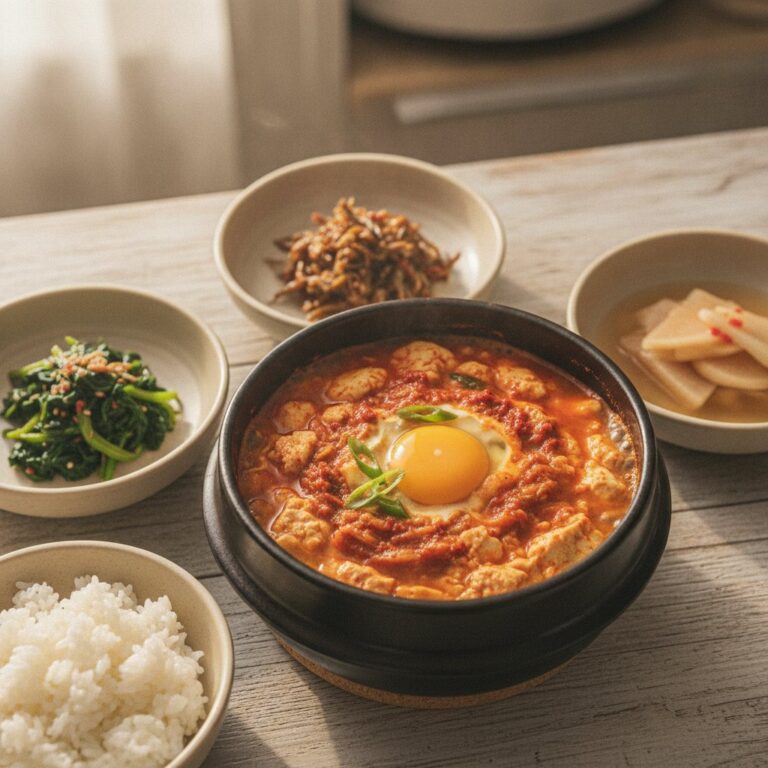
Kimchi Sujeobi: Chewy Korean Hand Pulled Dough Soup
This post contains affiliate links. As an Amazon Associate, we earn from qualifying purchases at no extra cost to you.
At a glance
- In shortA guide to making chewy Korean hand-pulled dough soup in a savory, spicy kimchi broth.
- Best forHome cooks wanting to make Korean hand-pulled dough soup
- DifficultyMedium
- HeatMedium
- Key pointsResting dough with oil relaxes gluten for easy hand stretching. · Sautéing sour kimchi in sesame oil mellows harsh acidity and deepens flavor. · Dropping dough directly into boiling soup cooks it fast and prevents clumping.
- Heads-upRemove dried kelp after 5 minutes of boiling to keep the broth clean and non-bitter.
When heavy rain clouds roll over the Han River and start tapping against my Seoul apartment windows, my mother always pulls a fresh bag of flour and a dark jar of fermented kimchi from the fridge. In Korea, rain calls for two things: crispy savory pancakes or a steaming pot of kimchi sujeobi (hand-pulled dough soup with kimchi). The gentle patter of raindrops outside seems to match the soothing rhythm of tearing soft, stretchy flour dough into a bubbling, crimson broth.
Sujeobi is one of the ultimate classic Korean comfort foods. Long before commercially produced instant noodles filled grocery store shelves, Korean home cooks made this simple, nourishing dish to feed hungry families using pantry staples. At its heart, kimchi sujeobi combines a deeply savory anchovy-kelp broth, punchy sour kimchi, and rustic, tender sheets of hand-torn wheat dough. Each bite offers a satisfying contrast between toothsome dough pieces and tender, tangy vegetables suspended in a rich, spicy soup.
If you have ever felt intimidated by making fresh noodle dough from scratch, this recipe will change your mind. There are no pasta machines, rolling pins, or delicate shaping skills required. In fact, uneven, free-form edges are the mark of a true home-cooked sujeobi. Below, I share my family’s time-tested technique to get silky, chewy dough every single time using basic ingredients you can find at any supermarket.
Why This Works
- A short resting period with a splash of oil: Mixing a tiny bit of vegetable oil into the wheat flour dough and resting it for 30 minutes relaxes the gluten network. This creates an amazingly pliable, stretchy dough that thins out easily between your fingers without snapping or sticking.
- Sautéing sour kimchi in sesame oil: Stir-frying well-aged kimchi before adding liquid caramelizes its natural sugars, mellows out harsh raw acidity, and builds a deep, savory flavor backbone for the broth.
- Simultaneous boiling and dough dropping: Tearing dough sheets directly into a vigorously boiling soup cooks each piece instantly. This seals the outer starch immediately, keeping the broth clear rather than turning it into a heavy, gummy porridge.

Ingredients
- For the Hand-Pulled Dough:
- 240 g (about 2 cups) all-purpose flour
- 120 ml (about 1/2 cup) warm water
- 15 ml (1 tbsp) neutral cooking oil, such as canola or vegetable oil
- 3 g (1/2 tsp) fine sea salt
- For the Anchovy Broth Base:
- 15 g (about 5 to 6 large) dried Korean soup anchovies (gukmul-yong myeolchi), heads and inner black guts removed
- 1 piece (about 10 x 10 cm / 4 x 4 inches) dried kelp (dashima or kombu)
- 1.5 liters (about 6.5 cups) cold water
- For the Soup Base and Vegetables:
- 300 g (about 1.5 cups) well-fermented, sour Napa cabbage kimchi (ssindang-kimchi), coarsely chopped
- 60 ml (about 1/4 cup) aged kimchi brine (kimchi-gukmul)
- 15 ml (1 tbsp) toasted sesame oil (cham-gireum)
- 15 g (1 tbsp) Korean red pepper powder (gochugaru)
- 15 g (1 tbsp) minced fresh garlic (about 3 to 4 cloves)
- 15 ml (1 tbsp) soup soy sauce (guk-ganjang) or fish sauce
- 150 g (about 5 oz) Korean zucchini (aobak) or regular zucchini, sliced into 1/2-cm half-moons
- 100 g (about 1/2 medium) yellow onion, sliced into 1-cm strips
- 2 scallions, diagonally sliced into 3-cm pieces
- 1 fresh red or green chili pepper, thin sliced (optional, for extra heat)
- Salt to taste
Substitutions
While dried anchovies and dried kelp produce the traditional ocean-savory base typical of Korean coastal homes, you can easily substitute 1.5 liters of mild vegetable broth or low-sodium chicken broth from a carton. If you use store-bought broth, skip the anchovy step and start straight from sautéing the kimchi. If you do not have Korean soup soy sauce (guk-ganjang), use regular light soy sauce mixed with a small pinch of sea salt, or substitute a good quality Asian fish sauce for extra umami depth.
How to Make It
-
Knead and rest the dough: In a medium mixing bowl, whisk together the all-purpose flour and sea salt. Pour in the warm water and neutral cooking oil. Stir with a spoon until a shaggy dough forms, then knead with your hands for about 3 to 4 minutes until smooth and elastic. Wrap the dough tightly in plastic wrap or place it inside a sealed bag, then let it rest in the refrigerator for at least 30 minutes.
Why: Kneading hydrates the flour molecules, while the resting period allows the gluten strands to relax fully. Adding a little oil keeps the dough moist and prevents sticky hands when pulling sheets later. -
Simmer the stock base: Combine cold water, cleaned dried anchovies, and dried kelp in a medium stockpot over medium-high heat. Bring to a gentle boil uncovered. Once boiling, remove the kelp piece immediately after 5 minutes. Lower the heat and let the anchovies simmer gently for another 15 minutes, then strain the liquids into a clean bowl and discard the solids.
Why: Leaving dried kelp in boiling water too long releases excess mucilage and bitter compounds, making the soup cloudy and sticky. Removing it early yields a clean, crisp ocean stock. -
Sauté the kimchi and aromatics: Heat the toasted sesame oil over medium heat in your stockpot. Add the chopped fermented kimchi and Korean red pepper powder (gochugaru). Sauté for 3 to 4 minutes until the kimchi turns translucent and soft around the edges.
Why: Sautéing releases aromatic oil-soluble flavor compounds from the pepper powder and mellows out the sharp raw vinegar tang of old kimchi into a rich, sweet-and-savory taste. - Build the soup foundation: Pour the strained anchovy stock and aged kimchi brine into the pot with the sautéed kimchi. Add minced garlic and soup soy sauce. Turn heat up to high and bring the entire pot to a rolling boil.
-
Pull and drop the dough pieces: Keep the soup at an active, steady boil. Take the rested dough out of the fridge. Wet your hands lightly with cold water. Grab a small portion of dough (about the size of a golf ball) and stretch it between your thumbs and forefingers until it is thin enough to see light through it (around 1 to 2 mm thick). Tear off bite-sized pieces and drop them directly into the boiling soup. Stir gently once every minute so pieces don’t stick to the pot bottom. Halfway through pulling dough, add sliced zucchini and onions into the bubbling pot.
Why: Dropping thin dough directly into boiling stock cooks the outer surface instantly, preserving a pleasant chew while preventing individual dough sheets from sticking together in a clump. - Finish and season: After all the dough is pulled in, cook for an additional 3 to 4 minutes. The dough sheets will float to the top and turn glossy and semi-translucent when fully cooked. Toss in sliced scallions and fresh chili peppers. Taste the broth and adjust with a pinch of sea salt or a dash of extra soup soy sauce if needed. Serve hot in individual bowls.
If Something Goes Wrong
| Problem | Likely Cause | Fix |
|---|---|---|
| Dough is stiff and snaps back instead of stretching | Gluten network hasn’t relaxed or dough was kept too cold | Let the dough sit at room temperature for 10-15 minutes to relax gluten before stretching. |
| Broth tastes bitter or overly cloudy | Kelp was boiled too long or anchovy inner guts were left in | Remove kelp after 5 minutes of boiling and ensure anchovy heads and black guts are removed prior to boiling. |
| Dough pieces stick together in a big clump | Soup was not at a full boil or pieces were dropped too thick/fast | Keep broth at an active rolling boil, stretch dough thin (1-2 mm), and drop pieces one by one while stirring occasionally. |
Scaling & Make-Ahead
Make-Ahead: The dough can be kneaded and refrigerated up to 24 hours in advance. Keep it tightly wrapped in plastic wrap so it does not dry out. The anchovy stock can also be strained and stored in the fridge for up to 3 days. Do not tear and cook the dough until right before serving, as cooked dough will absorb broth and soften over time.
Scaling: If doubling this recipe for 4-6 servings, double the dough ingredients and vegetables. Scale the liquid stock base to about 2.25 liters (1.5x) to prevent overfilling the stockpot while maintaining a concentrated broth flavor.
Key Takeaways
- Pliable Dough Technique: Resting wheat dough with a splash of oil relaxes gluten strands, enabling paper-thin hand pulling without tearing.
- Balanced Acidity: Sautéing well-fermented kimchi in toasted sesame oil mellows harsh vinegar notes into a deep, savory broth base.
- Clear, Non-Gummy Soup: Removing dried kelp early and dropping dough sheets directly into a rolling boil ensures a toothsome texture without thick, gummy broth.
More on Kimchi Soups & Stews
- Kimchi Jjigae (Kimchi Stew)A guide to making authentic Korean Kimchi Jjigae using sour kimchi, pork, and anchovy broth.
- Classic Pork Belly Kimchi JjigaeHow to make rich, authentic Korean kimchi stew at home using aged kimchi and pork belly.
- Quick Tuna Kimchi JjigaeHow to make a rich, authentic Korean tuna kimchi stew in twenty minutes using pantry staples.
See every Kimchi Soups & Stews post in our Kimchi guide.
Handy toolsRecipe scaler · Measurement converter · Korean pantry guide · Recipe Finder
More Korean Recipes
- Crispy Kimchi Mandu Recipe: Pan-Fried Korean Dumplings
- Sweet and Savory Stir-Fried Kimchi (Kimchi Bokkeum)
- Fresh Buchu Kimchi Recipe: Quick Korean Garlic Chive Kimchi
- Easy Kimchi Bibim Guksu: Spicy Korean Cold Noodles