Gat Kimchi Recipe: How to Make Spicy Mustard Greens Kimchi
This post contains affiliate links. As an Amazon Associate, we earn from qualifying purchases at no extra cost to you.
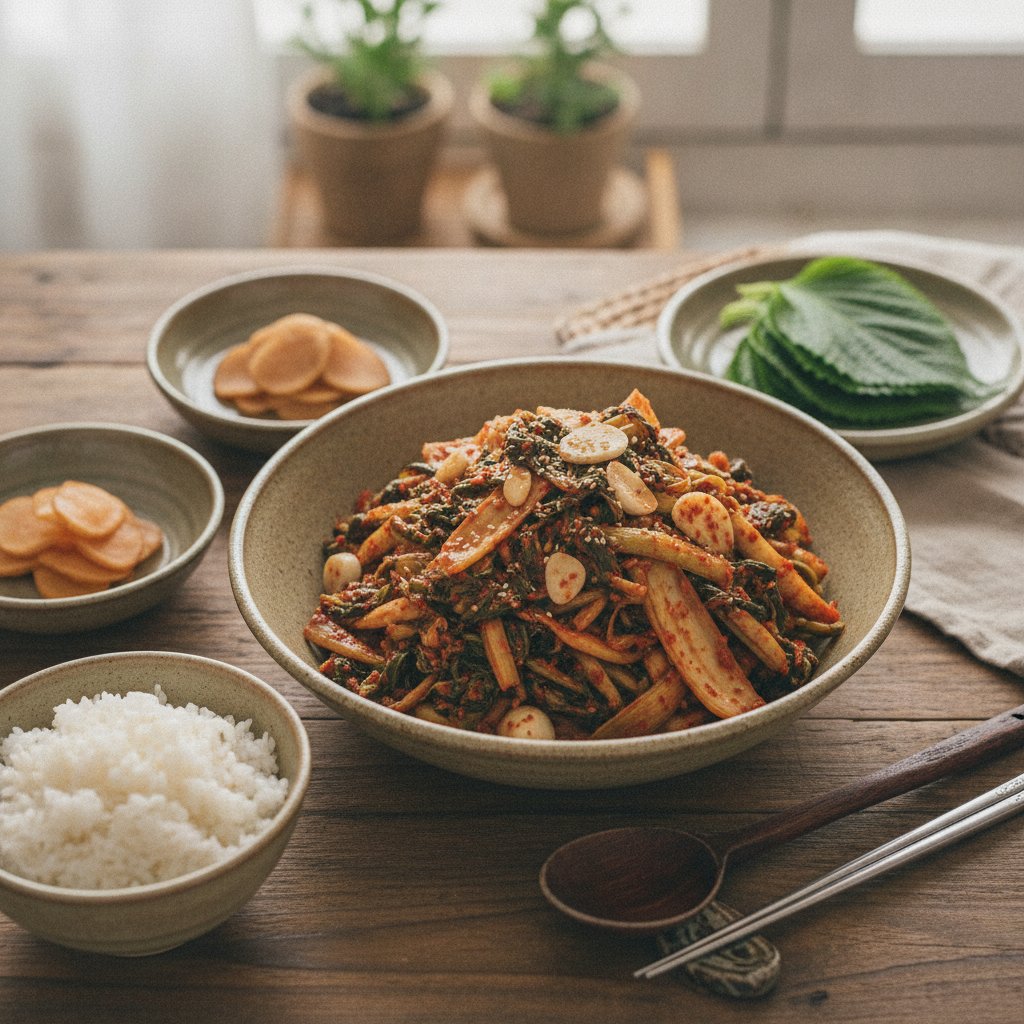
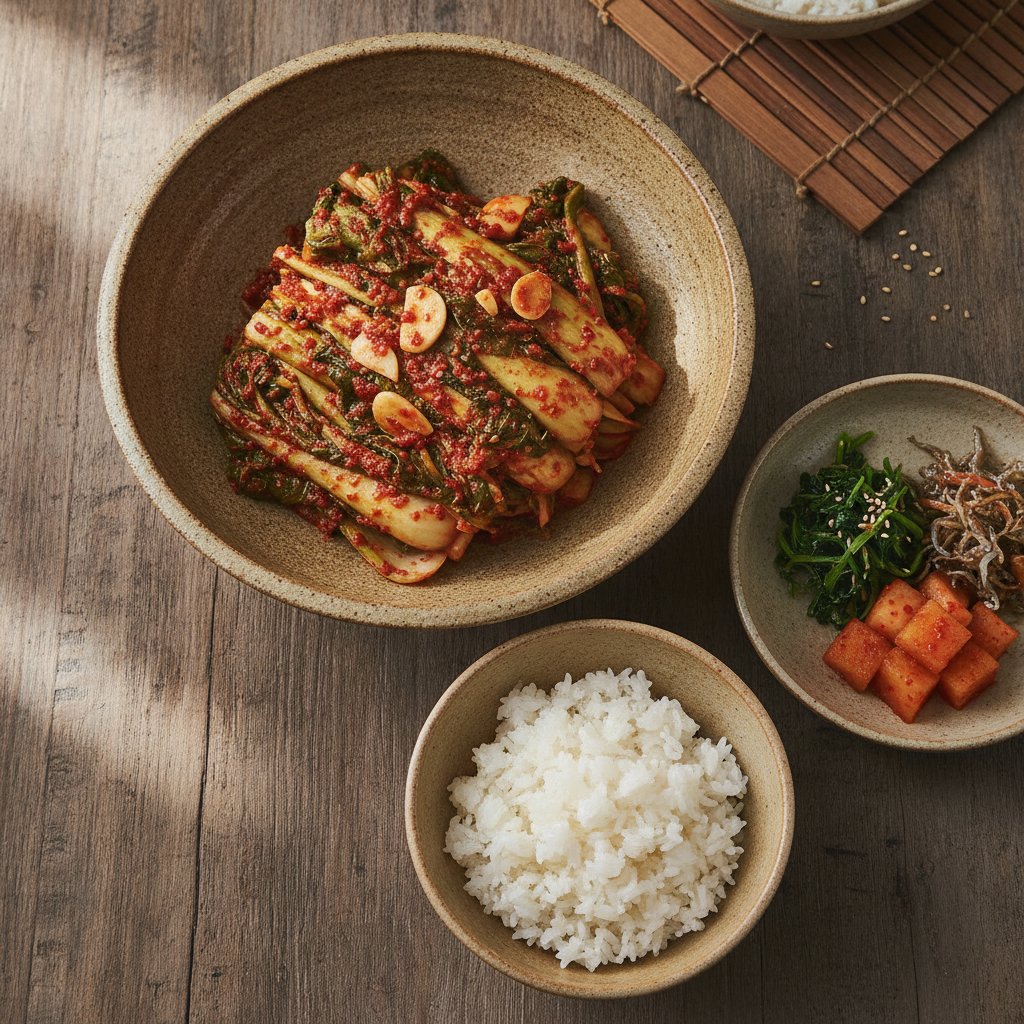
Every late autumn in Seoul, when the crisp chill in the air turns sharp and street vendors begin roasting sweet potatoes on neighborhood corners, my family gets ready for kimchi season. While classic napa cabbage kimchi is our daily staple, gat kimchi (mustard greens kimchi) is the bold, peppery dish we crave alongside hot bowls of steamed rice and freshly grilled pork belly. The mustard greens deliver a sharp, nasal-clearing kick similar to wasabi or horseradish, which softens into a deeply complex, savory umami as the greens ferment.
If you have only ever tried cabbage or radish kimchi, mustard greens kimchi might sound intense. However, in Korean home cooking, this dish is prized precisely for its vivid herbal bite and sturdy texture. Mustard greens hold their crunch exceptionally well during long fermentation, making this one of the most rewarding pickles to keep in your refrigerator through the winter months. This recipe brings that authentic, rustic flavor to your kitchen using straightforward steps and easy ingredient adjustments so you can make it anywhere in the world.
Why This Works
- Targeted salting time: A controlled brine softens the fibrous stems and tempers raw bitterness without rendering the delicate leaves soggy.
- Glutinous rice paste binder: A quick cooked rice flour porridge helps the heavy gochugaru (Korean chili flakes) paste cling evenly to every leaf and stem.
- Dual umami seasoning: Combining anchovy fish sauce with saeujeot (salted fermented shrimp) provides the deep, savory backdrop required to balance the natural mustard heat during fermentation.
Ingredients
- 1 kg (about 2.2 lbs) Korean mustard greens (dolsan gat) or Western green mustard greens
- 100 g (about 1/3 cup) coarse sea salt or Korean gut-jeol-im coarse salt
- 1 liter (about 4 cups) water
- 250 ml (about 1 cup) water or kelp broth, for the paste slurry
- 2 tbsp (about 20 g) glutinous rice flour (sweet rice flour)
- 70 g (about 3/4 cup) gochugaru (Korean chili flakes)
- 3 tbsp (about 45 ml) anchovy fish sauce
- 2 tbsp (about 30 g) saeujeot (salted fermented shrimp), finely minced
- 40 g (about 4 tbsp) minced garlic
- 10 g (about 1 tbsp) finely grated fresh ginger
- 100 g (about 1/2 medium) yellow onion, grated or pureed
- 150 g (about 1 small) Asian pear or crisp sweet apple, peeled and grated
- 1 tbsp (about 15 ml) maesil-cheong (Korean plum syrup) or light brown sugar
- 5 green onions (about 100 g), cut into 2-inch (5 cm) lengths
Substitutions
If you cannot find traditional Korean dolsan gat (which has broad, thick leaves and a signature purple hue near the stems), standard green mustard greens from your local Western supermarket work remarkably well. Choose young, crisp bunches with firm stems rather than overgrown, tough stalks.
For the seasoning, if saeujeot (salted fermented shrimp) is unavailable at your local market, replace it with an additional tablespoon of anchovy fish sauce or fish sauce combined with a teaspoon of white soy sauce. If you need a vegan version, substitute the fish sauce and shrimp with 4 tablespoons of Yondu vegetable seasoning or standard Korean soup soy sauce, plus a pinch of kelp powder for depth.
🛒 Gat Kimchi Recipe
As an Amazon Associate we earn from qualifying purchases.
Shop Ingredients & Tools →How to Make It
- Trim and wash the greens: Trim off the absolute bottom tips of the mustard green roots, keeping the stalks whole. Wash the greens thoroughly in cold water two or three times to remove any residual dirt nestled between the stems. Why: Washing before salting prevents grit from getting trapped inside the leaves as they soften.
- Brine the greens: In a large basin, dissolve 100 g of coarse sea salt in 1 liter of water. Submerge the mustard greens in the salt water, turning them over gently so the brine coats every part. Let them soak at room temperature for about 1.5 to 2 hours, gently flipping the greens halfway through. Why: Salting draws out surplus moisture, seasons the dense stems, and tames the fiery raw bite of the mustard oils so the greens can ferment safely.
- Prepare the rice porridge (pul): While the greens are brining, combine 250 ml of water (or kelp broth) and 2 tbsp of glutinous rice flour in a small saucepan over medium-low heat. Whisk continuously for 3 to 5 minutes until the mixture bubbles and thickens into a glossy, translucent paste. Remove from heat and cool completely. Why: Cooked starch acts as food for beneficial lactic acid bacteria during fermentation and creates a viscous base that binds the chili flakes to the slick leaves.
- Rinse and drain thoroughly: Check the greens; the thickest stems should bend gently without snapping clean. Rinse the salted greens in cold running water three times to wash away excess surface salt. Drain in a colander, pressing down gently with your hands, and let rest for 30 minutes. Why: Leaving too much water on the greens will dilute the seasoning paste and cause the kimchi to become watery and bland over time.
- Mix the kimchi paste: In a large mixing bowl, combine the completely cooled rice porridge, gochugaru, anchovy fish sauce, minced saeujeot, garlic, ginger, grated onion, grated Asian pear, and plum syrup. Stir well and let the paste rest for 15 minutes. Why: Resting allows the dry chili flakes to hydrate, softening their texture and deepening the paste into a rich, crimson color.
- Combine and bundle: Add the sliced green onions to the paste mixture. Working in small batches, wear food-safe kitchen gloves and rub the spicy paste thoroughly over every strand of mustard greens, ensuring even coverage from root to tip. Take 3 to 4 stalks of coated greens, fold the leaf ends back over the stems, and wrap one long leaf around the middle to tie each group into a neat small bundle. Why: Tying the greens into compact bundles prevents them from tangling in the container, traps less air, and makes it simple to pull out single portions when serving.
- Pack and ferment: Pack the bundled greens tightly into a clean glass jar or specialized kimchi container, pressing down firmly with your gloved hands to purge trapped air bubbles. Leave about 2 inches (5 cm) of space at the top for expanding gases. Cover tightly and let sit at room temperature for 24 to 48 hours depending on your kitchen’s temperature. Why: Initial ambient fermentation encourages the friendly microflora to establish themselves quickly before long-term cold storage.
Tips from a Korean Kitchen
Always wait until the rice flour paste has cooled to room temperature before adding your aromatic ingredients. Mixing fresh garlic, ginger, and fruit juices into hot starch will alter their flavor and kill off beneficial microbes necessary for proper fermentation.
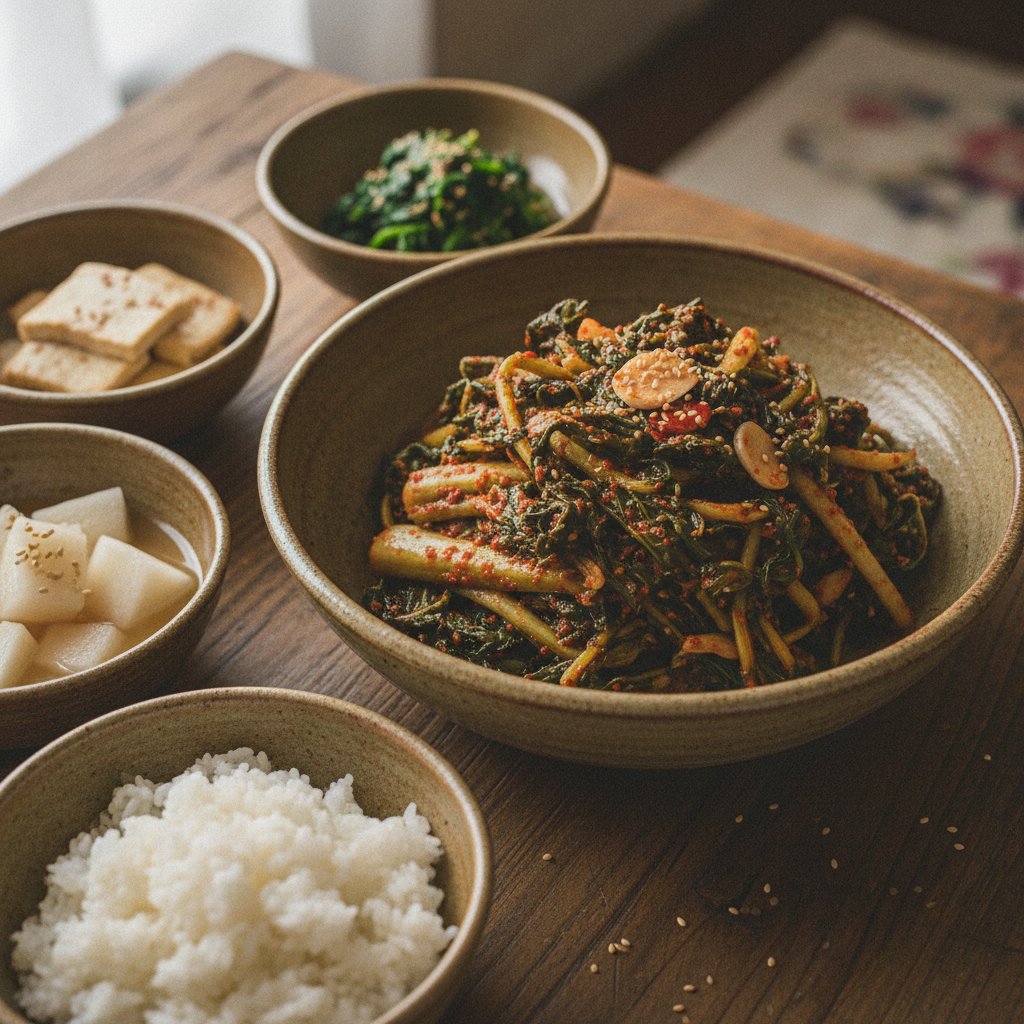
Gat kimchi requires patience compared to quick cabbage salads or cucumber kimchi. Raw mustard greens have a sharp pungency that can feel overwhelmingly spicy on day one. As the kimchi ferments over 2 to 3 weeks in the refrigerator, that harsh edge mellows into a rich, complex sourness with a clean, pleasant finish.
When packing your kimchi into jars, press down hard until the liquid rises to cover the top leaves. Air pockets encourage undesirable mold growth, while submerging the greens keeps the fermentation anaerobic and clean.
Storage
After sitting at room temperature for 1 to 2 days—until you see tiny bubbles forming along the side of the glass or smell a light sour aroma—transfer the container straight to the coldest part of your refrigerator. Mustard greens kimchi ferments slowly and will stay crisp and delicious for 3 to 6 months in cold storage.
Avoid freezing fresh kimchi, as freezing ruptures the cell walls of the raw greens and leaves them limp and watery upon thawing. However, if you have well-aged, very sour gat kimchi, you can chop it up and freeze it in portions specifically for cooking into warm soups, fried rice, or savory stews later on.
🛒 Gat Kimchi Recipe
As an Amazon Associate we earn from qualifying purchases.
Shop Ingredients & Tools →FAQ
How do I know when my mustard greens kimchi is ready to eat?
You can eat it immediately if you enjoy raw mustard heat, but gat kimchi tastes best after at least 2 weeks of cold maturation in the fridge. It is ready when the stems change from bright green to an olive hue, the raw sharpness softens, and a pleasant tangy smell emerges when you open the lid.
Why is my gat kimchi too bitter or pungent?
Mustard greens naturally contain glucosinolates, the chemical compounds responsible for pungency in mustard, horseradish, and wasabi. If your kimchi feels overly sharp or bitter, it simply needs more time to age in the refrigerator. Time and acidity break down these intense flavor compounds.
Can I make this recipe without glutinous rice flour?
Yes. You can substitute glutinous rice flour with an equal amount of regular white rice flour, sweet potato starch, or even all-purpose flour. Alternatively, blend 2 tablespoons of cooked white rice with a splash of warm water until smooth to make a quick porridge base.
More Korean Recipes
- Crunchy & Refreshing Kkakdugi Recipe (Cubed Radish Kimchi)
- Kimchi Storage (김치 보관법) & Sour Kimchi Tips
- Quick Oi Muchim (Cucumber Kimchi) in 15 Minutes
- How to Make Kimchi (김치) at Home: A Small-Batch Beginner’s Guide
🛒 Gat Kimchi Recipe
As an Amazon Associate we earn from qualifying purchases.
Shop Ingredients & Tools →