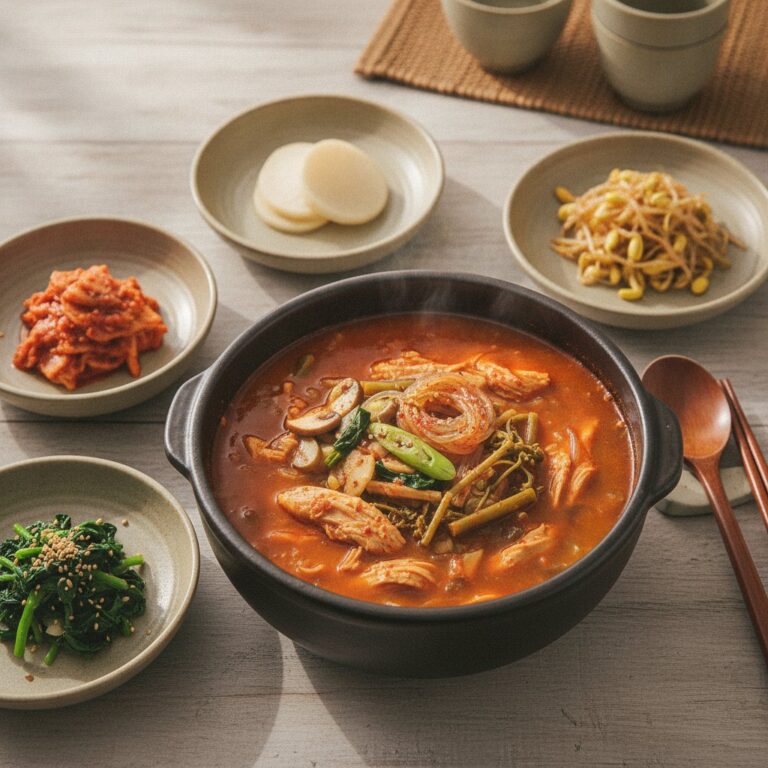
Sogogi Baechu Guk: Korean Beef and Napa Cabbage Soup
This post contains affiliate links. As an Amazon Associate, we earn from qualifying purchases at no extra cost to you.
At a glance
- In shortA recipe guide for making Sogogi Baechu Guk, a simple and restorative Korean beef and napa cabbage soup.
- Best forHome cooks looking to make simple Korean comfort food
- DifficultyEasy
- HeatMild
- Key pointsSear beef with garlic and sesame oil first to build a rich flavor base. · Toast soybean paste in oil before adding liquid to reduce raw sharpness. · Hand-tear napa cabbage along the leaf grain to better absorb savory broth.
- Heads-upAdd Japanese miso in the last 3 minutes of cooking if substituting it for doenjang.
When winter wind blows down from Bukhansan and cuts through the alleyways of Seoul, every home kitchen turns toward simple pot meals. In my house, that almost always means boiling down a pot of sogogi baechu guk (beef napa cabbage soup). It is not a flashy dish designed for restaurant menus or photo shoots. You rarely see tourists lining up for it in Myeongdong. But if you walk into any Korean apartment on a cold Tuesday evening, there is a very high chance this precise broth is bubbling gently on the stove top.
Sogogi baechu guk (beef napa cabbage soup) combines tender slices of beef, sweet winter cabbage, garlic, and rich fermented soybean paste into a light yet deeply savory broth. In Korean home cooking, we classify this as a daily guk—a clear or lightly seasoned soup served alongside a bowl of hot steamed rice and kimchi. It is deeply restorative, incredibly cheap to make, and forgiving enough that even absolute beginners can cook it perfectly on their first try.
The secret to why this home dish tastes so complete comes down to the balance between sweet winter cabbage and savory soybean paste. Napa cabbage harvested in late autumn and winter is remarkably crisp and sugary. When cooked down slowly into broth, those natural sugars melt into the liquid, balancing the earthy, salty punch of Korean soybean paste. Whether you are stocking up at your local Western supermarket or taking your first trip to an Asian grocery store, this step-by-step recipe will help you recreate an authentic Seoul dinner table right in your own kitchen.
Why This Works
- Searing beef with garlic and sesame oil first creates a flavorful base layer right in the pot, eliminating the need to boil beef bones for hours.
- Toasting fermented soybean paste in dry heat before adding water mellows its raw, sharp edges and unlocks deep caramel tones without adding excessive heavy fat.
- Hand-tearing cabbage along the leaf grain ruptures cell walls better than a knife, helping the leaves absorb savory broth while keeping their tender texture.

Ingredients
- 300 g (about 10 oz) beef flank, brisket, or chuck, cut into thin bite-sized slices
- 450 g (about 1 lb) napa cabbage leaves, thoroughly washed
- 1.2 L (about 5 cups) water or basic anchovy-kelp stock
- 2.5 tbsp (about 40 g) Korean soybean paste (doenjang)
- 1 tbsp (15 ml) Korean soup soy sauce (guk-ganjang)
- 1 tbsp (15 ml) toasted sesame oil
- 1 tbsp (8 g) minced garlic
- 2 green onions (scallions), sliced diagonally into short pieces
- 1 green or red chili pepper, thinly sliced (optional, for gentle heat)
- 1/4 tsp black pepper
Substitutions
Finding every traditional Korean condiment in a standard Western market can sometimes be tricky. Here is how you can make sensible swaps without losing the classic comfort-food soul of this dish:
- Korean Soybean Paste (Doenjang): While doenjang (brands like CJ Haandlip or Sempio are widely available on Amazon) is sharper and saltier than Japanese miso, you can substitute Japanese red or dark miso. If using miso, stir it in during the last 3 minutes of cooking rather than the beginning, as miso loses its aromatic fragrance if boiled vigorously for long periods.
- Soup Soy Sauce (Guk-Ganjang): Korean soup soy sauce is saltier and lighter in color than regular soy sauce, designed to season soups without turning broth dark. If you do not have it, use 2 teaspoons of regular soy sauce mixed with 1/2 teaspoon of fine salt, or a splash of fish sauce.
- Beef Cut: Any well-marbled stew beef, ribeye trim, flank, or brisket works beautifully. In a pinch, thinly shaved hot-pot beef or lean ground beef will yield a delicious broth in half the time.
🛒 Sogogi Baechu Guk
As an Amazon Associate we earn from qualifying purchases.
Shop Ingredients & Tools →How to Make It
- Prepare the cabbage by hand: Wash your napa cabbage thoroughly under cold running water. Instead of chopping all of it with a chef’s knife, take each leaf and tear it lengthwise into 2-inch strips, then tear across into bite-sized pieces. Tearing damages the leafy edges irregularly, which creates more surface area for the warm broth to soak into as it simmers.
- Sear the beef and aromatics: Heat your soup pot over medium heat and pour in 1 tablespoon of toasted sesame oil. Add the sliced beef and minced garlic. Stir-fry for about 2 to 3 minutes until the beef loses its pink raw color and turns light brown. Searing the meat directly in sesame oil renders small amounts of beef fat while frying the garlic, building a rich, nutty foundation for your soup.
- Bloom the soybean paste: Push the beef slightly to one side of the pot. Add 2.5 tablespoons of Korean soybean paste directly into the rendered oil at the bottom of the pot. Stir-fry the paste by itself for 45 to 60 seconds over medium-low heat. Toasting fermented soybean paste in oil lowers its raw sharpness and creates a rounder, deeper umami taste.
- Add liquid and bring to a simmer: Pour in 1.2 liters of water or kelp-anchovy stock. Turn the stove to medium-high and bring the mixture to a full boil. As it comes up to heat, light foam or floating fat may rise to the surface; skim this off with a spoon for a cleaner broth appearance.
- Add the napa cabbage: Toss in all your torn napa cabbage. The pot might look completely full or crowded at first, but cabbage contains a high percentage of water and will shrink significantly within minutes. Turn the heat down to medium-low, cover the pot with a lid, and let it simmer gently for 15 to 20 minutes. You want the thick white stems of the cabbage to turn translucent and yield easily when pressed with chopsticks.
- Season and finish: Uncover the pot and taste the broth. Add 1 tablespoon of Korean soup soy sauce and a pinch of black pepper. Stir in the sliced green onions and optional chili pepper. Let the soup boil uncovered for another 2 to 3 minutes so the scallion aroma infuses into the broth. Taste once more and add a tiny sprinkle of salt if you prefer a saltier tone. Turn off the heat.

Tips from a Korean Kitchen
In Korean homes, cooking soup is an intuitive process passed down through observation rather than precise timers. Keep these practical kitchen habits in mind to achieve authentic flavor:
- Use winter cabbage when possible: Late fall and winter napa cabbages are naturally much sweeter and hold their shape better during simmering. If cooking in mid-summer when cabbages carry higher water content and lower sugar, add a tiny pinch of sugar (less than 1/4 teaspoon) to balance the salty soybean paste.
- Strain the soybean paste for a smoother broth: Traditional country-style doenjang contains whole fermented soybeans. If you prefer a completely smooth broth without soft bean bits at the bottom of your bowl, push the soybean paste through a small fine-mesh strainer submerged in the boiling pot using the back of a spoon. In my family, however, we always leave the bits in because that is where the rich texture lives!
- Let it rest before serving: Like many stews and soups, sogogi baechu guk tastes noticeably better 10 to 15 minutes after you turn off the burner. Letting the pot sit allows the sweet vegetable juices and savory broth to equalize across the cabbage leaves.
- Serve the traditional way: Place a large bowl of piping hot soup alongside a bowl of freshly cooked medium-grain white rice and well-fermented napa cabbage kimchi. Many Koreans like to drop half a bowl of rice directly into the broth (a style called gukbap) and eat it with a spoonful of cold kimchi on top.
Storage
Sogogi baechu guk stores remarkably well and often tastes even richer the next day as the cabbage continues to absorb flavor.
- Refrigerator: Allow the soup to cool to room temperature, then transfer it into a airtight container. It keeps fresh in the fridge for up to 4 to 5 days. Reheat on the stove over medium heat until steaming hot.
- Freezer: You can freeze this soup for up to 1 month. Be aware that cabbage texture becomes slightly softer after thawing, but the savory broth flavor remains perfectly intact. Thaw in the refrigerator overnight before reheating on the stove.
- Reheating: If the soup reduces too much and turns a bit salty upon reheating, simply add 2 to 3 tablespoons of fresh water to restore the balance.
🛒 Sogogi Baechu Guk
As an Amazon Associate we earn from qualifying purchases.
Shop Ingredients & Tools →FAQ
Is sogogi baechu guk spicy?
No, standard sogogi baechu guk is a mild, soothing, and non-spicy soup. Its primary flavor comes from savory soybean paste and sweet cabbage. If you prefer a mild kick, you can add a single sliced fresh green chili pepper or a small pinch of Korean chili flakes (gochugaru) during the final boiling step.
Can I make this vegetarian or vegan?
Yes, absolutely. Skip the beef entirely and double the amount of napa cabbage or add sliced king oyster mushrooms and shiitake mushrooms for texture. Swap the beef cooking oil step by sautéing garlic directly in sesame oil, and use a dried kelp (dashima) broth instead of beef or anchovy stock.
Why does my broth taste bitter?
Bitterness usually happens if the soybean paste is burned while searing, or if lower-quality store-bought anchovy stock was boiled too long with dried fish guts left inside. To prevent this, bloomed soybean paste should only be toasted on medium-low heat for under a minute, and home-made anchovy stock should be strained after a maximum of 15 minutes of boiling.
More on Meat & Poultry Soups
- Spicy Beef Hangover SoupA guide to making quick, authentic Korean spicy beef hangover soup at home in under an hour.
- Soondae Gukbap (Korean Sausage Soup)A quick home-cooking recipe for Korean blood sausage soup using store-bought broth and perilla seed powder.
- Dwaeji Gukbap (Korean Pork Soup) RecipeA home-style recipe for Korean pork and rice soup made in under two hours.
See every Meat & Poultry Soups post in our Soups & Stews guide.
Handy toolsRecipe scaler · Measurement converter · Korean pantry guide · Recipe Finder
🛒 Sogogi Baechu Guk
As an Amazon Associate we earn from qualifying purchases.
Shop Ingredients & Tools →More Korean Recipes
- Oi Naenguk Recipe: Chilled Korean Cucumber Soup
- Korean Beef Mushroom Hot Pot (Sogogi Beosot Jeongol)
- Rich Perilla Seed Noodle Soup (Deul Kkae Kalguksu)
- Clear Korean Clam Soup: Easy Jogae Tang Recipe
🛒 Sogogi Baechu Guk
As an Amazon Associate we earn from qualifying purchases.
Shop Ingredients & Tools →