
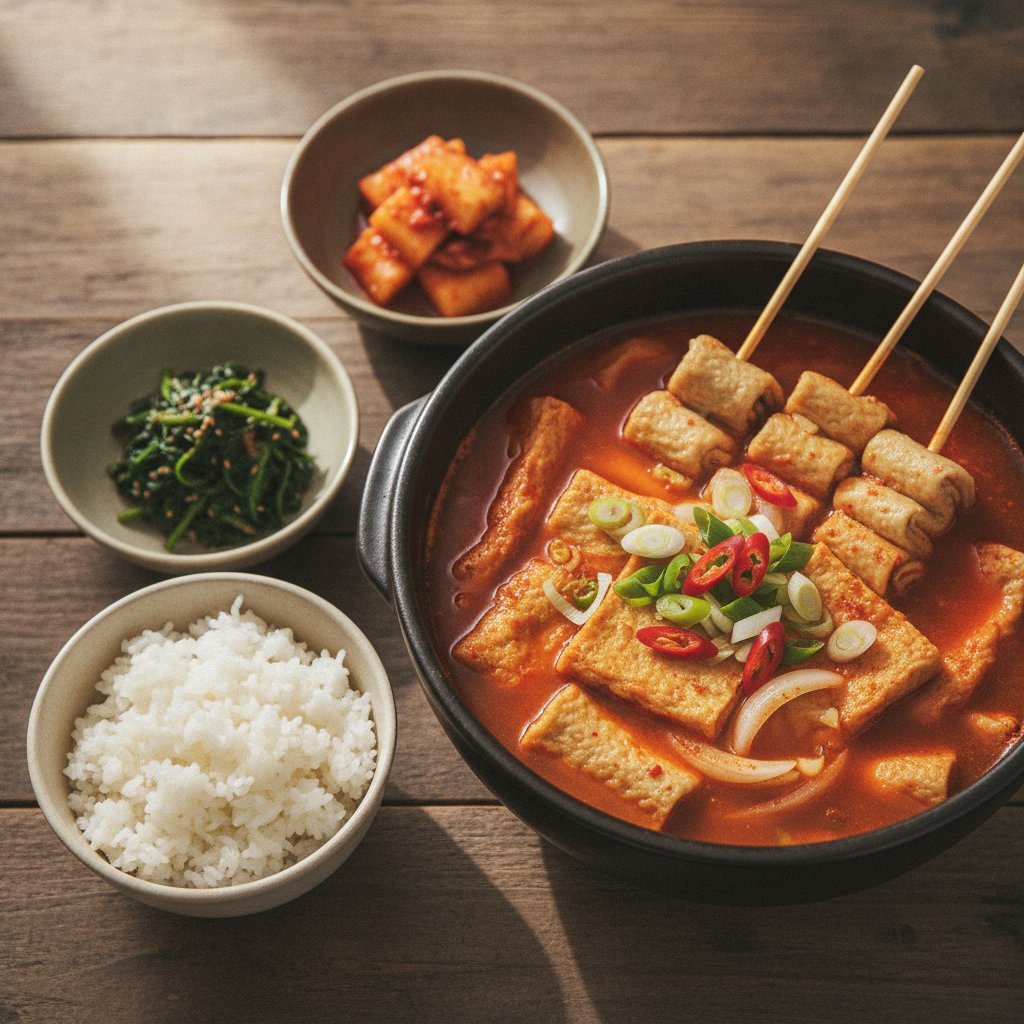
Spicy Korean Fish Cake Soup (Maeun Odeng Tang)
This post contains affiliate links. As an Amazon Associate, we earn from qualifying purchases at no extra cost to you.
At a glance
- In shortA guide to making authentic spicy Korean fish cake soup (maeun odeng tang) at home in under 30 minutes.
- Best forHome cooks wanting a fast, comforting spicy Korean street soup
- Time30 min
- DifficultyEasy
- HeatMedium
- Key pointsRinsing fish cakes in hot water removes excess oil for a cleaner broth. · Boiling anchovy stock uncovered allows harsh fishy odors to evaporate. · Keep broth at a gentle simmer after adding fish cakes to maintain texture.
- Heads-upRemove dried kelp after 8 minutes of boiling to prevent the broth from turning slimy.
On icy winter evenings in Seoul, when the wind coming off the Han River cuts straight through your coat, there is one sound that instantly pulls you off the sidewalk: the soft, rhythmic bubbling of a heavy broth pot inside a pojangmacha (orange street food tent). Steaming billows out into the cold night, carrying the irresistible scent of ocean-rich broth, toasted sesame oil, and sharp Korean chili flakes. Inside, people stand shoulder to shoulder, dipping skewers of bouncy fish cakes into steaming spicy broth and drinking the hot soup directly from paper cups.
This dish is maeun eomuk tang (spicy fish cake soup), also commonly called maeun odeng tang. In Korean homes, we make this whenever the weather turns cold or when we want an effortless, comforting meal that feels like a warm hug from the inside out. While non-spicy fish cake soup is popular with young kids, the spicy version is what adults crave after a long workday. It balances sweet fish cakes against a fiery, deeply savory broth made with radish, dried anchovies, and kelp.
If you live outside Korea, you do not need a street cart stove to make authentic spicy Korean fish cake soup. With a few simple techniques and easily adaptable ingredients from your local Asian market or regular grocery store, you can recreate this Seoul classic in under thirty minutes.
Why This Works
- Double-layered heat: Combining coarse gochugaru (Korean chili flakes) with a small touch of gochujang (Korean chili paste) creates a broth that is fiery on the tip of your tongue yet deep and full-bodied rather than thin or sharp.
- Quick oil-blotting step: Briefly rinsing processed fish cakes with boiling water removes excess surface frying oil, keeping your broth clean, vibrant, and surprisingly light.
- Radish-anchovy stock foundation: Simmering thin slices of Korean radish alongside dried kelp and dried anchovies releases natural sweetness and glutamates, providing a rich savory base that balances the chili heat without needing artificial seasonings.
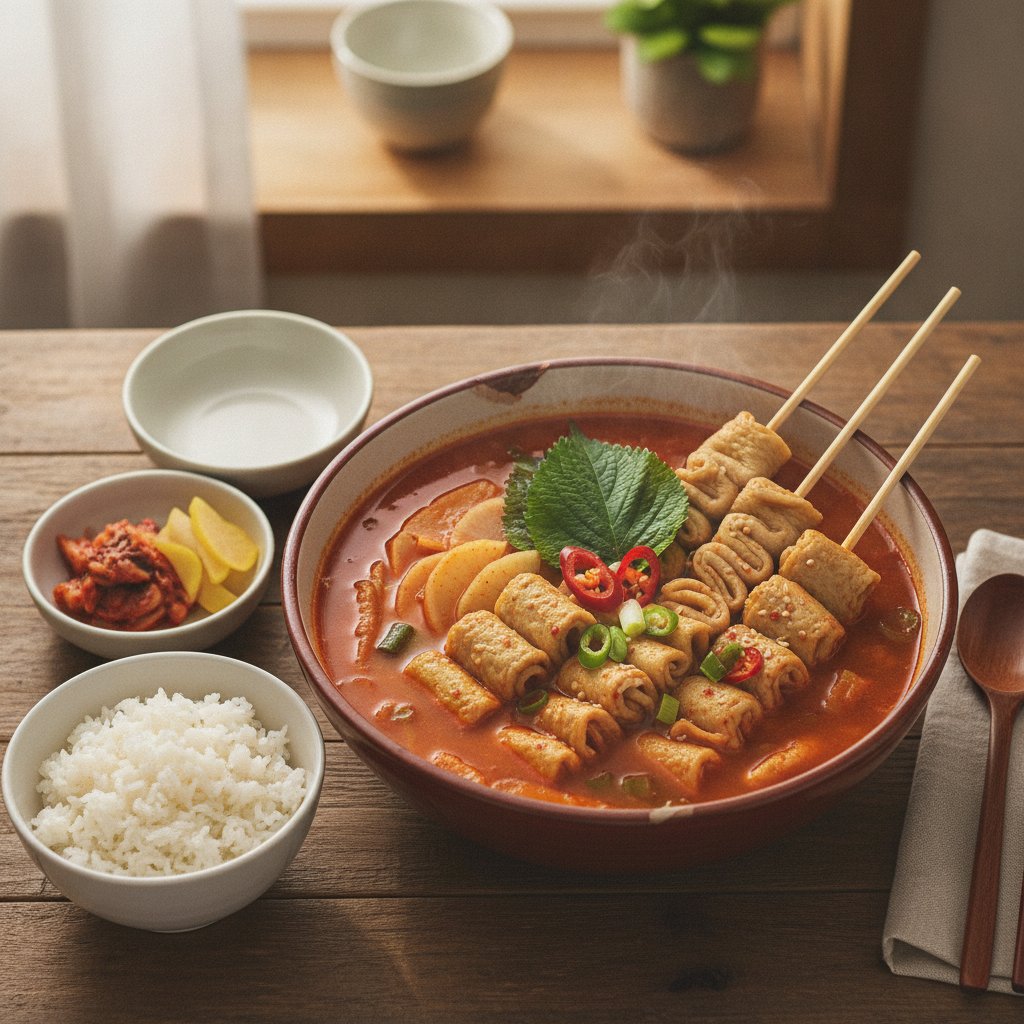
Ingredients
- Fish cakes: 300 g (about 10.5 oz) Korean fish cakes (eomuk or odeng), mixed shapes or flat sheets
- Korean radish: 200 g (about 7 oz) Korean radish (mu), peeled and sliced into thin 1-inch triangles
- Dried anchovies: 15 large dried soup anchovies (gukmulyong myeolchi), heads and inner guts removed
- Dried kelp: 1 piece dried kombu/kelp (dashima), roughly 10×10 cm (4×4 inches)
- Water: 1.5 liters (approx. 6.3 cups)
- Korean chili flakes: 2 tbsp gochugaru (adjust to taste)
- Korean chili paste: 1 tbsp gochujang
- Soup soy sauce: 2 tbsp guk-ganjang (Korean soup soy sauce) or light soy sauce
- Minced garlic: 1 tbsp (about 3-4 cloves)
- Mirin: 1 tbsp cooking rice wine
- Black pepper: 1/2 tsp finely ground
- Green onions: 2 stalks, cut diagonally into 2-inch pieces
- Fresh chilies: 1 red or green chili pepper, thinly sliced (optional, for extra heat)
- Crown daisy or spinach: 50 g (about 1.7 oz) fresh crown daisy (ssukgat) or baby spinach leaves for finishing
- Skewers: 4-6 wooden skewers (optional, for street-food style presentation)
Substitutions
If you cannot source every traditional Korean ingredient, here are reliable options that maintain the heart of the dish:
- Korean Radish (Mu): Replace with Daikon radish, which is widely available in regular supermarkets. In a pinch, peeled turnip or even white globe radishes will provide a similar crisp, refreshing profile.
- Dried Soup Anchovies and Kelp: You can substitute this handmade stock base with 1.5 liters of low-sodium vegetable or chicken broth combined with 1 teaspoon of fish sauce. Alternatively, use Japanese dashi powder (about 1.5 teaspoons).
- Korean Soup Soy Sauce (Guk-ganjang): Standard light soy sauce works fine. Because regular soy sauce is slightly sweeter and less salty than Korean soup soy sauce, add a pinch of sea salt if the broth needs extra punch.
- Fish Cakes: If you cannot find Korean brands like CJ or Samjin, substitute Japanese kamaboko, fried fish balls, or fish cakes from any East Asian market frozen section.
🛒 Spicy Korean Fish Cake Soup
As an Amazon Associate we earn from qualifying purchases.
Shop Ingredients & Tools →How to Make It
- Build the stock base: In a medium pot, add 1.5 liters (6.3 cups) of water, the cleaned dried anchovies, dried kelp piece, and sliced radish. Bring to a rapid boil over medium-high heat uncovered. Why: Boiling uncovered allows harsh fishy aromas from the anchovies to evaporate rather than trap inside the stock.
- Remove kelp and strain broth: Once boiling, let it bubble for 8 minutes, then lift out the kelp piece with tongs. Continue simmering the anchovies and radish for another 7 minutes (15 minutes total stock time). Strain out the anchovies, keeping the radish slices and stock in the pot. Why: Leaving kelp in boiling water for too long releases excess mucilage, making your soup broth slimy and slightly bitter.
- Rinse the fish cakes: Place your fish cakes in a colander and pour a kettle of freshly boiled water over them. Drain thoroughly. Cut flat sheets into long strips and fold them accordion-style onto wooden skewers, or simply slice all fish cakes into bite-sized bite pieces. Why: Pre-packaged fish cakes are deep-fried before frozen. A hot water rinse washes off stale surface oil, ensuring your finished broth stays bright red rather than greasy.
- Bloom the spice paste: In a small bowl, mix together 2 tbsp gochugaru, 1 tbsp gochujang, 2 tbsp soy sauce, 1 tbsp minced garlic, 1 tbsp mirin, and 1/2 tsp black pepper with 2 tablespoons of the warm broth until a smooth paste forms. Why: Hydrating Korean chili flakes in warm liquid before cooking prevents them from floating on top of the broth as dry, unappealing flecks and allows the flavors to melt together smoothly.
- Simmer the spicy broth base: Stir the spice paste into the boiling radish broth. Reduce the heat to medium and cook until the radish turns translucent and tender when pierced with a fork, about 6-8 minutes. Why: Radish requires sufficient simmering time to break down its harsh raw crunch and infuse its natural sugars into the broth.
- Add fish cakes and cook briefly: Drop the skewered or sliced fish cakes into the bubbling spicy soup. Lower heat to medium-low and let simmer gently for 5 to 6 minutes. Why: Fish cakes are already fully cooked. Overboiling them causes them to absorb too much liquid, swell up excessively, and lose their desirable springy, chewy bite.
- Garnish and serve: Toss in the sliced green onions, fresh chilies, and crown daisy or baby spinach. Let simmer for just 60 seconds until the greens wilt slightly, then turn off the heat immediately. Why: Adding delicate aromatics right at the end retains their crisp color and fresh herbal aroma without overcooking them into bitterness.
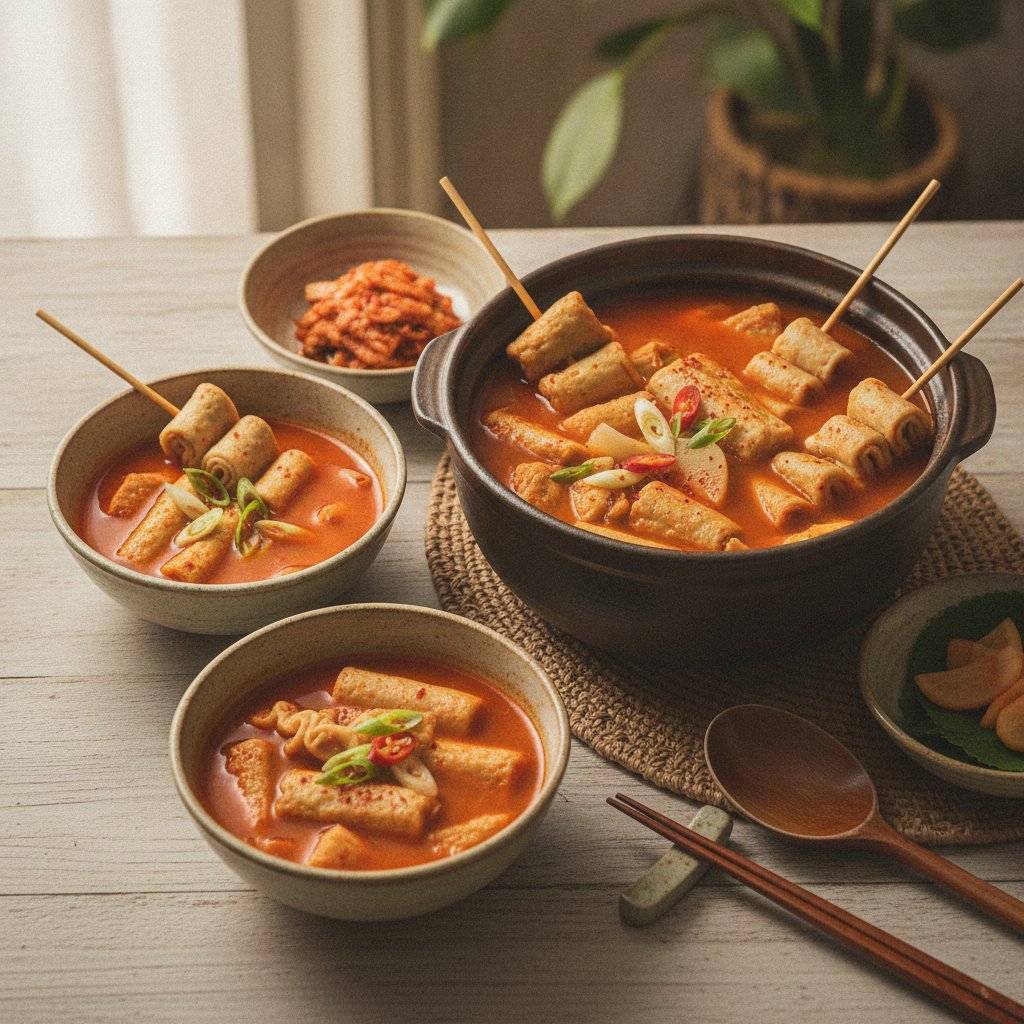
Tips from a Korean Kitchen
In my family, we follow a few simple kitchen rules to turn an ordinary pot of fish cake soup into something truly restaurant-worthy:
- Keep the broth at a bare simmer once fish cakes go in: High rolling boils tear delicate fish cakes apart and cause them to swell up like balloons. Gentle heat keeps their texture firm and bouncy.
- Adjust heat with gochugaru, not gochujang: If you want your soup spicier, add more chili flakes (gochugaru). Do not add extra chili paste (gochujang), as excess paste contains starch that will make your clear street-food style broth thick and murky.
- Fold sheets like a letter: When skewering flat sheet fish cakes (eomuk eopeuk), fold the sheet longwise into thirds like a business letter, then weave the skewer back and forth through the folded strip. This keeps the cake securely on the stick while creating pockets that hold extra broth.
- Taste the radish first: Korean radish varies in sweetness throughout the year. Winter radish is naturally sweet, while summer radish can be slightly peppery. If your stock tastes bitter, add a tiny pinch (1/4 teaspoon) of sugar to balance the broth.
Storage
Spicy Korean fish cake soup is best enjoyed fresh off the stove while the fish cakes are springy. However, leftovers can be handled easily:
- Refrigeration: Store leftover soup in a sealed airtight container in the refrigerator for up to 3 days. Note that fish cakes will continue to absorb broth as they sit in the fridge.
- Reheating: Reheat leftovers in a saucepan over medium-low heat. Add 1/2 cup of fresh water or light stock to replace liquid absorbed by the fish cakes. Warm until steaming hot throughout.
- Freezing: We do not recommend freezing cooked fish cakes because freezing breaks down their delicate emulsified protein structure, making them soft and spongy upon thawing. However, you can make the spicy radish stock in advance, freeze the stock for up to 1 month, and simply drop in fresh fish cakes when you are ready to eat.
🛒 Spicy Korean Fish Cake Soup
As an Amazon Associate we earn from qualifying purchases.
Shop Ingredients & Tools →FAQ
What is the difference between eomuk tang and odeng tang?
They are actually two names for the exact same dish! Eomuk is the native Korean word for fish cake, while odeng comes from the Japanese word oden (a classic Japanese winter stew). While older generations in Korea often say odeng tang, modern Korean recipes and menus increasingly use the pure Korean term eomuk tang. Both refer to this comforting, savory fish cake soup.
Can I make spicy Korean fish cake soup without anchovy stock?
Yes! While traditional Korean home cooks prefer a classic dried anchovy and kelp stock, you can easily use a light vegetable broth or chicken broth. Adding a tiny splash of fish sauce (about 1 teaspoon) will give you that characteristic savory, deep ocean richness without needing to source dried anchovies.
Why do my fish cakes get bloated and mushy when I make this soup?
Bloated fish cakes are caused by overcooking. Fish cakes sold in markets are pre-cooked before packaging. They only need 5 to 6 minutes of gentle simmering in hot broth to warm through and absorb flavor. If you leave them simmering on high heat for 15 or 20 minutes, they will soak up excessive broth, double in size, and lose their signature springy, chewy texture.
More on Seafood & Fish Soups
- Korean Yeonpotang (Clear Octopus Soup)A guide to making traditional Korean clear octopus soup with vegetables and an anchovy-kelp broth.
- Korean Oyster Seaweed Soup (Gul Miyeokguk)A step-by-step recipe for making quick, comforting Korean oyster seaweed soup at home.
- Cold Seaweed Soup Recipe (Miyeok Naenguk)A recipe for making miyeok naenguk, a crisp and refreshing chilled Korean seaweed soup for summer.
See every Seafood & Fish Soups post in our Soups & Stews guide.
Handy toolsRecipe scaler · Measurement converter · Korean pantry guide · Recipe Finder
🛒 Spicy Korean Fish Cake Soup
As an Amazon Associate we earn from qualifying purchases.
Shop Ingredients & Tools →More Korean Recipes
- Gopchang Jeongol Recipe: Spicy Beef Intestine Hot Pot
- Jeonju Style Kongnamul Gukbap Rice Soup
- Gul Miyeokguk: Easy Korean Oyster Seaweed Soup
- Sogogi Beosot Juk: Korean Beef and Mushroom Porridge
🛒 Spicy Korean Fish Cake Soup
As an Amazon Associate we earn from qualifying purchases.
Shop Ingredients & Tools →


