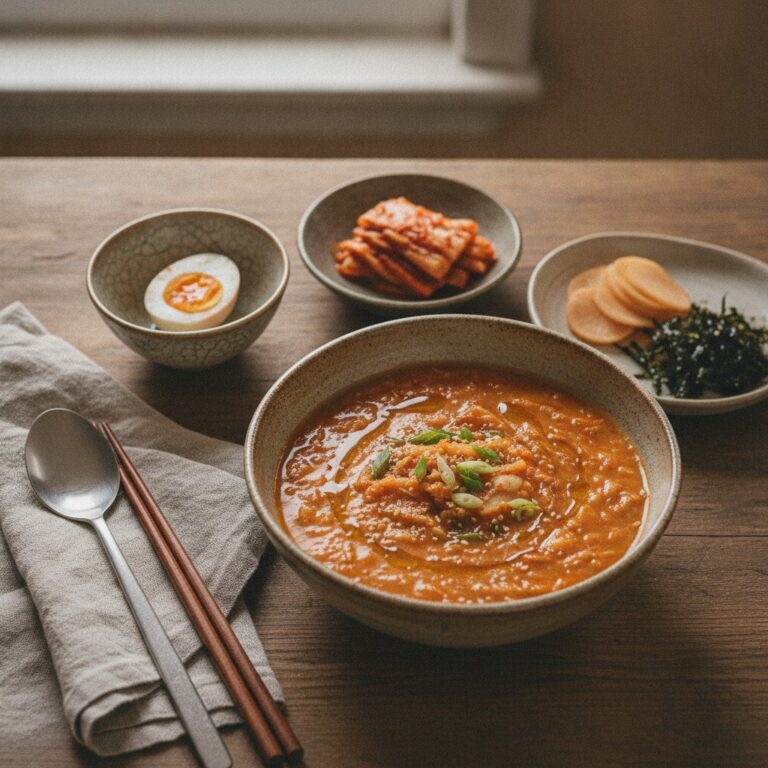
Mu Guk (Korean Radish Soup): A Clean & Simple Beef Broth Recipe
This post contains affiliate links. As an Amazon Associate, we earn from qualifying purchases at no extra cost to you.
At a glance
- In shortLearn how to prepare classic Korean Mu Guk, a clean and comforting beef and radish soup.
- Best forHome cooks wanting to cook traditional Korean soups
- DifficultyEasy
- HeatNot spicy
- Key pointsBrowning beef and radish first releases rich umami and natural sweetness. · Skim foam while boiling to ensure a clear and clean-tasting broth. · Slowly simmer for at least 30 to 40 minutes for tender beef and radish.
- Heads-upIf using regular light soy sauce instead of guk ganjang, add extra salt.
Annyeonghaseyo, food lovers! Welcome back to the Korean Recipe Lab. Today, I’m so excited to share one of the most fundamental and comforting soups from my Korean kitchen: Mu Guk (무국), or Korean Beef and Radish Soup. This isn’t a flashy dish with bold, spicy flavors; instead, it’s a quiet hero, a warm hug in a bowl that Koreans eat almost daily, from breakfast to a late-night supper. If you’ve ever wondered what Koreans actually cook and eat at home, this is it – simple, nourishing, and deeply satisfying.
Mu Guk is a clear, savory soup featuring tender pieces of beef and soft, sweet daikon radish simmered in a light, aromatic broth. In my family, we often say it’s the perfect antidote to a chilly day, a tired mind, or even a rough morning after a little too much soju! It’s incredible how such a simple combination of ingredients can create such a profound depth of flavor. While there are many variations of Mu Guk (some spicy with gochugaru, some with different meats), today I’m sharing the clean and simple, classic beef version – the way most Korean grandmothers, including mine, have made it for generations.
This recipe is designed to bring you that authentic taste using ingredients you can mostly find at your local Western grocery store, with maybe a quick trip to an Asian market for Korean soup soy sauce if you want to be super traditional (but I’ll give you a great substitute!). It focuses on extracting the pure, sweet essence of the radish and the rich umami of the beef, resulting in a broth that is both light and incredibly flavorful. Let’s get cooking!
Ingredients
Here’s what you’ll need to make this comforting bowl of Mu Guk. Remember, fresh ingredients make all the difference!
- 300-400 g (about ⅔ – ¾ lb) beef for soup: Brisket (양지, yangji) is traditional for its richness and texture when slow-cooked. Flank steak, chuck roast, or even boneless short ribs cut into thin slices work beautifully too.
- 500-600 g (about 1.1 – 1.3 lb) Korean radish (무, mu) or daikon radish: Look for a firm, heavy radish with smooth skin.
- 1 tbsp sesame oil (참기름, chamgireum): For sautéing the beef and adding a nutty aroma.
- 3-4 cloves garlic: Minced finely, about 1-1.5 tablespoons.
- 2 tbsp Korean soup soy sauce (국간장, guk ganjang): This soy sauce is specifically made for soups, saltier and lighter in color than regular soy sauce. It adds a unique depth without darkening the broth.
- 1.5-2 L (about 6-8 cups) water: You might need a little more depending on how long you simmer.
- Salt: To taste, for final seasoning.
- Freshly ground black pepper: To taste.
- 2-3 green onions (파, pa): Thinly sliced for garnish and fresh flavor.
Substitutions
Don’t worry if you can’t find every exact ingredient. Here are some easy swaps:
- Korean Radish: If you can’t find Korean radish (which is generally rounder and sweeter than daikon), a regular daikon radish is an excellent substitute. It might be slightly milder, but it will still provide that wonderful sweetness and texture.
- Korean Soup Soy Sauce (Guk Ganjang): This is truly ideal for its specific umami and clean flavor profile. However, if it’s not available, you can use regular light soy sauce (like Kikkoman or Sempio brand) but you’ll need to add a bit more salt to achieve the desired seasoning, as guk ganjang is saltier. Start with 1.5 tablespoons of regular soy sauce and taste as you go.

How to Make It
Making Mu Guk is a gentle process, allowing the ingredients to slowly release their flavors into a harmonious broth. Follow these steps for a truly authentic taste:
-
Prepare the Beef: First, gently rinse your beef under cold water. This helps to remove any impurities and ensures a cleaner broth. Pat it dry with a paper towel. Then, slice the beef into bite-sized pieces, about 2-3 cm (1 inch) cubes or thin strips. The reason for slicing it thin or small is to allow it to cook quickly and absorb the broth’s flavors more efficiently. My grandmother always said, “Don’t be shy with the knife!” for this step.
-
Sauté the Beef: Heat a medium to large pot over medium-high heat. Add the sesame oil. Once shimmering, add the beef slices. Sauté the beef, stirring occasionally, until it’s no longer pink and begins to brown lightly on the edges, about 3-5 minutes. The why here is crucial: browning the beef slightly creates a deeper, richer flavor base through the Maillard reaction, which is essential for a savory broth.
-
Add and Sauté the Radish: While the beef is browning, peel your radish. Then, slice it into about 0.5 cm (¼ inch) thick half-moon or rectangular pieces. Add the sliced radish to the pot with the beef. Continue to sauté for another 5-7 minutes, stirring occasionally. You’ll notice the radish becoming slightly translucent and absorbing some of the beef and sesame oil flavors. This step is important because it allows the radish to soften slightly and release its natural sweetness into the oil, which will then infuse beautifully into the soup later.
-
Build the Broth: Pour in the water, add the minced garlic, and the Korean soup soy sauce (guk ganjang). Stir everything together. Bring the soup to a rolling boil over high heat. As it boils, you might see some foam or scum rise to the surface. It’s a good idea to skim this off with a spoon or a small fine-mesh sieve. Skimming ensures a clear, clean-tasting broth, which is a hallmark of good Mu Guk.
-
Simmer and Tenderize: Once boiling, reduce the heat to medium-low, cover the pot partially (leaving a small gap for steam to escape), and let it simmer for at least 30-40 minutes, or even up to an hour. The goal is for the beef to become fork-tender and the radish to be very soft, almost melt-in-your-mouth. The longer, slower simmer allows all the flavors to meld together and the beef to become incredibly tender. If you rush this step, the beef will be tough, and the radish won’t have released its full sweetness.
-
Final Seasoning: After simmering, taste the soup. This is the moment for adjustment. Add salt to taste, little by little, until it reaches your desired savory level. Sometimes, I add a tiny bit more guk ganjang for extra depth if needed. Remember, you can always add more salt, but you can’t take it away! Aim for a broth that is comforting and well-balanced, not overly salty but distinctly flavorful.
-
Finish and Serve: Stir in the thinly sliced green onions and a generous sprinkle of freshly ground black pepper just before serving. The green onions add a fresh, aromatic finish and a pop of color, while the black pepper enhances the overall warmth and depth of the soup. Ladle the hot Mu Guk into individual bowls and serve immediately with a bowl of freshly cooked rice and any of your favorite banchan (side dishes). Enjoy the simple, profound comfort!

Tips from a Korean Kitchen
To truly master Mu Guk, here are a few insights from a home cook in Seoul:
- Choose Your Radish Wisely: The quality of your radish makes a huge difference. A good Korean radish or daikon should be firm, heavy for its size, and free from soft spots or blemishes. A fresh radish will impart a sweet, slightly peppery note that is essential for Mu Guk. My mother always said, “A happy radish makes a happy soup!”
- Don’t Skip Skimming: I mentioned it in the steps, but it bears repeating. Skimming off the foam that rises during the initial boil is key for a clear, pristine broth. This foam contains impurities from the beef, and removing it results in a much cleaner flavor and appearance.
- The Patience of Simmering: Mu Guk is not a quick soup. The magic happens during the slow simmer. This is when the beef breaks down and becomes tender, and the radish completely softens, releasing all its sweet, earthy goodness into the broth. Resist the urge to rush it; let it gently bubble away.
- Taste, Taste, Taste: Seasoning to taste is paramount. Different brands of soy sauce have varying salt levels, and your personal preference matters. Always taste before adding more salt. The flavor should be balanced – savory from the beef and soy sauce, with a subtle sweetness from the radish.
Storage
Mu Guk is one of those soups that often tastes even better the next day as the flavors continue to meld. You can store leftover Mu Guk in an airtight container in the refrigerator for up to 3-4 days. For longer storage, it freezes beautifully for up to 2-3 months. Just make sure to cool it completely before freezing. To reheat, gently warm on the stovetop over medium heat until simmering, or in the microwave. Add a splash of water if it has thickened too much.
FAQ
Can I make Mu Guk vegetarian?
Absolutely! While the beef provides a rich depth, you can easily make a delicious vegetarian version. Simply omit the beef and instead, start by sautéing the radish with a drizzle of sesame oil. Then, instead of water, use a good quality vegetable broth or mushroom broth (made from rehydrated dried shiitake mushrooms) to simmer the radish. You’ll still get a wonderfully comforting and flavorful radish soup.
What are common side dishes to serve with Mu Guk?
Mu Guk is almost always served with a bowl of freshly steamed white rice. For side dishes (banchan), classic pairings include various types of kimchi (napa cabbage kimchi, radish kimchi), seasoned spinach (sigeumchi namul), stir-fried anchovies (myeolchi bokkeum), or any simple fresh vegetable banchan. The clean flavor of the soup complements almost anything!
My Mu Guk broth is cloudy. What went wrong?
A cloudy broth typically happens for a few reasons. The most common is not skimming the foam and impurities that rise to the surface when the soup first boils. Another reason could be over-stirring the soup vigorously during simmering, which can break down the beef fibers too much and release tiny particles into the broth. Lastly, if the beef wasn’t rinsed adequately before cooking, it can contribute to cloudiness. For a crystal-clear broth, always remember to rinse the meat, skim diligently, and simmer gently.
More on Meat & Poultry Soups
- Gamja Guk (Korean Potato Soup)A recipe for making Gamja Guk, a quick and comforting Korean potato and pork soup.
- Simple Korean Chicken Soup (Dak Gomtang)A simple recipe for making authentic, comforting Korean chicken soup at home.
- Easy Seolleongtang (Korean Ox Bone Soup)A guide to making authentic Korean ox bone soup at home with a rich, milky broth.
See every Meat & Poultry Soups post in our Soups & Stews guide.
Handy toolsRecipe scaler · Measurement converter · Korean pantry guide · Recipe Finder
More Korean Recipes
- Easy Kalguksu (Korean Knife-Cut Noodle Soup) with Shortcut Noodles
- Heartwarming Mandu Guk (Korean Dumpling Soup) with Store-Bought Mandu
- Warm & Comforting Chamchi Kimchi Jjigae (Tuna Kimchi Stew) from Your Pantry
- Gyeran-guk (Korean Egg Drop Soup) in 10 Minutes