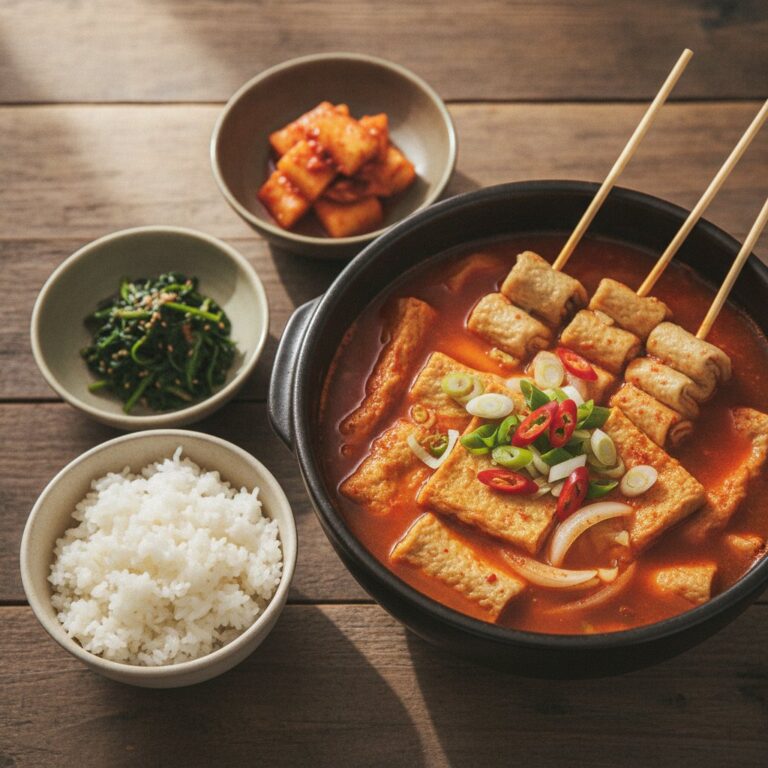
Doenjang Jjigae (Soybean Paste Stew) for Beginners
This post contains affiliate links. As an Amazon Associate, we earn from qualifying purchases at no extra cost to you.
At a glance
- In shortA beginner-friendly recipe for traditional Korean soybean paste stew with flexible ingredient options.
- Best forHome cooks wanting to make Korean soybean paste stew
- DifficultyEasy
- HeatMild
- Key pointsDoenjang provides the essential earthy and umami flavor base for the stew. · Ingredients like pork, tofu, potato, and zucchini add rich flavor and texture. · Flexible broth options include rice water, anchovy-kelp broth, or simple water.
- Heads-upRemove kelp from the broth after 10 minutes to prevent a bitter or slimy taste.
I still remember the comforting aroma that would fill our kitchen almost every morning—the rich, earthy scent of doenjang bubbling gently on the stove. For my family, and countless others across Korea, Doenjang Jjigae (된장찌개), Korean Soybean Paste Stew, was more than just a meal; it was the ultimate comfort food. This daily staple truly embodies the soulful flavors of home, much like a warm hug from your grandma.
Doenjang Jjigae isn’t just a stew; it’s a way of life here. Served bubbling hot in a traditional earthenware pot (tteukbaegi, 뚝배기), usually alongside a steaming bowl of rice and an array of banchan (side dishes), it’s the centerpiece of countless meals. Unlike some of the flashier Korean dishes you might know, doenjang jjigae is humble, robust, and deeply satisfying. It’s savory, a little earthy, packed with umami, and can have a gentle kick of spice depending on how you like it. Think of it as the Korean equivalent of your favorite hearty chili or a deeply flavorful soup that warms you from the inside out.
For those of you living outside Korea, I know finding some authentic Korean ingredients can sometimes feel like a treasure hunt. But don’t worry! This particular doenjang jjigae recipe is specifically designed for beginners and uses ingredients that are either readily available at most Western grocery stores or easily found at your local Asian market or online. We’ll focus on getting that authentic, rich flavor without needing to source every single traditional component. In my family, we make this several times a week, sometimes with pork, sometimes with seafood, or just packed with vegetables. It’s incredibly versatile, and I’m so excited to share my family’s well-loved version with you today. Let’s get cooking!
Ingredients
Here’s what you’ll need to create this comforting stew. Remember, feel free to adjust the quantities slightly to your personal taste – cooking is an art, not just a science!
- For the Broth:
- 7 cups (1.7 liters) water OR ssaltteumul (rice water) – This is the water you get from washing rice! It adds a subtle starchiness and depth that makes a huge difference.
- (Optional) 4-5 large dried anchovies (멸치, myeolchi), heads and guts removed – For that classic umami base, often found dried at Asian markets.
- (Optional) 1-2 pieces dried kelp (다시마, dashima), about 3×3 inches (8×8 cm) – Adds ocean-like depth to the broth.
- For the Stew:
- 200 g (about 7 oz) pork shoulder or pork belly, thinly sliced or diced – Pork adds richness and flavor. You can also use beef brisket or omit for a vegetarian version.
- 1 small onion (about 150 g / 5 oz), diced
- 1 medium potato (about 200 g / 7 oz), peeled and cut into 1/2-inch (1.2 cm) cubes – Potatoes absorb the stew’s flavor beautifully and provide a comforting texture.
- 1 small zucchini (about 150 g / 5 oz), cut into 1/2-inch (1.2 cm) half-moon slices – Korean zucchini (hobak) is traditional, but regular green zucchini works perfectly.
- 1 block (about 300 g / 10.5 oz) firm or extra-firm tofu, drained and cut into 1-inch (2.5 cm) cubes – Tofu soaks up the delicious broth and adds protein.
- 2-3 cloves garlic, minced (about 1 tablespoon)
- 1-2 green onions (파, pa), chopped – For garnish and a fresh bite at the end.
- 1-2 fresh green or red chilies (e.g., Cheongyang pepper (청양고추, cheongyang gochu) or jalapeño/serrano), sliced (optional, for heat)
- Seasoning:
- 3-4 tablespoons doenjang (된장, Korean soybean paste) – The star of the show! Start with 3, add more to taste. Available at Asian markets or online.
- 1/2 – 1 tablespoon gochugaru (고추가루, Korean chili flakes) – Optional, for a mild spicy kick and color. Adjust to your preference.
- 1/2 teaspoon sugar (optional, for balance)
- Salt, to taste (only if needed after doenjang)
Substitutions
While some ingredients are key to the authentic flavor, here are some realistic swaps for items that might be harder to find at your regular Western grocery store:
- Doenjang (Korean Soybean Paste): This is truly the soul of the stew, so a direct substitute is impossible. Please make an effort to find it at an Asian grocery store or online. Brands like Sempio, CJ, or Daesang are widely available and excellent examples.
- Dried Anchovies & Kelp: If you can’t find these or prefer a simpler approach, you can easily use vegetable broth, beef broth, or even just plain water. The rice water (ssaltteumul) will still add good depth even without the anchovy/kelp base.
- Korean Zucchini (Hobak): Don’t stress about finding the exact Korean variety; regular green zucchini works perfectly fine and will yield delicious results.
- Pork Shoulder/Belly: You can easily swap this for thinly sliced beef brisket, short ribs, or even fresh shrimp or clams for a seafood version. For a vegetarian option, simply omit the meat and perhaps add some mushrooms (like shiitake or enoki) for extra umami and texture.
- Cheongyang Chilies: These are quite spicy! If you want a similar kick, a sliced jalapeño or serrano pepper will work. For milder heat, use a mild green chili or omit entirely – the stew is still delicious without it.

How to Make It
Let’s turn these wonderful ingredients into a bubbling pot of Korean deliciousness! Take your time, enjoy the process, and don’t be afraid to taste as you go – that’s how true home cooks create magic.
- Prepare Your Broth (if using anchovy/kelp or rice water):
If you’re using dried anchovies and kelp, combine the water (or rice water) with the anchovies and kelp in a medium pot. Bring it to a boil over medium-high heat, then reduce the heat to a simmer and cook for about 15-20 minutes. The reason we do this is to extract maximum umami and depth from the dried ingredients, which forms the foundational savory base of a truly flavorful stew. Make sure to remove the kelp after about 10 minutes to prevent it from becoming slimy or giving off a slightly bitter taste, and strain out the anchovies when the broth is done. If you’re using plain water or pre-made broth, you can skip this step and just have your liquid ready.
- Prep the Ingredients:
While your broth is simmering (if applicable), prepare all your vegetables and meat. Dice the onion, potato, and zucchini into roughly 1/2-inch (1.2 cm) cubes or slices. Cut the tofu into 1-inch (2.5 cm) cubes. Thinly slice your pork. Mince your garlic and chop your green onions and chilies. Having everything prepped and ready to go (what we call ‘mise en place’ in the cooking world!) makes the cooking process smooth and prevents overcooking any ingredients. Cutting them into similar sizes ensures they cook evenly and are tender at the same time.
- Sauté the Aromatics and Meat:
In a heavy-bottomed pot or a traditional Korean earthenware pot (tteukbaegi) if you have one, add a tiny drizzle of cooking oil (about 1 teaspoon, if needed, as pork belly will render its own fat) over medium heat. Add the diced onion and cook until it starts to turn translucent and slightly softened, about 3-4 minutes. Then, add the sliced pork and cook, stirring occasionally, until it’s lightly browned and no longer pink, about 5-7 minutes. Sautéing the onions first softens them and brings out their natural sweetness, while browning the pork adds a deeper, more complex savory flavor to the stew through the Maillard reaction. This foundational step builds a rich and aromatic base.
- Build the Flavor with Doenjang and Vegetables:
Reduce the heat to medium-low. Add the cubed potatoes and zucchini to the pot. Now, add the doenjang. Use 3 tablespoons to start – you can always add more later. If you like a spicier stew, add the gochugaru here too. Stir everything well to coat the vegetables and pork with the doenjang. Cook for another 2-3 minutes, stirring gently to prevent sticking. Cooking the doenjang directly with the vegetables and meat for a few minutes helps to cook out any raw paste flavor and allows its earthy, savory notes to deepen and meld with the other ingredients before the liquid is added. Potatoes go in early because they take longer to cook through and absorb flavor from the base.
- Add the Broth and Simmer:
Pour in your prepared broth (or water/ssaltteumul). Make sure there’s enough liquid to cover all the ingredients adequately. Bring the stew to a rolling boil over medium-high heat. Once boiling vigorously, reduce the heat to medium-low, cover, and let it simmer for about 10-15 minutes, or until the potatoes are tender when poked with a fork. Simmering allows all the flavors to truly infuse and marry together, and gives the harder vegetables time to become perfectly tender without disintegrating.
- Add Tofu, Garlic, and Chili:
Once the potatoes are tender, gently add the cubed tofu, minced garlic, and sliced chilies (if using). Stir very gently to combine, being careful not to break up the delicate tofu. Continue to simmer for another 5 minutes. Tofu is added later to prevent it from becoming too tough or crumbling from overcooking, while garlic and fresh chilies are added near the end to retain their pungent freshness, aroma, and vibrant color, which would dissipate if cooked too long.
- Taste and Adjust Seasoning:
Give your doenjang jjigae a taste. This is the most important part! Does it need more saltiness and depth? Add another tablespoon of doenjang. Is it a bit too salty or intense? A tiny pinch of sugar can balance the flavors beautifully without making it sweet, or a splash more water/broth can dilute it slightly. Doenjang itself is quite salty, so always taste before adding any extra salt. Adjusting seasoning at the end ensures your stew is perfectly balanced to your palate.
- Finish and Serve:
Remove the pot from the heat. Stir in half of the chopped green onions. Ladle the hot stew into individual serving bowls (or serve directly from the tteukbaegi, being careful as it will be very hot!). Garnish with the remaining green onions. Serve immediately with freshly cooked rice and your favorite banchan. Enjoy the warmth and incredible depth of flavor! Green onions added at the end provide a fresh, vibrant contrast to the rich, savory stew, both visually and texturally.

🛒 Doenjang Jjigae for Beginners
As an Amazon Associate we earn from qualifying purchases.
Shop Ingredients & Tools →Tips from a Korean Kitchen
Having grown up with doenjang jjigae as a constant on our table, I’ve picked up a few insights I’d love to share with you to make your stew truly sing!
- The Doenjang Matters: Just like good quality cheese or olive oil is essential in Western cooking, the quality of your doenjang makes all the difference here. Don’t skimp! Look for “traditional” or “homemade style” doenjang if you can, as these often have a deeper, richer, and more complex flavor. There are also different kinds: some are specifically labeled for stews (찌개용 된장, jjigae-yong doenjang) which are often thicker and more robust, while others are for dipping (쌈장, ssamjang) or general use. For this recipe, a general-purpose doenjang or a stew-specific one is perfect.
- Don’t Skip the Rice Water (Ssaltteumul): I mentioned this in the ingredients, but I can’t emphasize it enough. The slightly starchy water from washing rice (the second or third rinse is best, after the initial quick rinse) is a secret weapon in Korean cooking. It adds a subtle creaminess, helps to thicken the stew slightly, and provides a gentle sweetness and depth that plain water simply can’t replicate. It’s a trick my grandmother always used, and it truly elevates the flavor without much extra effort.
- Layer Your Flavors: Notice how we sauté the onions and pork first, then cook the doenjang with the vegetables before adding the liquid? This isn’t just random. By cooking ingredients in stages, you build layers of flavor. The initial sauté creates a savory and aromatic base, and cooking the doenjang directly with the vegetables before dilution allows its complex notes to develop more fully. This layering is key to a truly rich and nuanced stew, rather than just a simple boiled soup.
- Taste, Taste, Taste! Every batch of doenjang is slightly different in saltiness and intensity, and your preference for seasoning will also vary. Always taste your stew before adding more doenjang or salt. It’s much easier to add more flavor than to dilute too much! A small pinch of sugar can really help to balance out the savory and salty notes without making it overtly sweet, creating a more harmonious flavor profile.
Storage
Doenjang Jjigae is one of those dishes that tastes even better the next day as the flavors continue to meld and deepen! Store any leftovers in an airtight container in the refrigerator for up to 3-4 days. While you can freeze it, the texture of the tofu and potatoes might change slightly upon thawing, becoming a bit spongier or mushier. It’s best enjoyed fresh or after a day or two in the fridge. To reheat, gently warm on the stovetop over medium-low heat until simmering, or in the microwave. You might need to add a splash of water or broth if it has thickened too much overnight.
FAQ
What’s the difference between Doenjang Jjigae and Doenjang Guk (Doenjang Soup)?
Great question! While both use doenjang as their base, the main difference lies in consistency and the amount of ingredients. Doenjang Jjigae (찌개) is a stew. It’s typically thicker, richer, and packed with a higher ratio of solid ingredients (such as vegetables, meat, and tofu) to broth. It’s meant to be a hearty main dish, often shared from a communal pot at the center of the table. Doenjang Guk (국), on the other hand, is a soup. It’s lighter, with more broth and fewer solid ingredients, and is usually served as an individual side soup to complement a meal, similar to how Western meals might include a clear broth soup to start.
Can I make Doenjang Jjigae vegetarian or vegan?
Absolutely! This stew is wonderfully adaptable for various dietary preferences. To make it vegetarian, simply omit the pork. To make it completely vegan, you’ll need to omit the pork and ensure your broth is either plain water, rice water, or a vegetable broth (instead of anchovy broth). You can add extra mushrooms (like shiitake, oyster, or enoki) or more firm vegetables such as radish or squash for added texture and umami depth. The doenjang itself is naturally vegan-friendly, being made from fermented soybeans.
Why is my Doenjang Jjigae bland or bitter?
There are a few common reasons for this! If it’s bland, you might not have used enough doenjang. Remember, doenjang quality and saltiness vary, so you might need more than the recipe suggests – trust your taste buds! It could also be that your broth base wasn’t strong enough – did you use rice water or a flavorful stock? If it’s bitter, it might be due to using too much doenjang without enough other balancing flavors. Also, if you used kelp in your broth, leaving it in for too long (over 10-15 minutes of boiling) can sometimes impart a slightly bitter taste. A tiny pinch of sugar can often help round out and mellow any bitterness while enhancing the overall umami and complexity of the stew.
I hope this journey into Doenjang Jjigae has inspired you to try making this incredible Korean staple at home. It’s truly a taste of Korea, simple yet profound, and endlessly comforting. Until next time, happy cooking, and jal meogeosseumnida (잘 먹었습니다 – I have eaten well)!
🛒 Doenjang Jjigae for Beginners
As an Amazon Associate we earn from qualifying purchases.
Shop Ingredients & Tools →More on Stews & Hot Pots
- Classic Budae Jjigae (Korean Army Stew)A recipe guide for making authentic Korean Army Stew with tips and ingredient substitutions.
- Home-Style Kimchi Jjigae with PorkA guide to making classic Korean kimchi jjigae with pork shoulder and aged kimchi.
- Tuna Kimchi Stew (Chamchi Kimchi Jjigae)A simple recipe for making authentic Korean canned tuna and kimchi stew using accessible pantry ingredients.
See every Stews & Hot Pots post in our Soups & Stews guide.
Handy toolsRecipe scaler · Measurement converter · Korean pantry guide · Recipe Finder
More Korean Recipes
- Clear Broth Galbitang (Korean Beef Short Rib Soup)
- Sundubu Jjigae (Soft Tofu Stew), Restaurant-Style
- Spicy Korean Fish Roe Stew (Altang) Recipe
- Creamy Biji Jjigae (Korean Ground Soybean Stew)
🛒 Doenjang Jjigae for Beginners
As an Amazon Associate we earn from qualifying purchases.
Shop Ingredients & Tools →