Fresh & Fast Kimchi: Geotjeori (겉절이) Recipe in Under 30 Minutes
This post contains affiliate links. As an Amazon Associate, we earn from qualifying purchases at no extra cost to you.
At a glance
- In shortA quick recipe for Geotjeori, a fresh and unfermented Korean kimchi made in under 30 minutes.
- Best forHome cooks seeking an instant Korean kimchi side dish
- Time30 min
- DifficultyEasy
- HeatMedium
- Key pointsGeotjeori is a fresh, unfermented kimchi ready in under 30 minutes. · Cabbage is salted for 15-20 minutes, rinsed, and gently squeezed dry. · The cabbage is tossed with vegetables and a vibrant spicy seasoning paste.
- Heads-upWear gloves to prevent gochugaru from staining your hands or causing a burning sensation.
I still remember the first time I realized kimchi didn’t *have* to involve a days-long wait; it was a revelation that transformed my weeknight cooking. That’s precisely why Geotjeori (겉절이), a fresh, unfermented kimchi, holds a special place in my heart—it delivers all the vibrant crunch and flavor of Korea in under 30 minutes. This quick side dish is perfect for anyone seeking an instant burst of authentic taste without the traditional fermentation.
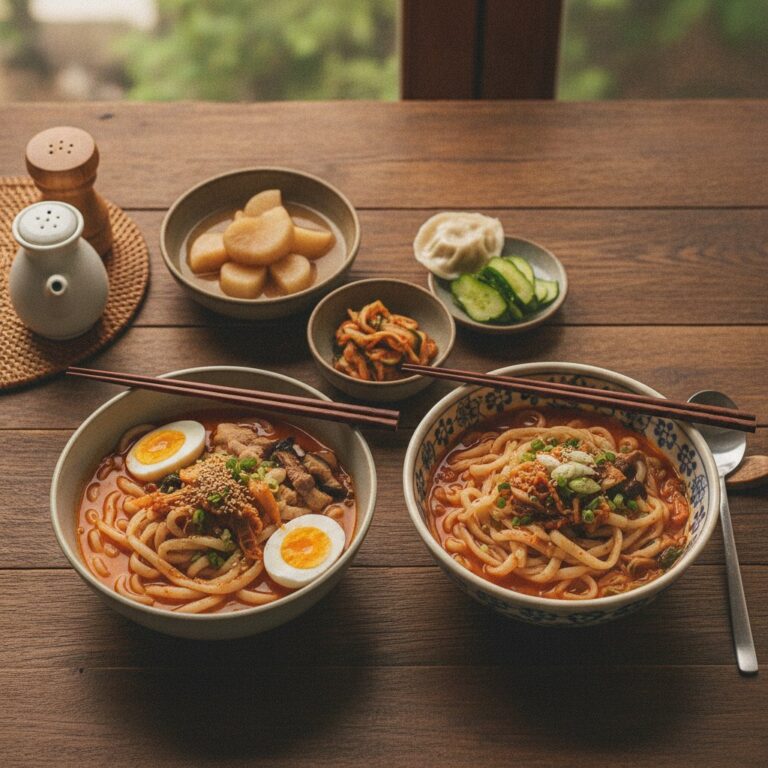
In Korea, while traditional fermented kimchi (kimchi-jjigae or kimchi-bokkeumbap, for example) is a staple, geotjeori holds a special place, especially when we want something fresh and immediate. We often make it to accompany rich, grilled meats like samgyeopsal (grilled pork belly) or a hearty bowl of kalguksu (handmade noodle soup). Its crisp texture and bright, spicy-sweet-garlicky flavors cut through any richness, making every bite incredibly satisfying. It’s also fantastic simply with a warm bowl of rice!
The beauty of geotjeori is its simplicity and speed. Unlike traditional kimchi, which can take days to prepare and weeks to ferment, geotjeori is made to be eaten fresh, right after mixing. This version is designed with our international readers in mind – using ingredients you can find relatively easily, whether at your local supermarket, an Asian grocery store, or online. No need to wait, no complex techniques. Just pure, delicious Korean freshness!
Ingredients
- 1 medium napa cabbage (about 800-900 g or 1.7-2 lbs)
- 2-3 tablespoons coarse sea salt or pickling salt
- 1/2 medium onion (about 100 g or 3.5 oz), thinly sliced
- 3-4 spring onions (scallions), cut into 5 cm (2-inch) pieces
- 1/2 small carrot (about 50 g or 1.8 oz), thinly julienned
For the Geotjeori Seasoning Paste (Yangnyeom)
- 4-5 tablespoons Korean chili flakes (gochugaru, 고춧가루) – adjust to your spice preference
- 3 tablespoons minced garlic (about 4-5 large cloves)
- 1 tablespoon minced fresh ginger
- 2 tablespoons fish sauce (aekjeot, 액젓)
- 1 tablespoon maesil cheong (매실청, Korean plum syrup) or substitute with sugar/honey
- 1 teaspoon toasted sesame oil
- 1 teaspoon roasted sesame seeds
- 1 tablespoon brown sugar or white sugar (if not using plum syrup)
- 2 tablespoons water (or anchovy broth for deeper flavor)
Substitutions
- Napa Cabbage: While napa cabbage is traditional and best, if you absolutely can’t find it, you could experiment with a mix of romaine lettuce and savoy cabbage for a similar crunch, though the flavor profile will differ slightly.
- Coarse Sea Salt: Any coarse salt without anti-caking agents will work. Avoid iodized table salt as it can sometimes leave a metallic taste and over-salt quickly.
- Korean Chili Flakes (Gochugaru): This is quite essential for the authentic color and flavor. If you can’t find it, use a mix of regular chili flakes and a pinch of paprika for color, but be aware the flavor won’t be identical. Gochugaru has a unique fruity-smoky heat. Check Asian markets or online.
- Fish Sauce (Aekjeot): Look for ‘멸치액젓’ (myeolchi aekjeot) for anchovy fish sauce or ‘까나리액젓’ (kkanari aekjeot) for sand lance fish sauce. Any good quality Thai or Vietnamese fish sauce will work as a substitute, but choose one with a clean, mild aroma. For a vegetarian/vegan version, use soy sauce or a vegan ‘fish sauce’ alternative, adjusting saltiness.
- Maesil Cheong (Korean Plum Syrup): This adds a lovely fruity sweetness and depth. If you can’t find it, 1 tablespoon of sugar (brown or white) or honey will work just fine.

How to Make It
-
Prepare the Cabbage: First, take your napa cabbage and cut it lengthwise into quarters, then chop each quarter into bite-sized pieces, roughly 3-4 cm (1.5 inches) squares. Why do we do this now? Unlike traditional kimchi where you salt whole cabbage leaves, for geotjeori, we want quick absorption of salt and easier mixing. Bite-sized pieces also make it easier to eat right away!
-
Salt the Cabbage: Place the chopped cabbage in a large bowl. Sprinkle 2-3 tablespoons of coarse salt over the cabbage. Toss thoroughly with your hands, making sure the salt is evenly distributed. Why salt the cabbage? Salting draws out excess water from the cabbage, which makes it crispier and prevents the kimchi from becoming watery later. It also seasons the cabbage lightly from within. Let it sit for about 15-20 minutes, tossing once or twice in between. You’ll notice the cabbage starting to wilt and release water.
-
Rinse and Drain the Cabbage: After 15-20 minutes, the cabbage should be noticeably softer and more pliable. Transfer it to a colander and rinse it thoroughly under cold running water 2-3 times to remove the excess salt. Why rinse? This step is crucial to prevent your geotjeori from being too salty. After rinsing, gently squeeze handfuls of cabbage to remove as much water as possible. It’s important to get it quite dry, but don’t over-squeeze so much that you bruise the cabbage. Why squeeze out water? Excess water will dilute your seasoning paste and make your geotjeori soggy. Good draining ensures a crisp texture and concentrated flavor.
-
Prepare the Vegetables: While the cabbage is salting, prepare your other vegetables. Thinly slice the onion, cut the spring onions into 5 cm (2-inch) pieces, and julienne the carrot. Why fresh vegetables? These add varying textures, fresh aromatics, and a touch of natural sweetness, enhancing the overall experience of the geotjeori.
-
Make the Seasoning Paste (Yangnyeom): In a separate large bowl (one that will fit all your cabbage later!), combine all the seasoning paste ingredients: gochugaru, minced garlic, minced ginger, fish sauce, maesil cheong (or sugar/honey), sesame oil, sesame seeds, and water (or anchovy broth). Mix everything together until you have a thick, vibrant paste. Why mix the paste separately? This ensures all the flavors are well combined before they touch the cabbage, leading to a more evenly seasoned final product.
-
Combine and Mix: Add the well-drained napa cabbage, sliced onion, spring onions, and julienned carrot to the bowl with the seasoning paste. Now, put on some food-safe gloves (trust me, your hands will thank you!) and use your hands to thoroughly mix everything together. Why use hands? This is the traditional and most effective way to gently massage the seasoning into every leaf and crevice of the cabbage without bruising it. It ensures even coating and proper distribution of flavors. Mix until every piece of cabbage and vegetable is beautifully coated in the bright red paste.
-
Taste and Adjust: Take a small piece of geotjeori and taste it. This is your moment to adjust! Why taste now? Because it’s meant to be eaten fresh, the flavor profile is immediate. If it needs more saltiness, add a tiny bit more fish sauce. If you prefer it sweeter, add a pinch more sugar or plum syrup. Spicier? A dash more gochugaru. The perfect geotjeori is balanced to your personal preference.
-
Serve Immediately: Transfer your freshly made geotjeori to a serving dish. It’s ready to eat right away! Enjoy its incredible crunch and fresh, spicy flavors. Why serve immediately? Geotjeori is at its peak freshness and crispness the moment it’s made. The longer it sits, the softer the cabbage will become, and it will start to slowly ferment, changing its flavor profile.

🛒 Fresh & Fast Kimchi
As an Amazon Associate we earn from qualifying purchases.
Shop Ingredients & Tools →Tips from a Korean Kitchen
- Wear Gloves for Mixing: This isn’t just for hygiene; gochugaru (chili flakes) can stain your hands and cause a burning sensation, especially if you have any cuts. Food-safe gloves are your best friend when making kimchi.
- Don’t Over-Salt the Cabbage: While salting is important, using too much salt or salting for too long can make your geotjeori excessively salty even after rinsing. Always taste a small piece after rinsing to gauge its saltiness before adding the paste. If it’s still too salty, rinse it again quickly.
- Squeeze Cabbage Properly: After rinsing, really take the time to squeeze out excess water. This is key for a crispy texture. However, don’t wring it out so violently that you damage the cabbage leaves. A gentle, firm squeeze is enough.
- Adjust to Your Taste: Geotjeori is very forgiving! Don’t be afraid to adjust the seasoning paste. If you like it spicier, add more gochugaru. Sweeter? More plum syrup or sugar. Garlic lover? Add an extra clove! The beauty of home cooking is making it your own.
Storage
Geotjeori is truly best enjoyed fresh, ideally on the day it’s made, or within 1-2 days. Store any leftovers in an airtight container in the refrigerator. After a couple of days, the cabbage will start to soften, and the flavors will begin to ferment, turning it into a more traditional, slightly sour kimchi. It does not freeze well, as freezing will destroy its crisp texture. There’s no need for reheating; geotjeori is always served cold as a side dish.
FAQ
Can I make this vegetarian or vegan?
Absolutely! The main non-vegan ingredient in traditional geotjeori is fish sauce (aekjeot). You can easily substitute this with an equal amount of soy sauce for saltiness, or even better, a vegan ‘fish sauce’ alternative found in many Asian markets or online. Ensure your gochugaru is pure chili flakes and doesn’t contain any hidden animal products (most are naturally vegan).
What’s the difference between geotjeori and regular kimchi?
The main difference lies in fermentation. Geotjeori (겉절이) is fresh kimchi, made to be eaten immediately. It has a vibrant, crisp texture and a bright, spicy-sweet-garlicky flavor profile. Traditional Kimchi (김치), on the other hand, undergoes a fermentation process, often for days or weeks. This fermentation gives it a distinct sour, tangy, and complex umami flavor, and a softer texture. Geotjeori is the ‘instant gratification’ version!
What are the best dishes to pair geotjeori with?
Geotjeori is incredibly versatile! It pairs perfectly with rich, grilled meats like samgyeopsal (pork belly) or galbi (beef ribs), as its fresh, spicy kick cuts through the fattiness. It’s also fantastic with simple dishes like a warm bowl of plain rice, bibimbap, or kalguksu (noodle soup). Some Koreans even enjoy it with instant ramen to add a fresh crunch. Think of it as a vibrant, fresh salad that brings any meal to life!
🛒 Fresh & Fast Kimchi
As an Amazon Associate we earn from qualifying purchases.
Shop Ingredients & Tools →More on Homemade Kimchi Basics
- Baek Kimchi (Mild White Kimchi) RecipeA step-by-step recipe for making mild, non-spicy Korean white kimchi suitable for kids.
- Authentic Vegan Kimchi RecipeA step-by-step recipe for making authentic traditional-tasting kimchi without animal products.
- Kimchi Yangnyeom (Kimchi Paste)Learn how to make versatile Korean kimchi paste with step-by-step instructions and ingredient substitutions.
See every Homemade Kimchi Basics post in our Kimchi guide.
Handy toolsRecipe scaler · Measurement converter · Korean pantry guide · Recipe Finder
More Korean Recipes
- Crunchy & Refreshing Kkakdugi Recipe (Cubed Radish Kimchi)
- Kimchi Storage (김치 보관법) & Sour Kimchi Tips
- Quick Oi Muchim (Cucumber Kimchi) in 15 Minutes
- How to Make Kimchi (김치) at Home: A Small-Batch Beginner’s Guide
🛒 Fresh & Fast Kimchi
As an Amazon Associate we earn from qualifying purchases.
Shop Ingredients & Tools →