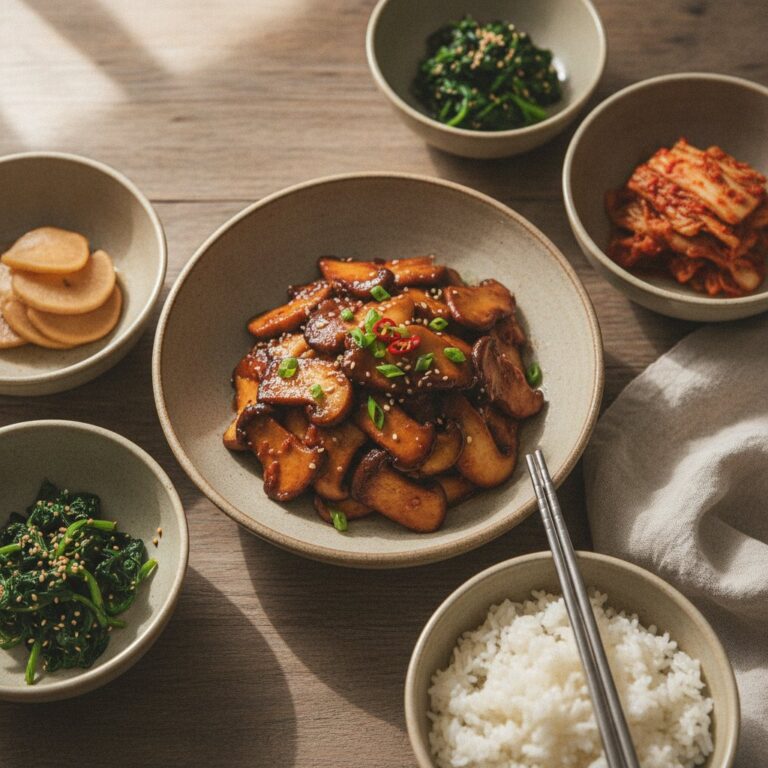
Authentic Bulgogi (불고기) Recipe: Your Go-To Korean BBQ Beef at Home
This post contains affiliate links. As an Amazon Associate, we earn from qualifying purchases at no extra cost to you.
At a glance
- In shortA guide to preparing tender Korean BBQ marinated beef at home using simple stovetop methods.
- Best forHome cooks seeking an easy stovetop Korean BBQ beef recipe
- DifficultyEasy
- HeatNot spicy
- Key pointsSlice beef thinly against the grain for quick cooking and maximum tenderness. · Use grated Korean pear or sweet apple in the marinade to tenderize the meat. · Cook in small batches over high heat to sear properly without steaming.
- Heads-upDo not marinate over 24 hours because fruit enzymes break down the meat excessively.
Yes, you can easily make authentic Bulgogi at home, bringing the savory, sweet, and unbelievably tender marinated beef of Korean BBQ straight to your table. This iconic dish, a beloved favorite for special occasions or any family dinner, embodies the comforting flavors of Korea. It’s a cherished taste that’s simpler to recreate than you might expect.
Bulgogi literally translates to “fire meat” – a nod to its traditional cooking method over a charcoal grill. But don’t worry, you don’t need a fancy Korean BBQ setup to make this at home. My version is perfectly adapted for a Western kitchen, whether you’re using a skillet on your stovetop or an outdoor grill. The magic of bulgogi lies in its delicate balance of flavors and the incredible tenderness of the beef, achieved through a simple yet powerful marinade that I’ve refined over years of cooking for my own family here in Seoul.
Many of you might be familiar with the restaurant experience, where bulgogi is cooked right at your table. While that’s wonderful, the way Koreans actually make this at home is often simpler, focusing on deep flavor and ease. This bulgogi recipe cuts through any confusion, giving you the authentic taste without requiring obscure ingredients or complex techniques. You’ll be surprised at how easy it is to create that irresistible umami and sweet aroma right in your own kitchen. So, let’s get cooking!
Ingredients
- For the Beef:
- 600-700 g (about 1.3-1.5 lb) beef ribeye, sirloin, or tenderloin, thinly sliced (about 2-3 mm / 1/8 inch thick)
- For the Marinade:
- 1/2 cup (120 ml) soy sauce (Korean Guk-ganjang or regular low-sodium soy sauce)
- 1/4 cup (60 ml) water
- 2-3 tablespoons brown sugar (adjust to your sweetness preference)
- 2 tablespoons sesame oil
- 1/4 cup (60 ml) grated Korean pear or sweet apple (like Fuji) – about 1/2 small pear/apple
- 1/4 cup (60 ml) finely minced garlic (about 5-6 cloves)
- 1 tablespoon finely grated fresh ginger
- 1 tablespoon mirin (Korean cooking wine, or dry sherry)
- 1/2 teaspoon black pepper
- For the Vegetables (Optional but Recommended):
- 1 medium onion, thinly sliced
- 1 carrot, peeled and thinly julienned
- 100-150 g (about 3.5-5 oz) mushrooms (shiitake, oyster, or button mushrooms), sliced
- 2-3 green onions (scallions), cut into 5 cm (2 inch) pieces
- For Serving (Optional):
- Cooked white rice
- Lettuce leaves (for ssam/wraps)
- Ssamjang (Korean spicy dipping sauce)
- Kimchi
Substitutions
Don’t worry if you can’t find every single item! Here are some common swaps:
- Korean Pear (Bae): This is a game-changer for tenderness and natural sweetness in bulgogi. If you can’t find a Korean pear, a sweet apple like Fuji or Gala works beautifully. Just make sure to grate it finely. You can also use 1/4 cup (60 ml) of unsweetened pear juice or apple juice.
- Mirin: A dry sherry or even a splash of dry white wine can stand in for mirin. It adds a subtle depth and helps balance the flavors.
- Shiitake Mushrooms: Cremini or regular button mushrooms are perfectly fine. Slice them thinly so they cook quickly and absorb the bulgogi flavor.
- Korean Soy Sauce (Guk-ganjang): If you don’t have this specialized soy sauce (which is saltier and has a deeper umami), use regular low-sodium soy sauce. You might need to adjust the saltiness slightly at the end if you find it lacking.

How to Make It
- Prepare the Beef: The first and most crucial step for perfect bulgogi is thinly sliced beef. If your butcher can slice it for you, ask for it shaved or sliced about 2-3 mm (1/8 inch) thick. If you’re slicing at home, partially freeze the beef for about 30-60 minutes until it’s firm but not rock-solid. This makes it much easier to cut against the grain into thin, uniform pieces. Why? Thin slices absorb the marinade quickly, cook almost instantly, and result in incredibly tender beef that melts in your mouth.
- Make the Marinade: In a large bowl, combine the soy sauce, water, brown sugar, sesame oil, grated pear (or apple), minced garlic, grated ginger, mirin, and black pepper. Whisk everything together until the sugar is fully dissolved. Why? Creating a well-emulsified marinade ensures every bite of beef is packed with flavor, and the sugar needs to dissolve fully to avoid a grainy texture.
- Marinate the Beef: Add the thinly sliced beef to the marinade. Use your hands (wearing gloves if you prefer) to gently massage the marinade into the beef, ensuring every piece is coated. Cover the bowl and refrigerate for at least 30 minutes, or up to 2 hours. For the best flavor and tenderness, I often marinate it overnight. Why? Marinating allows the beef to absorb the sweet and savory flavors, and the enzymes from the pear/apple work their magic to tenderize the meat.
- Prepare the Vegetables: While the beef is marinating, thinly slice your onion, julienne the carrot, and slice your mushrooms. Cut the green onions into 5 cm (2 inch) pieces. Keep them separate from the beef for now. Why? Preparing the vegetables ahead of time ensures a smooth cooking process, as the bulgogi cooks very quickly. We add them later to ensure they are tender-crisp, not overcooked.
- Cook the Bulgogi: Heat a large, heavy-bottomed skillet or cast iron pan over medium-high heat. Add a tiny drizzle of oil if your pan isn’t non-stick, though the sesame oil in the marinade usually suffices. Once the pan is hot, add a single layer of marinated beef, making sure not to overcrowd the pan. Why? Overcrowding cools the pan down, causing the beef to steam rather than sear and caramelize, which leads to tough, grey meat instead of beautifully browned, tender bulgogi.
- Sear in Batches: Cook the beef for about 1-2 minutes per side until it’s nicely browned and caramelized. As each batch finishes, transfer it to a plate. Continue cooking the remaining beef in batches. Why? Quick, high-heat searing creates a delicious crust and locks in the juices, keeping the beef moist and flavorful.
- Add Vegetables and Finish: Once all the beef is cooked, if there’s any remaining marinade in the bowl, pour it into the hot pan along with the sliced onions, carrots, and mushrooms. Cook, stirring occasionally, until the vegetables are tender-crisp and the sauce has thickened slightly, about 3-4 minutes. Why? Cooking the vegetables separately ensures they retain their texture, and reducing the leftover marinade creates a flavorful, glossy sauce to coat everything.
- Combine and Serve: Return the cooked beef to the pan with the vegetables and green onions. Toss everything together for about 30 seconds, just until the green onions are slightly wilted and everything is heated through. Why? A final quick toss ensures the beef is warmed through and coated in the fresh vegetable flavors and reduced sauce.
- Enjoy! Serve your homemade bulgogi immediately with freshly steamed white rice. For a truly authentic experience, serve it with crisp lettuce leaves and a dollop of ssamjang (Korean spicy dipping sauce) or kimchi for wrapping (ssam).

Scaling & Make-Ahead
Scaling: If doubling or tripling the recipe, double the meat and vegetables, but scale the marinade liquid to approximately 1.5 times first so the pan doesn’t become overly wet. Always cook in small, sequential batches to maintain high pan temperature for proper searing.
Make-Ahead: The beef can be marinated up to 24 hours in advance in the refrigerator (avoid marinating longer than 24 hours, as fruit enzymes can break down the meat too much). You can also freeze marinated raw bulgogi in an airtight container or freezer bag for up to 1 month; simply thaw overnight in the refrigerator before cooking.
If Something Goes Wrong
| Problem | Likely Cause | Fix |
|---|---|---|
| Meat turns out tough or chewy | Beef cut too thick, sliced with the grain, or overcooked in an overcrowded pan | Slice against the grain at 2-3 mm thick and sear in small batches over high heat for just 1-2 minutes per side. |
| Meat steams and turns grey instead of browning | Pan was overcrowded or heat was too low, releasing excess liquid | Remove the meat, pour off excess liquid, reheat the skillet to high, and resume searing in smaller single-layer batches. |
| Flavor is overly sweet or too salty | Imbalance in sugar/soy sauce ratio or over-reduced sauce | Balance the taste by adding a small splash of water or sesame oil, or serve with unsalted lettuce wraps (ssam) and plain steamed rice. |
🛒 Authentic Bulgogi Recipe
As an Amazon Associate we earn from qualifying purchases.
Shop Ingredients & Tools →Key Takeaways
- Thin Slicing is Essential: Partially freeze the beef for 30-60 minutes to achieve paper-thin 2-3 mm slices that absorb marinade fast and cook in minutes.
- Fruit Enzyme Power: Grated Korean pear or Fuji apple acts as a natural tenderizer while providing authentic, subtle sweetness.
- High Heat & Batch Cooking: Cook in single-layer batches over high heat to ensure quick caramelization rather than steaming.
- Complete Korean BBQ Experience: Serve hot off the pan with white rice, crisp lettuce leaves, and ssamjang for wrapped ssam bites.
More on Pork & Beef Dishes
- Tteok Galbi (Korean Short Rib Patties)A guide and recipe for making tender, boneless Korean Tteok Galbi patties at home.
- Dweji Galbi (Korean Pork Ribs)Learn how to make sweet, sticky Seoul-style Korean pork ribs at home with a fruit marinade.
- Korean Hambak Steak RecipeA guide to making tender Korean hambak steak patties with a savory pan sauce at home.
See every Pork & Beef Dishes post in our Main Dishes guide.
Handy toolsRecipe scaler · Measurement converter · Korean pantry guide · Recipe Finder
🛒 Authentic Bulgogi Recipe
As an Amazon Associate we earn from qualifying purchases.
Shop Ingredients & Tools →More Korean Recipes
- Korean Grilled Pork Belly (삼겹살) at Home
- Roll Gimbap (김밥) That Stays Together
- Seoul Street Tteokbokki (Spicy Rice Cakes) at Home
- LA Galbi (Korean BBQ Short Ribs) Marinade Ratios
🛒 Authentic Bulgogi Recipe
As an Amazon Associate we earn from qualifying purchases.
Shop Ingredients & Tools →