Dongchimi Guksu Cold Korean Noodle Soup Recipe
This post contains affiliate links. As an Amazon Associate, we earn from qualifying purchases at no extra cost to you.
At a glance
- In shortHow to make traditional Korean cold radish kimchi noodle soup with somyeon noodles.
- Best forHome cooks looking for a refreshing Korean cold noodle dish
- DifficultyEasy
- HeatNot spicy
- Key pointsBalance sour kimchi brine with cold broth and a splash of vinegar. · Vigorously rub boiled somyeon noodles under cold water to purge excess starch. · Freeze the broth for 45 to 60 minutes to create an icy slush texture.
- Heads-upEat immediately after assembly; noodles absorb cold broth and lose springiness within 15 minutes.
Late December in Seoul brings a biting frost that makes you crave steaming bowls of stew, yet if you walk into my mother’s kitchen after the winter solstice, you will often find her slurping a bowl of ice-cold noodles with a peaceful grin. To non-Koreans, eating icy soup in the dead of winter sounds almost punitive. To us, it is pure nostalgic comfort. This is dongchimi guksu (refreshing cold radish kimchi noodle soup), a dish rooted deeply in our winter culinary history.
Before modern refrigeration, Korean households prepared massive subterranean clay pots of dongchimi (watery radish kimchi) during late autumn. By mid-winter, the radishes had fermented into a crisp, fizzy, tangy tonic. On nights when the underfloor heating (ondol) made the living room pleasantly hot, my family would ladle that sparkling garlic-infused radish brine over freshly boiled wheat noodles. Today, we eat this dish year-round—especially during sweltering summer afternoons when standing over a hot stove feels impossible—but the spirit remains identical: a clean, deeply satisfying contrast of crisp, sour brine and soft noodles.
Why This Works
- Broth seasoning balancing: Pure kimchi brine can sometimes feel too sharply acidic on its own, so balancing it with a splash of sweet Korean beef broth or sparkling water mellows the bite while preserving its signature natural carbonation.
- Double-shock noodle rinsing: Agitating boiled somyeon (thin wheat noodles) vigorously under running cold water purges excess surface starches, preventing the cold soup from turning cloudy or gummy.
- Slush freezing technique: Chilling the prepared broth in the freezer for forty-five minutes creates delicate ice crystals that keep your bowl frozen down to the last slurp without diluting the liquid with melting ice cubes.
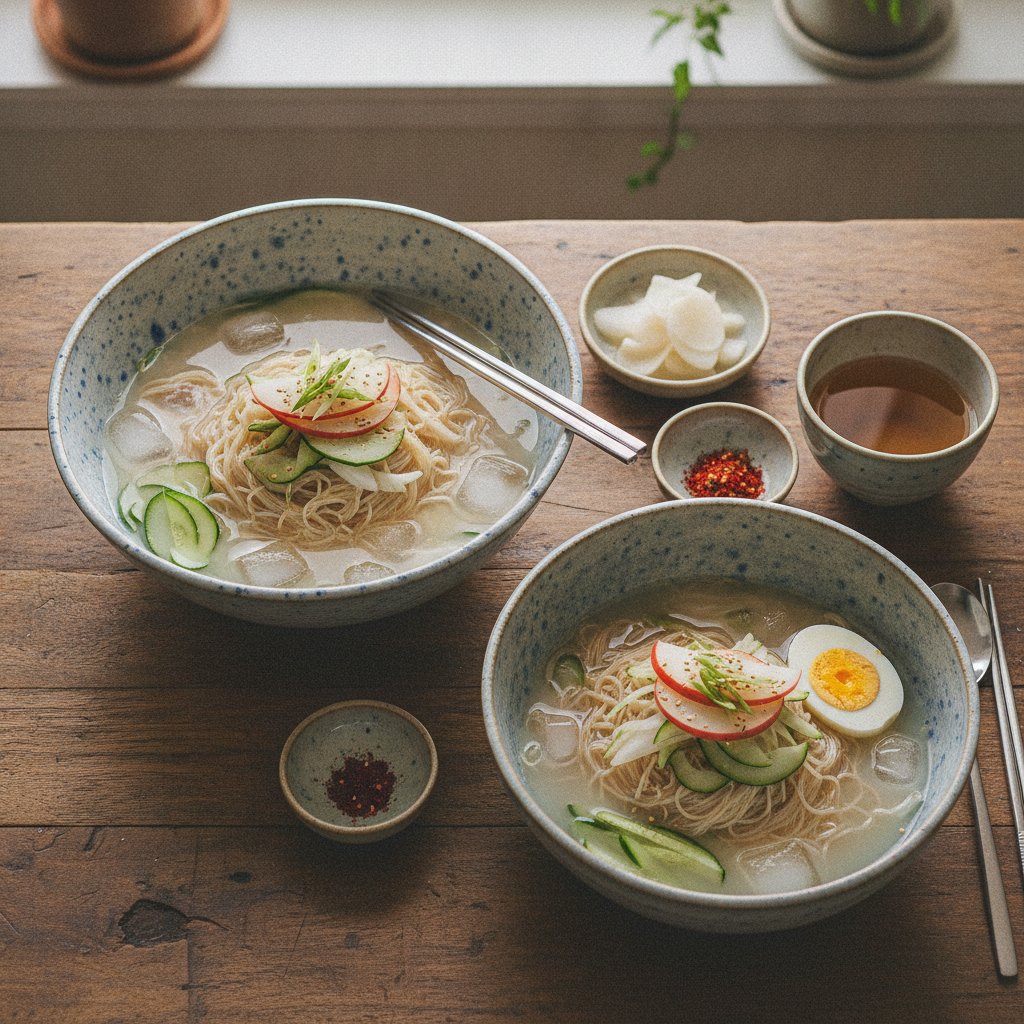
Ingredients
- 400 g (about 14 oz) somyeon (thin Korean wheat noodles)
- 600 ml (about 2.5 cups) dongchimi broth (strained water-kimchi brine)
- 200 ml (about 0.8 cup) unsalted cold beef stock or vegetable broth
- 15 g (about 1 tbsp) granulated sugar
- 15 ml (about 1 tbsp) rice vinegar (adjust based on sourness of your kimchi)
- 100 g (about 3.5 oz) fermented dongchimi radish, cut into thin matchsticks
- 100 g (about 3.5 oz) English cucumber, julienned
- 1/2 Asian pear, peeled and sliced into thin matchsticks
- 2 hard-boiled eggs, halved lengthwise
- 15 g (about 1 tbsp) toasted sesame seeds, lightly crushed
- 1 roasted Korean green chili (optional), thinly sliced
Substitutions
If you do not have homemade water kimchi on hand, look for plastic tubs labeled dongchimi or yeolmu mul-kimchi in the refrigerated kimchi aisle of an Asian supermarket. In a pinch, you can create a quick mock broth by blending chilled unsalted beef broth with rice vinegar, a pinch of salt, sugar, and a dash of sparkling mineral water to recreate that natural effervescence. If somyeon noodles are unavailable, thin Japanese somen noodles make an exact one-to-one swap, or thin capellini (angel hair) pasta can work if boiled slightly past al dente and rinsed thoroughly.
🛒 Dongchimi Guksu Cold Korean Noodle Soup Recipe
As an Amazon Associate we earn from qualifying purchases.
Shop Ingredients & Tools →How to Make It
-
Prepare and balance the cold broth: Strain your dongchimi brine through a fine mesh sieve into a large mixing bowl to remove floating bits of garlic or ginger. Stir in the cold beef stock, sugar, and rice vinegar until dissolved. Taste the liquid now: it should strike a vivid balance between sharp tartness, mild saltiness, and a delicate touch of sweetness. Adjust vinegar or sugar as needed, as kimchi acidity varies widely. Cover the bowl and place it in the freezer for 45 to 60 minutes until tiny slushy ice crystals form around the rim.
Why: Freezing the soup creates a slush texture that keeps the bowl icy without using plain ice cubes, which melt quickly and wash out your carefully balanced broth flavor.
-
Boil the somyeon noodles: Bring a large pot of water (at least 2 liters) to a rolling boil over high heat. Fan the thin wheat noodles into the boiling water, stirring immediately with chopsticks to prevent them from clumping together. When the water bubbles up violently to the top of the pot (about 2 minutes in), pour in 100 ml (about 1/3 cup) of cold water. Repeat this cold-water shock twice when it boils up again.
Why: Dropping cold water into the pot lowers the surface temperature suddenly, allowing the core of thin wheat noodles to cook evenly without the exterior disintegrating into a mushy mush.
-
Rinse and knead the cooked noodles: Drain the noodles instantly into a colander set in the sink. Immediately run ice-cold tap water over them. Take handfuls of noodles between your palms and rub them vigorously together under the running water for at least a full minute, almost like washing fine linens. Rinse until the water runs completely clear, then drop ice cubes over them to fully chill.
Why: Physical rubbing washes away thick surface starches created during boiling. If left behind, these starches dissolve into your cold soup broth, making it thick and sticky rather than crisp and clean.
-
Prepare the garnishes: Slice your fermented radish, cucumber, and Asian pear into uniform, delicate matchsticks. Halve your hard-boiled eggs. Keep all garnished ingredients chilled in the refrigerator until the exact moment of assembly.
Why: Uniform, thin cuts allow the crisp fruits and vegetables to bend effortlessly around your chopsticks along with the noodles, guaranteeing a textural contrast in every single bite.
-
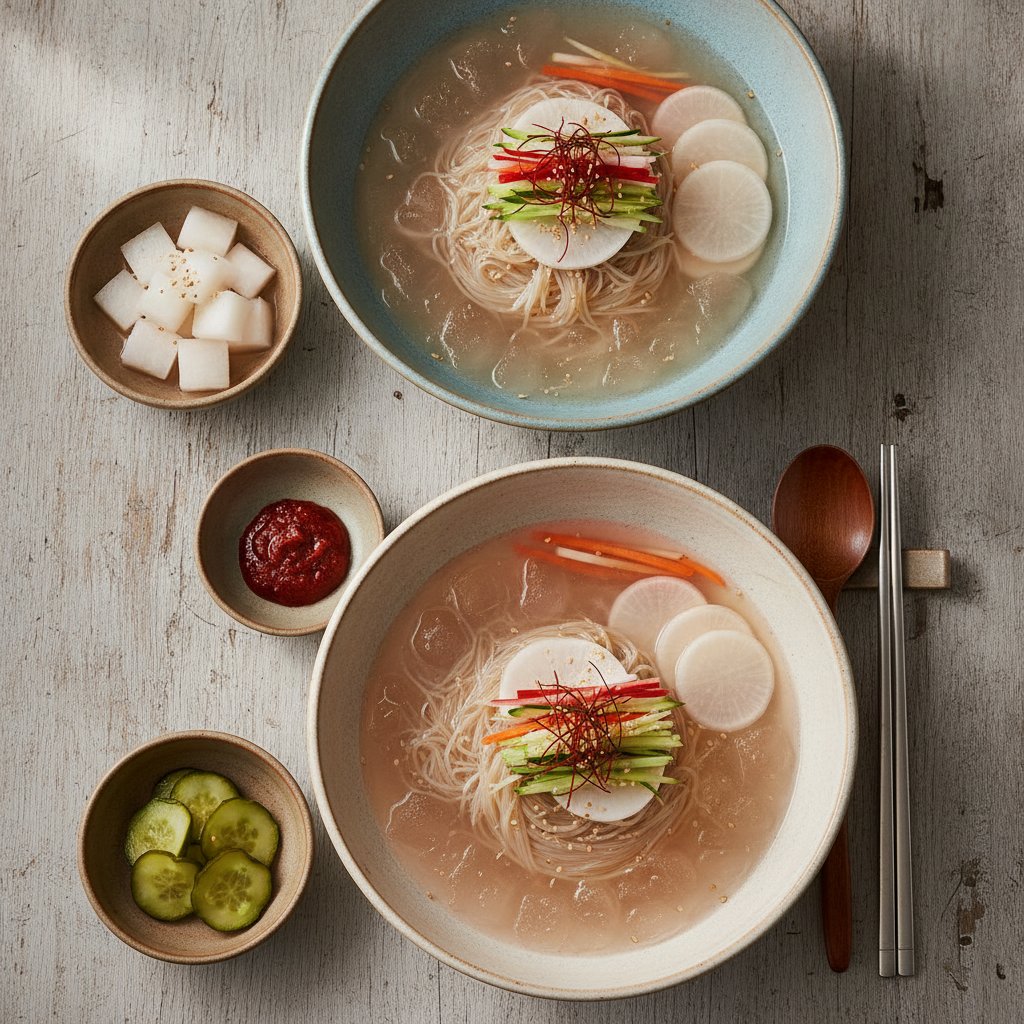
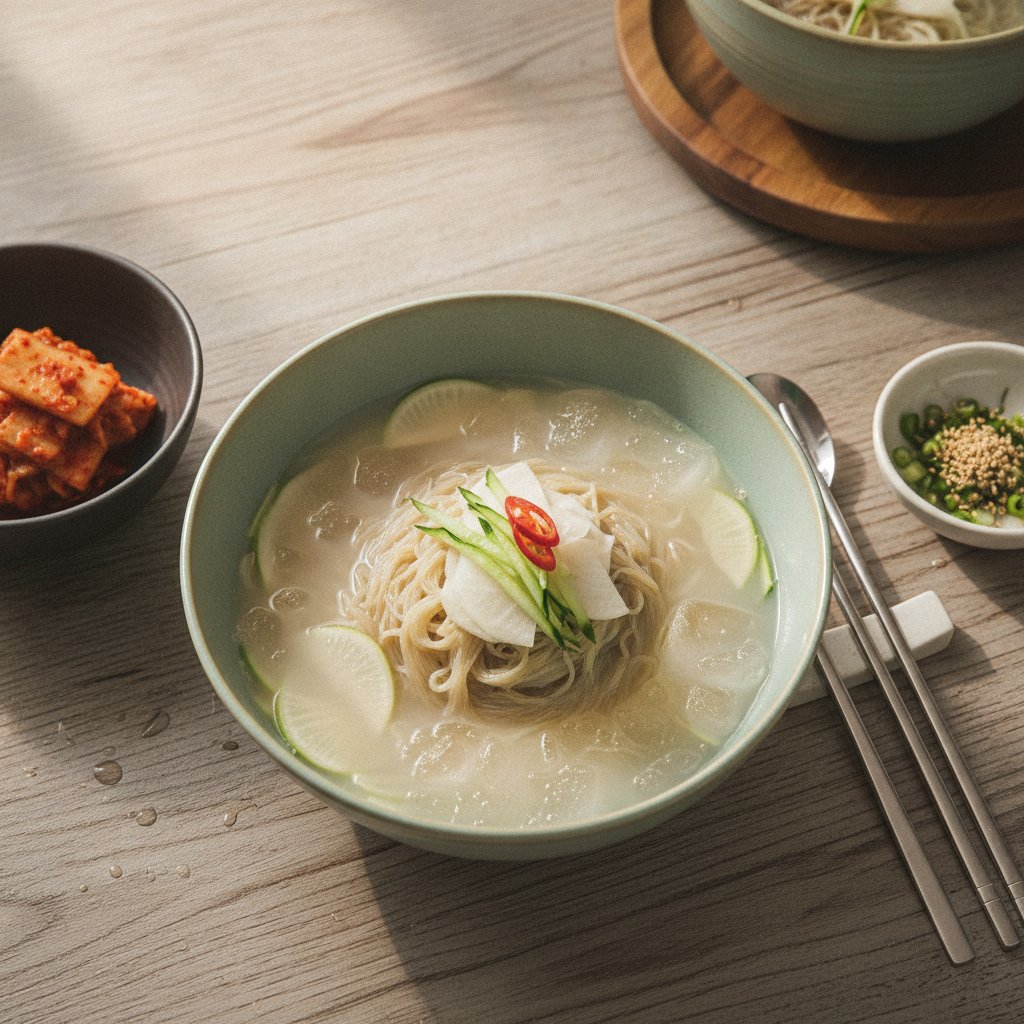
Assemble and serve: Divide the washed, thoroughly drained noodles into two or three large, deep chilled serving bowls, twirling each portion into a tight mound in the center. Carefully pour the partially frozen slushy broth around the base of the noodles. Top each mound artfully with sliced radish, julienned cucumber, Asian pear matchsticks, and half a hard-boiled egg. Sprinkle generously with crushed toasted sesame seeds.
Why: Pouring broth along the side preserves the neat structure of the noodle mound and prevents delicate toppings from sinking instantly to the bottom of the bowl.
Tips from a Korean Kitchen
The secret behind real home-style dongchimi guksu lies in handling the balance of aging kimchi. When your radish kimchi is young (less than two weeks old), the broth lacks punch, so a splash of extra rice vinegar and a tiny drop of yellow mustard paste helps mimic mature acidity. When the kimchi is deeply aged and very sour, increase the proportion of chilled beef broth relative to kimchi juice to tame the harsh edge.
Always crush your toasted sesame seeds coarsely between your fingers or in a mortar right before garnishing. Intact sesame seeds slide off cold noodles, but coarsely crushed seeds release aromatic oils that float across the icy liquid, adding a nutty aroma that bridges the sour radish and rich egg yolk beautifully.
Storage
Once assembled with broth and garnishes, this cold noodle dish must be eaten immediately; wheat noodles absorb cold broth over time and will lose their pleasant elastic springiness within fifteen minutes. However, the prepared mixed broth can be stored tightly sealed in a glass jar in the refrigerator for up to 5 days. Cooked, un-broth noodles can be tossed lightly with a drop of neutral oil and kept cold for up to 6 hours, though cooking fresh noodles per serving yields far superior results. We do not recommend freezing the prepared broth for long-term storage, as thawed kimchi brine loses its natural effervescent sparkle.
🛒 Dongchimi Guksu Cold Korean Noodle Soup Recipe
As an Amazon Associate we earn from qualifying purchases.
Shop Ingredients & Tools →FAQ
Can I make dongchimi noodle soup spicy?
Yes, absolutely. While traditional dongchimi guksu is valued for its clear, non-spicy profile, many home cooks add a spoonful of red pepper paste mixture. Stir together 15 g (1 tbsp) gochujang (Korean chili paste), 5 g (1 tsp) gochutgaru (fine chili flakes), 5 ml (1 tsp) soy sauce, and a minced garlic clove, then swirl this paste into your bowl before eating.
What is the main difference between dongchimi guksu and naengmyeon?
The distinction comes down to noodle texture and broth style. Naengmyeon utilizes extremely springy, chewy noodles made from buckwheat, sweet potato starch, or arrowroot starch, served in a complex broth often dominated by chilled beef broth. Dongchimi guksu uses delicate, soft wheat flour noodles (somyeon) and relies predominantly on fermented radish kimchi brine for its sharp, refreshing flavor profile.
Is dongchimi noodle soup gluten-free?
Traditional somyeon wheat noodles contain gluten. However, you can easily adapt this dish into a gluten-free meal by replacing the wheat noodles with 100% buckwheat noodles (pure soba) or Korean glass noodles made from sweet potato starch (dangmyeon). Ensure your beef broth base is certified gluten-free as well.
More on Kimchi Noodles & Pasta
- Kimchi Kalguksu RecipeHow to cook Korean knife-cut noodle soup with sour kimchi in a rich broth.
- Creamy Kimchi PastaHow to make creamy kimchi pasta using well-aged kimchi, heavy cream, bacon, and gochujang.
- 10-Minute Upgraded Kimchi Ramen HackHow to quickly transform packaged instant ramen into a rich Korean kimchi soup using simple tips.
See every Kimchi Noodles & Pasta post in our Kimchi guide.
Handy toolsRecipe scaler · Measurement converter · Korean pantry guide · Recipe Finder
🛒 Dongchimi Guksu Cold Korean Noodle Soup Recipe
As an Amazon Associate we earn from qualifying purchases.
Shop Ingredients & Tools →More Korean Recipes
- Crisp Bindaetteok Recipe: Korean Mung Bean Pancakes
- Kimchi Juk: Cozy Korean Kimchi Porridge Recipe
- Sweet Crunchy Bossam Kimchi Recipe (Musaengchae)
- Kimchi Mandu Guk: Easy Kimchi Dumpling Soup
🛒 Dongchimi Guksu Cold Korean Noodle Soup Recipe
As an Amazon Associate we earn from qualifying purchases.
Shop Ingredients & Tools →