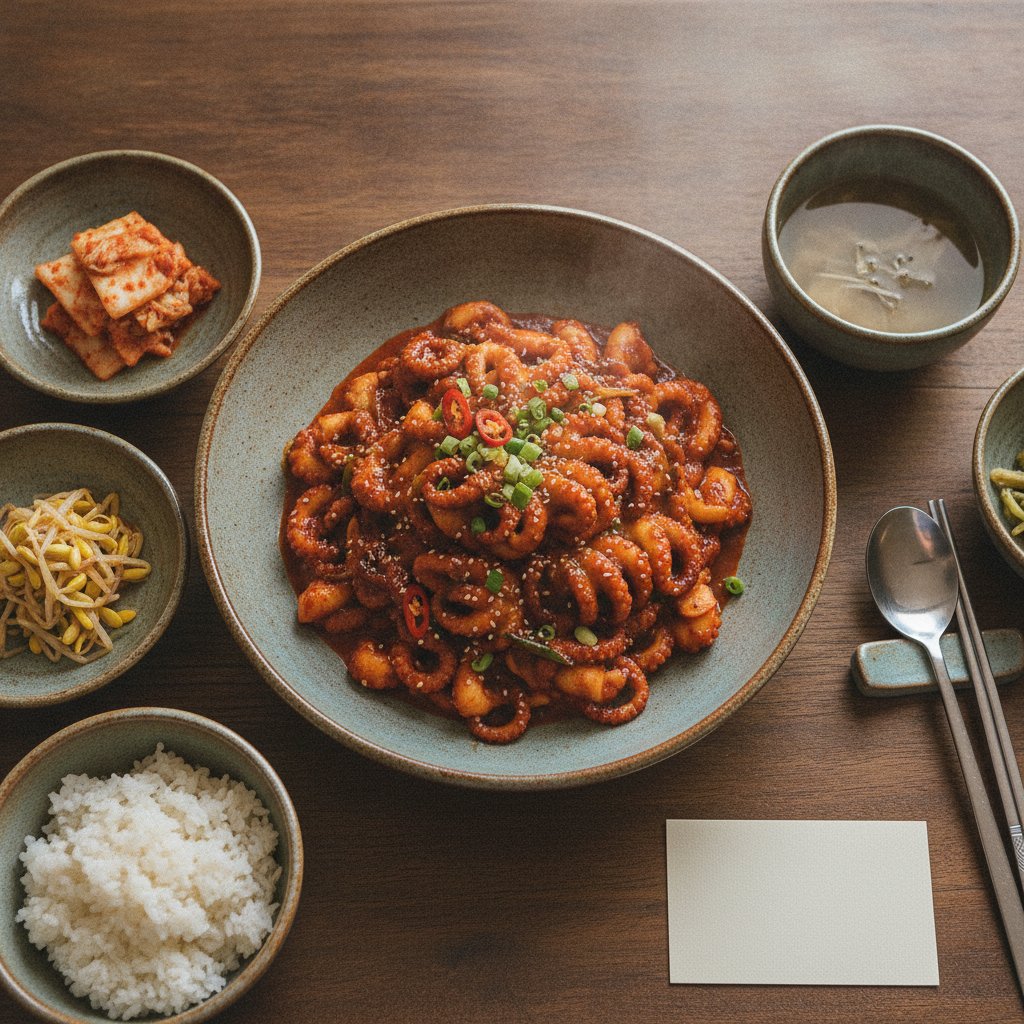
Spicy Korean Stir-Fried Octopus Recipe (Nakji Bokkeum)
This post contains affiliate links. As an Amazon Associate, we earn from qualifying purchases at no extra cost to you.
At a glance
- In shortHow to make spicy Korean stir-fried octopus at home that stays springy, tender, and never watery.
- Best forHome cooks wanting to master Korean seafood stir-fries
- DifficultyMedium
- HeatHot
- Key pointsScrubbing and blanching octopus seals in moisture and prevents a watery sauce. · Hydrating the spice paste beforehand stops it from burning in high heat. · Flash-fry on maximum heat for under two minutes to ensure tender seafood.
- Heads-upDo not microwave leftovers as it destroys octopus protein texture; eat within 2 days.
p>On rainy Friday nights in Seoul, small street tent bars known as pojangmacha fill with the irresistible sizzle of red-hot woks and the clinking of tiny green soju glasses. If you walk into any of these cozy stalls, one dish dominates almost every table: nakji bokkeum (spicy stir-fried octopus). Served blistering hot with a glossy, crimson chili sauce and tender, snappy bite-sized seafood, it is the dish Koreans turn to when they want to shake off a stressful week.
In my family, we used to visit a famous alley near Mugyo-dong in downtown Seoul that has been specializing in spicy octopus since the 1960s. The air there smells intensely of toasted sesame oil, scorched garlic, and sharp Korean chili flakes. What makes genuine nakji bokkeum so addictive is the interplay of texture and heat. In Korean, we describe the perfect bite as jjollgit-jjollgit—pleasingly chewy and springy, but never tough or rubbery like leather.
If you have tried making this dish at home before and ended up with a pan full of watery, boiled octopus, you are not alone. Octopus releases a tremendous amount of liquid as its muscle fibers contract during cooking. This home-kitchen recipe solves that exact issue using simple techniques that replicate high-heat restaurant cooking without requiring a commercial burner.
Why This Works
- Scrubbing and quick blanching purges liquid and surface residue beforehand, ensuring the octopus stays springy rather than tough and soggy.
- Hydrating the chili paste ahead of time creates a thick rub that clings directly to the seafood instead of sliding off into a watery pool.
- High-heat flash cooking cooks the entire stir-fry in under two minutes, preserving crisp vegetable texture and preventing overcooked seafood.
Ingredients
- 500 g (about 1.1 lbs) whole small octopus or octopus tentacles (fresh or thawed from frozen)
- 2 tbsp (about 30 g / 1 oz) coarse sea salt or kosher salt (for scrubbing the octopus)
- 1 tbsp (15 ml) neutral cooking oil (such as canola, vegetable, or grape seed oil)
- 1 medium yellow onion (approx. 150 g / 5.3 oz), sliced into 1/2-inch strips
- 1 cup (about 80 g / 2.8 oz) green cabbage, cut into bite-sized squares
- 2 stalks scallions (green onions), sliced into 2-inch long pieces
- 1 fresh red chili pepper (optional), diagonally sliced
- 1 fresh green chili pepper (such as Korean cheongyang pepper or jalapeño), diagonally sliced
For the Spicy Seasoning Paste:
- 3 tbsp (about 24 g / 0.8 oz) gochutgaru (Korean red pepper flakes)
- 1.5 tbsp (about 28 g / 1 oz) gochujang (Korean red pepper paste, such as CJ Haechandle or Sunchang)
- 2 tbsp (30 ml) ganjang (regular Korean soy sauce or standard soy sauce)
- 1.5 tbsp (22.5 ml) rice syrup (jochong) or corn syrup (or substitute granulated sugar or honey)
- 1 tbsp (about 15 g / 0.5 oz) fresh garlic, finely minced
- 1 tsp (about 5 g / 0.18 oz) fresh ginger, finely grated
- 1 tbsp (15 ml) chamgireum (toasted Korean sesame oil)
- 1 tsp (about 3 g) toasted sesame seeds (for garnish)
Substitutions
If you cannot source small octopus (nakji), frozen baby octopus or whole squid/calamari works wonderfully with the exact same cook time and technique. In fact, squid prepared this way becomes ojingeo bokkeum, another beloved Korean stir-fry.
For the sauce, gochutgaru (Korean chili flakes) provides a fruity, smoky heat that is difficult to replicate with Western chili powder. However, if you are stuck, a blend of 3 parts mild paprika and 1 part cayenne pepper gives decent color and heat. Rice syrup gives Korean stir-fries their signature glossy finish and thick body; honey or simple brown sugar will work as a sweetener, though you should reduce the amount slightly as honey is sweeter.
🛒 Spicy Korean Stir
As an Amazon Associate we earn from qualifying purchases.
Shop Ingredients & Tools →How to Make It
- Clean and scrub the octopus: Place the thawed octopus in a large mixing bowl with 2 tablespoons of coarse salt. Vigorous rubbing and massaging with your hands for 2 to 3 minutes strips away surface slime and debris while gently tenderizing the muscle fibers through light osmosis. Rinse under cold running water 3 or 4 times until completely clean, then drain in a colander.
- Par-blanch for moisture control: Bring a pot of water to a rolling boil. Drop the cleaned octopus into the boiling water for just 20 to 30 seconds. You are not trying to cook it through here; you are briefly shocking the outer proteins so they contract and seal in juices. Drain immediately and plunge into an ice bath to stop the cooking. Pat thoroughly dry with paper towels, then slice into 2-inch long, bite-sized pieces.
- Bloom the spice paste: In a small mixing bowl, combine the gochutgaru, gochujang, soy sauce, rice syrup, minced garlic, and grated ginger. Stir well until it forms a thick paste. Letting this mixture sit for 10 minutes allows the dry chili flakes to absorb the liquid ingredients, which prevents the flakes from burning in the hot pan later.
- Sauté the aromatic vegetables: Heat 1 tablespoon of neutral oil in a heavy skillet or wok over medium-high heat until shimmeringly hot. Add the sliced yellow onion, green cabbage, and sliced chili peppers. Stir-fry for 1.5 to 2 minutes until the vegetables begin to soften slightly at the edges but retain a crisp crunch.
- Flash-fry seafood and sauce: Turn the heat up to high—as high as your stovetop safely allows. Add the blanched octopus pieces and the spicy paste to the skillet all at once. Toss constantly with tongs or a spatula for 60 to 90 seconds. High heat allows the sugars in the sauce to caramelize against the hot metal without letting the octopus release excess liquid.
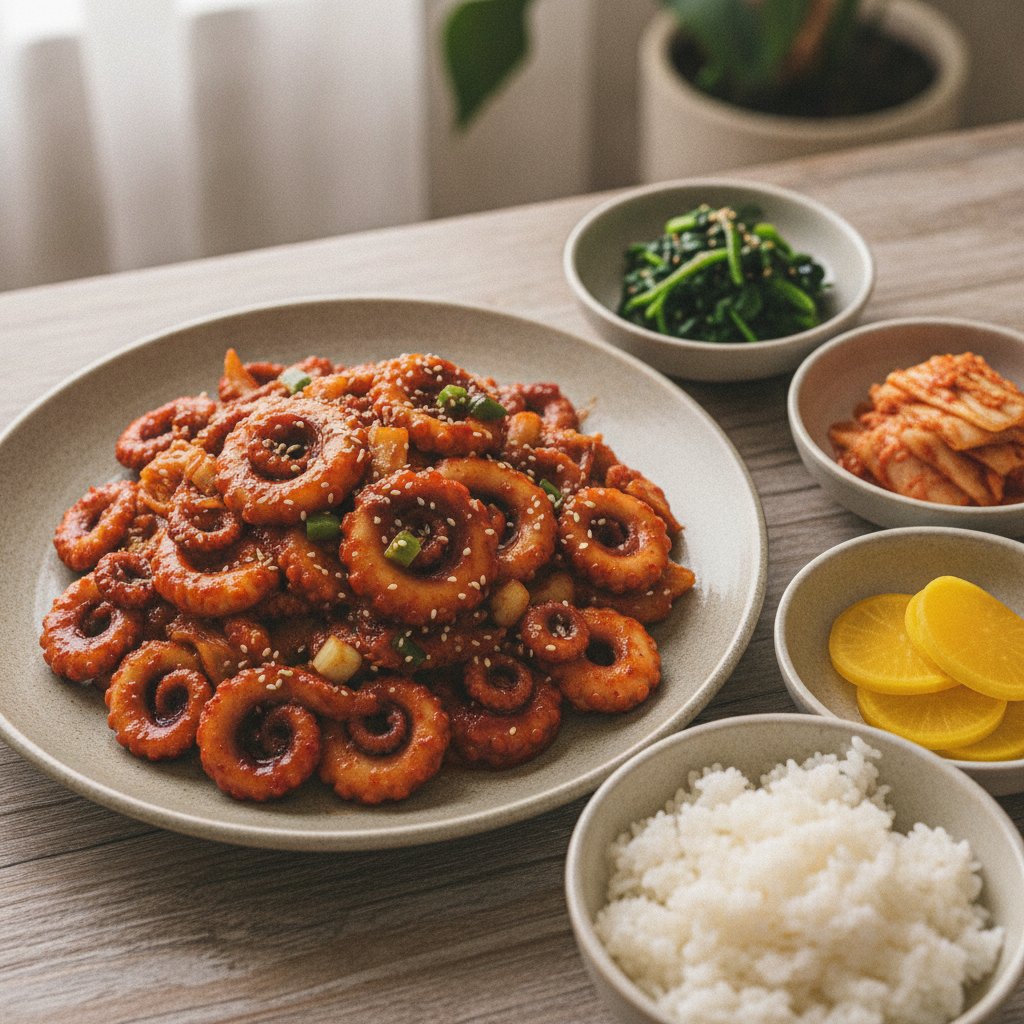
- Finish with aromatics: Turn off the heat completely. Toss in the sliced scallions, drizzle with toasted sesame oil, and sprinkle with toasted sesame seeds. The residual heat of the pan will gently wilt the green onions while protecting the aromatic volatiles of the sesame oil from burning. Serve immediately while piping hot.
Tips from a Korean Kitchen
Never skip the dry prep: Moisture is the absolute enemy of a good Korean stir-fry. Make sure your vegetables are dried after washing and your octopus is patted down with paper towels after blanching. Excess water boils your ingredients instead of frying them, resulting in a thin sauce that fails to coat the octopus.
Mix remaining sauce with rice: In Korean restaurants, nobody leaves leftover sauce in the pan. When you finish eating the octopus pieces, dump a bowl of warm cooked short-grain rice, some chopped kimchi, a handful of crushed seasoned seaweeds (gim), and an extra drizzle of sesame oil directly into the warm pan. Stir it around over low heat for 2 minutes to create an incredible spicy fried rice (bokkeumbap).
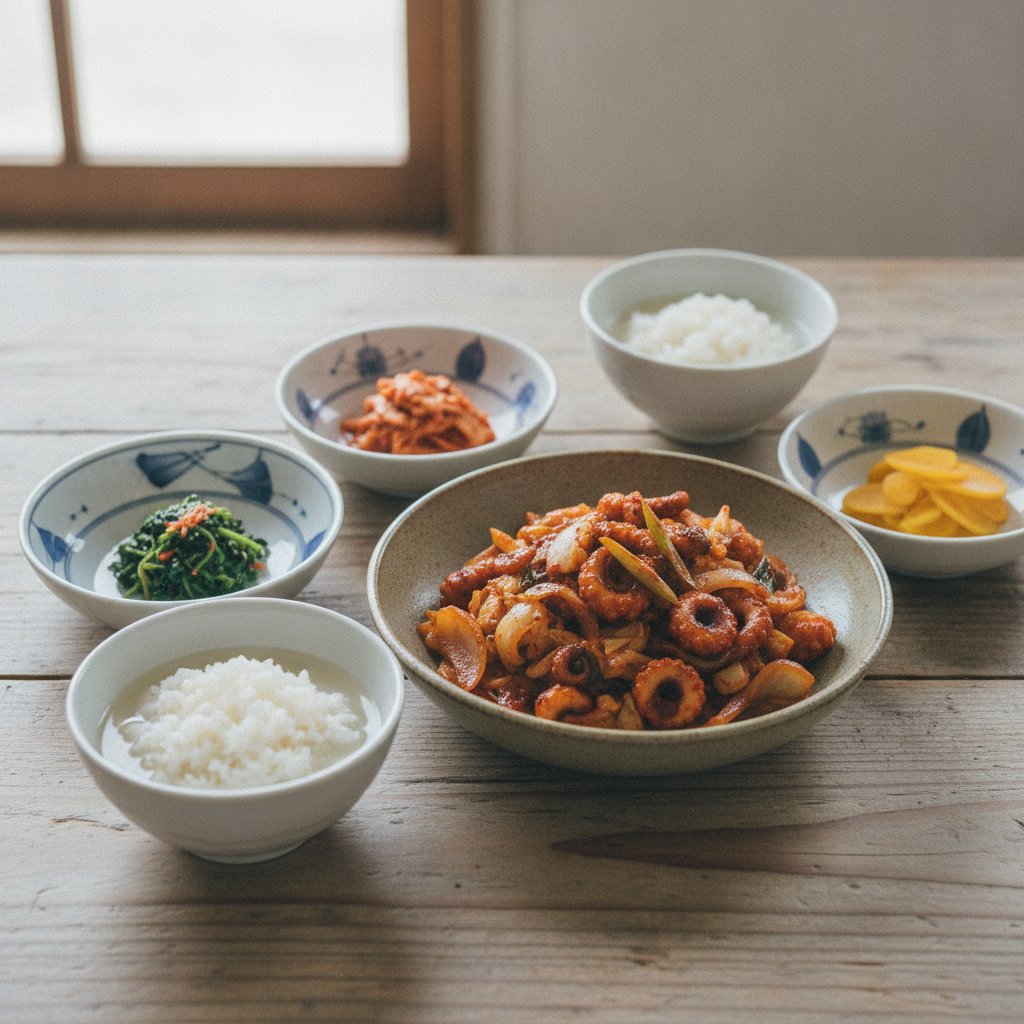
Pairing with cooling sides: Real nakji bokkeum carries a fiery kick. In my home, we always serve this alongside a mild, fluffy Korean steamed egg (gyeran-찜) or a simple bowl of cold bean sprout soup (kongnamul-guk). These mild dishes neutralize the spice and restore your palate between bites.
Storage
Nakji bokkeum is best enjoyed immediately straight from the pan while the texture of the octopus is at its peak. However, leftovers can be stored in an airtight container in the refrigerator for up to 2 days.
To reheat, heat a skillet over medium-high heat with half a teaspoon of oil and toss the leftover stir-fry quickly for 1 to 2 minutes just until warmed through. Avoid microwave reheating if possible, as it breaks down octopus proteins rapidly and makes them rubbery. Freezing cooked nakji bokkeum is not recommended, as freezing and thawing degrades the texture of cooked seafood.
🛒 Spicy Korean Stir
As an Amazon Associate we earn from qualifying purchases.
Shop Ingredients & Tools →FAQ
Can I use frozen octopus for nakji bokkeum?
Yes, absolutely. In fact, most home cooks in Seoul purchase frozen cleaned octopus because freezing naturally breaks down tough muscle fibers, making the meat even more tender when quick-cooked.
How do I keep nakji bokkeum from becoming watery?
Wateriness happens when octopus cooks slowly over medium heat or enters the pan raw with high water content. To fix this, always scrub with salt, blanch for 20 seconds, pat completely dry, and stir-fry over maximum heat for under 2 minutes.
How spicy is authentic nakji bokkeum?
Traditional nakji bokkeum is notoriously one of the spiciest dishes in Korean cuisine. However, you can easily control the heat at home by using mild gochutgaru, omitting the fresh green chili peppers, or slightly reducing the chili flakes while keeping the soy sauce and garlic amounts the same.
More on Street Food & Snacks
- Crispy Pan-Fried ManduLearn how to make authentic pan-fried Korean dumplings filled with pork, cabbage, and tofu.
- Kimchi Jeon and Pajeon Master BatterHow to make crispy Korean Kimchi Jeon and Pajeon using a single versatile pancake batter.
- Pan-Seared Korean Mackerel (Godeungeo Gui)A guide to preparing crispy, deodorized pan-seared Korean mackerel at home.
See every Street Food & Snacks post in our Main Dishes guide.
Handy toolsRecipe scaler · Measurement converter · Korean pantry guide · Recipe Finder
🛒 Spicy Korean Stir
As an Amazon Associate we earn from qualifying purchases.
Shop Ingredients & Tools →More Korean Recipes
- Gochujang Samgyeopsal (Spicy Korean Pork Belly)
- Easy Maeun Jokbal Recipe: Spicy Braised Pork Feet
- Korean Spicy Braised Pollock Recipe (Kkodari Jorim)
- Quick Seolleongtang (Korean Ox Bone Soup Recipe)
🛒 Spicy Korean Stir
As an Amazon Associate we earn from qualifying purchases.
Shop Ingredients & Tools →