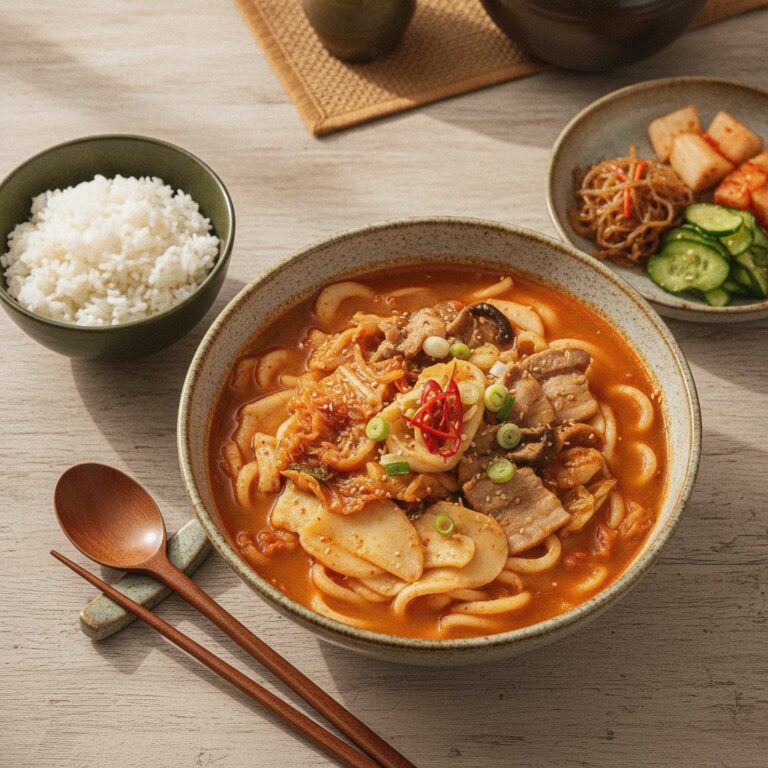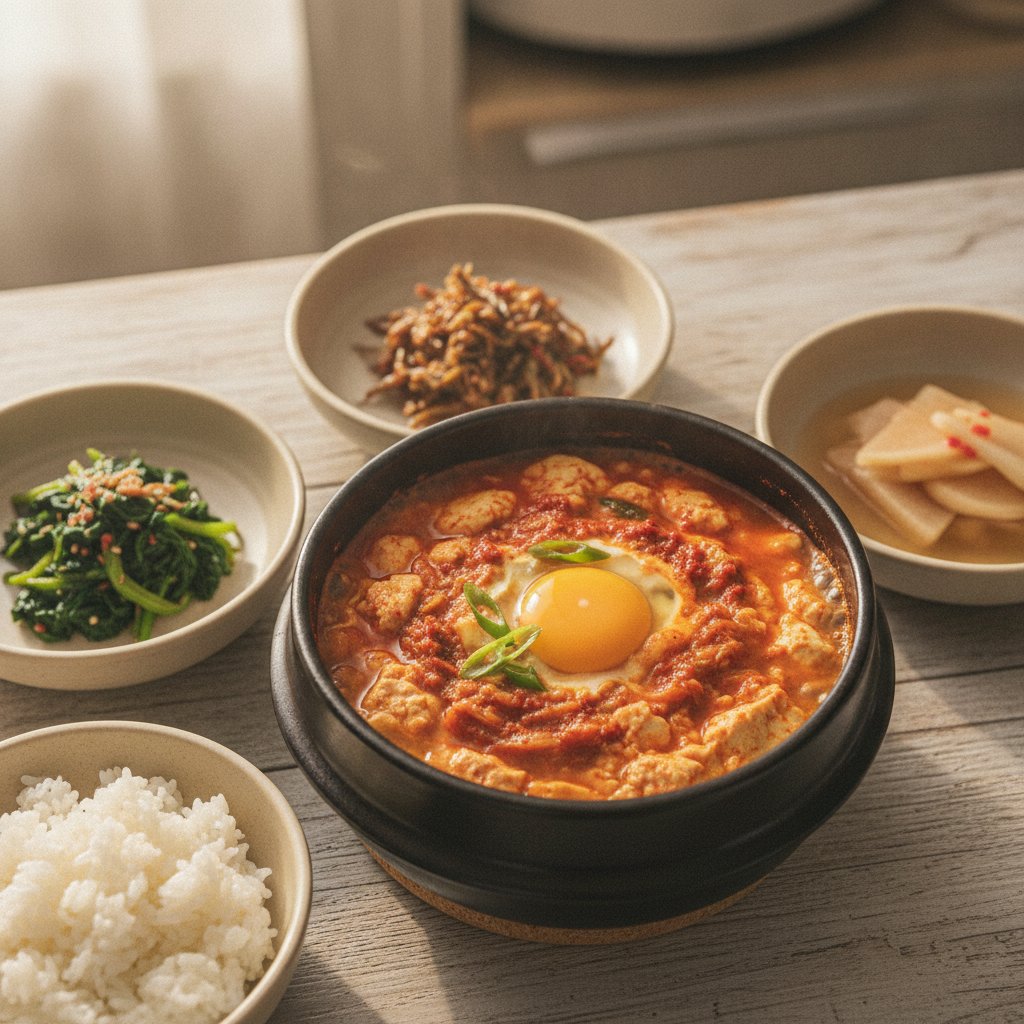
Easy Kimchi Sundubu Jjigae (Spicy Soft Tofu Stew)
This post contains affiliate links. As an Amazon Associate, we earn from qualifying purchases at no extra cost to you.
At a glance
- In shortA quick guide to making comforting Korean spicy soft tofu stew with aged kimchi in about 15 minutes.
- Best forHome cooks wanting a quick, authentic Korean tofu stew
- Time15 min
- DifficultyEasy
- HeatMedium
- Key pointsBloom gochugaru in warm oil over low heat to make a chili oil base. · Use sour, well-fermented kimchi to add instant tang and deep umami. · Add soft tofu late and stir minimally to maintain its delicate texture.
- Heads-upKeep heat low when blooming red pepper flakes to prevent them from turning bitter.
On a cold late winter evening in Seoul, when the wind comes howling down the alleyways between high-rises, there is only one dish my family reaches for: kimchi sundubu jjigae (spicy soft tofu stew with fermented kimchi). My mother kept two things perpetually stocked in our kitchen for emergency late-night meals—a tube of uncurdled soft tofu in the fridge door and a container of sour, aged kimchi in the bottom drawer. Within fifteen minutes, she could transform those two humble staples into a bubbling, crimson stew that would completely warm you from the inside out.
This quick kimchi sundubu jjigae recipe brings that exact comfort to your own table, even if you are cooking thousands of miles away from Korea. It relies on simple technique rather than hours of simmer time, making it one of the easiest standard dinners in Korean home cooking. The key lies in creating an aromatic chili paste right in the pot before adding your liquid, giving you a deep, restorative broth that tastes like it came straight out of a neighborhood sikdang (eatery) in Jongno.
Why This Works
- Building a fresh chili oil base: Searing Korean red pepper flakes directly in warm oil alongside garlic and sliced pork releases fat-soluble flavor compounds, yielding a vibrant, complex broth without needing a long boiling process.
- Capitalizing on aged kimchi: Well-fermented kimchi acts as an instant flavor shortcut, supplying natural lactic acid, garlic, ginger, and umami directly into the liquid.
- Staggered tofu addition: Sinking the extra-soft tofu into the pot during the last few minutes preserves its delicate, custard-like texture so it melts on your tongue rather than dissolving into liquid mush.
Ingredients
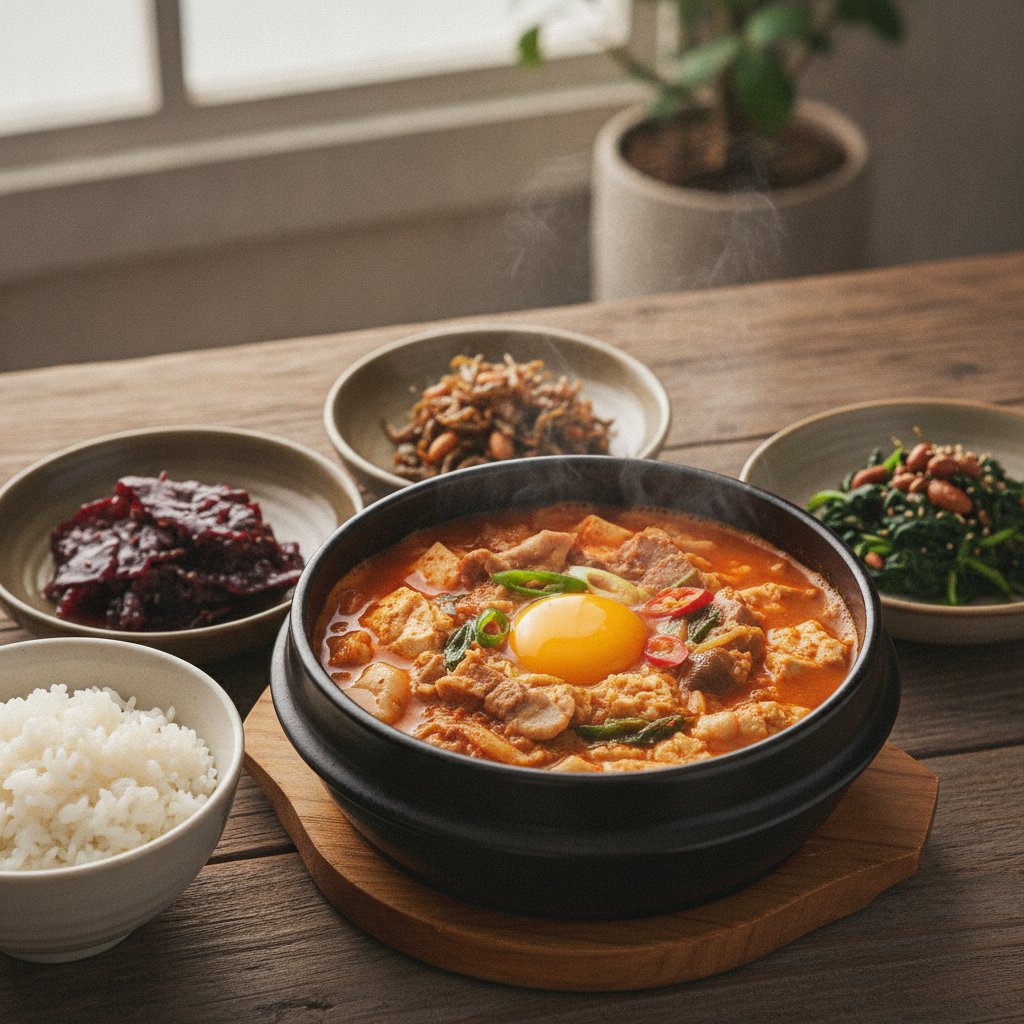
- 150 g (about 1 cup) aged Napa cabbage kimchi (baechu-kimchi), chopped into bite-sized pieces
- 60 ml (about 1/4 cup) reserved kimchi juice from the jar
- 350 g (about 12 oz / 1 standard tube or block) extra-soft or silken tofu (sundubu)
- 100 g (about 3.5 oz) pork belly or pork shoulder, sliced into thin bite-sized strips
- 15 g (about 2 tbsp) Korean coarse red pepper flakes (gochugaru)
- 15 ml (about 1 tbsp) toasted sesame oil
- 15 ml (about 1 tbsp) neutral cooking oil (avocado, vegetable, or canola oil)
- 15 g (about 1 tbsp / 3 large cloves) garlic, finely minced
- 15 ml (about 1 tbsp) soup soy sauce (guk-ganjang) or regular soy sauce
- 7.5 ml (about 1/2 tbsp) fish sauce or liquid anchovy sauce (myeolchi-aekjeot)
- 350 ml (about 1.5 cups) Korean kelp-anchovy broth, or plain water
- 2 stalks scallions (green onions), sliced thinly on a diagonal
- 1 large fresh egg
- 1 small pinch freshly ground black pepper
Substitutions
If you cannot visit an Asian market this week, you can easily make adjustments with regular supermarket finds:
- Pork Belly: Substitute with thinly sliced beef ribeye, skinless chicken thigh, peeled shrimp, or sliced shiitake mushrooms for a vegetarian option.
- Korean Red Pepper Flakes (Gochugaru): There is no direct 1-to-1 substitute for the fruity, mild heat of gochugaru. However, a blend of 3 parts smoky paprika and 1 part cayenne pepper works in a pinch, though you should start with half the amount to control spiciness. Avoid standard Western chili powder blends, as they contain cumin and oregano.
- Extra-Soft Tofu (Sundubu): Look for extra-soft or silken tofu sold in plastic tubes or square containers at regular Western grocery stores. Avoid firm or extra-firm tofu here, as the texture of this dish relies entirely on soft, pillowy curds.
- Kelp-Anchovy Broth: If you do not have dried kelp (dashima) and dried anchovies, unsalted chicken bone broth or vegetable broth works wonderfully as a modern shortcut.
🛒 Easy Kimchi Sundubu Jjigae
As an Amazon Associate we earn from qualifying purchases.
Shop Ingredients & Tools →How to Make It
-
Savor the aromatics and bloom the spices. Set a small earthenware pot (ttukbaegi) or a small heavy-bottomed saucepan over medium heat. Add the neutral oil, toasted sesame oil, minced garlic, and sliced pork. Cook for 2 to 3 minutes until the pork loses its raw pink color and begins releasing its fat. Turn the heat down to low, then sprinkle in the gochugaru. Stir continuously for about 1 minute until the oil turns a deep ruby red. Why: Blooming pepper flakes in warm oil extracts fat-soluble aromatic compounds and creates homemade chili oil, but low heat is vital because scorched red pepper turns bitter instantly.
-
Sauté the sour kimchi. Add the chopped aged kimchi to the pot. Increase the heat back to medium and fry everything together for 3 to 4 minutes until the kimchi leaves soften and turn slightly translucent at the edges. Why: Searing kimchi in pork fat mellows its sharp raw acidity and caramelizes its natural sugars, creating a rounder, wealthier flavor profile in the final broth.
-
Add the liquids and simmer. Pour in the broth (or water), reserved kimchi juice, soy sauce, and fish sauce. Stir gently to lift any caramelized bits stuck to the bottom of the pot. Bring the liquid up to a energetic boil over medium-high heat, then reduce the heat to medium-low, cover with a lid, and simmer gently for 5 minutes. Why: A quick simmer allows the pork, kimchi brine, and fish sauce to meld together into a balanced, savory base before introducing the delicate tofu.
-
Incorporate the extra-soft tofu. Cut the top end of the tofu package and squeeze or scoop the extra-soft tofu directly into the bubbling broth in large chunks. Use a spoon to gently break the tofu into large pieces—do not stir aggressively. Taste the broth and add a small pinch of salt or a splash more fish sauce if you prefer a saltier flavor. Simmer for another 3 to 4 minutes until the tofu is heated completely through. Why: Leaving the tofu in substantial curds prevents it from breaking down into microscopic specks, allowing it to absorb heat while maintaining its silky texture.
-
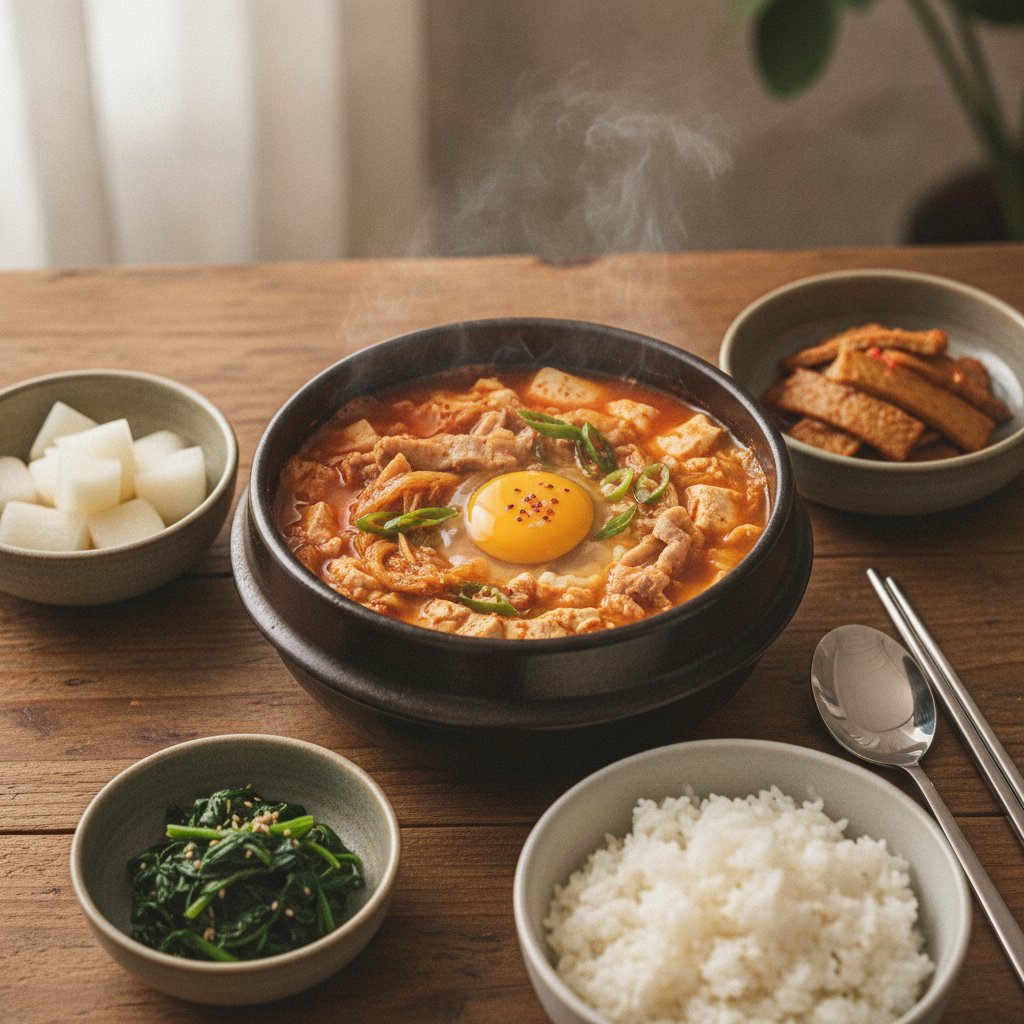
Finish with the fresh egg and scallions. Turn off the heat or drop the stove down to low. Crack the fresh whole egg right into the center of the gently bubbling stew and scatter the sliced green onions and black pepper around it. Serve immediately while still rolling hot. Why: Serving the stew piping hot allows the residual heat of the earthenware pot to cook the egg white softly while keeping the yolk rich and runny for dipping.
Tips from a Korean Kitchen
In Korean homes, small details elevate a basic meal into something truly special. Keep these practical considerations in mind when preparing your stew:
- Always use old, sour kimchi: Freshly made kimchi lacks the developed lactic acid required to give this stew its signature tangy kick. If your kimchi is too fresh, leave the jar out on your kitchen counter at room temperature for 24 to 48 hours until it swells slightly and smells distinctly sour.
- Invest in an earthenware pot (Ttukbaegi): Korean earthenware retains heat exceptionally well. When cooked in a ttukbaegi, your stew will continue boiling gently at the dining table for several minutes after coming off the burner, keeping your meal piping hot through the last bite.
- Do not over-stir after adding tofu: Silken and extra-soft tofu contain high moisture content. Excessive stirring destroys the cloud-like texture and turns your clear red broth cloudy and watery.
- Mind the sodium levels: Commercial kimchi brands vary widely in saltiness. Always taste your broth right before adding the egg; if your kimchi was exceptionally salty, balance it with a tiny pinch of sugar rather than adding more soy sauce.
🛒 Easy Kimchi Sundubu Jjigae
As an Amazon Associate we earn from qualifying purchases.
Shop Ingredients & Tools →Storage
Refrigeration
Store leftover stew in a sealed glass container in the refrigerator for up to 3 days. Note that soft tofu will naturally release excess water over time, which may slightly dilute the broth strength.
Reheating
Transfer leftovers to a small saucepan and heat over medium heat until steaming hot throughout. Avoid microwave heating if possible, as uneven microwave radiation causes soft tofu to burst and lose its smooth texture. Taste and refresh with a small splash of fish sauce or fresh scallions if needed.
Freezing
Do not freeze this stew. Freezing structurally alters soft tofu, causing it to collapse into a spongy, rubbery texture once thawed.
FAQ
Can I make this kimchi sundubu jjigae recipe vegetarian?
Yes, absolutely. Omit the pork belly and replace it with 100 g of sliced fresh shiitake or beech mushrooms to retain a rich umami profile. Replace the fish sauce with Korean soup soy sauce (guk-ganjang) or Yondu vegetable seasoning sauce, and use kelp-vegetable broth instead of fish broth.
What is the difference between sundubu jjigae and kimchi jjigae?
While both are beloved Korean stews featuring kimchi, kimchi jjigae uses standard firm or medium tofu cut into thick cubes, contains a higher proportion of kimchi, and simmers for a longer duration to build a dense broth. Sundubu jjigae centers specifically on uncurdled, silky extra-soft tofu, cooks much faster, and typically features a lighter, chili-oil infused broth with an egg cracked on top.
How do I reduce the spice level without ruining the flavor?
To reduce the heat, cut the quantity of gochugaru in half (use 1 tablespoon instead of 2), but keep the sesame oil and garlic measurements the same. Do not substitute water for broth, as rich broth helps balance the spice. Cracking an extra egg into the hot stew at serving time will also help coat your palate and tame the heat naturally.
🛒 Easy Kimchi Sundubu Jjigae
As an Amazon Associate we earn from qualifying purchases.
Shop Ingredients & Tools →More on Kimchi Soups & Stews
- Slow Braised Pork Rib Kimchi JjimLearn how to make braised Korean pork ribs with aged kimchi low and slow.
- Kimchi Mandu Guk (Kimchi Dumpling Soup)A step-by-step recipe for making Korean kimchi dumpling soup with anchovy broth.
- Kimchi Juk: Korean Kimchi PorridgeA quick Korean recipe for making cozy kimchi rice porridge using leftover cooked rice.
See every Kimchi Soups & Stews post in our Kimchi guide.
Handy toolsRecipe scaler · Measurement converter · Korean pantry guide · Recipe Finder
More Korean Recipes
- Crisp Bindaetteok Recipe: Korean Mung Bean Pancakes
- Kimchi Juk: Cozy Korean Kimchi Porridge Recipe
- Sweet Crunchy Bossam Kimchi Recipe (Musaengchae)
- Kimchi Mandu Guk: Easy Kimchi Dumpling Soup
🛒 Easy Kimchi Sundubu Jjigae
As an Amazon Associate we earn from qualifying purchases.
Shop Ingredients & Tools →