Sweet Crunchy Bossam Kimchi Recipe (Musaengchae)
This post contains affiliate links. As an Amazon Associate, we earn from qualifying purchases at no extra cost to you.
At a glance
- In shortLearn how to make sweet, crunchy Korean radish salad (musaengchae) for boiled pork wraps.
- Best forHome cooks making restaurant-style Korean bossam kimchi
- DifficultyEasy
- HeatMedium
- Key pointsDual-maceration with salt and syrup ensures a flexible, crunchy texture. · Coating dry radish in chili flakes first seals in vibrant color and flavor. · Always slice radish lengthwise along the grain to maximize its natural crunch.
- Heads-upWring out as much water as possible before seasoning, and do not freeze the finished dish.
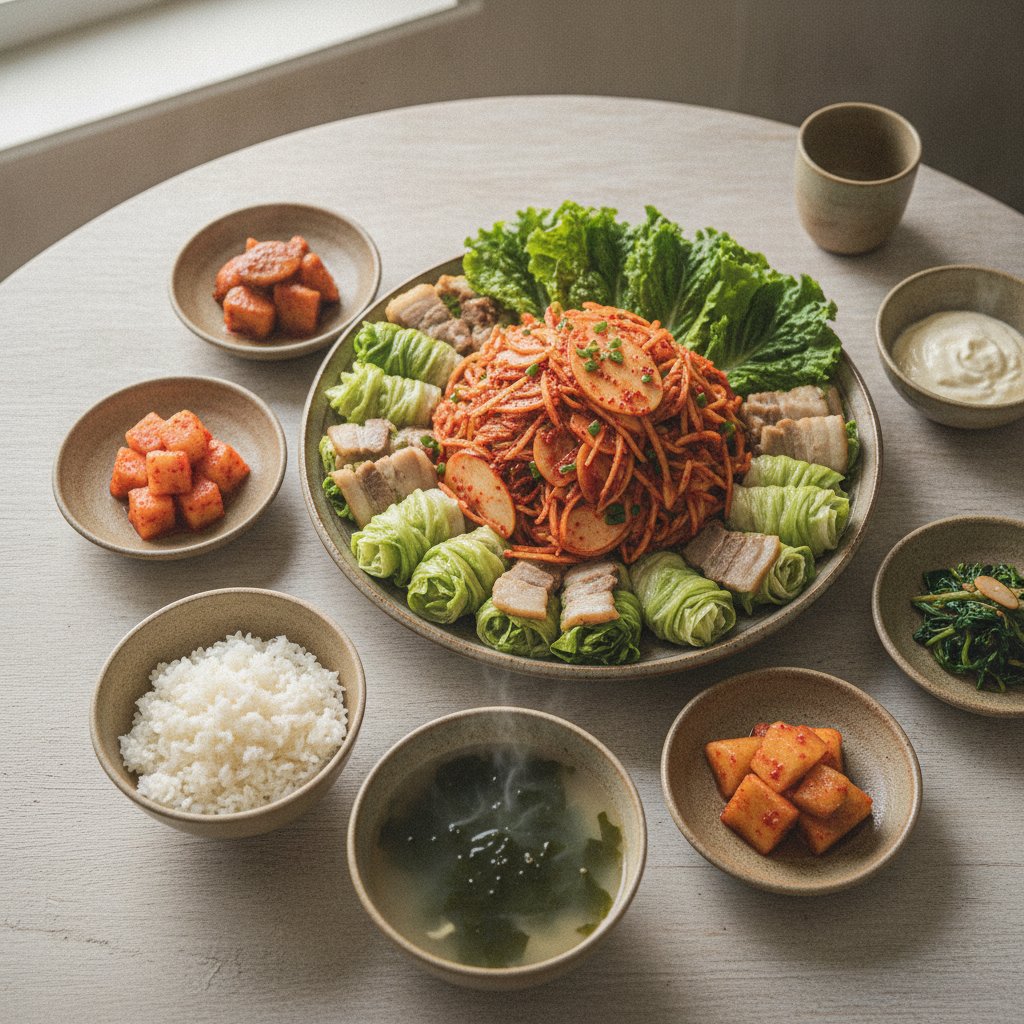
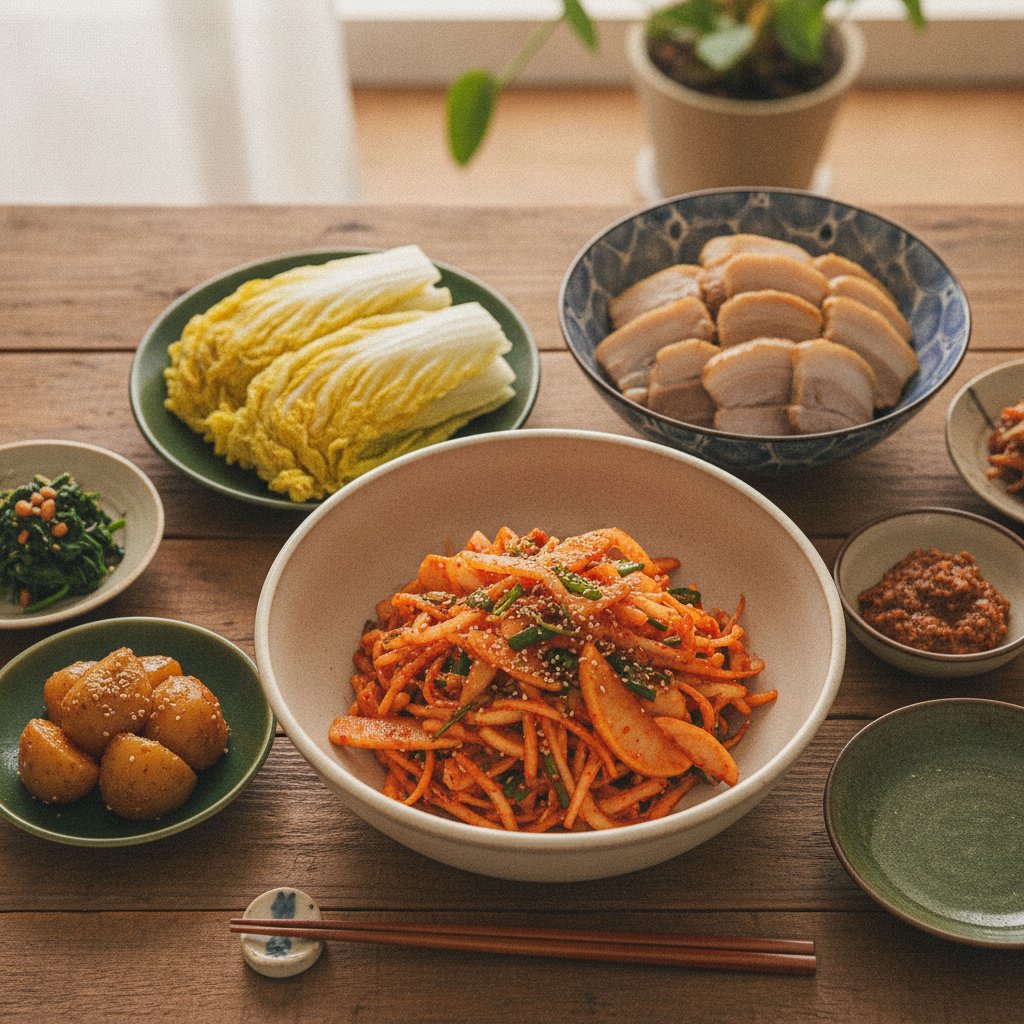
When winter hits Seoul, my mother always sets aside two heavy, jade-green bottomed Korean radishes strictly for bossam night. In our home, we would spend hours slow-simmering pork belly with ginger and soybean paste, but everyone at the table was secretly waiting for the centerpiece: a massive bowl of glossy, ruby-red bossam kimchi (spicy radish salad for boiled pork wraps). Unlike everyday fermented cabbage kimchi, this radish style—often called restaurant-style musaengchae (sweet and spicy radish salad)—is wildly crunchy, vibrant, and distinctly sweeter. It is crafted specifically to cut through the rich, buttery fat of tender boiled pork.
Many people outside Korea assume that all kimchi takes weeks of slow fermentation in an earthenware jar, but this fresh style is built for instant gratification. You can mix it up an hour before dinner, and it delivers an addictive contrast of sugar, spice, garlic, and an incredible chew. In Korean restaurants across Seoul, from famous franchises like Won Halmoni to tiny neighborhood alleys in Jongno, the secret to fantastic bossam (boiled pork belly wraps) lies entirely in how firm and sweet this radish companion is. If you have ever felt disappointed by watery, limp radish salad at home, this recipe fixes every single variable.
Why This Works
- Dual-maceration with salt and syrup: Salting the radish alongside rice syrup draws out excess moisture through osmotic pressure while wilting the strips into a flexible, dense texture that stays intensely crunchy instead of turning soggy.
- Gochutgaru blooming technique: Tossing the dry radish matchsticks in pure red pepper powder before adding any wet liquids seals the surface, giving the dish a vivid crimson color that never bleeds out into a watery puddle.
- Balanced savory-sweet profile: Combining fermented salted shrimp with a touch of plum syrup gives a deep, ocean-rich umami that balances the bright sweetness needed to complement rich meats.
Ingredients
- 1 kg (about 2.2 lbs) Korean radish (mu), peeled
- 60 g (about 1/4 cup) coarse Korean sea salt or kosher salt (for wilting)
- 120 ml (about 1/2 cup) Korean rice syrup (ssal-jocheong) or light corn syrup
- 45 g (about 1/2 cup) fine or medium-coarse Korean chili flakes (gochutgaru)
- 3 tbsp minced fresh garlic (about 7-8 cloves)
- 1 tbsp finely grated fresh ginger
- 2 tbsp Korean salted fermented shrimp (saeujeot), finely chopped
- 1.5 tbsp Korean anchovy fish sauce (aekjeot)
- 2 tbsp Korean green plum syrup (maesil-cheong) or white granulated sugar
- 4 stalks green onion, cut into 5 cm (2-inch) lengths
- 1 tbsp toasted sesame seeds
Substitutions
If you cannot source Korean radish (mu), broad white Daikon radish from a regular Western supermarket makes a very good substitute. Daikon contains a bit more water and slightly less natural sugar, so make sure to extend your salting time by an extra 15 minutes. If you cannot find Korean rice syrup, use light corn syrup or agave nectar. For the saeujeot (salted fermented shrimp), you can substitute an equal amount of additional Korean anchovy fish sauce plus a tiny pinch of fine salt, though the shrimp offers the most authentic, clean umami flavor. Finally, if green plum syrup is unavailable, brown sugar combined with a few drops of apple cider vinegar works beautifully.
🛒 Sweet Crunchy Bossam Kimchi Recipe
As an Amazon Associate we earn from qualifying purchases.
Shop Ingredients & Tools →How to Make It
- Slice the radish into thick matchsticks: Cut the peeled Korean radish into 0.5 cm (1/4 inch) thick planks, then cut those planks into sturdy matchsticks. Why: Bossam kimchi requires significantly thicker cuts than standard everyday radish salad. If cut too thin, the intense salting process will turn the radish into mush rather than giving it that signature leathery, satisfying crunch.
- Macerate with salt and syrup: In a large mixing bowl, combine the radish matchsticks, coarse sea salt, and rice syrup. Mix thoroughly with your hands to coat every piece. Let the bowl sit at room temperature for 1 hour, tossing gently halfway through. Why: The combination of salt and dense sugar syrup pulls out the harsh, bitter water inside the radish walls while simultaneously curing the exterior flesh. This creates a flexible, toothsome bite that cannot be achieved with salt alone.
- Rinse and squeeze thoroughly: Pour the radish into a colander to drain the accumulated liquid. Rinse the radish under cold running water for just 5 seconds to remove excess surface salt, then drain again. Working in small batches, place the radish inside a clean kitchen towel or cheesecloth and wring out as much liquid as humanly possible. Why: Any excess water left inside the radish will dilute your seasoning paste later and result in a bland, soupy kimchi. Thorough squeezing is the single most important step for long-lasting crunch.
- Bloom the gochutgaru: Place the dry radish strips back into a clean bowl. Add half of the Korean chili flakes (gochutgaru) and toss vigorously for 2 minutes until every radish stick is dyed a bright, uniform red. Let it sit for 5 minutes. Why: Rubbing dry chili powder directly onto the dry vegetable allows the natural pigments and spice oils to bind with the remaining surface moisture, preventing the sauce from separating later.
- Mix the savory aromatic paste: In a separate small bowl, combine the chopped fermented shrimp, fish sauce, minced garlic, grated ginger, plum syrup (or sugar), and the remaining chili flakes. Stir well into a thick, glossy paste. Why: Mixing your wet seasoning components separately ensures that strong garlic and concentrated fish sauce disperse evenly throughout the radish without overworking or breaking the radish matchsticks.
- Combine, massage, and finish: Pour the aromatic paste and sliced green onions over the red-tinted radish. Put on kitchen gloves and massage the paste firmly into the radish for 2 to 3 minutes until every strip is coated in a sticky, glistening glaze. Sprinkle with toasted sesame seeds and give it one final toss. Why: Physical massaging breaks down the surface tension of the paste, forcing the flavors deep into the matchsticks so it tastes fully seasoned from the very first bite.
Tips from a Korean Kitchen
In my family, we always pay close attention to how we slice the radish. Always slice lengthwise along the grain (from the stem end down to the root end) rather than crosswise. The natural fiber channels run vertically; cutting along these fibers preserves the structural integrity of the vegetable, giving you maximum snap when you bite into it.
Another common mistake is being too gentle during the drying phase. Don’t rely on your hand grip strength alone to squeeze out the water. Wrap the salted radish in a sturdy cotton cloth or nut milk bag and twist until you think not a single drop is left—then twist once more. You will be amazed at how much hidden juice comes out.
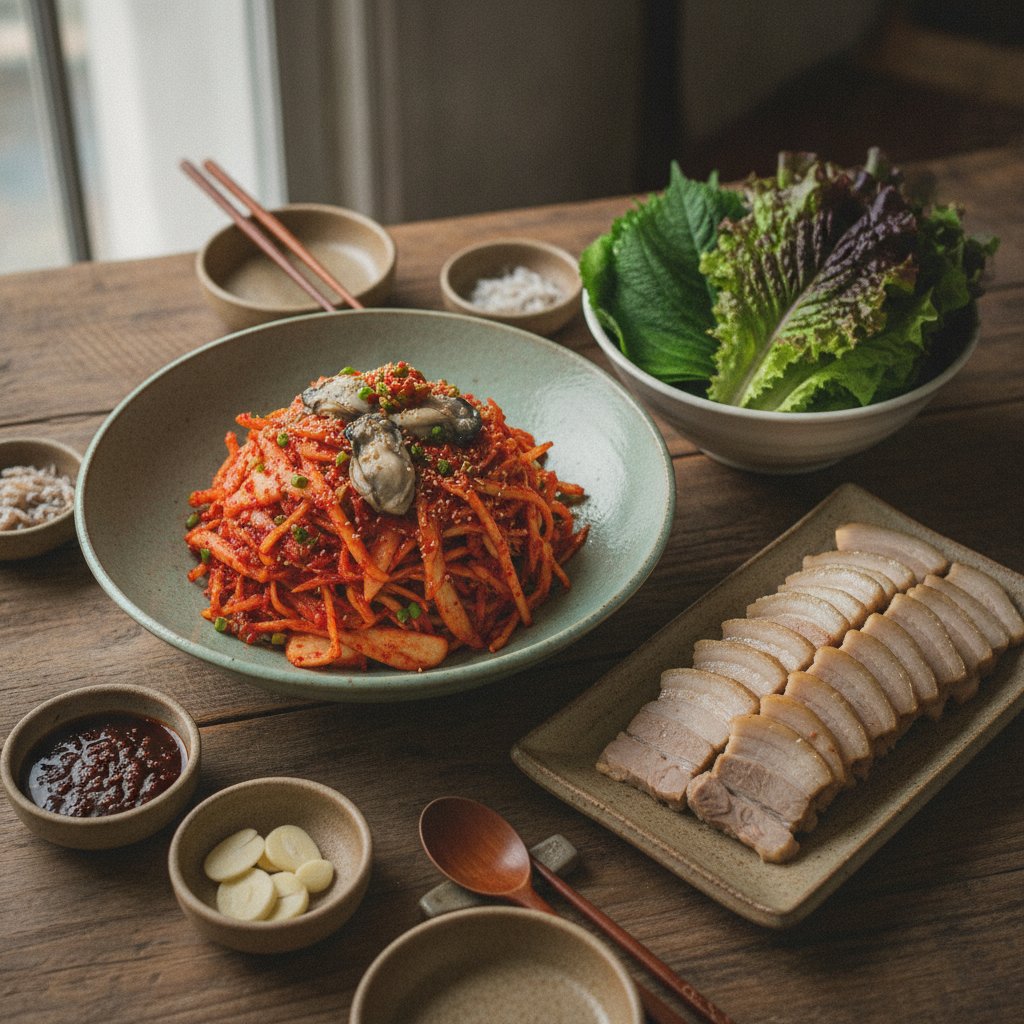
Lastly, remember that restaurant-style bossam kimchi is intentionally sweeter and more heavily seasoned than regular cabbage kimchi or everyday musaengchae. Because it is eaten directly wrapped around rich, unseasoned slices of boiled pork belly or pork shoulder, the bold sweetness and garlic punch are necessary to bring the whole bite into perfect balance.
Storage
Transfer your finished bossam kimchi into a clean glass container or airtight plastic vessel, pressing it down firmly to remove air pockets. Keep it stored in the coldest part of your refrigerator. Unlike traditional cabbage kimchi, which is designed to ferment for months, this fresh radish salad is at its absolute peak texture within the first 1 to 7 days. It remains safe and delicious to eat for up to 3 weeks, though it will naturally lose some crunch as it ferments and softens over time. Do not freeze this dish, as freezing destroys the cellular structure of raw radish and turns it limp and watery upon thawing. Serve chilled straight from the fridge alongside hot, freshly sliced boiled pork.
🛒 Sweet Crunchy Bossam Kimchi Recipe
As an Amazon Associate we earn from qualifying purchases.
Shop Ingredients & Tools →FAQ
Can I use standard American red pepper flakes instead of gochutgaru?
It is strongly recommended to use genuine Korean gochutgaru. Western red pepper flakes usually contain seeds and are far too spicy, dry, and coarse, which will leave your salad gritty and painfully hot. Korean chili powder has a mild, fruity heat and a fine texture that creates the signature sticky glaze necessary for this dish.
Why did my radish salad become watery after a few hours in the fridge?
This happens when the radish was not salted long enough or wasn’t squeezed dry enough before seasoning. The salt in the final seasoning paste continues to draw out hidden moisture if the vegetable wasn’t fully cured beforehand. Squeezing the radish inside a thick kitchen cloth until completely dry prevents this issue.
Is bossam kimchi supposed to be eaten fresh or fermented?
While traditional cabbage bossam kimchi can be fermented, this sweet radish style (musaengchae-style) is specifically designed to be eaten fresh or lightly rested overnight. It offers the best texture and bright flavor during the first few days after making it, making it ideal for quick dinner prep.
More on Vegetable & Fresh Kimchi
- Fresh Buchu Kimchi RecipeLearn how to make quick Korean garlic chive kimchi in under 30 minutes without pre-salting.
- Quick Oi Muchim (Cucumber Kimchi)A 15-minute recipe for making Quick Cucumber Kimchi (Oi Muchim), a fresh Korean side dish.
- Crunchy Kkakdugi RecipeLearn how to make authentic, crunchy Kkakdugi (cubed radish kimchi) at home with simple step-by-step instructions.
See every Vegetable & Fresh Kimchi post in our Kimchi guide.
Handy toolsRecipe scaler · Measurement converter · Korean pantry guide · Recipe Finder
🛒 Sweet Crunchy Bossam Kimchi Recipe
As an Amazon Associate we earn from qualifying purchases.
Shop Ingredients & Tools →More Korean Recipes
- Kimchi Mandu Guk: Easy Kimchi Dumpling Soup
- 10-Minute Kimchi Ramen Hack (Upgraded Kimchi Ramyeon)
- Creamy Kimchi Pasta (Kimchi Keurim Pasta)
- Crispy Potato Kimchi Pancake (Gamja Kimchi Jeon)
🛒 Sweet Crunchy Bossam Kimchi Recipe
As an Amazon Associate we earn from qualifying purchases.
Shop Ingredients & Tools →